Story audio is generated using AI
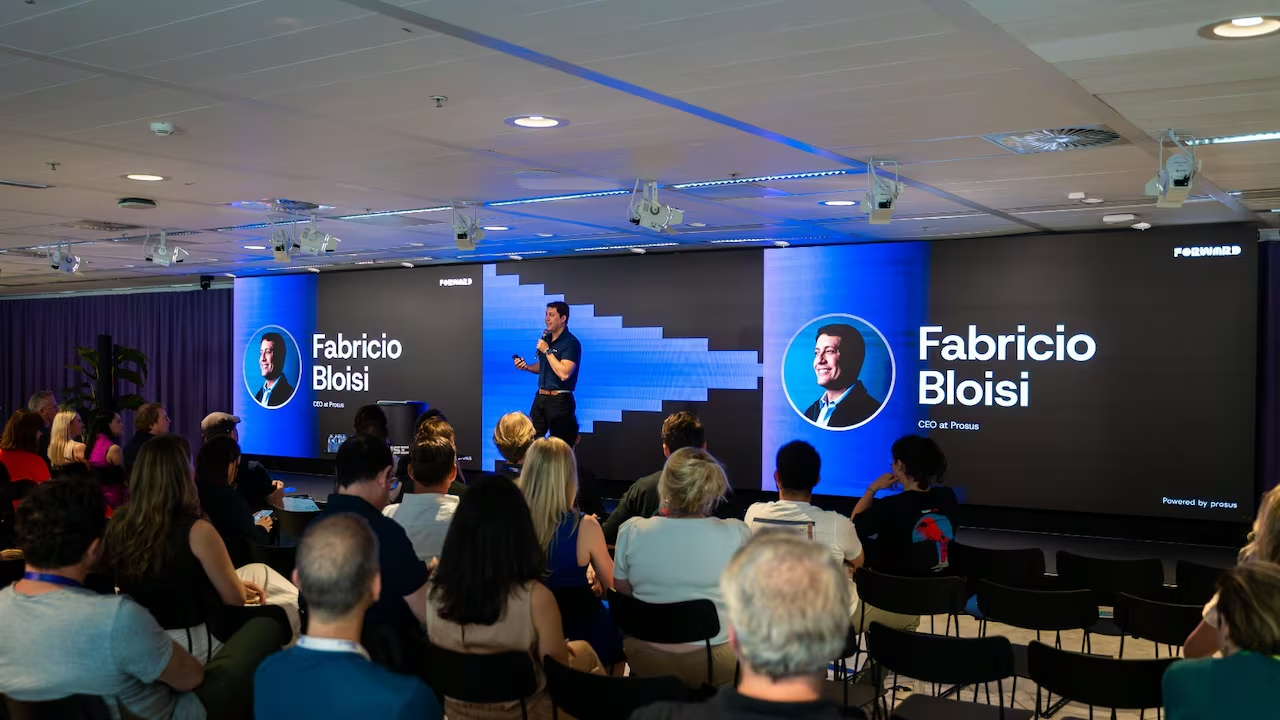
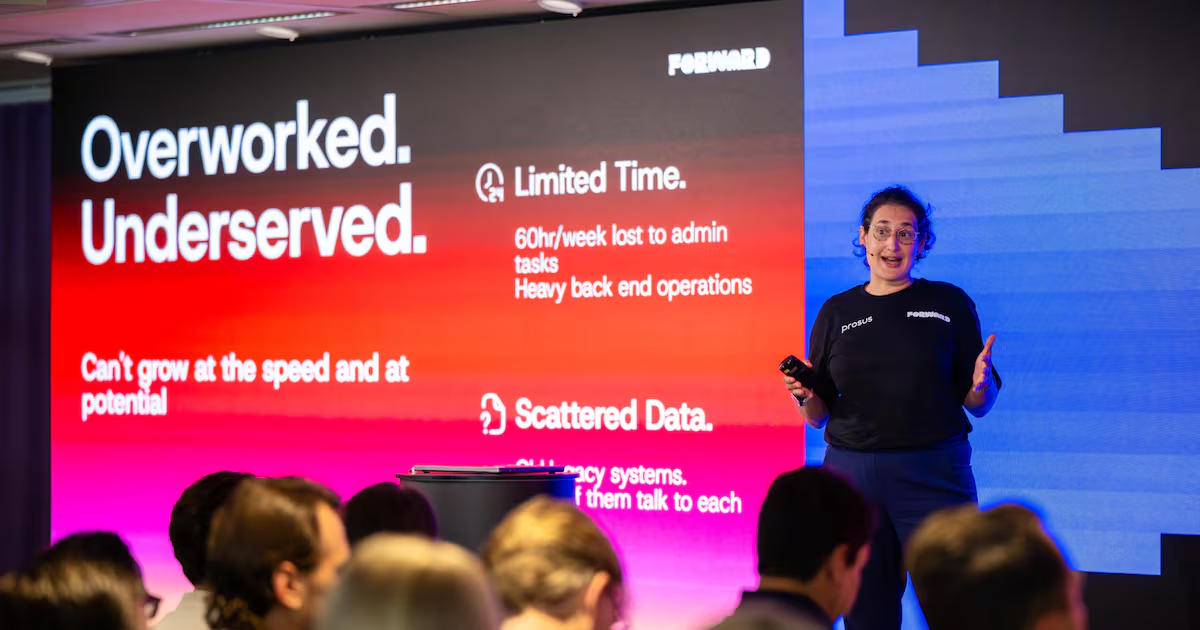
Prosus, Naspers’ international arm, is still figuring out how to make money, if at all, from its new set of AI platforms.Companies worldwide have felt the pressure to capitalise on the trend by employing AI-backed services or software platforms to either improve their own operations or create products.This week, the JSE’s largest technology group unveiled ToqanClaw, a platform that lets business owners develop their own software solutions without the need for complex technical teams or third-party developers. While many organisations are starting to use AI in their operations, it comes at a cost. The rising IT costs are now raising questions about the wisdom of replacing humans with AI, with the one type of cost simply being replaced by another. For now, ToqanClaw is free to use for companies in the Prosus ecosystem, that is, businesses that the group owns and operates or those it has a stake in, as well as those outside. (Dorothy Kgosi) The group’s focus is to help improve and grow the businesses that it invests in, which would help to show the value of holdings outside China’s Tencent. In addition, the group is pushing for high adoption rates as part of an effort to scale the AI platform. Over time, the group may have to find a way to monetise the tech, especially as the mounting costs of AI take up a growing piece of corporate budgets. When asked about a possible path to monetisation, Laura Fitoussi, global director of strategy and operations at Prosus, said, “It’s something we’re working through. We feel comfortable with our product market fit … there’s still some things that we need to test. It’s a free proposition for restaurants to use in our ecosystem.“We are able to do that because we manage our token spend very rigorously. We built ToqanClaw in such a way that it is model agnostic.” She said the system decides which model is used based on the type of query “to make sure that we use the most token-effective model”. Read: Fairy tale or fair bet? Naspers has a new AI strategyTokens, or the units of data produced, are the currency of the AI world. “We are also using open-source models, which are cheaper and faster to use for some queries. We created a lot of flexibility in the back end for ourselves to keep the token cost low,” said Fitoussi. “What really matters to us today is that restaurants log in, create an account [and] start using it,” seeing what value can be created. Making the platform free to use means Prosus shoulders all the cost. It makes sense that the group would be doing what it can to rein in token costs. This comes while providers of compute and digital infrastructure are pushing to see how they can deliver AI platforms as cheaply as feasible. As MTN technology chief Charles Molapisi points out: “The big metric here … is going to be the token per watt when it comes to the economics.” “Tokens per watt” is a calculation of the amount of AI-generated text or data chunks a system produces for each watt of power consumed. Given data centres’ huge energy demands, the metric is the primary measure of AI profitability and operational success.“The mathematics is very clear: the ones who are able to produce tokens at the most economical rate win the game. It’s not about who’s got the best compute and the best models; it’s about energy implications in terms of token generation,” Molapisi said. Given this state of affairs, the support for Naspers-Prosus creating its own AI products has begun to wane, for some, as investors favour returns over experimentation. Peter Takaendesa, chief investment officer at Mergence Investment Managers, said, “Market views have changed a lot from being supportive of that strategy to now being overly bearish.”He said that it is “a function of global investor concerns on companies investing into AI applications with limited visibility on monetisation or value creation on those products”.“It appears the market is now in a show-me-the-money mode.”Fitoussi did not rule out a paid version of ToqanClaw in the future. “We’re starting to get some traction and some understanding of what kind of real value we can derive out of ToqanClaw.“We need to scale a bit more and have it running on a larger set of restaurants to better understand the second-order value for our businesses.”