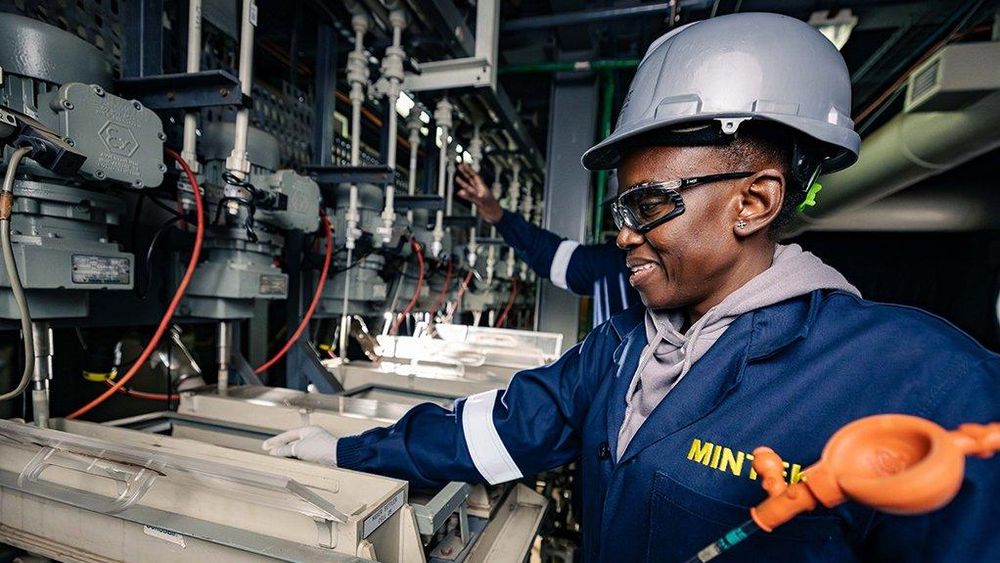
In June 2026, at Steenkampskraal in the Western Cape, a deposit left in the ground since 1963 produced South Africa’s first high-purity mixed rare-earth concentrate. The response was the familiar one: the country is geologically blessed, global supplies are tight and the cycle will reward us. But the deposit was never the constraint. It sat idle for more than 60 years because the capital case and the processing route did not exist, not because the rock was missing. China’s dominance of rare earths is not a dominance of geology, which is widely spread; it is a dominance of separation and refining, which is concentrated and capital-intensive. That distinction decides whether South Africa builds an industry or ships feedstock for a premium it never collects.New separation capacityThe timing is not incidental. China has spent the past year converting its processing monopoly into leverage, licensing heavy-rare-earth exports case by case and letting prices outside its borders run. A US-China trade truce struck late in 2025 suspended the harshest measures, but it will lapse in November. The West is treating the window as a deadline: new separation capacity will not reach scale before 2027, and rebuilding an independent supply chain is reckoned in years, not months. That is the gap a credible new supplier could fill.The capital that deadline is mobilising goes to one place. On June 18, the Pentagon’s Office of Strategic Capital signed a conditional loan of up to $725m with Energy Fuels. The mandate is specific: it funds a rare-earth separation and metallisation facility, the stage that converts concentrate into the metals and alloys permanent magnets require. Western governments are not financing extraction; they are paying for the refining.The same logic reshapes how South Africa’s own projects should be judged. Rainbow Rare Earths’ Phalaborwa project in Limpopo sidesteps the capital intensity of underground development by processing 35-million tonnes of above-ground phosphogypsum waste. It has secured a conditional $50m investment backed by the US’s Development Finance Institution through TechMet, and the structure is telling: the funds are drawn only once construction of the processing plant begins, expected in early 2027, with first production targeted for 2028. The money is committed to the chemistry, not the rock.None of this is unique to rare earths. In one input after another, the scarce asset has migrated from the resource, which is widely held, to the processing capability, which is not. China refines most of the world’s lithium, makes the bulk of its battery cells and supplies much of the grid hardware the energy transition depends on. Capital has noticed and it now flows to the scarce capability rather than the abundant ore. Rare earths are the sharpest case, not the exception.The market that matters is not one price but two. On China’s June prices, neodymium-praseodymium oxide traded near $110/kg and dysprosium oxide near $210; terbium, scarcer still, sat near $950.The Western contracts now being written sit well above those marks. A recent Serra Verde and USA Rare Earth offtake set floor prices of about $575/kg for dysprosium and $2,050 for terbium. Those are not spot prices; they are the minimum a Western buyer will underwrite to secure supply outside China, roughly two to three times the Chinese reference. South Africa cannot earn that premium by selling mixed concentrate. The premium attaches to separated, qualified, non-Chinese oxides — the stage its plants do not yet reach.MintekIts own plant shows the constraint exactly. A pilot at Mintek, South Africa’s national mineral research organisation, has produced mixed rare-earth oxalate, not separated oxides. Solvent-extraction separation into individual elements is the next stage of development. The joint venture with Steenkampskraal Monazite Mine targets commercial concentrate shipments before the end of November, but element separation remains unbuilt. Until that capability moves from the laboratory to an operating plant, domestic output stays tied to refining capacity abroad, most of it Chinese.South Africa does not lack geology. It lacks the industrial capacity that turns geology into value. The country has spent a century exporting raw minerals and importing the higher-value goods made from them; rare earths offer a chance to break that pattern, but only if policy follows the value chain rather than the ore body. That means the unglamorous work that capital rewards are regulatory certainty, the chemistry of separation, and the patient money to qualify the oxides the world will pay a premium to source outside China. A deposit you refine is an industry. A deposit you only ship is another country’s feedstock.• Chatikobo is a CA(SA) specialising in M&A advisory. He writes in his personal capacity.
ANESU M CHATIKOBO | SA’s rare earth opportunity lies beyond the mine
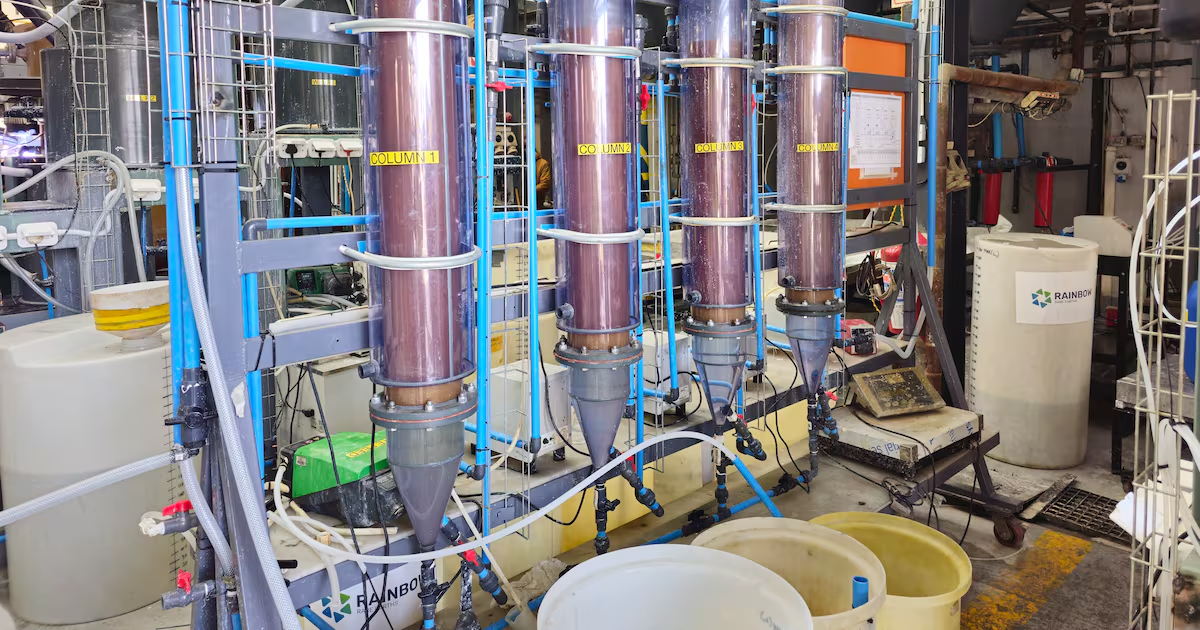
Processing is what liberates capital, and Rainbow Rare Earths is processing millions of tonnes of above-ground phosphogypsum waste
757 words~3 min read