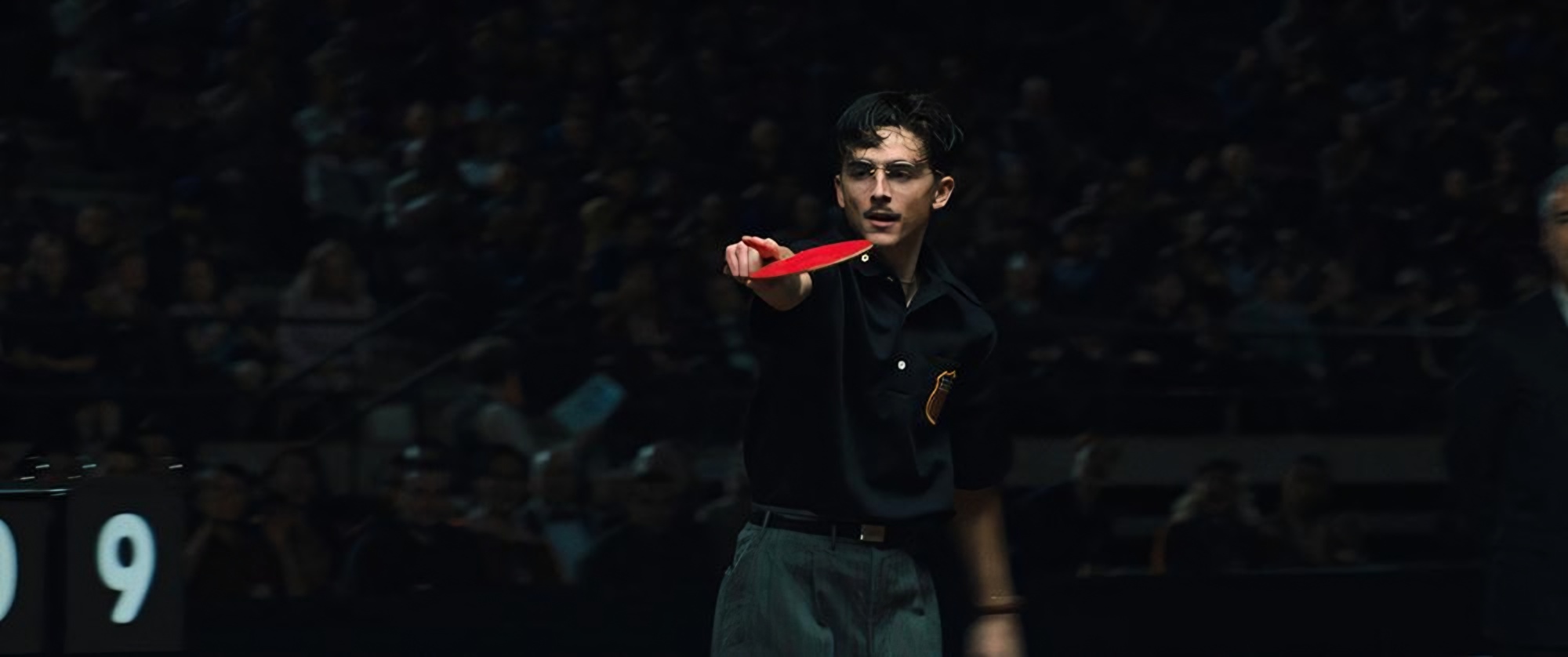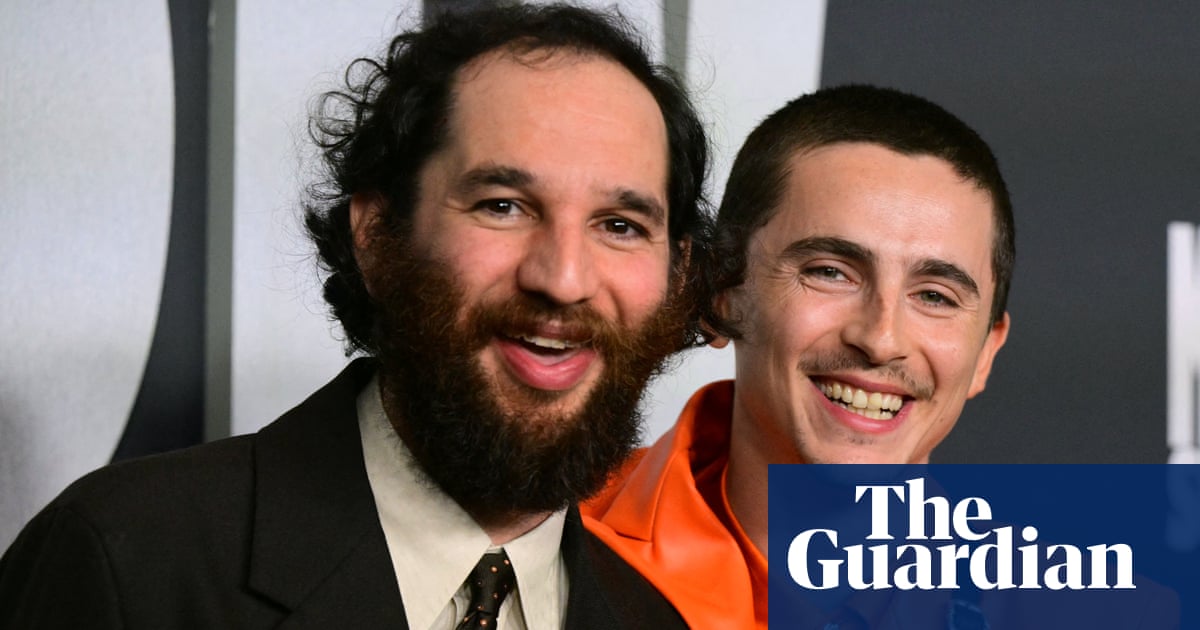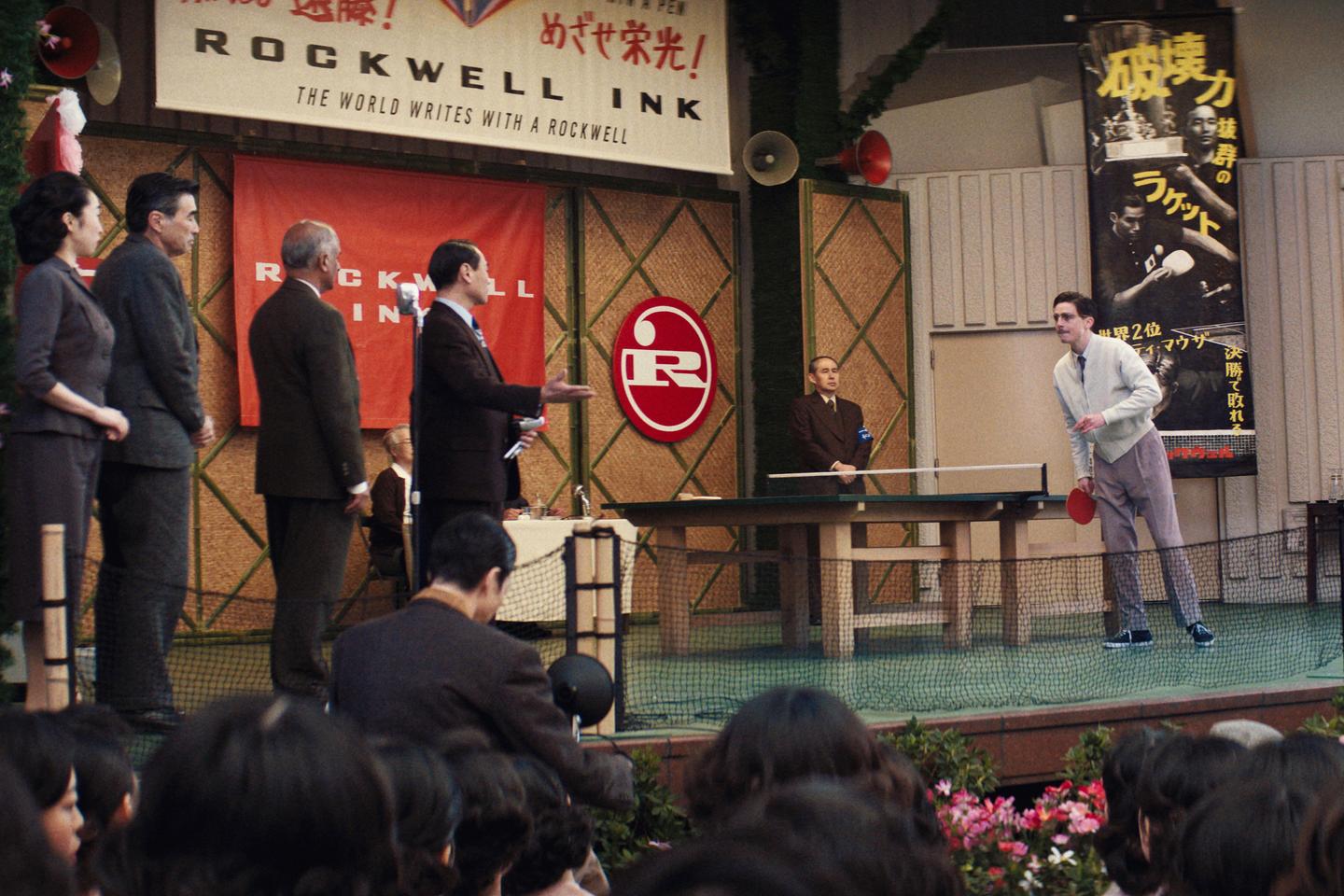
The 'Uncut Gems' director discusses his fast-talking hustler and the ending that almost was, a day after the film's Korean debut Josh Safdie (Atsushi Nishijima/Mindmark/Hive Media Corp) "I'm very interested in seeing characters do the things that sometimes we cannot do," Josh Safdie said Thursday. "There's something somewhat heroic in that."The impulse to root for someone you probably shouldn't cuts straight through "Marty Supreme," a rambunctious odyssey of a glory-obsessed ping-pong player that's now the highest-grossing title in A24's history. It opened in Korea on Wednesday months after its stateside run, arriving with a reputation built as much on the film itself as its star Timothee Chalamet, whose brash, self-promoting antics on the awards circuit last year turned quite a few heads.Safdie took questions from Korean reporters over a pre-recorded live stream, joining remotely for a film release he clearly wished he could have shown up for in person. He's a longtime admirer of Korean cinema, he said, and of Korean audiences for their enthusiasm.The ferocious, nerve-racking style Safdie built with his brother Benny on "Good Time" and "Uncut Gems" is largely intact here, but the difference is that he's working alone this time, and on a much bigger canvas. "Marty Supreme" carries that pulse across a 150-minute period piece that lurches from one disaster to the next, through a grimy, lovingly recreated 1950s Manhattan.Marty Mauser (Chalamet) is a 23-year-old shoe salesman on the Lower East Side, a fast talker with a bottomless supply of chutzpah, dead certain he's the best table-tennis player alive and that the world owes him for it. The sports-movie setup quickly gives way to a portrait of a man on the run from his own life: Marty robs, steals, hustles, cheats, sweet-talks and swindles his way toward tournaments in London and Tokyo, burning every bridge he's got. There's even a whiff of K-drama at its most unhinged here — except Marty is nobody's hero, and the movie is happy to always let him off the hook. Timothee Chalamet stars in "Marty Supreme." (A24/Mindmark/Hive Media Corp) What Safdie sees in all that hubris is a loftier ambition at work — a man chasing something greater than himself. "He's pursuing the idea of greatness, and he's pursuing a place in infinity," he said. "It doesn't matter that no one cared about it — he had to see it through to the absolute fullest."The irony is that greatness, when it finds Marty, comes from a direction he'd never have expected, which is more or less where the film leaves him at the end.By Safdie's own account, the real Marty Reisman, the ping-pong legend the film loosely draws on, has little to do with the guy on screen."At some point there was some sort of confusion amongst the internet or press that this was in any way a fictionalized story about Marty Reisman," Safdie said. "There's little to no correlation between Marty Mauser and Marty Reisman. I loved the name Marty and I couldn't get away from it."Reading Reisman's memoir opened the door for Safdie, though that world wasn't entirely new to him — his uncle had once played the man, and Reisman's old New York rivals would turn up for family Shabbat dinners. What the book opened up was the world around the sport, he said. "The geopolitics that I saw in Marty Reisman's book, and the hustling nature of all of those types of players — that was the seed to this story."For viewers here, the film is a chance to catch Chalamet at his best. It takes an actor of rare gifts to convince viewers to side with a real jerk; here Chalamet pulls it off with a live-wire ferocity that keeps him in near-constant motion. Timothee Chalamet stars in "Marty Supreme." (A24/Mindmark/Hive Media Corp) "One of the things that drew me to Timmy was his intensity," Safdie said of his lead, "but his intensity was softened by a certain sort of eternal youth and a boyish wonder about the world."Chalamet liked his directions written down and handed over all at once, in a single batch of notes each night, while Safdie's head, by his own account, was "all over the place all the time." The director finally gave up and told him he'd have to do it his way.What won him over at last was how hard Chalamet threw himself in. "I would send him a book to read and he would read the entire book within a week," Safdie recalled. "I had him training with table tennis very early on, way before the script, and he had complete trust in me as a director."On the ending, which sits somewhere between redemption and something more solemn, Safdie is happy to leave it open. "In many ways it's a happy ending, but there's also a melancholy," he said. "It's the end of his dream and the beginning of another dream."He'd written a very different one, too: a montage that carried Marty into old age — more kids, the family shoe store grown into a business empire, a mansion out on Long Island — before ending at a concert in 1989 with his grandkids on his shoulders. Then the businessman who needles him all through the film turns up behind him, not a day older, and bites his neck like a vampire.Better, perhaps, that he went the other way. "I believe it's him accepting his fate," Safdie said, "but it's not a doomed fate. Life is what happens when you're dreaming.""Marty Supreme" is playing in theaters nationwide.
Josh Safdie on 'Marty Supreme': 'Life is what happens when you're dreaming'
"I'm very interested in seeing characters do the things that sometimes we cannot do," Josh Safdie said Thursday. "There's something somewhat heroic in that." Th
921 words~4 min read