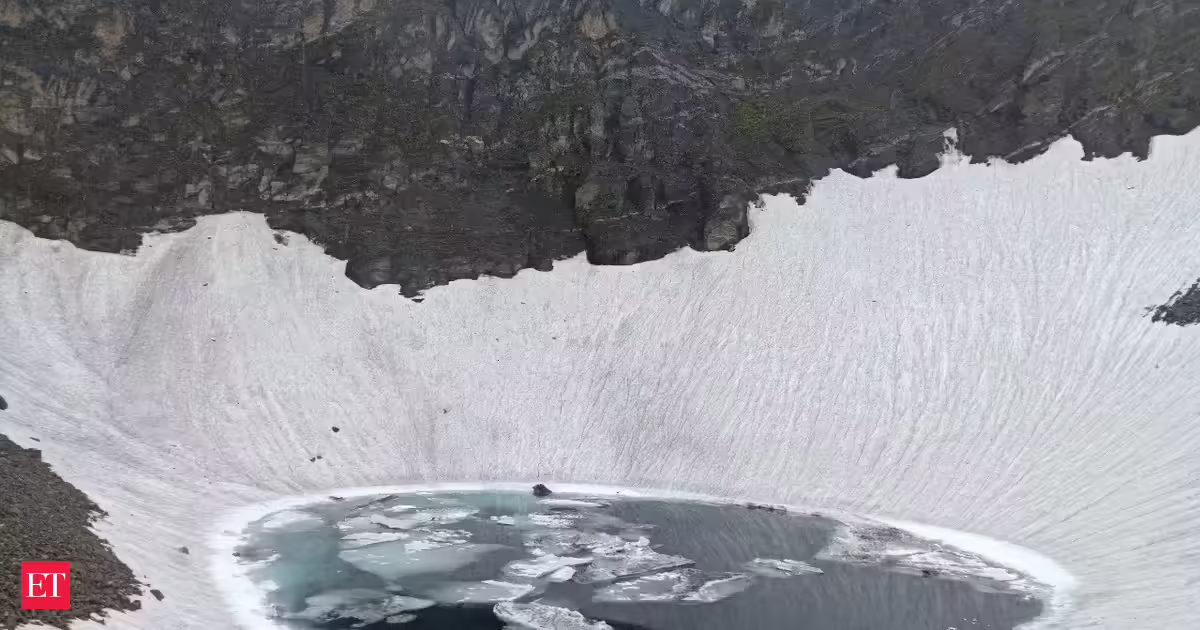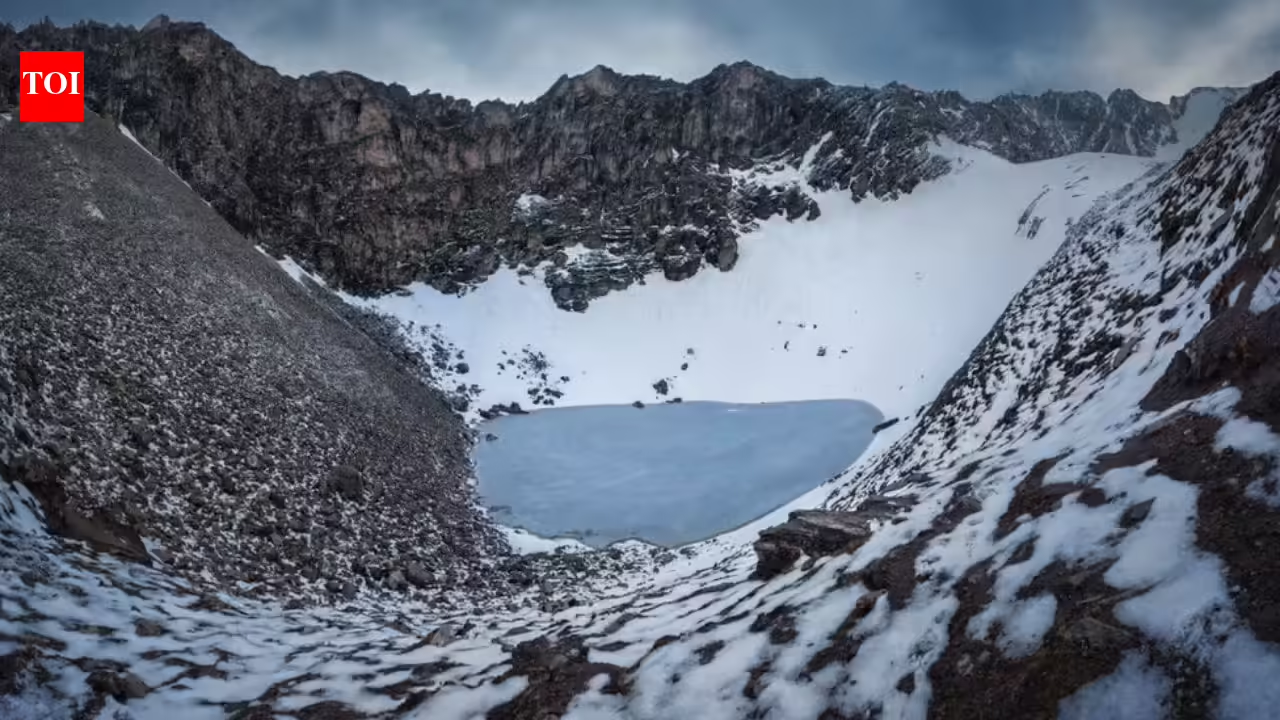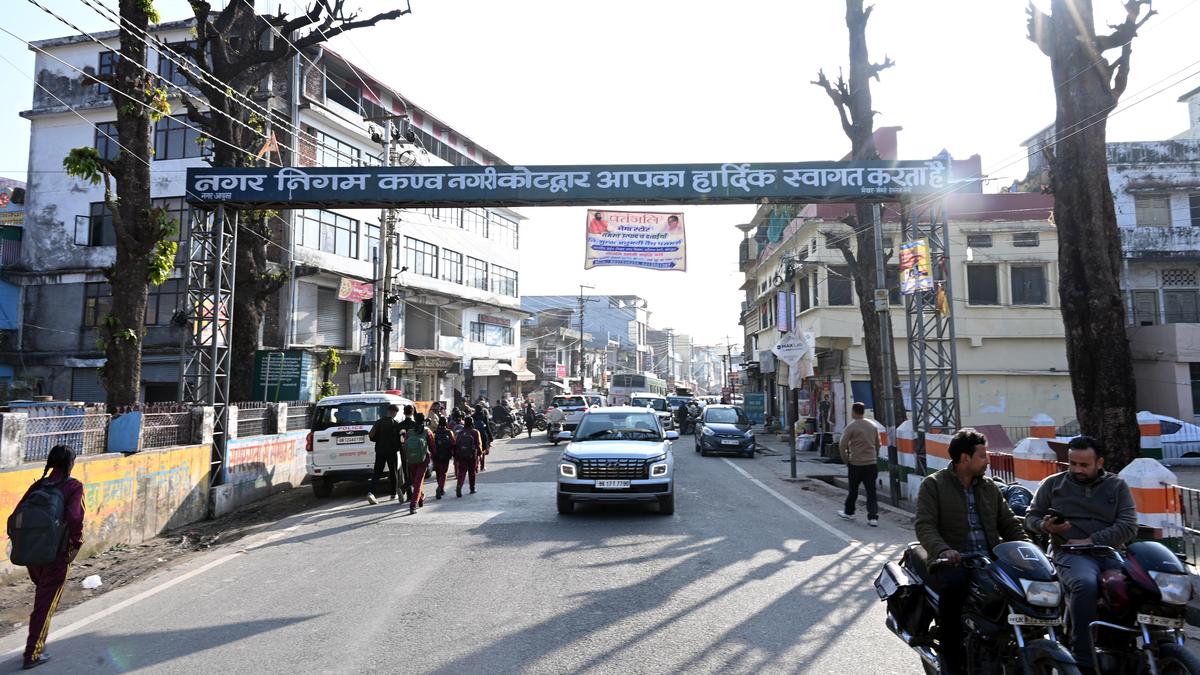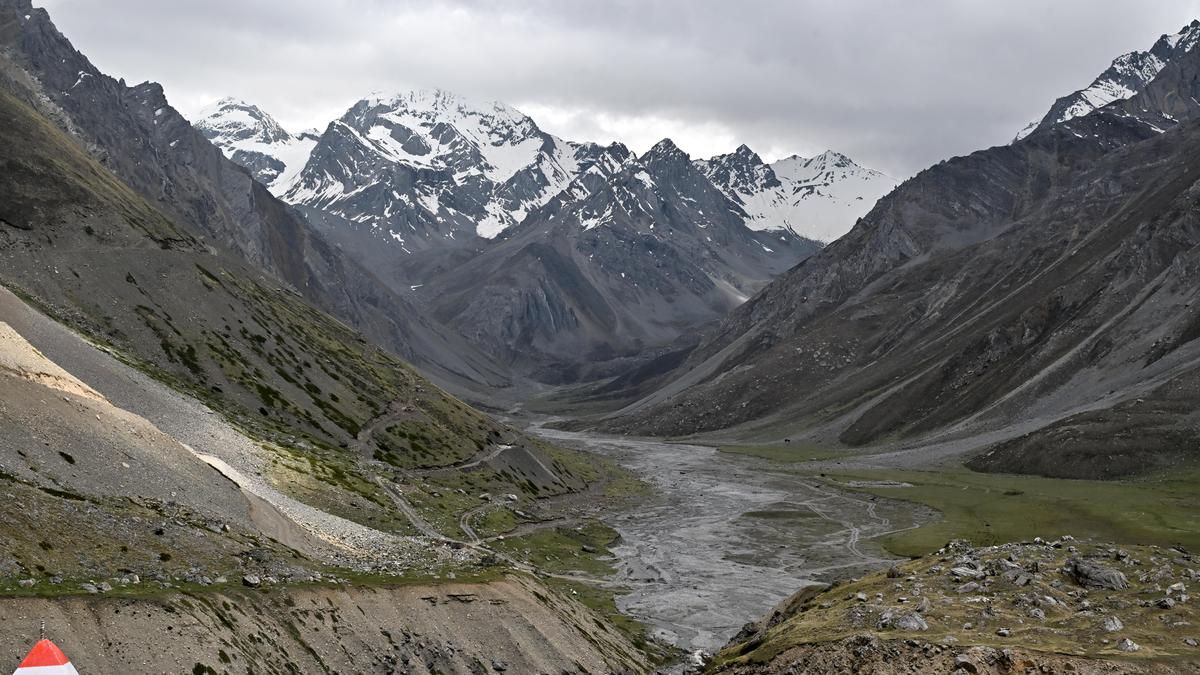
At an altitude of nearly 5,500 metres in the western Himalayas, where India’s frontier dissolves into Tibet and Nepal, rises Om Parvat. The mountain is famous for a natural snow formation that resembles the sacred Hindu symbol Om, which many devotees regard as a manifestation of Lord Shiva. The remote valley is inhabited by the indigenous Rung community who believe in the divinity of Om Parvat.This month, the community drew a line they felt could not be crossed. On June 15, members of the Shri Adi Kailash Group 2020 Trust, an organisation formed by Hindu devotees from Patna, Nashik, Jodhpur, Surat, and Noida to promote religious and charitable activities, arrived in Uttarakhand’s Nabidang. At this viewpoint on Om Parvat, they had planned to install a three-tonne Shivling. This was met with strong opposition from the Rungs. The Shivling, crafted in Rajasthan and transported by truck, was eventually stopped by the district administration at Garbhadhar, a key halt on the Kailash Mansarovar and Adi Kailash pilgrimage routes.The resistance by the Rungs was dubbed “anti-Hindu” by the members of Adi Kailash Group. But for the community, which inhabits the border valleys of Vyans, Darma, and Chaudans in the Pithoragarh district, behind the action lies a deeper anxiety. Rungs insist that they too are Hindus and devotees of Shiva, but they see and worship him in the natural form of mountains, glaciers, and rivers. Their objection, they say, was not to the Shivling, but to the idea of introducing man-made religious structures into a landscape they already regard as divine.“A mountain peak does not need a temple to become sacred. A river does not require an idol to be worshipped. The natural form is the deity for us,” said Prakash Singh Gunjiyal, 67, president of the Rung Kalyan Sanstha, a trust created for the upliftment of Rungs, who prefer calling themselves a community rather than a Schedule Tribe, though that is how they are mentioned in government records. Gunjiyal, who retired from the Central Bank of India and served in many tribal areas, said the community comprises some 21,000 people in India and abroad.“The fear is that once a religious structure enters a sacred landscape, the transformation rarely stops there. First a statue will come, then there will be fencing. Then a donation box will be placed, which will be followed by construction of a temple. Gradually, the land will be encroached upon and the entire landscape will change, leaving behind a distorted history and eroded culture,” he said.Contradictions withinOm Parvat and Adi Kailash are among the most revered pilgrimage sites in the Kumaon region. Until 2020, they were also among the most difficult to reach. A 90-100-kilometre trek from Dharchula, the closest town in the Pithoragarh district, took 7-10 days. Pilgrims had to navigate deep gorges, near-vertical cliff faces, and landslide-prone stretches. The journey itself was considered an act of devotion. That changed when the Border Roads Organisation built and opened roads to the region.“Since the roads have come up, these valleys have witnessed dramatic changes; there is growing religious tourism,” said Jaman Singh Routela, 76, who retired from the Reserve Bank of India. “The influx of devotees has created economic opportunities, but it has also posed serious challenges to the local environment and culture,” he said.Routela has trekked to Om Parvat and Adi Kailash many times in his youth. Today, like many others, he makes the journey in an SUV. “The difference,” he said with a smile, “is that I have chosen convenience without forgetting my culture.”
The Himalayas as a battleground of belief
Explore the conflict between Uttarakhand's Rung community and Hindu devotees over the sacred landscape of Om Parvat.
2,206 words~10 min read