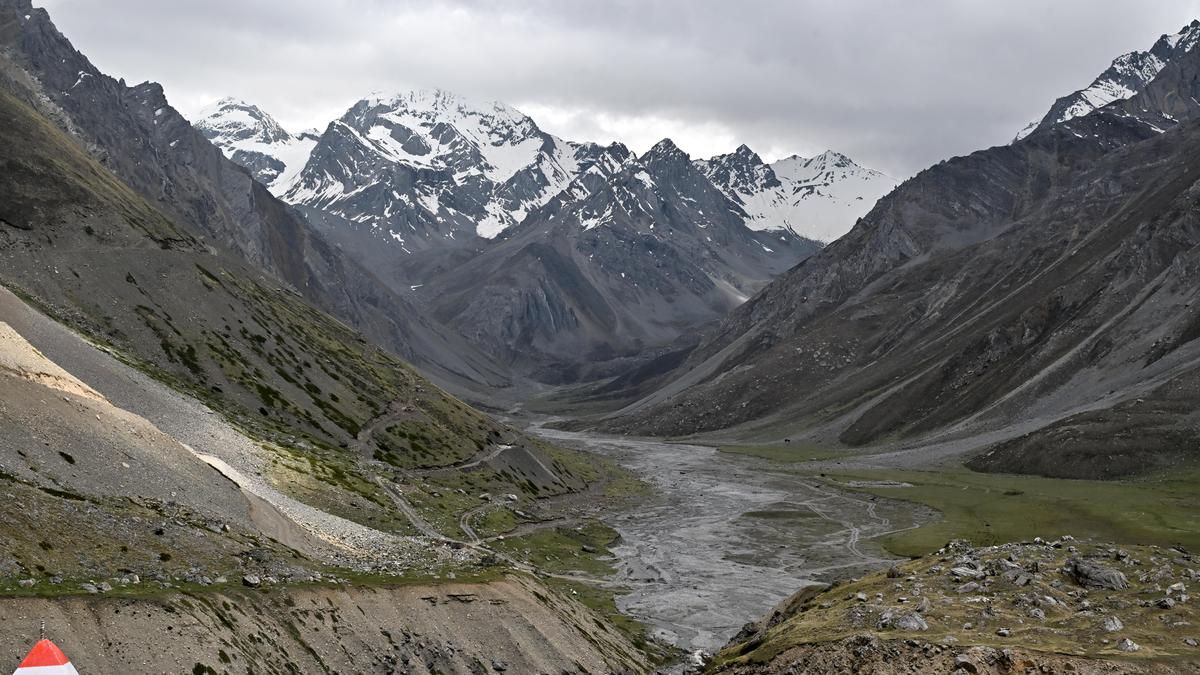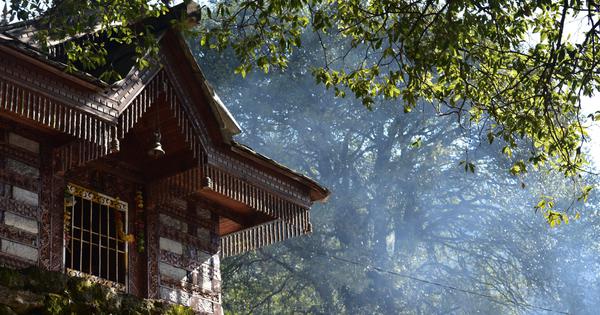
In Himachal Pradesh, the influence of traditional beliefs, religion and cultural practices continues to shape the conservation of forest land.Dev Vans, or sacred groves, are forest patches revered as the domain of local deities (devtas). Village customs strictly prohibit tree-felling, leaf collection, and the entry of alcohol or meat within its boundaries. Known as the “Land of Unknown Gods”, Himachal Pradesh spans 55,673 sq km and contains 514 documented sacred groves, often found across valleys and slopes, near settlements, temples and water sources.For generations, in Himachal Pradesh, it was faith, not legislation, that determined which forests would remain untouched. “Nobody wants to anger the god,” says Anurita Saxena, Principal at Rajkiya Kanya Mahavidyalaya, Shimla, who has spent decades researching the state’s cultural practices. “The customs allow certain forests to remain untouched, hence conserving nature.”The sacred groves continue to remain at the centre of community life, where rituals and festivals reinforce connections between people and nature, particularly in Himachal’s remote and elevated zones.Ceremonies unfold under their canopies, and community gatherings celebrate their presence tightening the bond between inhabitants and terrain. In numerous villages, sacred forests adjoin temples and fall under the watch of kardars or caretakers, governing access and rules.These belief-based practices have also helped preserve forest patches across generations, outside of formal conservation efforts.Sacred landscapes, not empty forestsCultural researcher Rahul Bhushan, who studies Himalayan communities, says sacred groves reflect an earlier worldview where forests were looked at as living, inhabited spaces rather than unclaimed land.“In areas such as Kullu, Upper Shimla and Kinnaur, every village maintains sacred forest zones that remain inviolate,” Bhushan says. Some are small clusters of trees marking the site of a local deity, while others historically functioned as village commons. “Before forestry departments arrived, each village managed its own woodland,” Bhushan says. “It provided resources, but it was closely tied to the village’s cultural and social practices.”A view of Chachogi village, surrounded by dense Himalayan forests. Many villages in this region historically protected nearby forest patches as sacred groves, where tree cutting and resource extraction were traditionally restricted due to religious beliefs tied to local deities. Image by special arrangement.Forests, he adds, were never imagined as vacant land. Belief systems described forest guardians like Bansheera, female spirits called Jognis, and various local deities tied to specific sites. “Certain places house particular energies,” Bhushan says. “That conviction alone generated restraint [to disturb forests].”This restraint, he contends, operated as an unwritten environmental governance system. “It was not conservation by modern definition, but it worked,” he says.Tourism, migration and changing relationsBhushan says these systems are weakening as tourism and migration enter mountain communities.“Tourism has altered young people’s relationship to land,” he says. “Previously, forests existed within a moral framework. Now they are increasingly understood economically.”As road networks expand and tourism enters previously isolated areas, land is more often viewed through the lens of economic opportunities. Hence, sacred groves that once inspired awe or fear sometimes appear as development barriers or potential spaces for parking areas, scenic overlooks or tourism-related construction.Migration has also changed cultural continuity. Younger generations, studying and employed beyond their villages, may participate less actively in ritual traditions, weakening customary traditions that protect land.From cultural erosion to climate vulnerabilityThe decline of sacred groves has implications beyond traditional practices. In mountain terrain like Himachal’s, forests play a critical role in absorbing monsoon rains, anchoring slopes and moderating water systems. Their fragmentation or removal can heighten exposure to climate change: flash floods, landslides, soil erosion.“In the past, people might not have discussed climate change,” he says, “But their behaviours helped contain [environmental] damage.” Now, even as cloudbursts, flash floods and landslides grow more common, those containment systems are vanishing.Villagers near preserved Dev Vans continue reporting differences during intense rainfall — gentler runoff, less soil loss and springs maintaining flow deeper into dry months. In contrast, locations where sacred groves have been carved for roadways or buildings frequently show accelerated runoff and heightened slope instability.“Earlier the springs used to flow throughout the year because the forest above the village was dense,” said Lokesh, a resident of Kullu district. “Now after trees have been cleared in some areas, the water reduces quickly after the monsoon.” According to another resident Anil, “Where the dev ban forest is still intact, the land is more stable. But where forests have been cleared, rainwater flows down quickly.” The local residents claim that where the sacred forest still stands, the springs nearby don’t dry up quickly.In parts of Seraj Valley and Lug Valley, sacred groves are often left untouched for generations, with villagers avoiding tree cutting or collecting forest produce from them. As a result, the groves frequently retain dense vegetation and older trees compared to surrounding forests.By contrast, areas experiencing rapid development in Kullu Valley and the expanding peri-urban zones around Shimla have seen growing forest fragmentation due to road construction, tourism infrastructure and settlement expansion. In such areas, hillsides cut for roads or hotels often lose their natural vegetation.A sacred site dedicated to a local deity in Rumsu village. Such devta sthans are often associated with nearby sacred groves, where traditional beliefs prohibit tree cutting and other disturbances. Image by special arrangement.Forests, faith and lawDespite their ecological function, most Dev Vans lack formal legal recognition. They are rarely classified as protected forests, biodiversity heritage sites or community forest resources. Since their protection derives from belief rather than statutory designation, they remain largely absent from formal government documents.This legal invisibility leaves them vulnerable to land use and infrastructure developments, including processes that may not require the same scrutiny as designated forests.Community resistance, uncertain futuresSome communities continue to resist these changes. In sections of Kullu Valley, local representatives have challenged tourism and infrastructure threatening sacred terrain, asserting that commercialising forested hillsides and territories risks both environmental harm and cultural breakdown.Elsewhere, elders and caretakers persist in enforcing inherited rules, though many fear belief alone may no longer suffice.As Himachal Pradesh confronts increasing climate variability and rapid development, Dev Vans pose difficult questions about what qualifies as conservation. Safeguarded across generations, these groves have operated as unplanned climate infrastructure managing water, securing land and absorbing hazard.Their future may depend on whether conservation frameworks recognise the environmental role of landscapes outside formal law.This article was first published on Mongabay.
In Himachal Pradesh, tourism and migration are altering beliefs that kept forests safe
Belief-based practices of sacred groves have helped preserve forest patches across generations.
1,050 words~5 min read