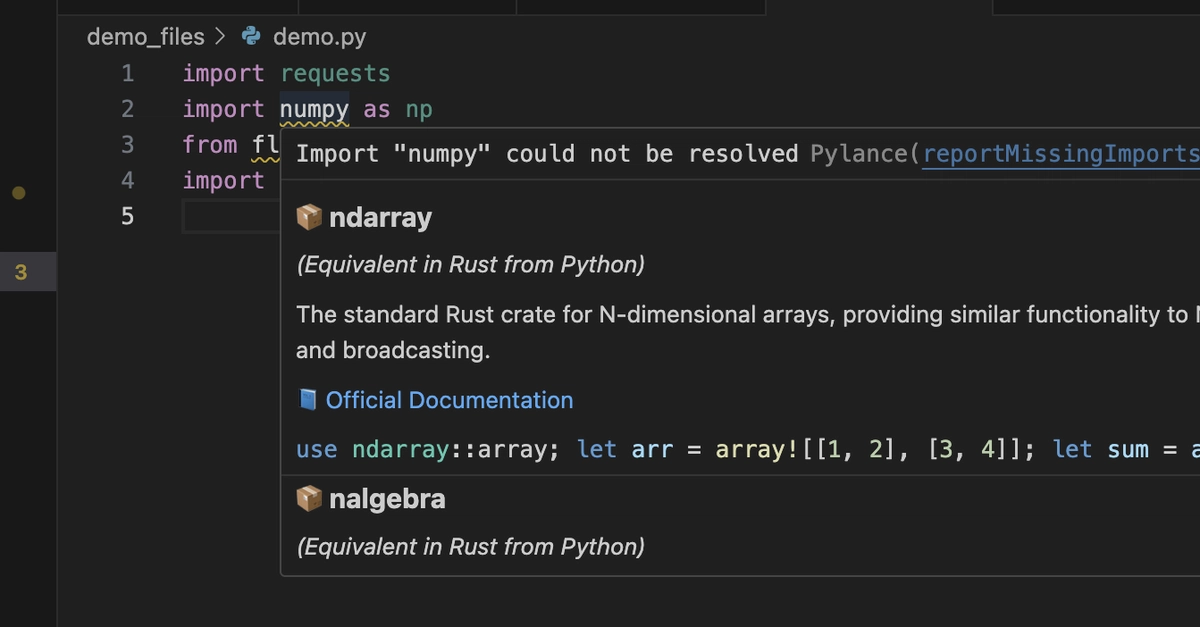
Porting Python code to Rust is one of the most common performance optimization plays in modern software engineering.
Whether you are rebuilding a bottlenecked web service (moving from FastAPI to Actix), accelerating a data pipeline (moving from Pandas to Polars), or rewriting a CLI utility, the performance gains are massive. Rust services routinely run 10x to 100x faster while consuming a fraction of the RAM.
But once you install Rust and set up your Cargo.toml, you hit the first roadblock: dependency mapping.
Python's PyPI ecosystem and Rust's Crates.io ecosystem look completely different. Python code relies on dynamic runtime patterns and heavy frameworks, whereas Rust prioritizes compiled type-safety, explicit memory management, and modular crates.
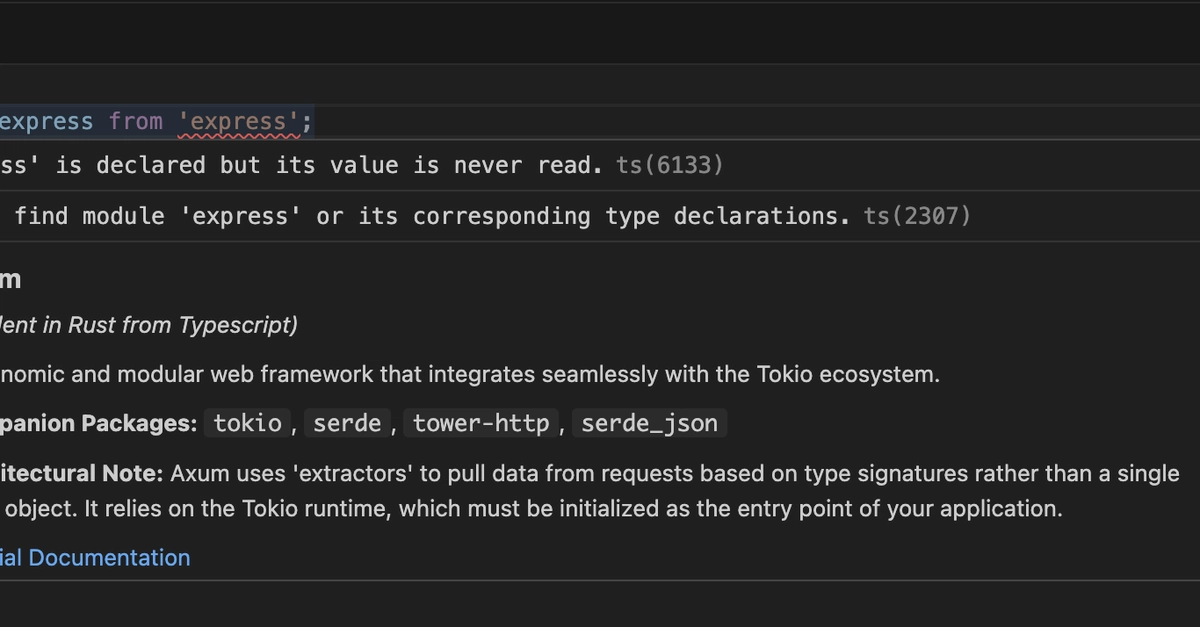
To save you hours of browsing crates.io, here is the ultimate cheat sheet for mapping common Python packages to their Rust equivalents, followed by a way to automate this directly inside your editor.