President Donald Trump signed his big tax and spending bill into law on July 4, 2025. The new law makes it harder to qualify for programs like SNAP. Some states are already seeing dramatic declines in SNAP enrollment as they implement the changes in the law. The impact of the huge tax and spending law, also known as H.R.-1, hit SNAP beneficiaries before the law was even a year old. Between the law’s July 2025 enactment and March of this year, “over 4 million people have dropped off SNAP,” said Ed Bolen, director of SNAP State Strategies at the Center on Budget and Policy Priorities. “That’s close to 10% of the overall case load.”The law now requires new groups of recipients — like adults without a disability up to age 64, who don’t live with dependent children, or who live with kids over age 14 — to prove they have a job. Bolen said the new requirements also apply to young adults aging out of foster care, veterans, and people experiencing homelessness.“Historically, we know people lose benefits when they’re subjected to that work requirement, because they’re unable to prove that they’re working enough hours to stay eligible,” he said.About 85% of SNAP households include a working adult, according to Census Bureau data.But Bolen said the drop in SNAP recipients is also due to new rules for states; they decide who qualifies and who doesn’t. Sometimes they make mistakes, like awarding a SNAP applicant too much or too little. Right now, the federal government pays for 100% of SNAP benefits. But if a state’s “error rate” reaches 6%, they have to pay part of that cost.That is something the states are taking great pains to avoid, according to Gina Plata-Nino, SNAP director at the Food Research and Action Center. States are imposing more requirements for benefits, but staffers are overwhelmed by the additional paperwork.“Their phones are not being picked up because historically state agencies have been underfunded,” she said.So, people who can’t get through to state agencies to do that verification lose their SNAP benefits. That happened to 32-year-old Da'jion Lymore. He moved to Georgia from Missouri in late 2024. He’d received SNAP benefits in Missouri but had to reapply in Georgia. He did get a benefit card there, but couldn’t log in to activate it. He couldn’t get through to his local SNAP office on the phone, so he went in person.“And then whenever I did go up there, they would hit you with a, ‘Oh, you’re supposed to call or try to make an appointment,’” he said. “And I was like, ‘No one’s answering the phone.’”Lymore said he never could activate that card, even though he tried for a year. The card is expired now. He thinks it had about $900 on it — money he could have used to feed his 7-year-old son, Tobias. Lymore had to leave Georgia and move in with his parents in Kansas after he had a toe amputated due to his diabetes and lost his job helping manage a trailer park. Now, he has to apply all over again for SNAP in Kansas, while continuing to look for work. In the meantime, he’s eating less to save money. “I do a lot of soup bases, as well — so tomato soup, chicken noodle soup. Fruit. The crackers with my soup too kind of helps fill up, as well,” he said.Marketplace reached out to the Department of Agriculture, which runs SNAP, to ask why so many people have dropped off of it. They wouldn’t do an interview. A USDA spokesperson did provide a comment, however, which said that households receiving SNAP are subject to recertification and ”therefore, the number of individuals receiving benefits is constantly changing.”
A year since Trump's big tax bill, SNAP enrollment has fallen dramatically
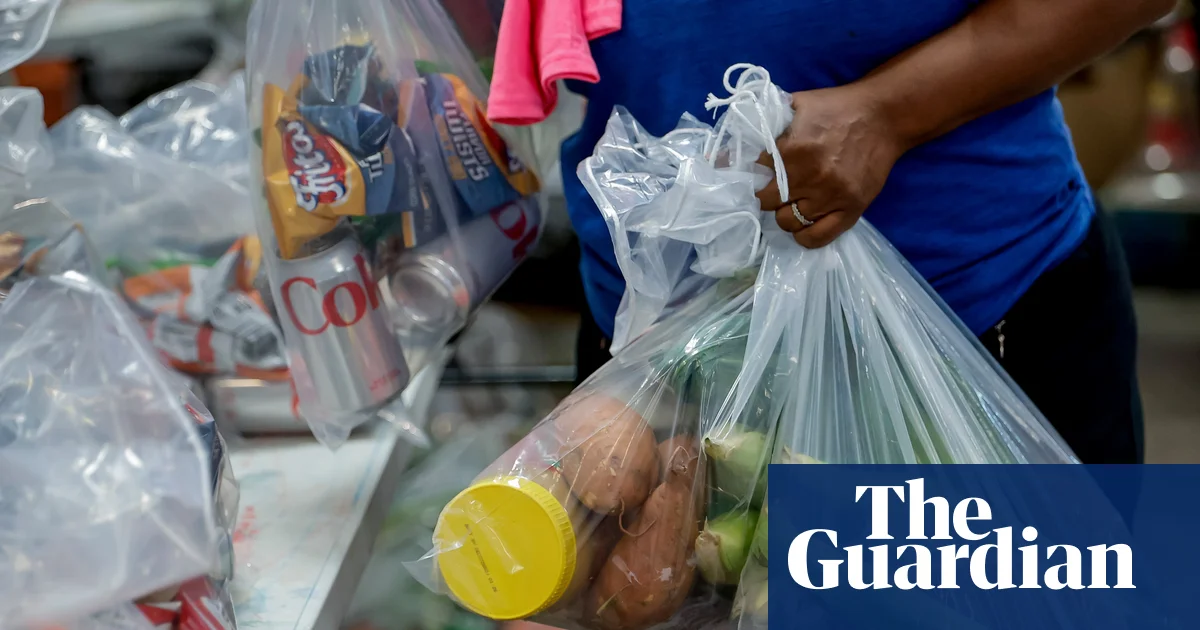
Even if they’re employed, people eligible for SNAP benefits may struggle to prove they’re working enough hours to meet work requirements.
622 words~3 min read