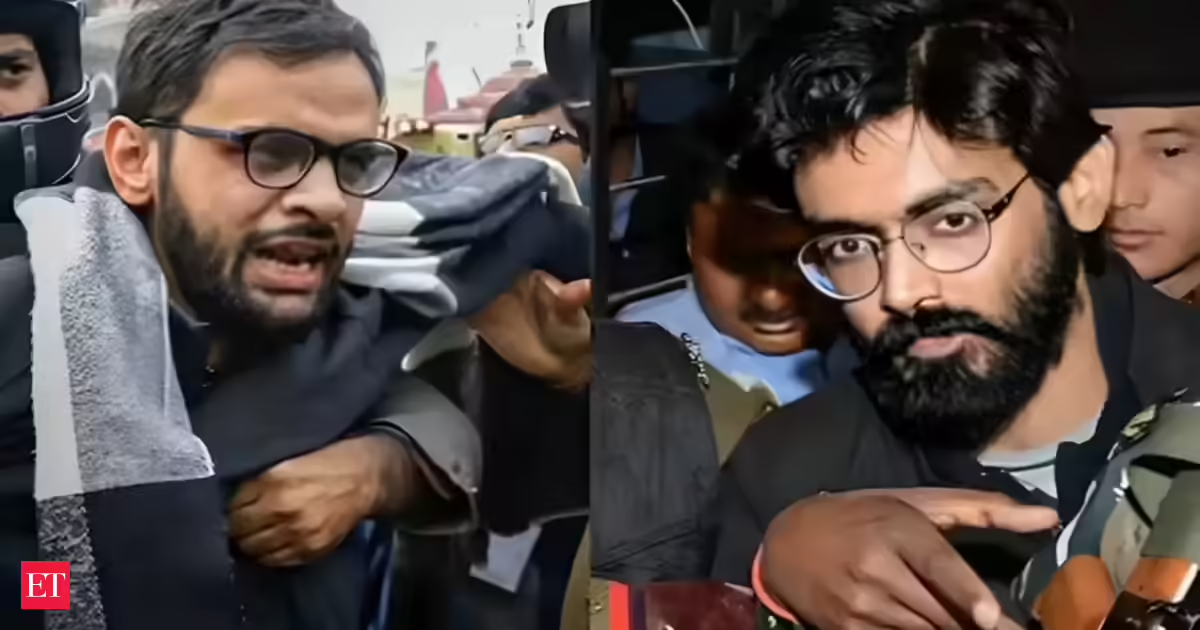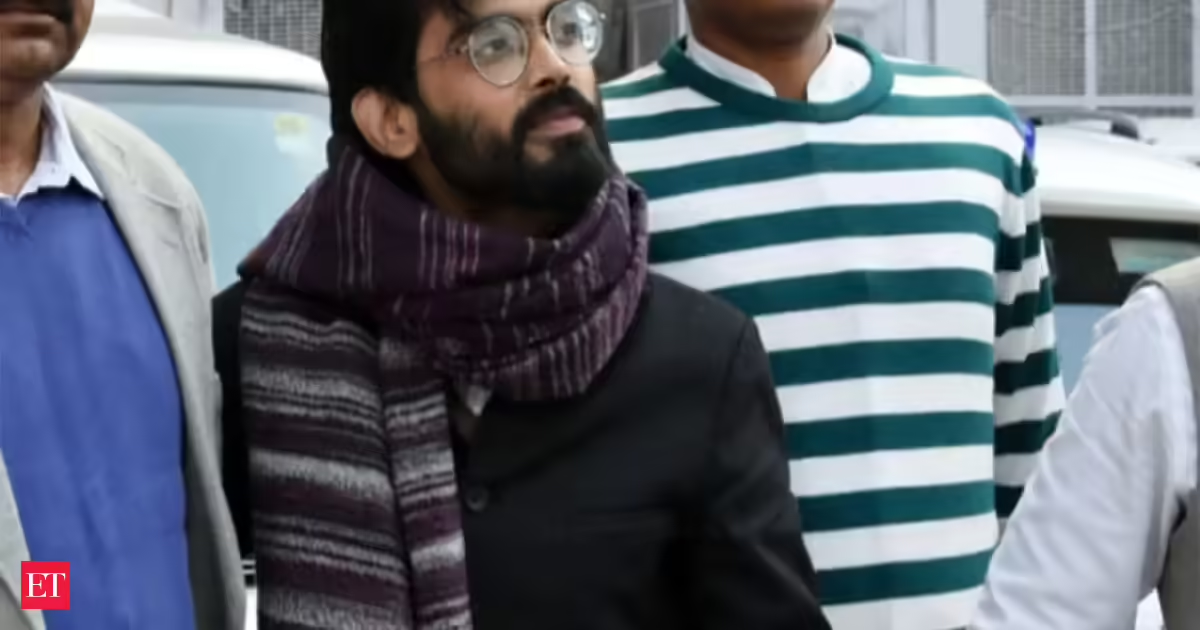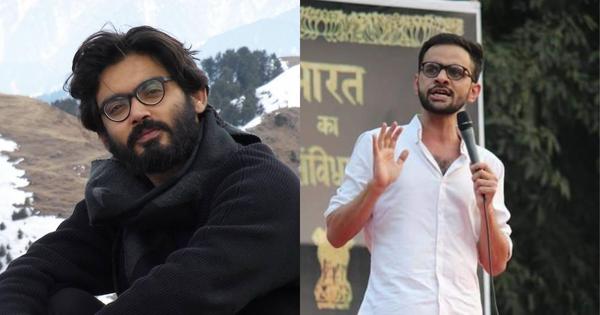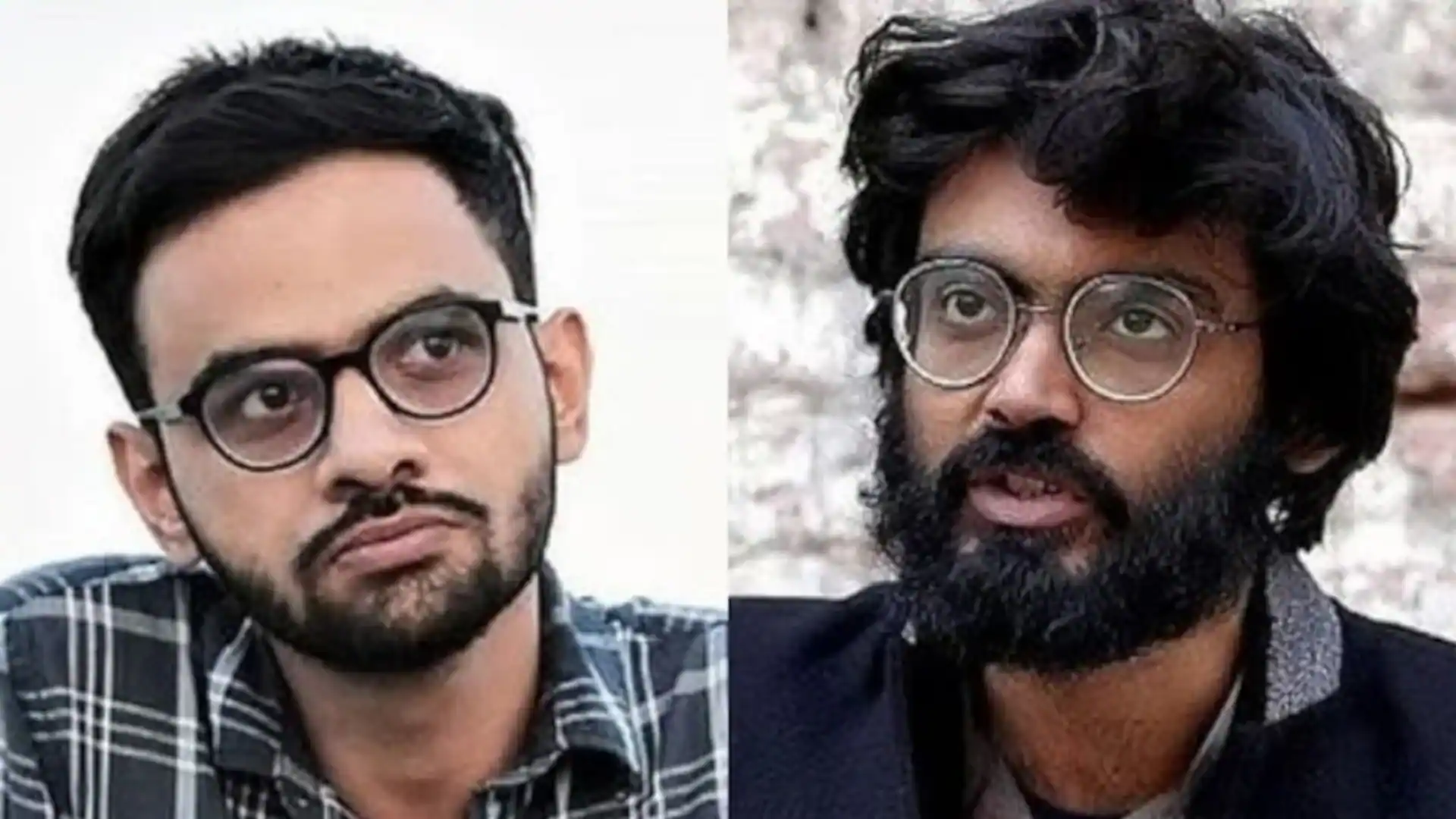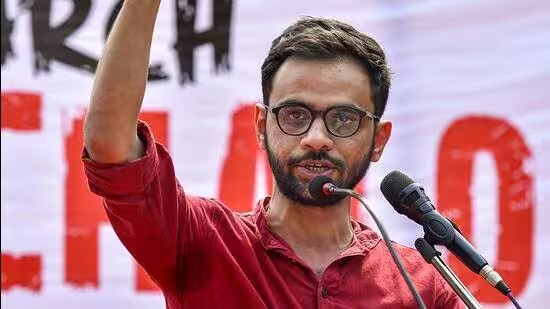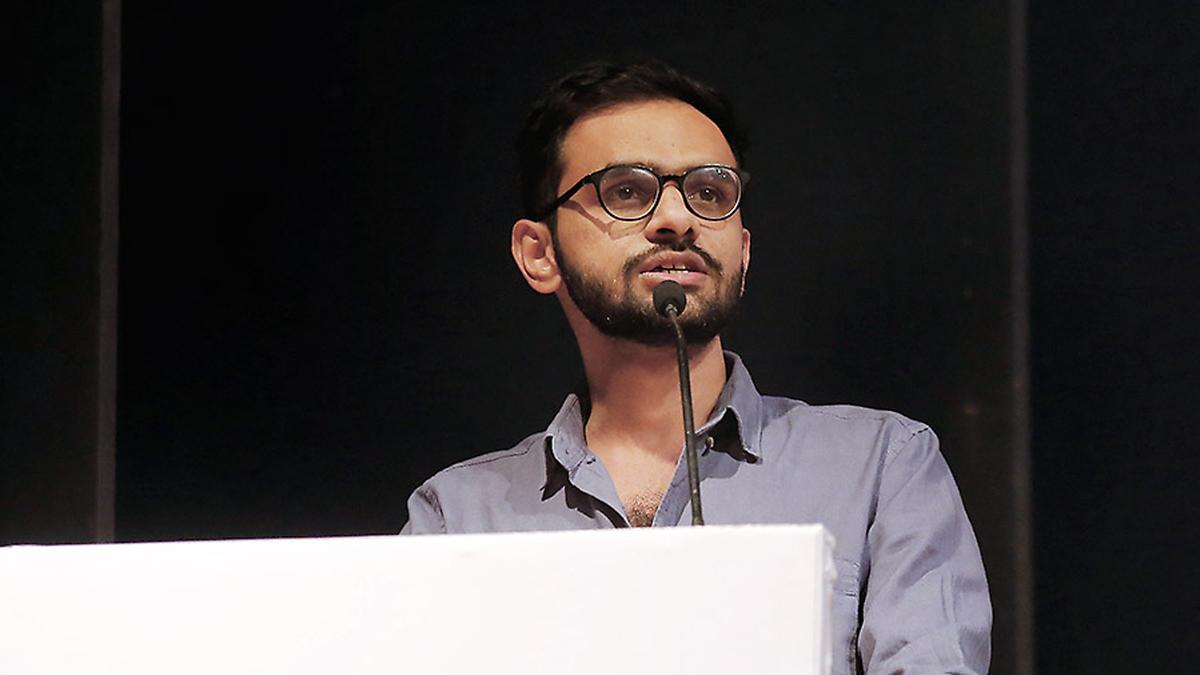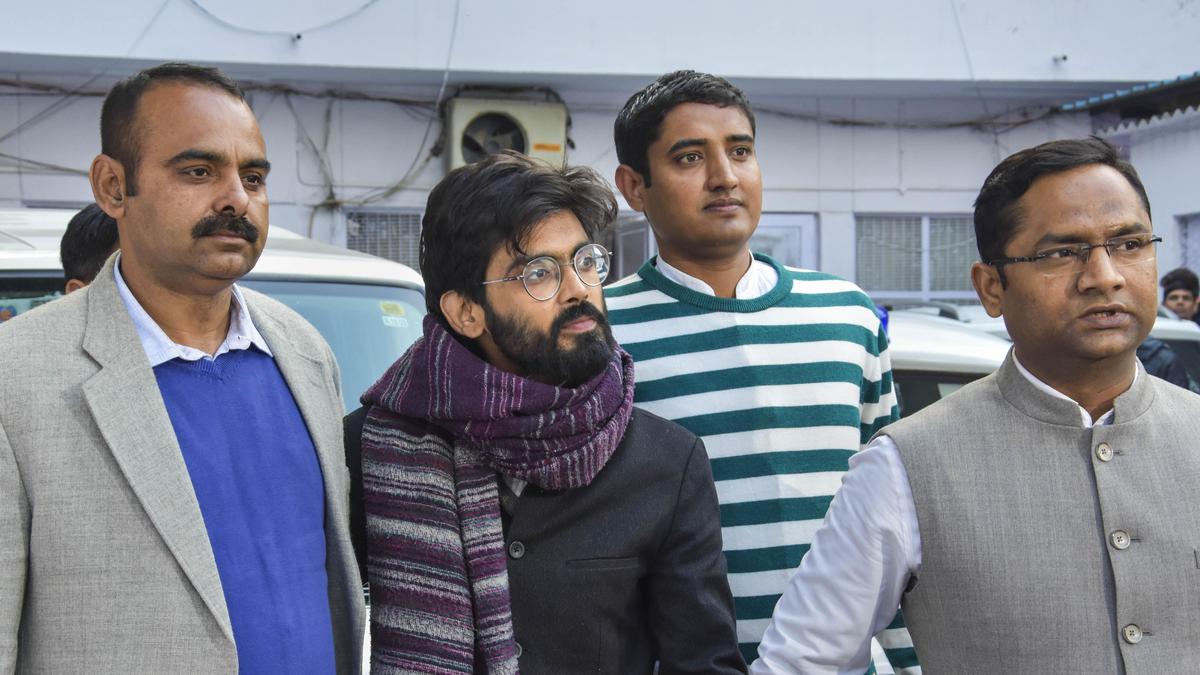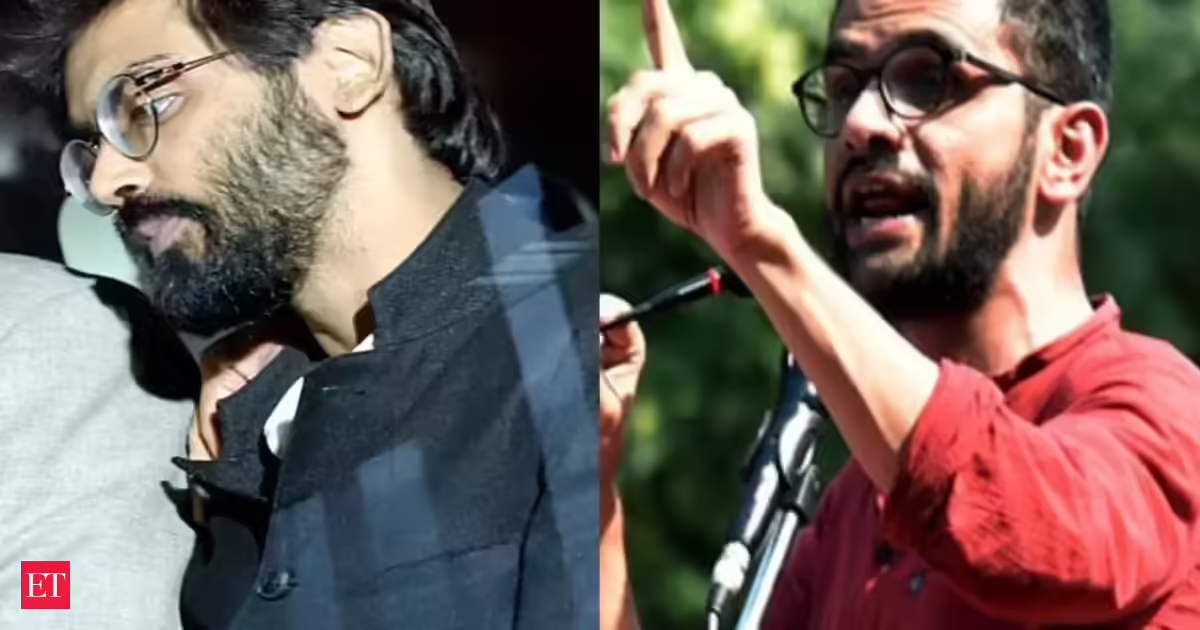
When, earlier this year, the Supreme Court of India denied bail to Umar Khalid and Sharjeel Imam in the 2020 Delhi Riots cases (while granting bail to five other individuals in the same case), one key question that arose was this: “how long is too long” for people to be kept in jail without being found guilty of an offence? At the time of the Court’s judgment, Umar Khalid and Sharjeel Imam had spent more than five years in jail without trial; at the time of writing, that period is approaching six years.Bail, delay, and rightsIn its own prior judgments, the Court had noted that an extended delay in trial would trigger an accused’s right to personal liberty under Article 21. Thus, even though the Unlawful Activities (Prevention) Act (UAPA) has strict requirements for delay, these statutory restrictions could not override the constitutional (and indeed, human) right to personal liberty.However, in denying bail to Umar Khalid and Sharjeel Imam, another Bench of the Court noted that a delay in the trial could not create an iron-clad right to bail, but would have to be weighed against other factors such as the gravity of the offence and which of the parties was “responsible” for the delay. With respect, these observations appear to miss the point. Issues such as the gravity of an offence are factors used to determine, in the first instance, whether or not a case for bail is made out. To then invoke the gravity of the offence—which, at the stage of bail, is only an allegation made by the state — to override the question of delay essentially creates a sliding scale under which certain individuals can be kept in jail for decades simply because they have been “accused” of grave offences.Indeed, this has happened: people accused under the UAPA have been kept in jail for more than two decades before eventually being acquitted, with the best years of their lives robbed from them. Indeed, the very fact that this has happened on more than one occasion ought to have given the Court pause.Nor does the argument that the accused themselves might be responsible for delaying the trial hold any water. Whatever applications an accused (or, for that matter, the state) may make, ultimately it is the judge who controls the courtroom and the pace of the trial, and it is the judge upon whom the ultimate responsibility rests to ensure that trials are completed within a reasonable timeframe.Indeed, it was clear that the Court itself recognised some of these issues when, in a rare move, another two-judge Bench recently openly criticised the Delhi Riots bail rejection as being contrary to established precedent and reiterated the fundamental principle that, under a Constitution committed to the rule of law, individuals cannot be incarcerated indefinitely without a trial.In response, and in another case, the Delhi Riots Bench “referred” this question to the Chief Justice to constitute a larger Bench to resolve. With respect, the very fact that the Supreme Court is effectively debating whether people who have spent more than half a decade in jail (the amount of time that another famous political prisoner, Captain Alfred Dreyfus, did) should or should not be released, is a cause for consternation.Bail and legal inconsistencyIn the meantime, at the level of the trial court and the High Courts, conflict and inconsistency in judicial decisions continue to persist. Recently, the High Court of Delhi (correctly) granted bail to the Kashmiri human rights activist, Khurram Parvez, who had been incarcerated for more than four years without trial. This length of time in prison without trial weighed heavily with the High Court in deciding to grant bail. What is curious, however, is that the judge who (correctly) granted Khurram Parvez bail had denied bail in the Delhi Riots cases the previous year, when the accused in that case had already spent more than four years in jail. Nor is this the only instance of the same judge speaking with different judicial voices: in the Delhi Riots cases themselves, on the same underlying facts, the same judge delivered opposing bail judgments a year apart.It is trite to say that no case is identical to the other. On an issue as basic as pre-trial incarceration, repeated inconsistencies across cases and courts undermine the rule of law and, ultimately, damage the cause of fundamental rights and individual liberty. These questions assume particular significance because laws such as the UAPA, in particular, have an undeniably political character, and it has been demonstrated across the world that states are only too happy to interpret these laws in a way that blurs the line between political dissent and what the law defines as “terrorism”. Recent attempts in the United Kingdom and the United States around dissent linked to Israel’s genocide in Palestine are examples of this.What the judiciary must ensureIn such a context, it becomes particularly important for the judiciary to ensure that such laws are not weaponised. While legal interpretation is subjective, one thing is — and should be — crystal clear: that the state cannot keep people behind bars for years without trial. It makes a mockery of having a system based on the rule of law, and one that — to use the old adage — entrenches the process as the punishment.It is unclear whether — or when — the Court’s larger Bench will opine on the issue. In the meantime, however, there remain contentious UAPA cases, where individuals continue to be imprisoned without trial, and their time spent in custody continues to increase with no resolution in sight. Indeed, one such case is that of Umar Khalid and Sharjeel Imam, the last two individuals among the accused student activists who remain in custody in the “Delhi Riots cases”. After the denial of bail by the Supreme Court, the case is once again coming up before the trial court this week; in the meantime, five years in prison have turned into six, and the cost — both to the lives of the imprisoned individuals and to the rule of law — has continued to become steeper.Ultimately, therefore, this issue is both about individual human lives and about our commitment as a society to human and democratic values. As these cases continue to arise, the courts will once again have an opportunity to reaffirm these values, whether in individual bail cases before trial courts or when it comes to laying down the law before the Court. It is to be hoped that this happens, and that the cycle of endless imprisonment without trial is broken.Gautam Bhatia is a Delhi-based lawyer
The right to a fair trial at the crossroads
The issue of the denial of bail and absence of trial in the Delhi Riots cases concerns not only the lives of the individuals affected but also our collective commitment to rights and democratic values
1,100 words~5 min read