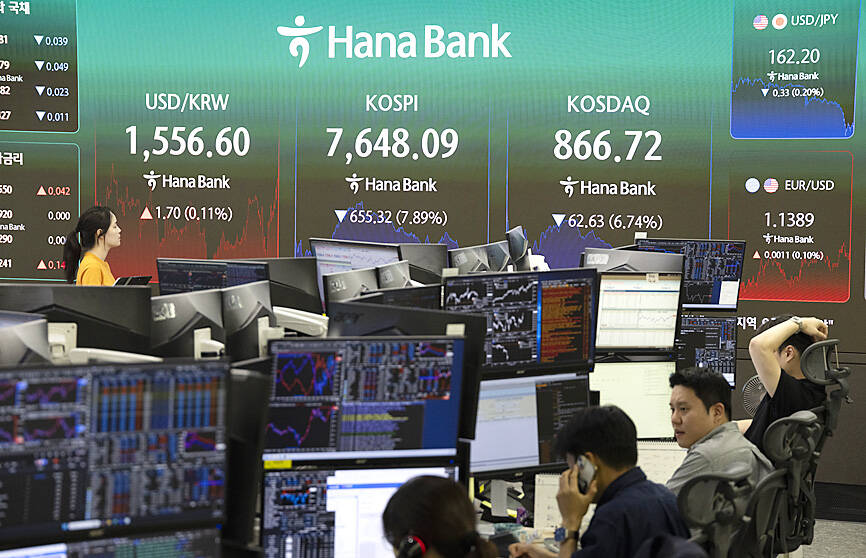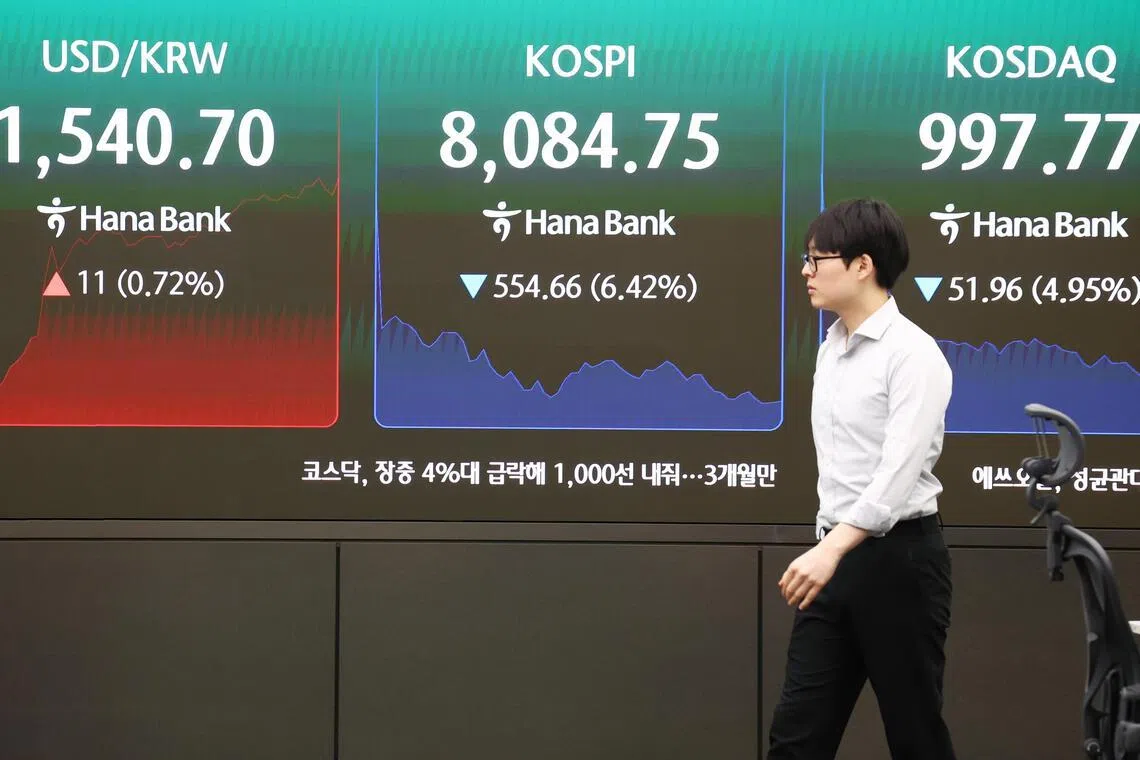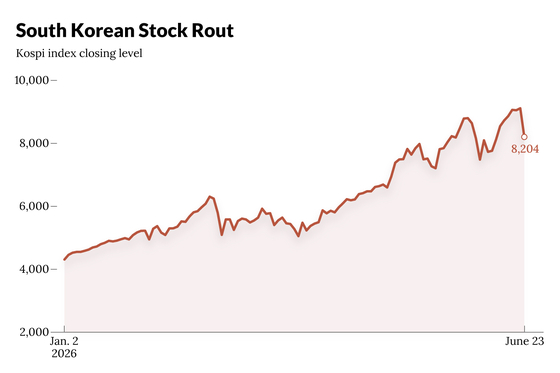
AI-linked markets in South Korea and Taiwan fell on Thursday, with Seoul’s benchmark dropping as much as 8 per cent, as concerns over potential overcapacity prompted investors to pare semiconductor holdings.South Korea’s KOSPI, home to many companies tied to the AI infrastructure buildout, has been volatile this year. Thursday’s loss was the worst since June 23.A blistering AI rally over the past year has also made the sector vulnerable to sudden swings in investor sentiment.Chipmakers Samsung Electronics and SK Hynix shed 9.1 per cent and 14.6 per cent, respectively.US chipmakers dragged the benchmarks there after media reports said Meta Platforms had plans to sell access to its AI computing power and models. The reports fuelled concerns that the company may have overbuilt capacity, setting the stage for the selloff in Asia.Sentiment soured further on media reports that Apple was considering sourcing memory chips from two Chinese manufacturers, a move that could challenge South Korean chipmakers.Taiwan stocks also dropped as much as 2 per cent, dragged lower by chipmaker TSMC, which fell 1.6 per cent. The index later ended 0.6 per cent lower.“Directionally, I think the selloff is overdone. The structural demand case for AI hardware doesn’t change in a single day,” said Dilin Wu, research strategist at Pepperstone.“But the market needs earnings season to rebuild conviction; TSMC’s July 16 results are the nearest test.”Globally, investors welcomed signs of progress in indirect talks between the US and Iran after Qatar said negotiations centred on the Strait of Hormuz had advanced, calming fears of disruptions to the vital oil shipping route.Markets also took heart from comments from Federal Reserve Chair Kevin Warsh and other policymakers pointing to a more even inflation outlook.Focus now shifts to Thursday’s US non-farm payrolls data as investors seek fresh clues on the interest-rate outlook.Moves in regional currencies were muted against a broadly unchanged dollar index.The rupiah was pinned near the 18,000-per-dollar level for a second consecutive session, while stocks gained 1.4 per cent.“Sentiments also benefited from the government’s moves to improve banking system liquidity to encourage credit growth and a decision to scale back allocations towards the flagship meals programme,” DBS economist Radhika Rao said.Philippine equities advanced 0.9 per cent, while the peso was flat. Malaysian stocks added 0.3 per cent, while the ringgit advanced 0.3 per cent.In Tokyo, the yen suddenly surged against the dollar, with traders on alert for possible intervention by Japanese authorities to support the battered currency.It was not immediately clear what drove the market move or whether Japanese authorities were in the market. The surge appeared smaller than those after previous bouts of intervention.The yen was last trading near 161.71 per US dollar.Published on July 2, 2026
South Korea, Taiwan stocks fall as investors reassess AI bets; FX muted
Overcapacity fears in chip sector prompt sharp falls in KOSPI and TSMC
445 words~2 min read