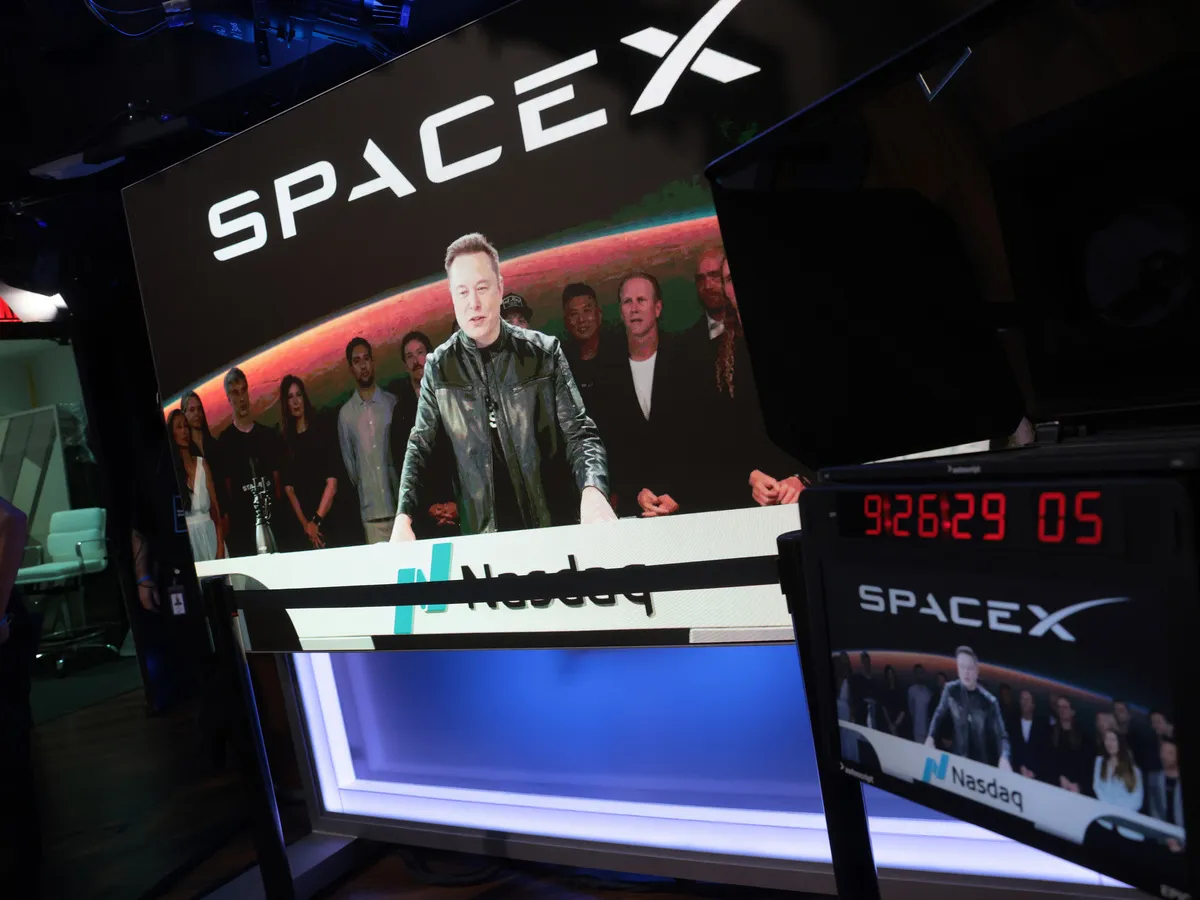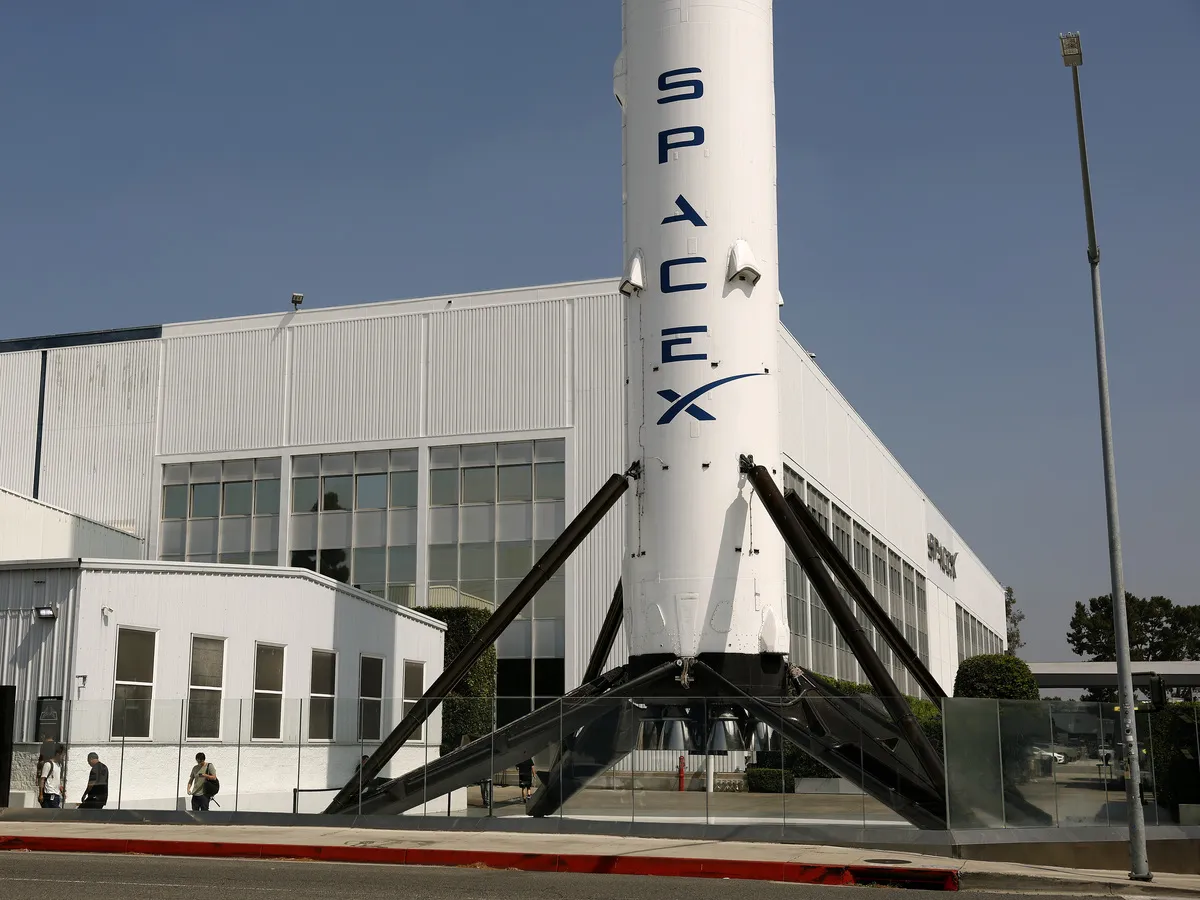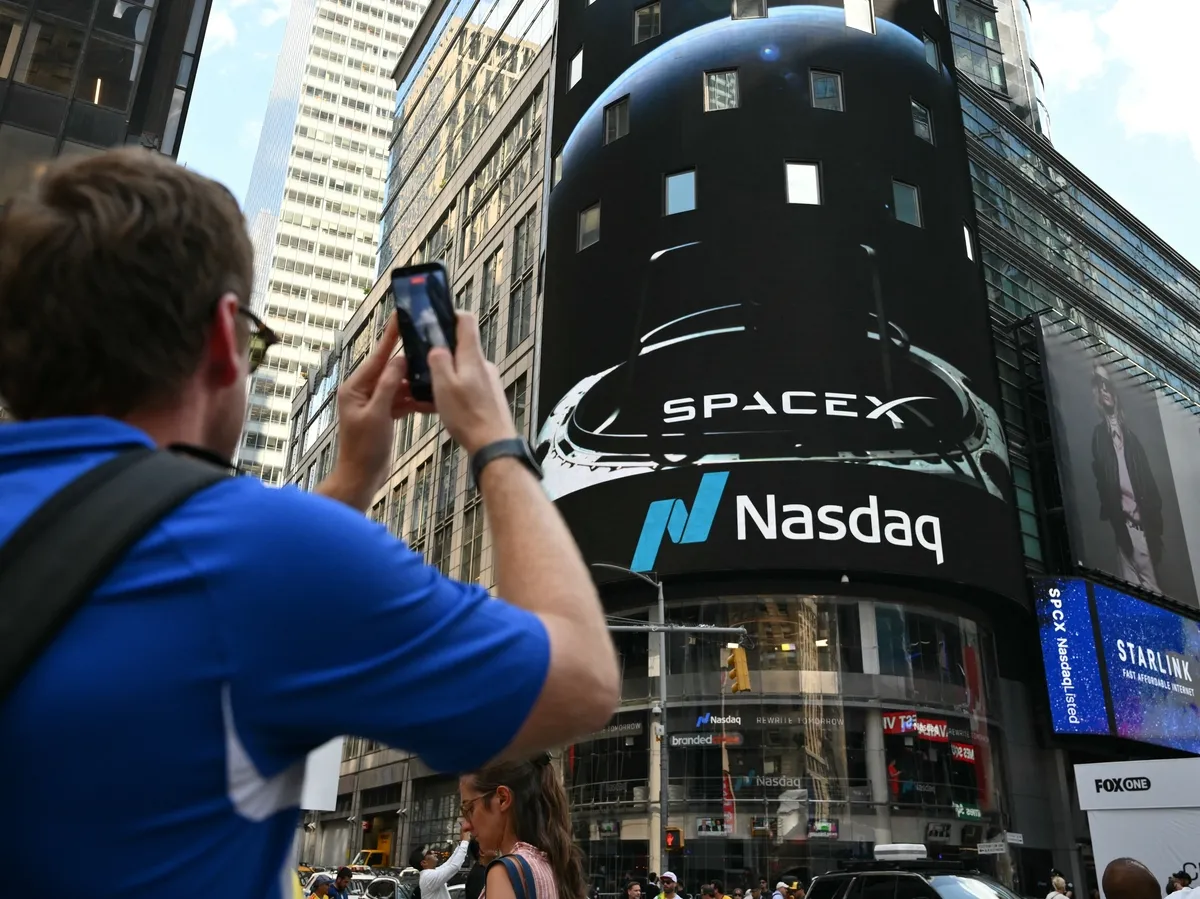
Skip to Content News Archives Economy Energy Oil & Gas Renewables Electric Vehicles Mining Commodities Agriculture Real Estate Mortgages Mortgage Rates Finance Banking Insurance Fintech Cryptocurrency Work Wealth Smart Money Wealth Management Investor Personal Finance Family Finance Retirement Taxes High Net Worth FP Comment Executive Women Puzzmo Newsletters Financial Times Business Essentials More Innovation Information Technology FP500 Podcasts Small Business Lives Told Tails Told Shopping Financial Post Store Obituaries Place a Notice Advertising Advertising With Us Advertising Solutions Postmedia Ad Manager Sponsorship Requests Classifieds Place a Classifieds ad Working Profile Settings My Subscriptions Saved Articles My Offers Newsletters Customer Service FAQ News Economy Energy Mining Real Estate Finance Work Wealth Investor FP Comment Executive Women Puzzmo Newsletters Financial Times Business Essentials HomeInvestorSpaceX analyst debut set to test US$2.2 trillion valuationInvestors in SpaceX have been flying blind since the record-breaking IPO last month. Next week that should changeAuthor of the article: You can save this article by registering for free here. Or sign-in if you have an account.SpaceX is challenging to value because it isn’t easily comparable to traditional aerospace companies, telecommunications providers, cloud infrastructure or AI businesses. Photo by ANGELA WEISS/AFP via Getty ImagesInvestors in SpaceX have been largely flying blind since the company’s record-breaking IPO last month, with few financial projections to help determine what the stock is actually worth.Subscribe now to read the latest news in your city and across Canada.Exclusive articles from Barbara Shecter, Joe O'Connor, Gabriel Friedman, and others.Daily content from Financial Times, the world's leading global business publication.Unlimited online access to read articles from Financial Post, National Post and 15 news sites across Canada with one account.National Post ePaper, an electronic replica of the print edition to view on any device, share and comment on.Daily puzzles, including the New York Times Crossword.Subscribe now to read the latest news in your city and across Canada.Exclusive articles from Barbara Shecter, Joe O'Connor, Gabriel Friedman and others.Daily content from Financial Times, the world's leading global business publication.Unlimited online access to read articles from Financial Post, National Post and 15 news sites across Canada with one account.National Post ePaper, an electronic replica of the print edition to view on any device, share and comment on.Daily puzzles, including the New York Times Crossword.Create an account or sign in to continue with your reading experience.Access articles from across Canada with one account.Share your thoughts and join the conversation in the comments.Enjoy additional articles per month.Get email updates from your favourite authors.Create an account or sign in to continue with your reading experience.Access articles from across Canada with one accountShare your thoughts and join the conversation in the commentsEnjoy additional articles per monthGet email updates from your favourite authorsSign In or Create an AccountorThat changes next week, when the quiet period ends for analysts at banks that underwrote the US$86 billion initial public offering, which was led by Goldman Sachs Group Inc. Morgan Stanley, Bank of America Corp., Citigroup and JPMorgan Chase & Co., with 18 other banks participating. Starting Tuesday, investors should expect a pile of new research, price targets and growth estimates, all of which should help shed light on where the shares are likely headed in the near term and over the next few years.“Everyone’s talking about what this company could be in 2030 and not what they can be for the next 12 months,” said Art Hogan, chief market strategist at B. Riley Wealth. “It’s an investment where you’re looking out to a brighter future, but you’re still looking out four years.”Canada's best source for investing news, analysis and insight.By signing up you consent to receive the above newsletter from Postmedia Network Inc.A welcome email is on its way. If you don't see it, please check your junk folder.The next issue of Investor will soon be in your inbox.We encountered an issue signing you up. Please try againThe problem with figuring out what SpaceX is worth lies in the difference between its current numbers and what is expected in the not-too-distant future. The company, which is officially called Space Exploration Technologies Corp., is expected to report about US$36 billion in revenue in 2026, based on a small number of early estimates from analysts at firms that did not participate in the IPO. And it isn’t profitable.SpaceX’s price-to-sales ratio is 41 times revenue projected over the next 12 months, according to data compiled by Bloomberg. To get a sense of how extreme this is, the most expensive stock in the S&P 500 index based on this metric is Palantir Technologies Inc., which trades at 32 times. Apple Inc. and Microsoft Corp. are both priced below nine times estimated sales.“There’s so much future value of the company tied up in revenue streams that are still to some extent distant,” said Robert Gruendyke, senior portfolio manager for the growth equity team at Allspring Global Investments. “It’s going to lead to much more volatility in the stock than most more established, mature businesses.”To square SpaceX’s current value Wall Street has been talking up its aggressive growth path. The research team at Goldman sees the company’s total revenue hitting US$474 billion in 2030. Evercore ISI analysts expect sales to top US$1 trillion by 2031. Morgan Stanley analysts said revenue could reach US$3.4 trillion in 2040, according to a report in the Wall Street Journal.“I may not be alive to see that,” said Vikram Rai, a portfolio manager and macro trader at First New York. “When you throw projections so far out in the future, there’s no way to check it.”This is why the research initiations will be important, because they should include more concrete near-term projections and figures for investors to compare as they assess what has quickly become one of the hottest stocks in the market.The shares went public at US$135 on June 11, opened for trading at US$150 a day later, and immediately took off. On June 16, SpaceX closed at US$201.80 with a market capitalization of US$2.6 trillion, making it the sixth-largest company in the world. Then, the momentum shifted. On Wednesday, the stock closed at US$157.54 with a market capitalization of less than US$2.1 trillion, down 22 per cent from its high and not far from where it started trading after the IPO.So far, Wall Street is mostly bullish on the stock. Eight of the 12 analysts tracked by Bloomberg rate it a buy. Individual targets for the share price over the next 12 months range from US$165 to US$401, and the average of US$223 is 41 per cent above where they closed Wednesday.Published estimates have SpaceX turning a slight profit in 2028, with revenue quadrupling to US$160 billion. The company could see an 800 per cent jump in sales by 2030, but its stock will still be more expensive than its megacap peers that generate many times more in revenue, according to Bloomberg Intelligence analysts led by George Ferguson.“SpaceX’s valuation is stretched despite revenue and profit seen rising sharply in the next five years, based on our model,” they wrote in a research note on June 30. “Even as sales rise almost 9x and Ebitda 17x to 2030, our model shows valuation exceeding 2026 metrics for moneymakers like Microsoft (Corp.), Meta (Platforms, Inc.), (Alphabet Inc.’s) Google and Amazon (Amazon.com, Inc.).”That helps explain why some analysts are skeptical about SpaceX. Morningstar’s Nicolas Owens has a sell rating on the stock. Argus initiated coverage at hold, saying it will likely be years before SpaceX’s multiple lands at a more normal level. And CFRA analyst Keith Snyder initiated coverage at sell with a US$115 12-month target, below the IPO price, citing the company’s elevated market valuation and significant capital intensity. SpaceX facilities in Hawthorne, California, US, on Monday, April 13, 2026. Photographer: Ethan Swope/Bloomberg“The current investment case requires investors to underwrite several difficult outcomes at the same time,” Snyder wrote in a note on June 12. SpaceX is challenging to value because it isn’t easily comparable to traditional aerospace companies, satellite operators, telecommunications providers, cloud infrastructure manufacturers or AI model businesses.“SpaceX is an exceptional company, but exceptional companies can still make unattractive investments if the valuation assumes too much future success,” he wrote.To make matters even more interesting, the analysts’ quiet period ends on the same day that SpaceX is being added to the Nasdaq 100 index, which will lend considerable support to the stock considering the number of funds that track the tech-heavy benchmark. Bloomberg Intelligence estimates that it will drive US$4.9 billion in share purchases.The timing is ideal to minimize volatility in the stock, according to David Trainer, chief executive of technology research firm New Constructs. However, he tells investors to be cautious because the company’s market valuation is so detached from its fundamentals.“It’s priced to perfection beyond out of this world,” he said.—With assistance from Subrat Patnaik. Join the Conversation This website uses cookies to personalize your content (including ads), and allows us to analyze our traffic. Read more about cookies here. By continuing to use our site, you agree to our Terms of Use and Privacy Policy.
SpaceX analyst debut set to test US$2.2 trillion valuation
Investors in SpaceX have been largely flying blind since the company’s record-breaking IPO last month. Next week that should change. Read on
1,500 words~7 min read