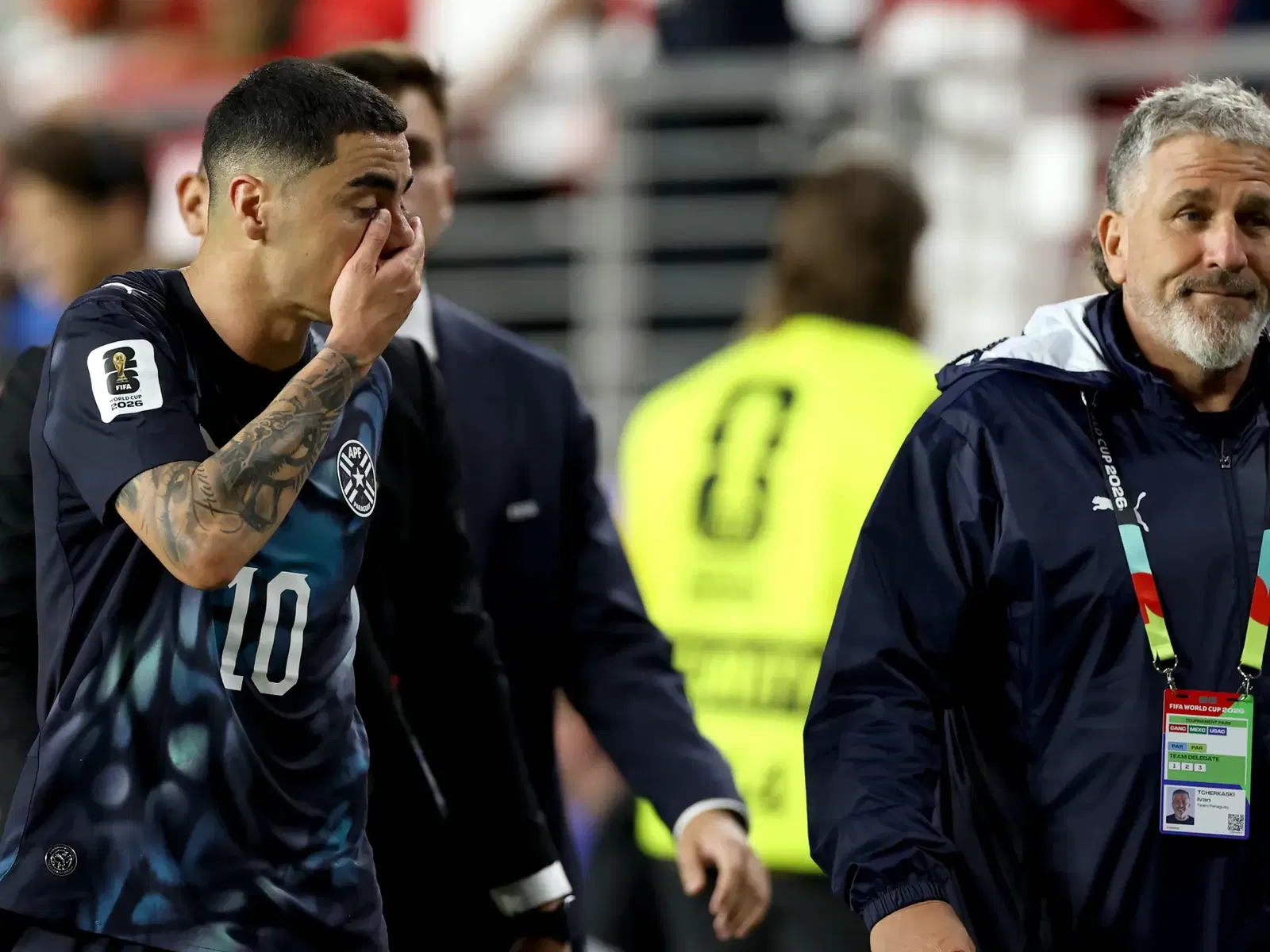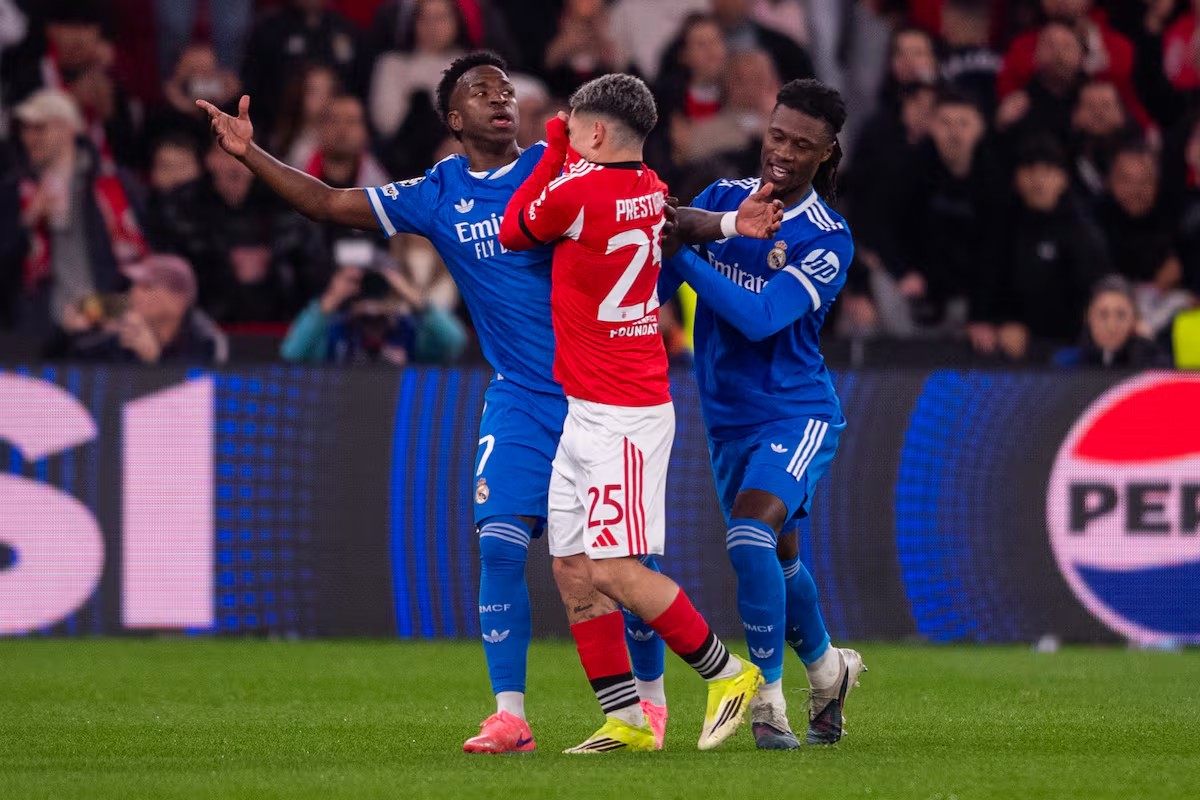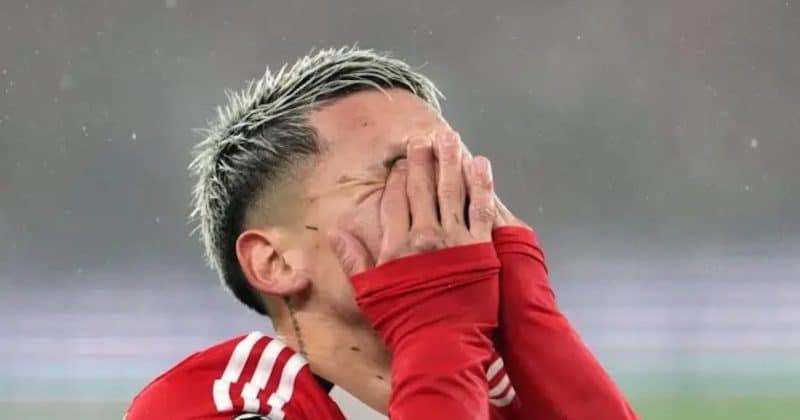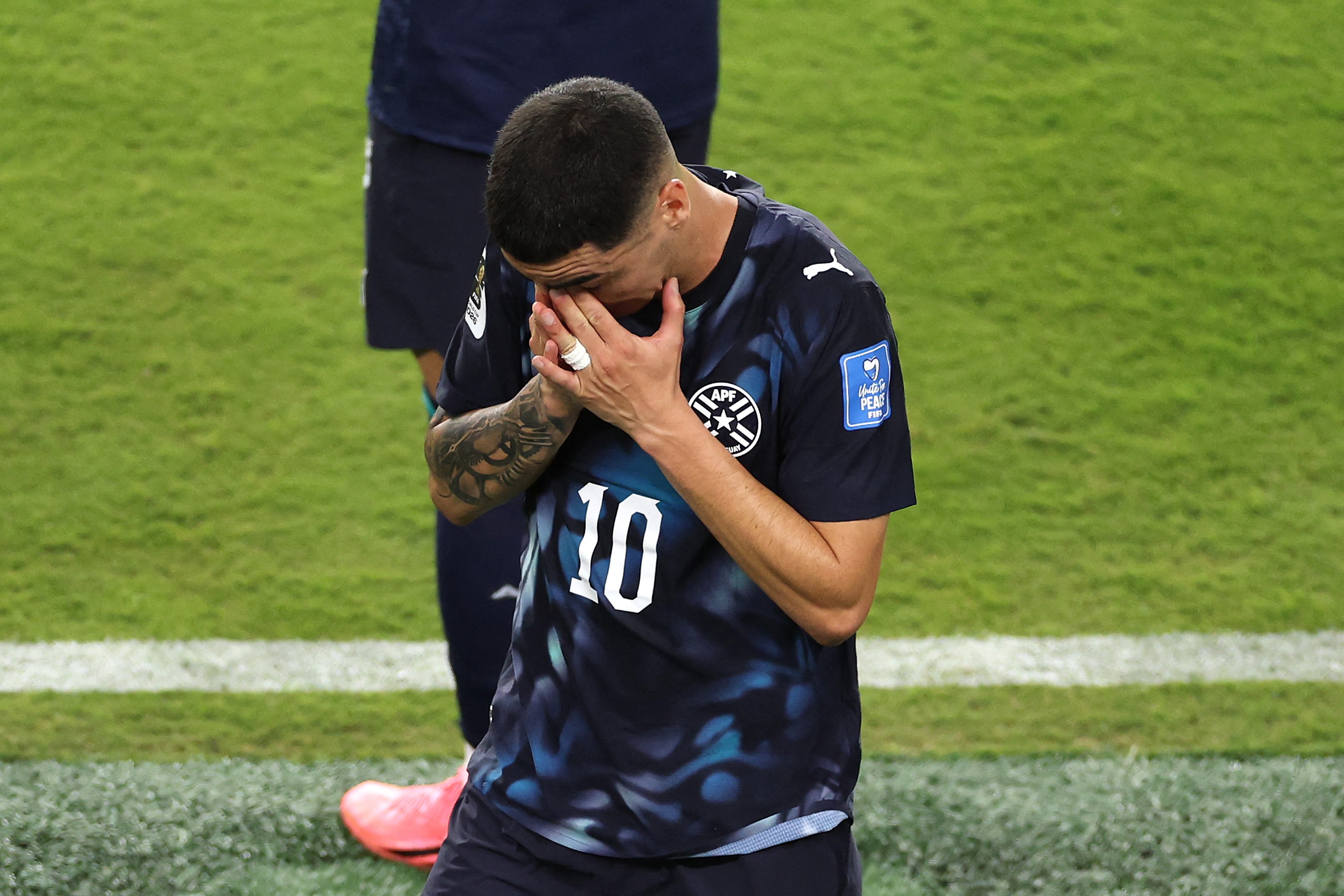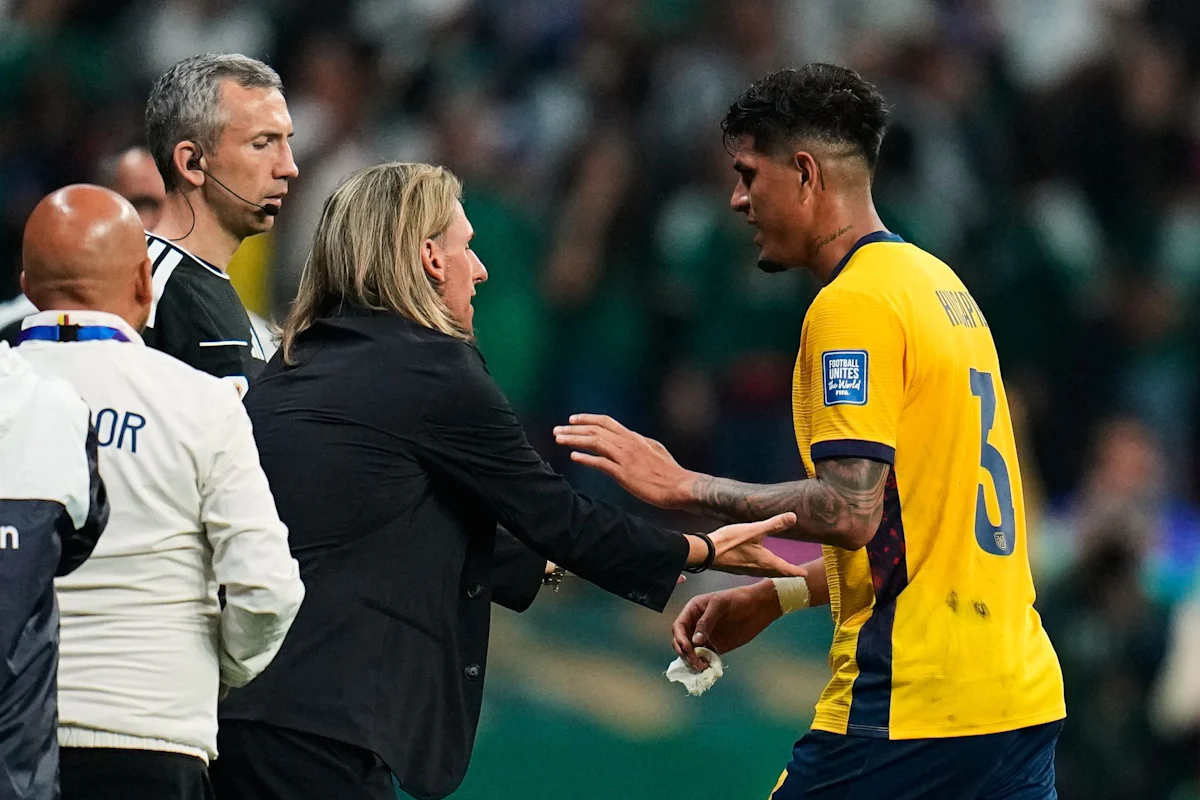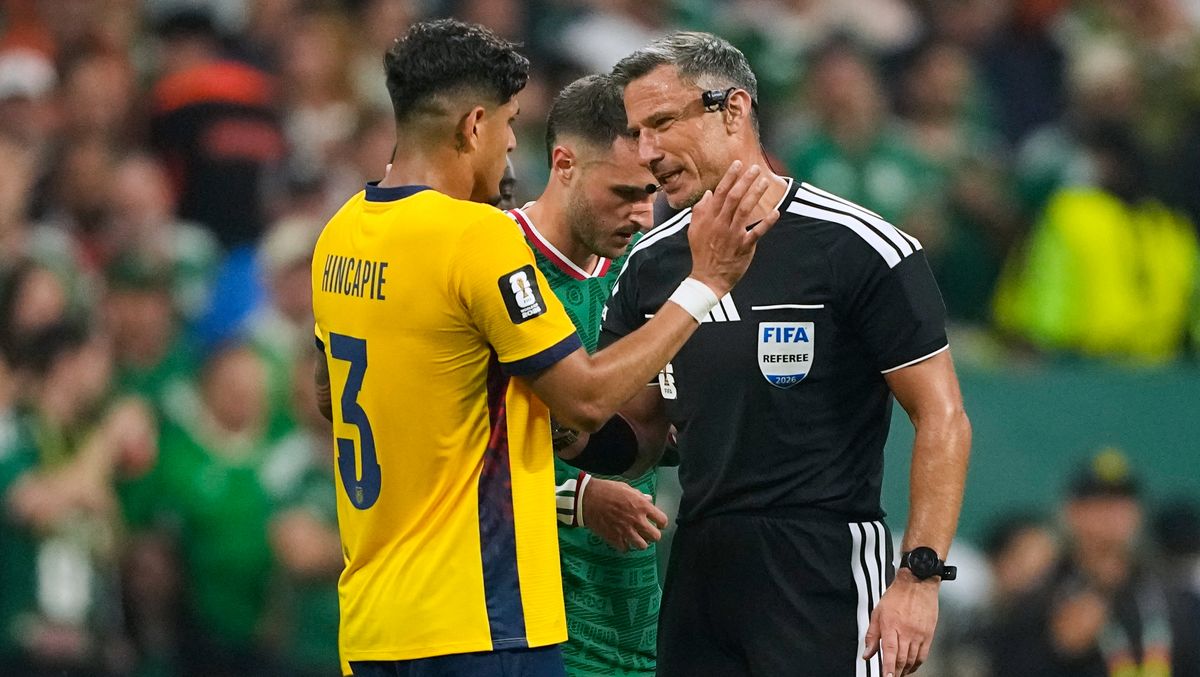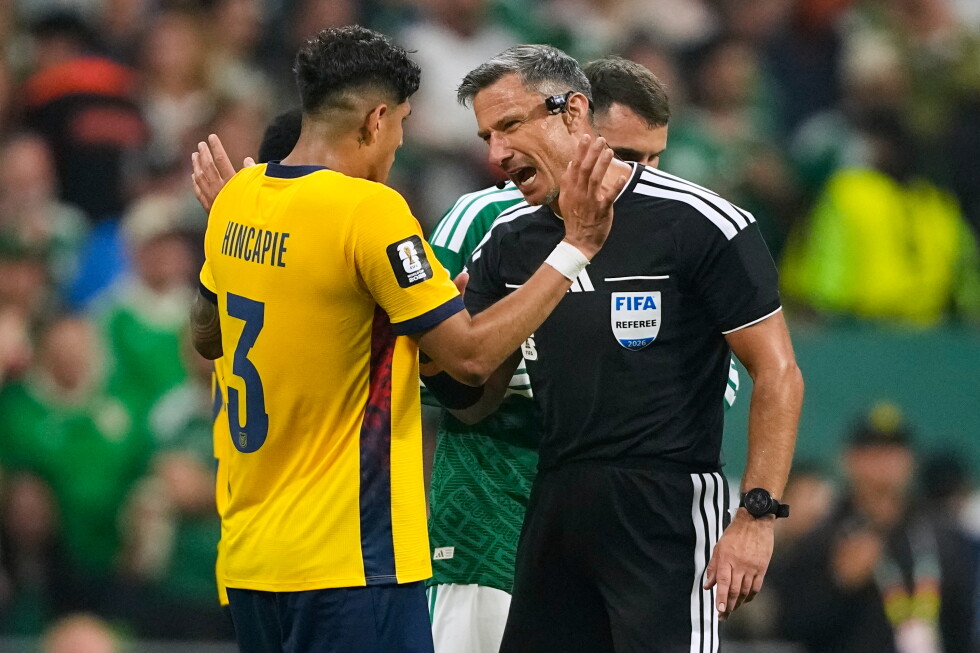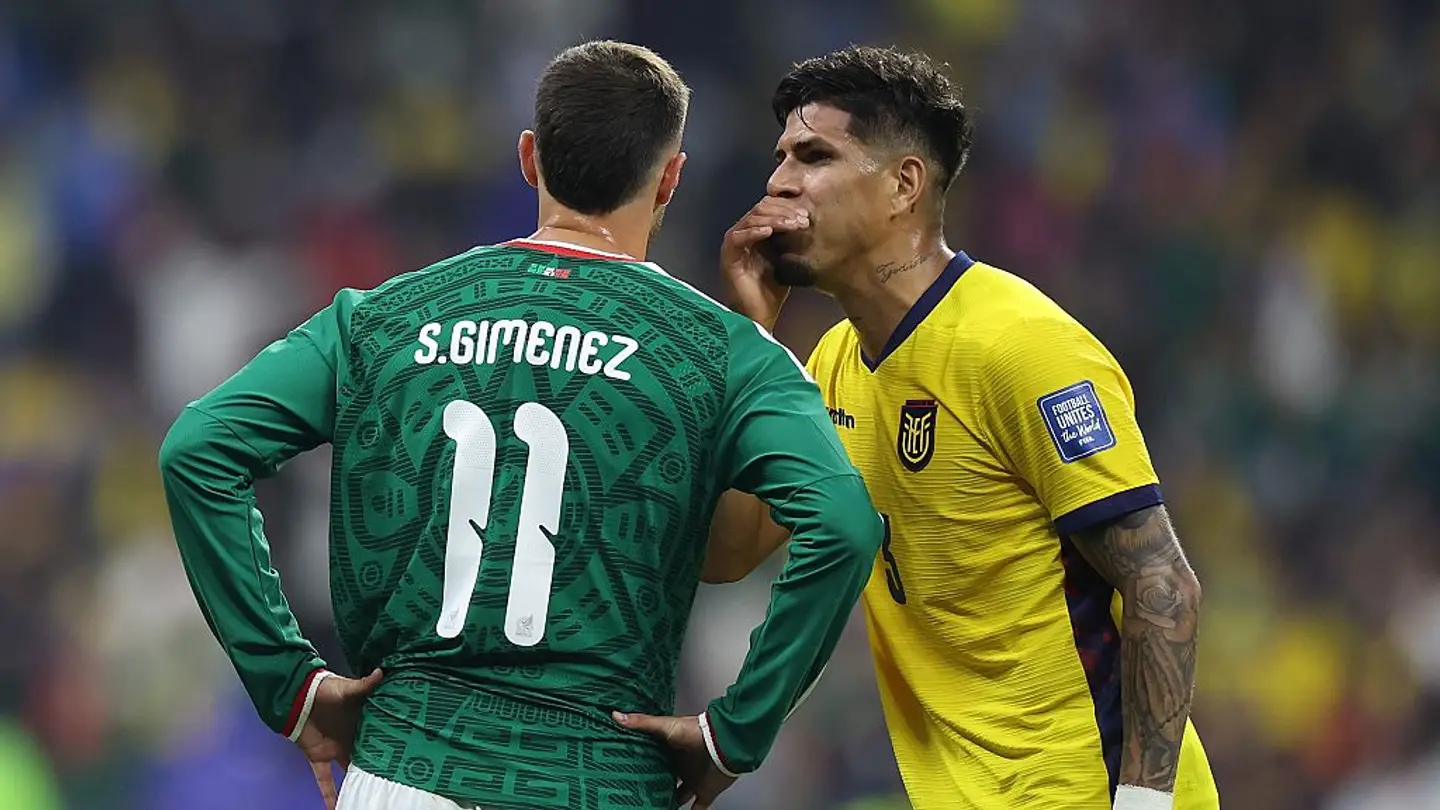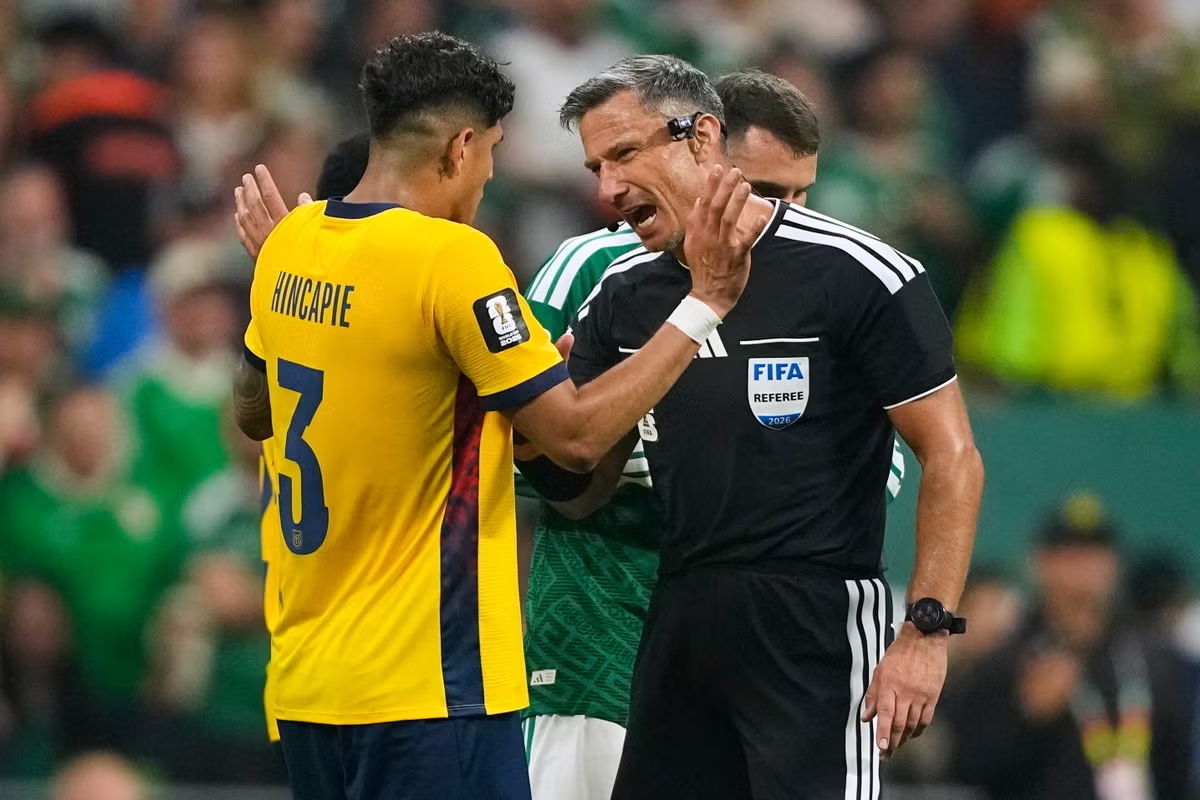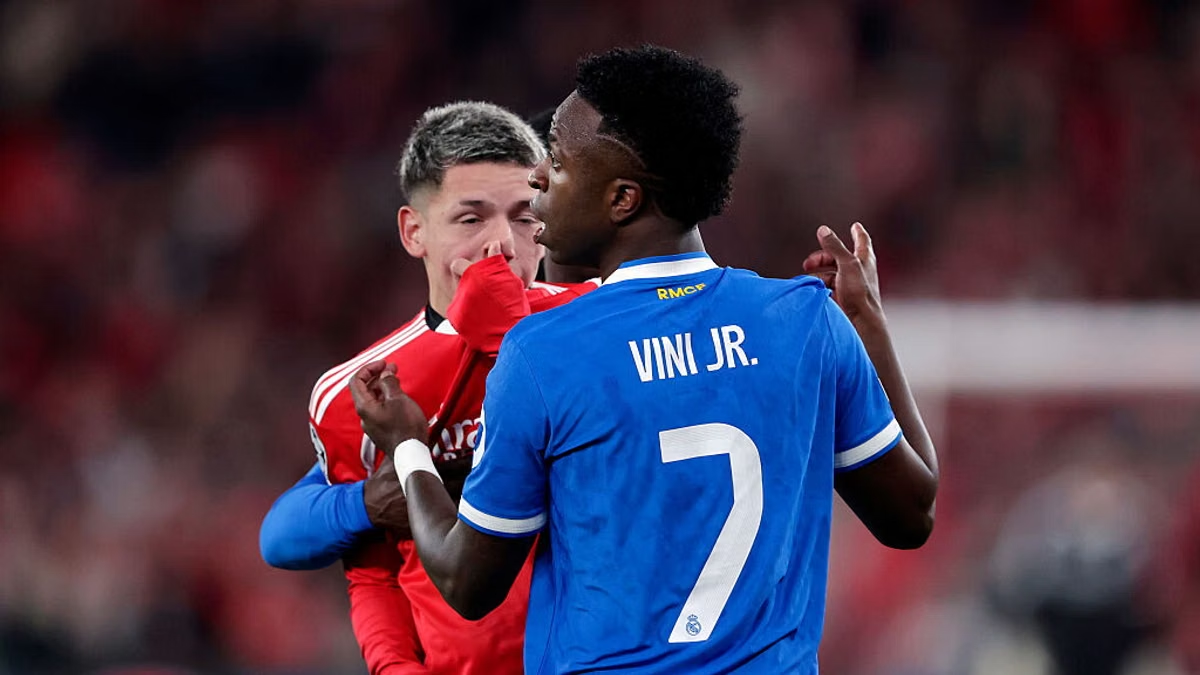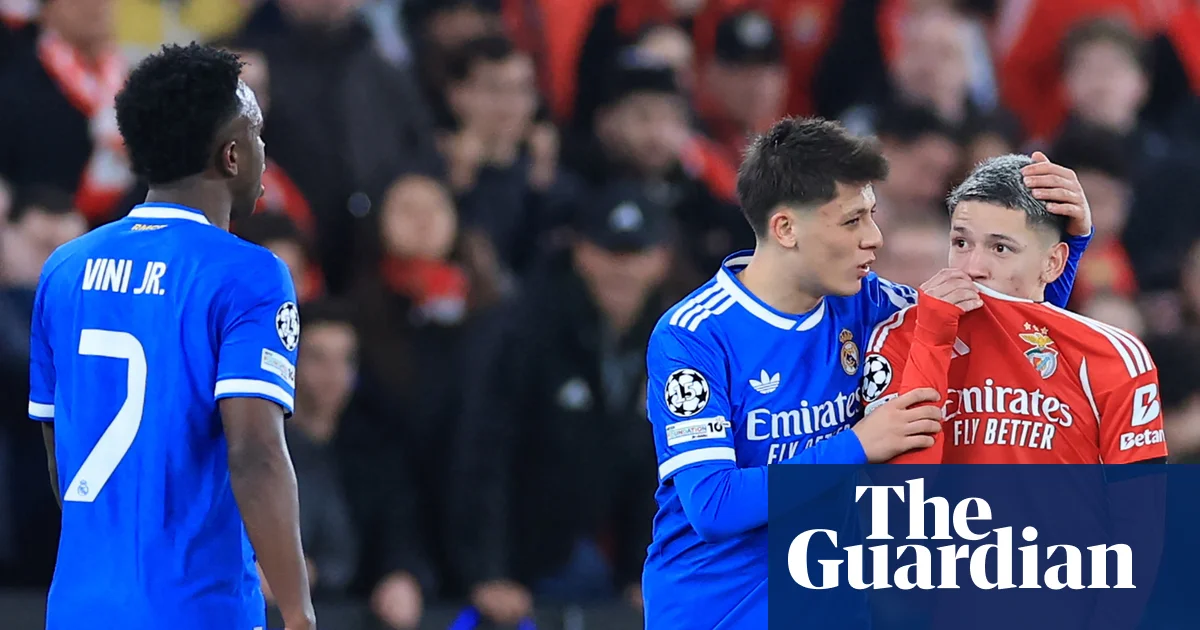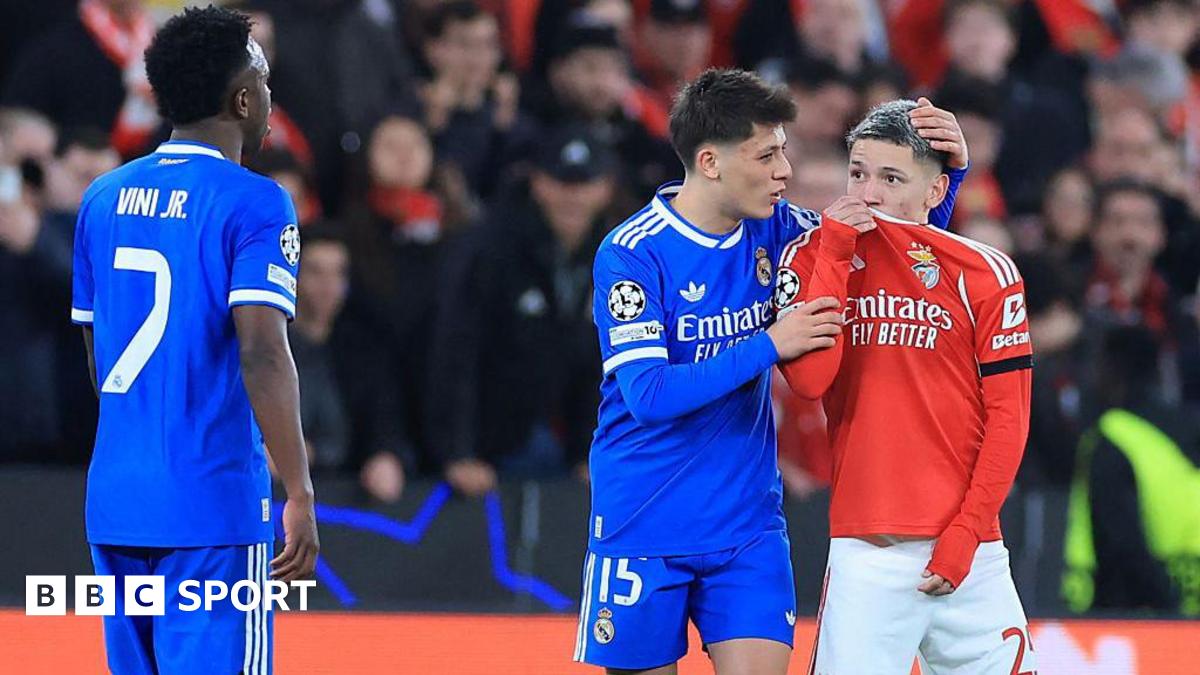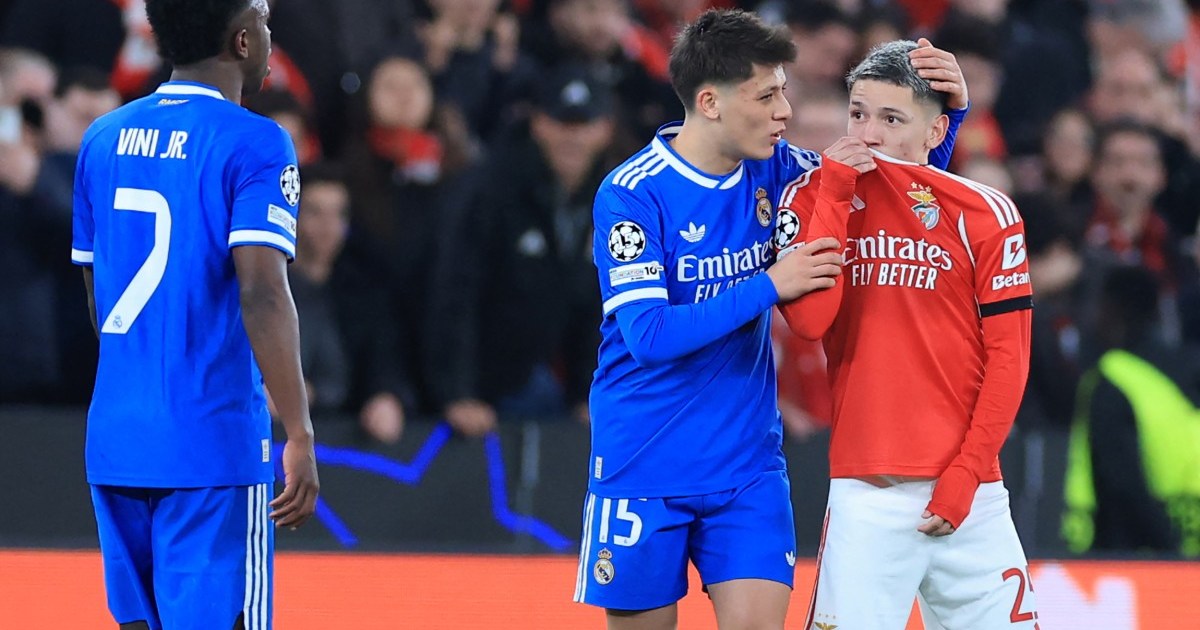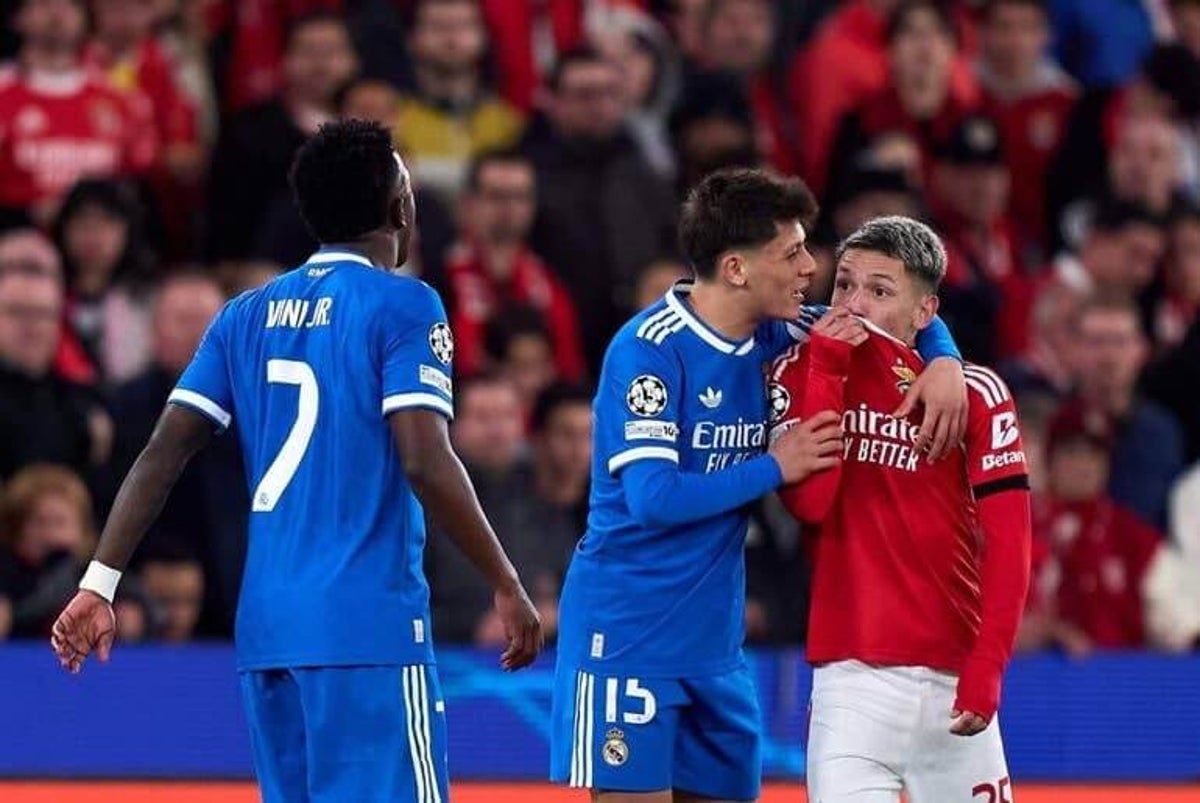
Footballers who cover their mouths while addressing opponents in situations of confrontation will not be shown red cards in competitions governed by UEFA.The governing body of European football — which oversees club competitions such as the Champions League, Europa League and Conference League, alongside international tournaments the European Championship and Nations League — will not follow the lead of global counterpart FIFA in adapting the rule.In April, the International Football Association Board (IFAB) — the body which sets the rules of the game — changed its laws to include players covering their mouths in instances of confrontation being punishable with a red card. The law has been introduced at this summer’s World Cup and two players, Paraguay’s Miguel Almiron and Ecuador’s Piero Hincapie, have been sent off for the offence.The law was added after an incident in February involving Real Madrid’s Vinicius Junior and Benfica’s Gianluca Prestianni in a UEFA Champions League match in February.During that match, Vinicius Jr alleged that Prestianni had racially abused him when the Argentine spoke to him while covering his mouth with his shirt. Prestianni denied racially abusing Vinicius Jr and was later given a six-game ban, three of which were suspended, for homophobic conduct.UEFA, however, communicated to its member associations on Thursday that it would not be opting in to the new law and instead would advise its officials to use discretion.The governing body said a yellow card should be shown to player in a case of them “attempting to conceal communication as an act of unsporting behaviour”.The advice continued: “This is obviously without prejudice to any disciplinary investigation or proceedings that may follow as a consequence of, or in connection with, such behaviour.”Of the other rules introduced by IFAB ahead of this summer’s World Cup, UEFA have opted to expand the powers of video assistant referees (VAR) to check for incorrectly-awarded corners, which can be overturned to instead award a free-kick. As of Thursday, 22 corners had been overturned during the World Cup.In the World Cup, Paraguay forward Almiron was the first player to be sent-off for covering his mouth while addressing an opponent, before Ecuador defender Hincapie was also shown a straight red card for doing so against Mexico in the last-32 stage. There is no indication either player said anything abusive.Hincapie becomes the second player at this World Cup to be sent off for breaching the new law. (Carl Recine/Getty Images)In each instance at the World Cup, the player received an automatic one-match ban for the red card, with FIFA’s disciplinary committee holding the power to extend the suspension if it chooses to.However, the new rule is not a blanket ban on mouth-covering when speaking to an opponent and the circumstances surrounding the exchange are key, with officials discretionarily determining whether such an exchange is confrontational.For example, England’s Jude Bellingham was not shown a red card for concealing his mouth when speaking to Jordan Ayew of Ghana earlier in the tournament.“If a player covers his mouth and says something, and this has a racist consequence, then he has to be sent off, obviously,” FIFA president Gianni Infantino told Sky News in March.IFAB then convened an extraordinary meeting where the decision was made to make the action of covering your mouth while confronting an opponent a red-card offence.“If it is a friendly conversation, they can continue to do it without any problem,” FIFA referee chief Pierluigi Collina explained in June.“When it is confrontational, it is a completely different story. Covering the mouth means you are doing something potentially very wrong.“This is something you do on purpose. It is not something that a player can do instinctively.”Jul 2, 2026Connections: Sports EditionSpot the pattern. Connect the termsFind the hidden link between sports terms
Players will not be sent off for covering mouths in UEFA competitions
The governing body of European football will not follow the lead of global counterpart FIFA in adapting the rule.
619 words~3 min read