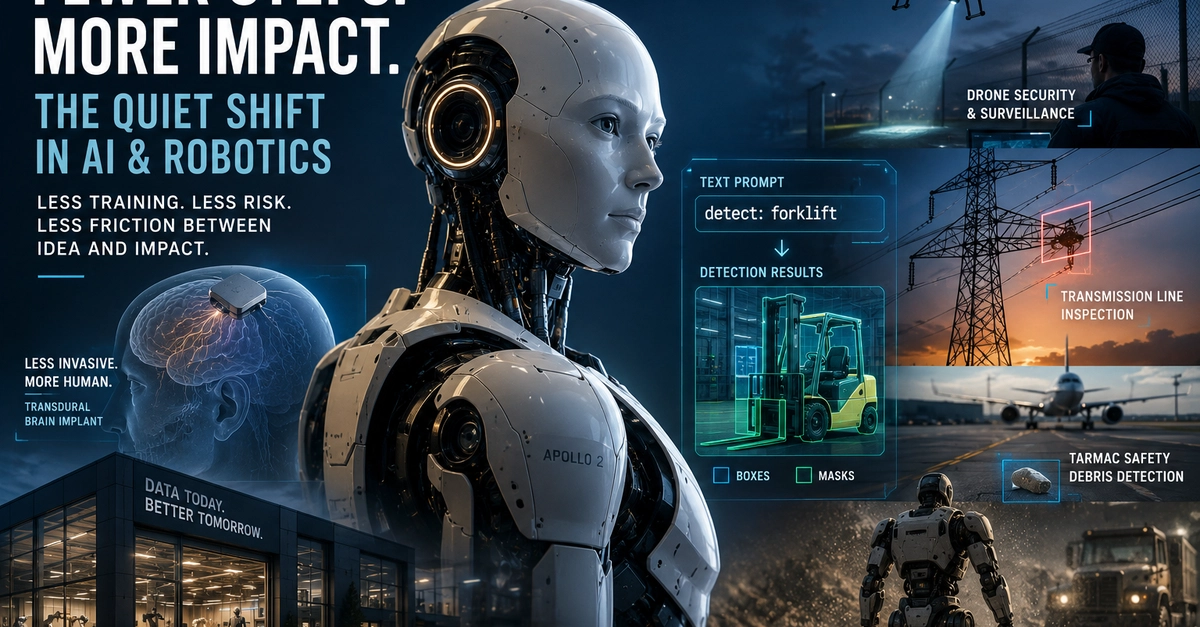
What happens when a machine no longer needs to be trained to see something new? That's the quiet question sitting underneath this week's news, buried next to a less invasive brain implant and a handful of robots getting tougher for the real world.
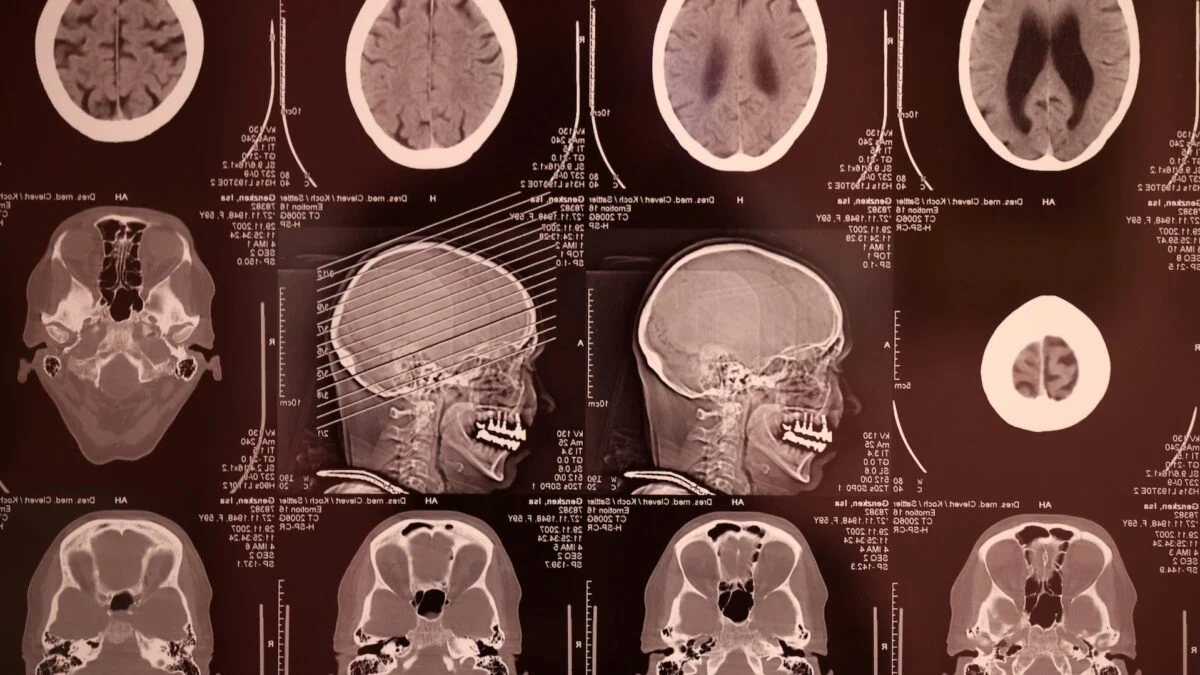
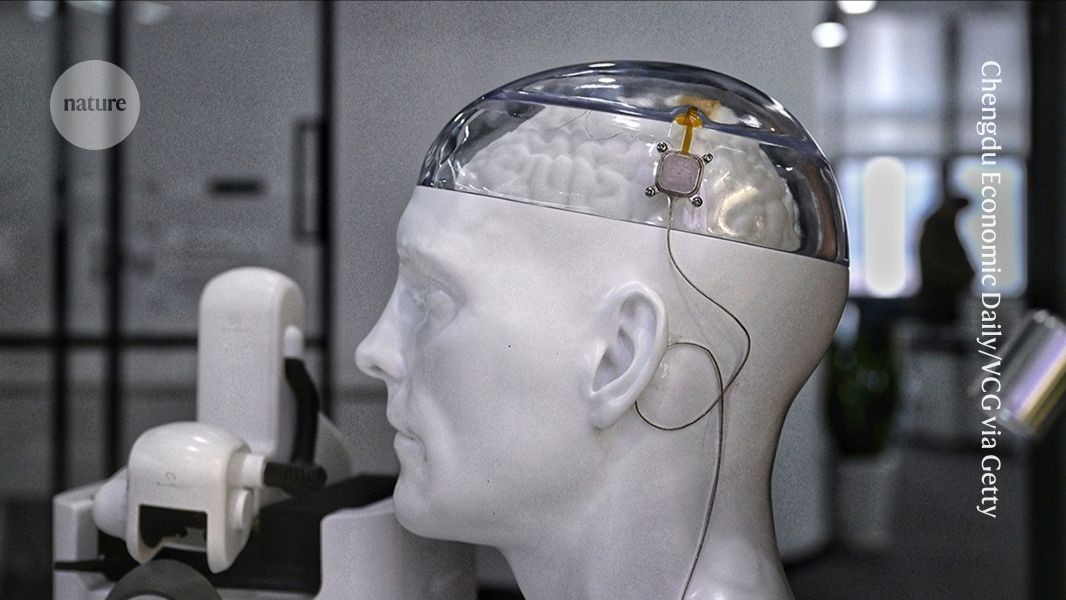
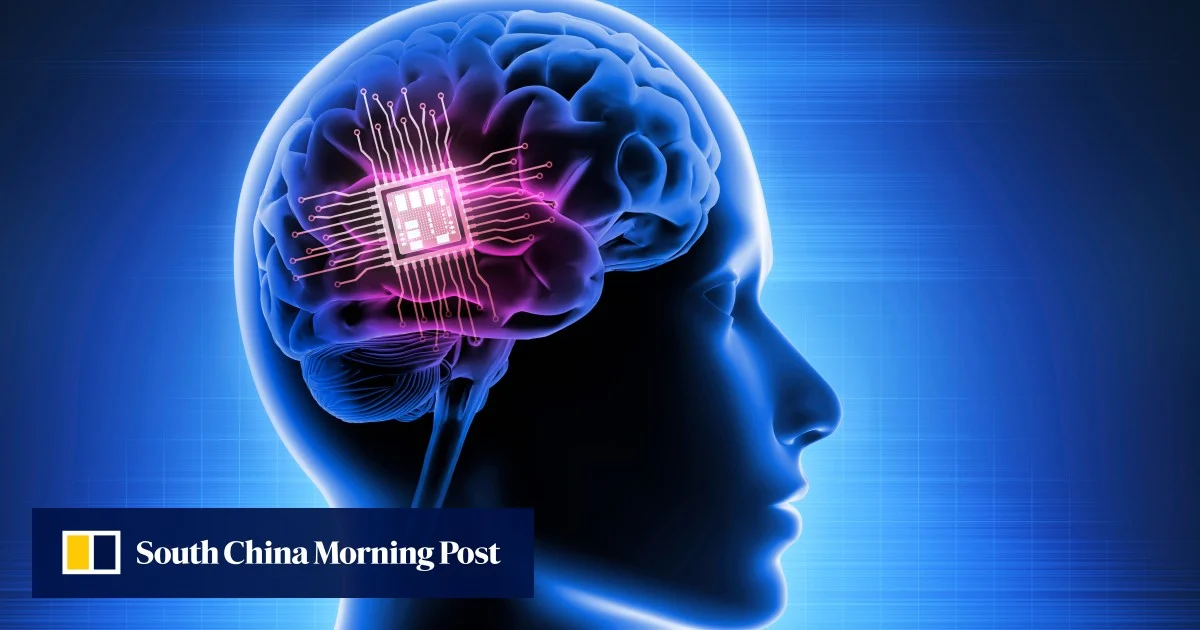
Neuralink says it's completed its first "transdural" brain implant, a surgical approach built to reduce trauma during the procedure. As someone who spends a lot of time thinking about how you get sensors close to a human eye without hurting anyone, I find these less-invasive-implant strategies worth watching, because the surgical-risk problem is basically the same one we wrestle with in ophthalmic hardware.
Vision is getting less invasive too, in its own way. Roboflow rolled out text-prompt object detection built on SAM3 (Meta's latest segmentation model): you type the class of object you want "forklift," "cracked tile," whatever, and it returns boxes and masks without you collecting a single training image first. That's a real shift. For most of computer vision's history, teaching a model to recognize something new meant labeling hundreds of examples before you could even start; this collapses that step into a sentence. The same week brought several applied builds using the same detect-then-orchestrate pattern: a drone system that patrols for intrusions, a pipeline that inspects transmission lines for damaged cables, and an airport tool that spots foreign debris on the tarmac.