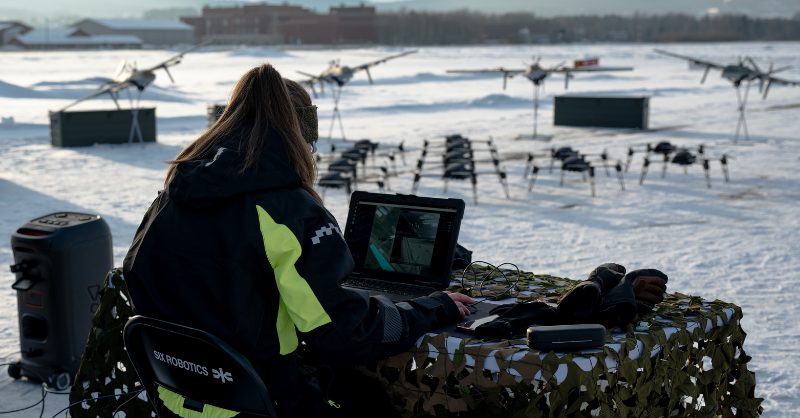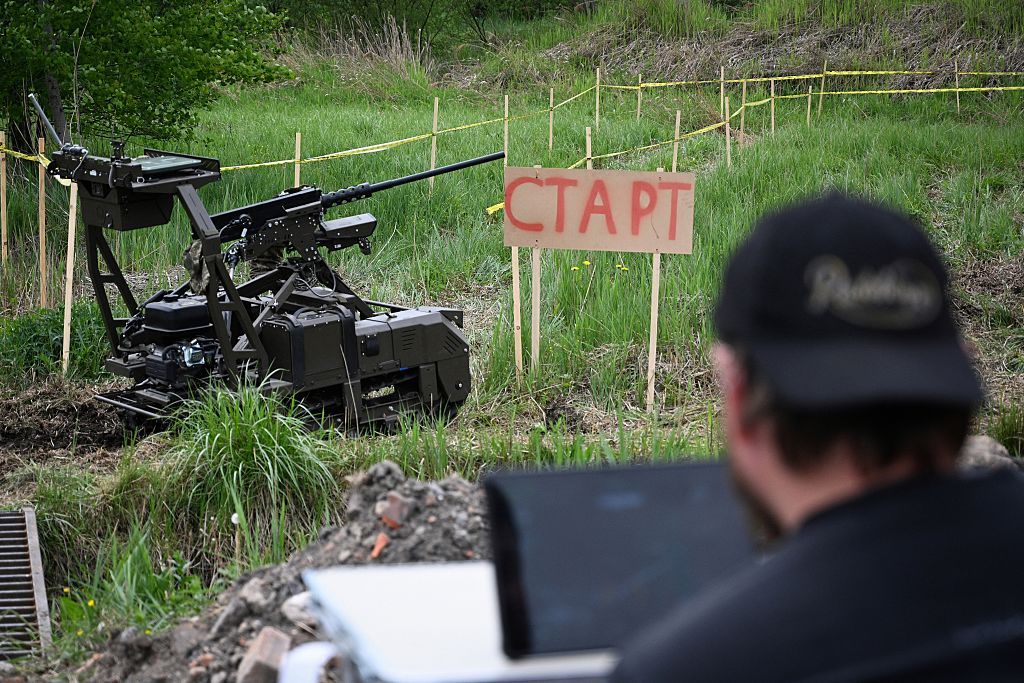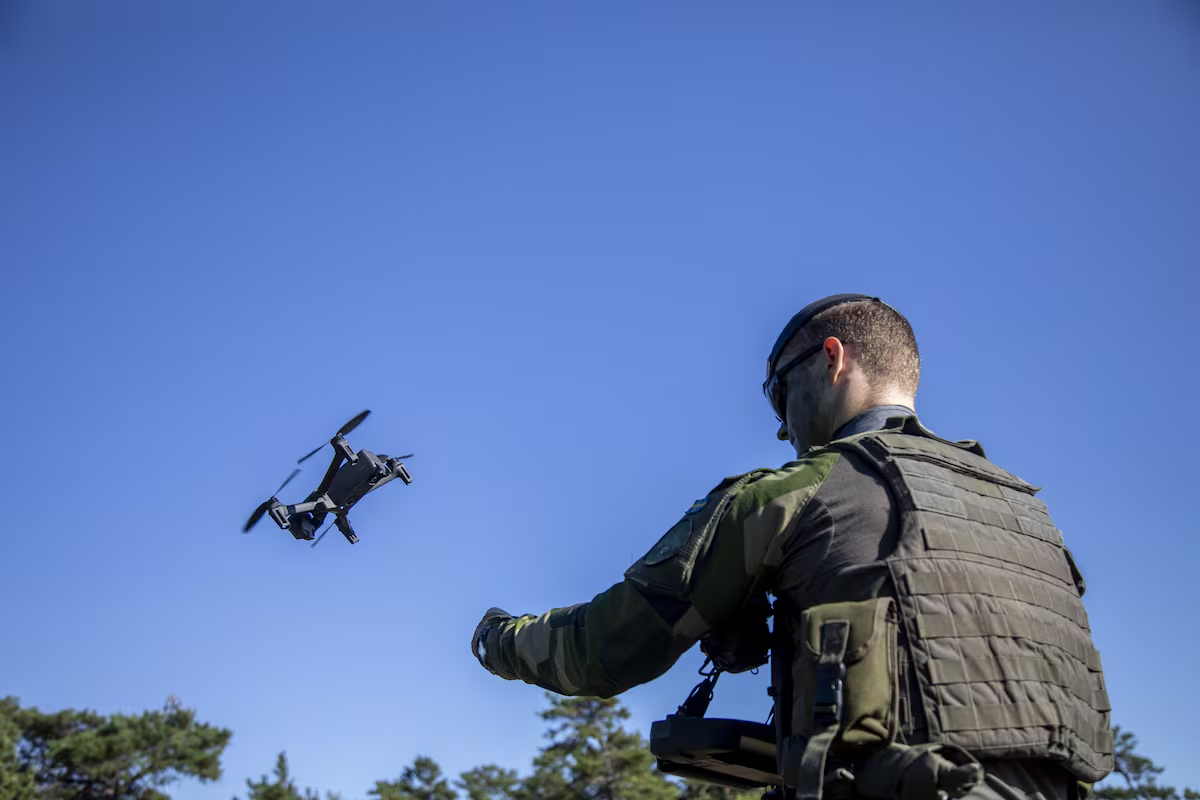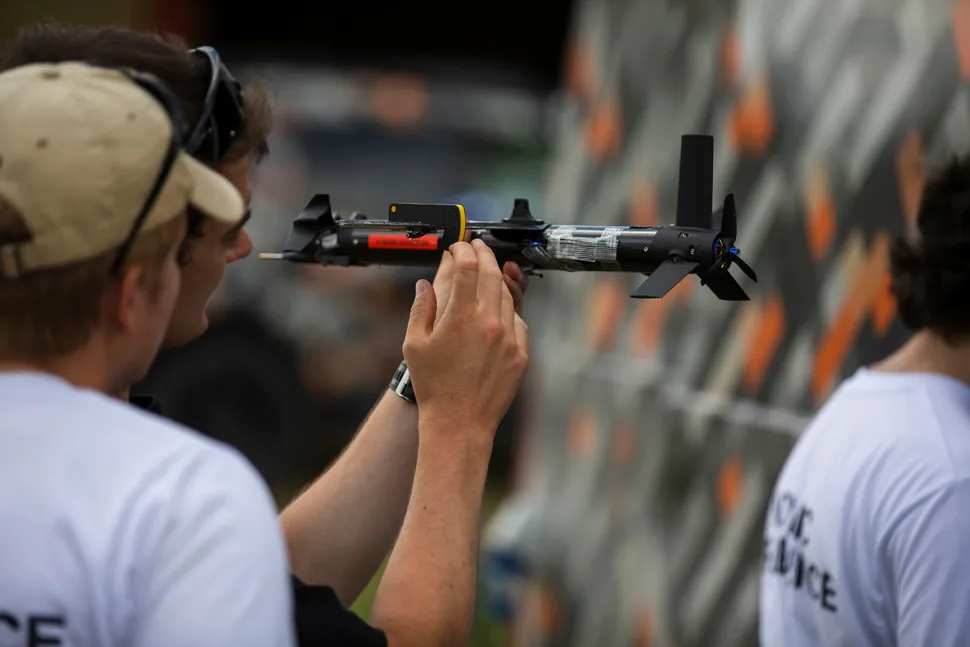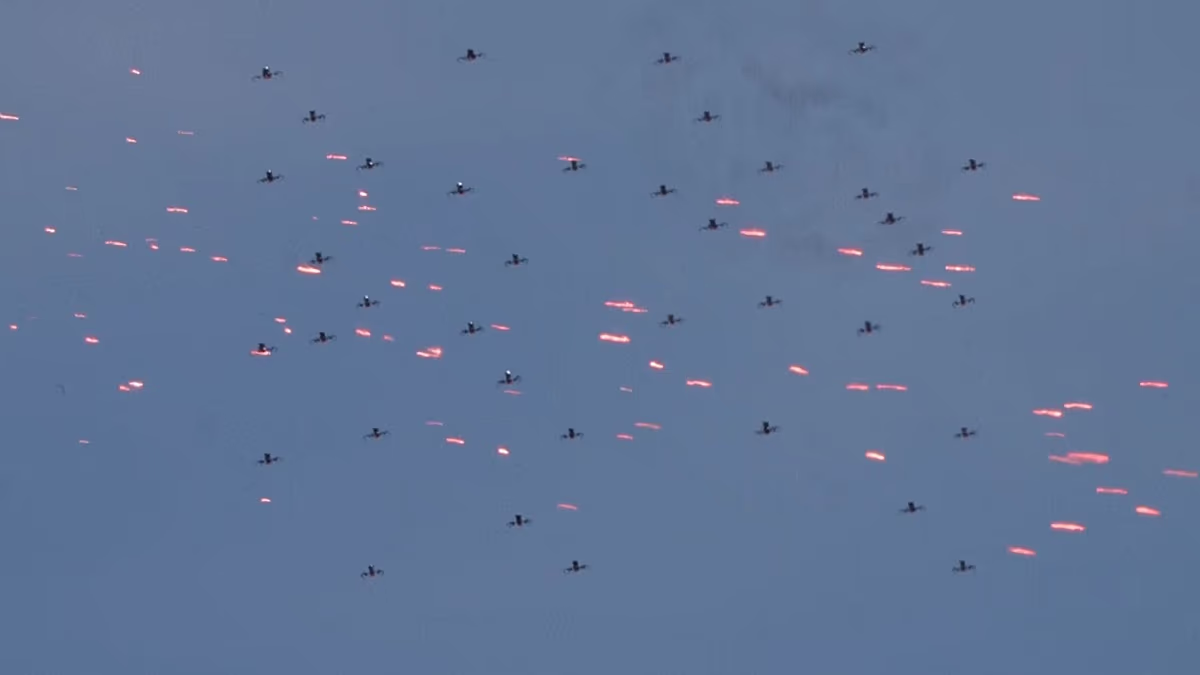
Cinematic landscape showcasing advanced drones navigating a dense, ancient forest during golden hour. Image Credit: TIL CreativesSweden has announced plans to create what could become one of Europe’s most advanced drone systems. The drone research project has been funded with 60 million Swedish kronor, or around £4.4 million. Researchers are developing drone swarms that can operate across air, land, and water with minimal human intervention.The research project, which will run for six years, has been brought together by researchers at Lund University, Linköping University, and Örebro University in a new national research centre known as Centre for Heterogeneous Adaptive Swarm Systems, or CHASS. The project has been funded by the Swedish Foundation for Strategic Research (SSF), which selected it as part of its investment in future technologies.The Swedish Foundation for Strategic Research explains that the centre will be involved in the creation of intelligent swarms made up of different kinds of drones that can work together to accomplish tasks that would be difficult for a single drone. The technology will be validated in real-world scenarios involving rescue operations, environmental monitoring, and the protection of critical infrastructure. Military applications are also included in the research project.The centre will also pull in three dual-use industrial partners - Saab, Sectra Communications and BAE Systems Hägglunds - alongside SMEs Irnova and Deep Forestry, plus agencies including FOI, MCF and LFV. Over six years, CHASS says it will train at least 14 doctoral students, validate the work in real-world test sites and release the results as open source to help build a Swedish national innovation ecosystem.Various types of drones, but one teamWhile typical drone projects concentrate only on drones themselves, CHASS operates under the concept of machines being complementary to each other.According to Lund University, various drones will be combined with the help of autonomous land and sea vessels, which are capable of communicating and coordinating their actions in real time. While some drones will be more durable, some can carry heavier loads or fly faster when an emergency occurs. All of them are supposed to work as one adaptive system, not separate machines.Rikard Tyllström, from Lund University's Department of Flight and Aeronautical Sciences, explained that the role of Lund University within the project would be concentrated mainly on aerial vehicles.Advanced drones conduct a vital rescue operation amidst a devastated urban landscape, delivering aid and hope. Image Credit: TIL CreativesAI will ensure the adaptation of the swarms autonomouslyAmong the most important scientific objectives for the centre is the creation of drone swarms capable of adapting independently from constant orders from humans.To do this, scientists will combine artificial intelligence with digital twin technology, creating virtual replicas of real-world systems to simulate conditions and improve decisions before field deployment.The main focus of the development work will revolve around a software platform referred to as SwarmOS. As per CHASS, the operating system is expected to link different platforms of drones into a single network regardless of the manufacturers of hardware components. Furthermore, scientists plan on making the code of the software available in an open-source manner.CHASS says SwarmOS is one of four initial research tracks, alongside sustainable modular drone platforms, human-swarm interaction and ethical, legal and societal questions. The centre also says it will test the system through increasingly complex demonstrations at Swedish sites and aims to make the core technology open source so it can be adopted across research and industry.Human supervision will still play an important roleEven though the drones are supposed to work on their own, it is said that humans would have the responsibility of overseeing the operations and making crucial decisions.At Lund University, scientists are doing research on how humans could work with large autonomous swarms, which has not been explored much as compared to individual drones. The study will investigate how tasks are divided between the human operator and the autonomous system, how multiple operators coordinate in complex missions, and how the swarm performs when drones fail or communication conditions change.Ethical and legal considerations form part of the research as wellTechnical problems only form one component of the program.Lund University researchers from the Department of Technology and Society will study the integration of autonomous drones into current legal systems and ways in which organisations can manage governance when using the technology.As the university states, the project will also explore broader issues about trust, regulation, and accountability in an increasingly autonomous world.Significance of the projectThere has been increasing international interest in the concept of autonomous swarms of drones, as it would be possible to perform various tasks much more efficiently using autonomous swarms rather than using individual drones.The use of an organized autonomous swarm would allow it to perform its operations in large disaster areas, observe the spread of wildfires, carry out inspections of damaged infrastructure as a result of natural disasters, and deliver goods in areas that are risky to enter due to a lack of resources.According to Linköping University, a main goal of the CHASS program is to strengthen research capacity in Sweden by training at least 14 Ph.D. students.
A 60 million-kronor Swedish project is building drone swarms that can fly, roll, and swim together, and the goal is rescue, wildfire response, and critical infrastructure defense
Sweden has announced plans to create what could become one of Europe’s most advanced drone systems. The drone research project has been funded with 60 million Swedish kronor, or around £4.4 million.
839 words~4 min read