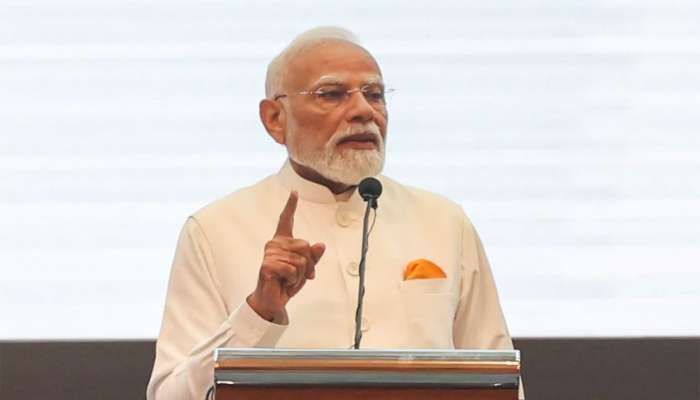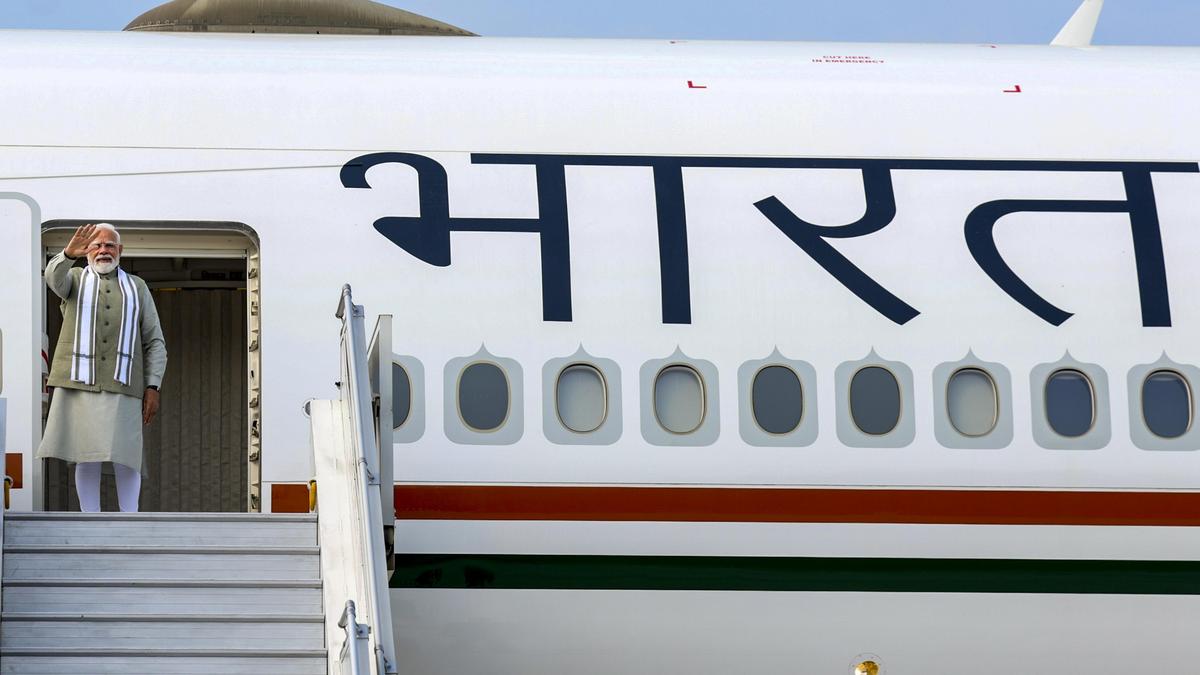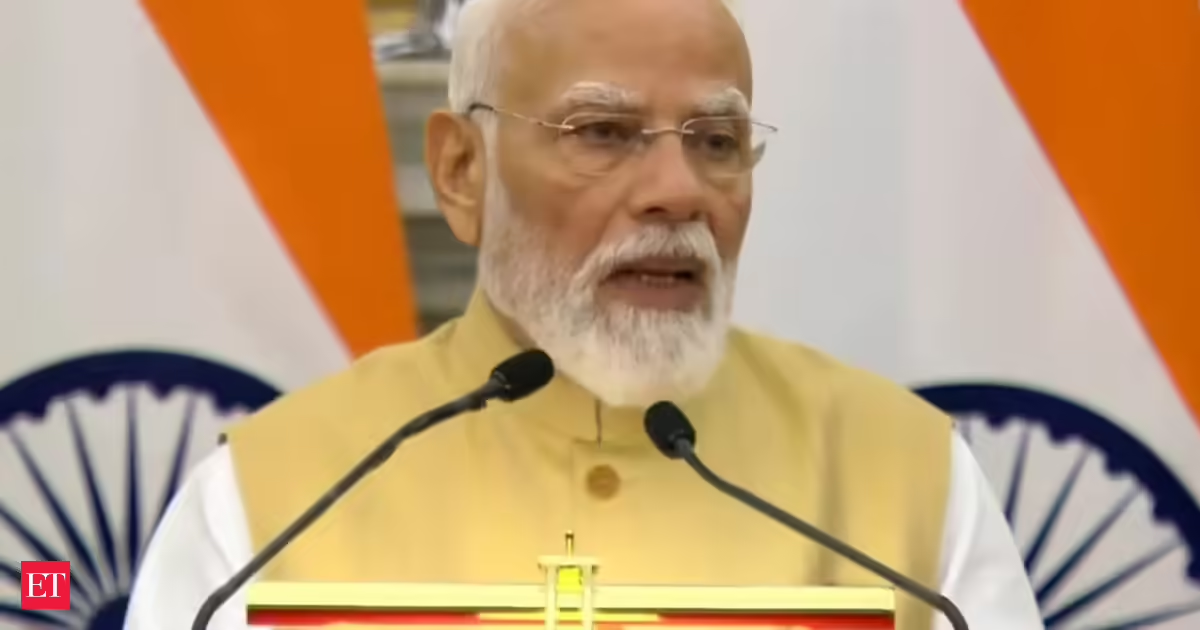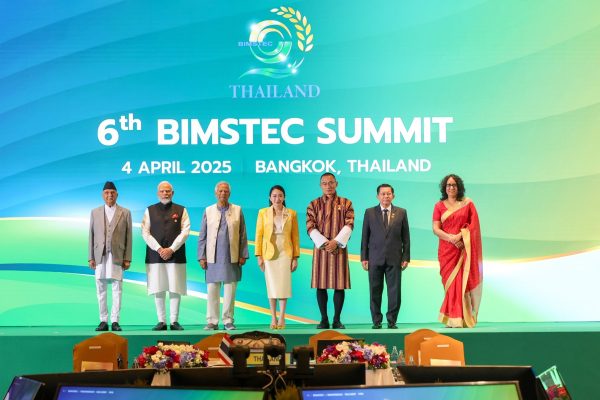
It made headlines when Prime Minister Narendra Modi announced a 21-point action plan at the 6th BIMSTEC Summit in Bangkok on April 4, 2025.
Two memoranda of understanding signed on the sidelines of the summit – one between India’s Ministry of Development of North Eastern Region (MDoNER) and Thailand’s Ministry of Foreign Affairs and another between India’s North Eastern Handicrafts Development Corporation (NEHDC) and the Creative Economy Agency of Thailand (CCAT) – drew far less attention. These were low-key pledges with a strong message: The Northeast is not only a highway between BIMSTEC nations, but a key to the region.
Policy-wise, Northeast India is still under-represented in India’s BIMSTEC engagement. The region’s development, as well as that of BIMSTEC as a viable strategic grouping, cannot be achieved without redressing this imbalance.
Trade among the BIMSTEC member countries has not increased significantly since the Bangkok Declaration of 1997. The share of intra-regional trade remains small, around 7 percent of total trade, despite the grouping comprising nearly 25 percent of the world’s population and $5.2 trillion in combined GDP. More than 20 years after the BIMSTEC Free Trade Agreement (FTA) was agreed in principle in 2004, it has not yet been implemented.