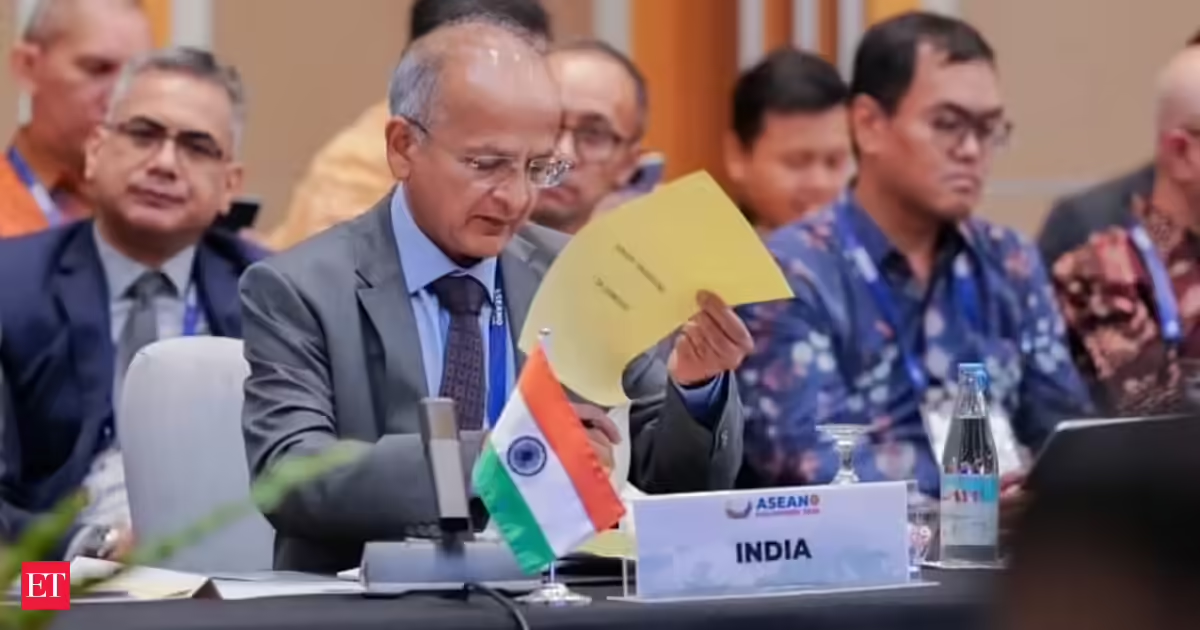
In 2014, Prime Minister Narendra Modi outlined India’s updated Act East Policy (AEP), expanding the strategic focus of ties to incorporate defense and security with its Southeast and East Asian partners. However, the policy was not originally conceptualized around security. Its predecessor, the Look East Policy (LEP), began in the early 1990s to strengthen economic relations, but transitioned into the AEP as New Delhi recognized the strategic imperative of developing defense ties with its extended eastern neighborhood.
While the policy’s first decade successfully deepened regional defense ties – including BrahMos deals with Indonesia, the Philippines, and Vietnam – India has again reached a moment when it is looking at the rise of critical and emerging technologies like artificial intelligence (AI), and the increasing prospect of partnering with its Asian partners on the same.
This reality places AI diplomacy at the very core of India’s AEP. It has become apparent that India seeks to achieve AI sovereignty across five layers of the AI stack — application, model, semiconductor, infrastructure, and energy. For this vision to succeed, its talent, researchers, and startups urgently require strategic value chain diversification beyond traditional partners in Western Europe and Northern America region. Escalating visa constraints, technology export controls, and the heavy economic toll of one-way talent mobility indicate the structural limits of this dependence.