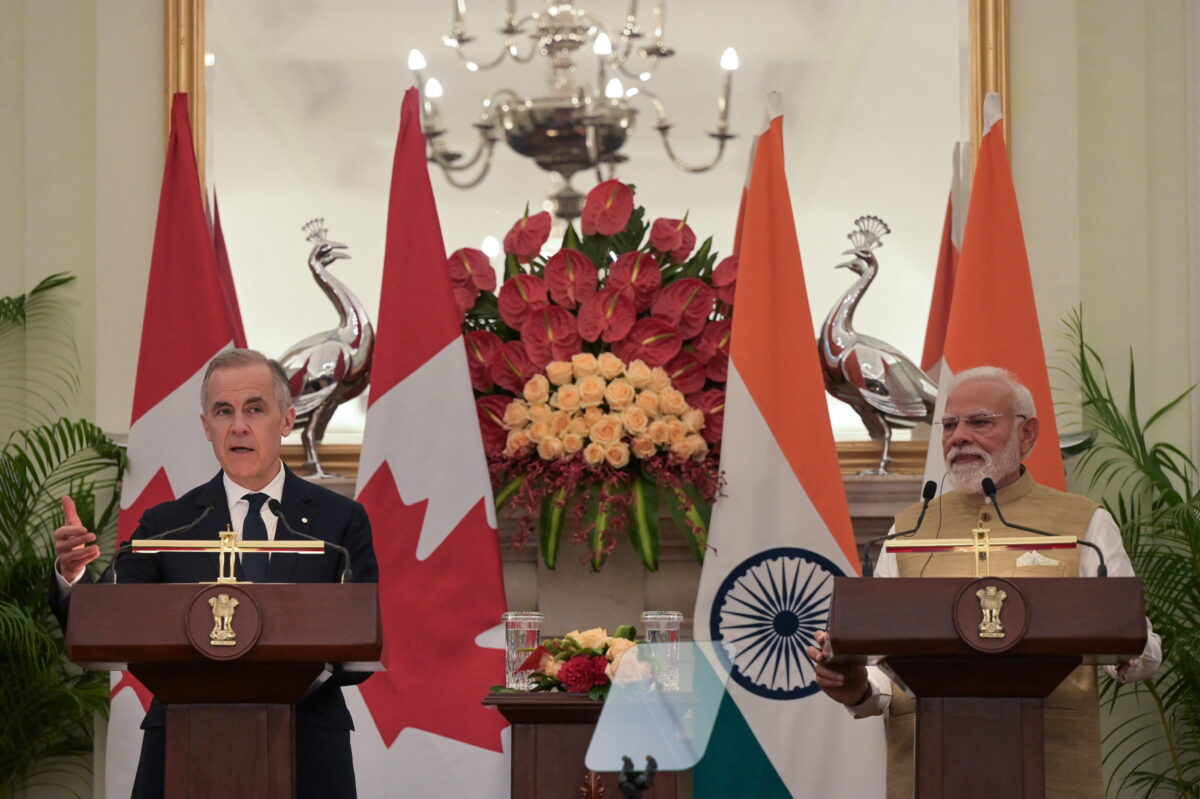
Canada and India’s March 2026 agreements on artificial intelligence (AI) cooperation and resource sharing represents one of the most concrete attempts by countries outside the US–China duopoly to build an alternative AI architecture. The agreements are a direct test of Canadian Prime Minister Mark Carney’s vision of middle powers building new multilateral frameworks.
As the United States consolidates its AI frontier capabilities and China scales state-led AI systems, the window for others to shape the emerging AI order is narrowing. Disruptions in the Strait of Hormuz have exposed the vulnerability of helium and liquefied natural gas (LNG) supply chains — both critical inputs for AI infrastructure — to geopolitical shocks. Against this backdrop, the Canada–India partnership takes on added significance.
India is a member of Pax Silica — a US-led initiative coordinating AI and semiconductor supply chains — while Canada is an observer. India’s decision to deepen AI ties with Canada signals an interest in preserving strategic flexibility. If properly structured, a Canada–India framework for AI infrastructure coordination, talent mobility and governance cooperation could help anchor a broader Indo-Pacific AI architecture beyond US-centred arrangements.