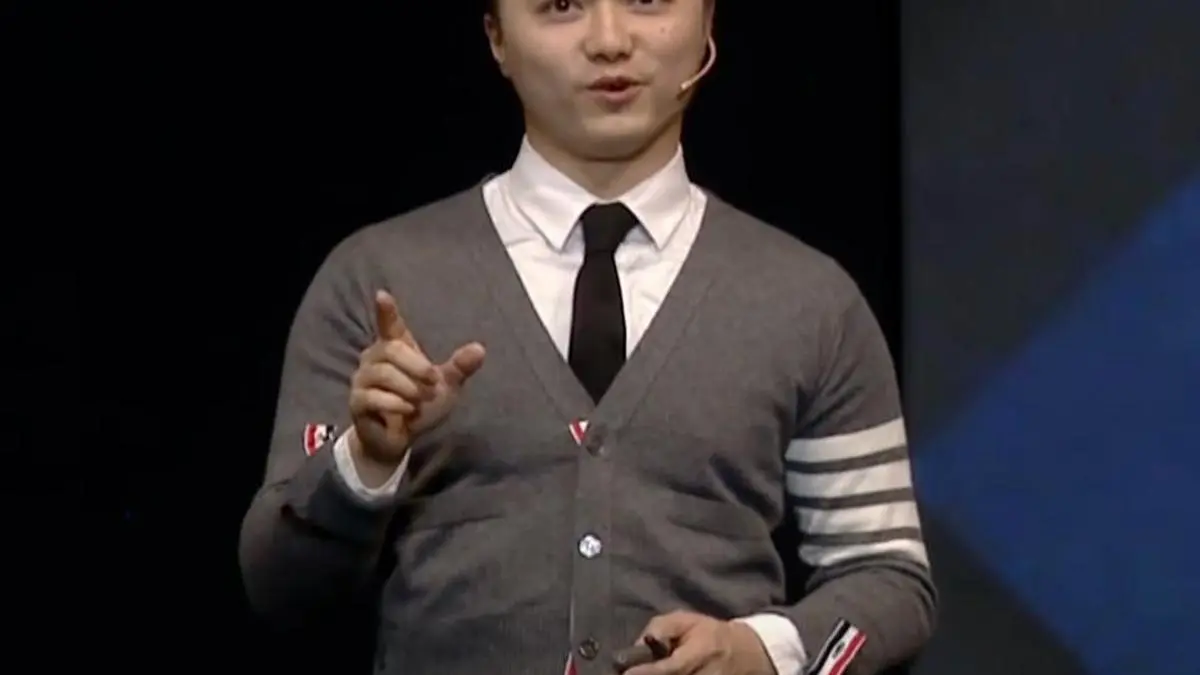
Dr Xi Zeng, founder and CEO, Chance AI
Singapore-based Chance AI is expanding its presence in India, one of its fastest-growing user bases, as it looks to establish a new category of AI “visual agents” built around camera-first interactions rather than text prompts.“We felt a missing category between visual search and chatbot -- something that doesn’t just identify objects or answer questions, but helps users understand why something matters. Chance AI is a visual agent, not just a camera tool or a search-identified app,” said founder and CEO Dr Xi Zeng.The visual agent is built for real-life lifestyle scenarios, not productivity. He added that the next important AI interface begins with vision, since it is the most intuitive operating system for humans, and not typing.Visually NativeThe ex-ByteDance and OnePlus exec shared that Chance AI has seen strong attraction among younger, visually native users, especially in North America and India. The application supports 17 languages, including Hindi, since India is the third-biggest community for the company.“India matters because it’s one of the most mobile-first, visually native, and young user-heavy markets in the world. That makes it a strong environment for a product like ours, which depends on camera-first behavior and real-life usage scenarios. We don’t see India as just a big market but as one of the places where a new AI habit could emerge fastest,” the CEO shared.North America accounts for 35–40 per cent of Chance AI’s users, followed by Europe at 25 per cent and India at 20 per cent.Some of Chance AI’s use cases include travel, shopping, fashion, everyday learning, artworks, landmarks, and installations. However, translation is not a key feature for the platform, as this productivity use case is already addressed by Google Lens.“Google Lens is good at identification, translation, and search. Chance AI is built for interpretation. We are not trying to answer what this is, but why it matters. That’s the difference between Google Lens and a visual agent,” Xi explained.Wearable DeviceThe company uses three layers of data to post-train its visual language model. The first comprises publicly available data. The second consists of licensed data sourced through partnerships with organisations such as museums, fashion groups and outfit databases. The third layer is licensed user data, where community posts shared publicly by users contribute to the next round of post-training.“A wearable device is the next step, depending on the maturity of the hardware. We can build a visual reasoning layer and be prepared for the next generation of AI hardware.”Many ApplicationsThe founder said enterprise adoption is part of the company’s long-term strategy, but its immediate focus is on growing its consumer business. He said building a large user base and database is a prerequisite before expanding into the enterprise segment.According to Xi, enterprise demand for visual reasoning is expected to emerge across areas like robotics, where machines continuously interpret visual information before taking action. Other applications include X-ray analysis, identification systems, museums, and travel-assistance robots. The company also sees opportunities in AI-powered hardware such as smart glasses, AI cameras, and visual AI earphones.Earlier this year, Chance AI raised $3 million in a seed funding round. This capital will be used to strengthen R&D, expand its data infrastructure, and drive user growth. “Currently, we have different servers in the local country, which is expensive to maintain for different markets globally. We will add more servers to keep it fast and make it safe,” Xi shared.Published on July 2, 2026