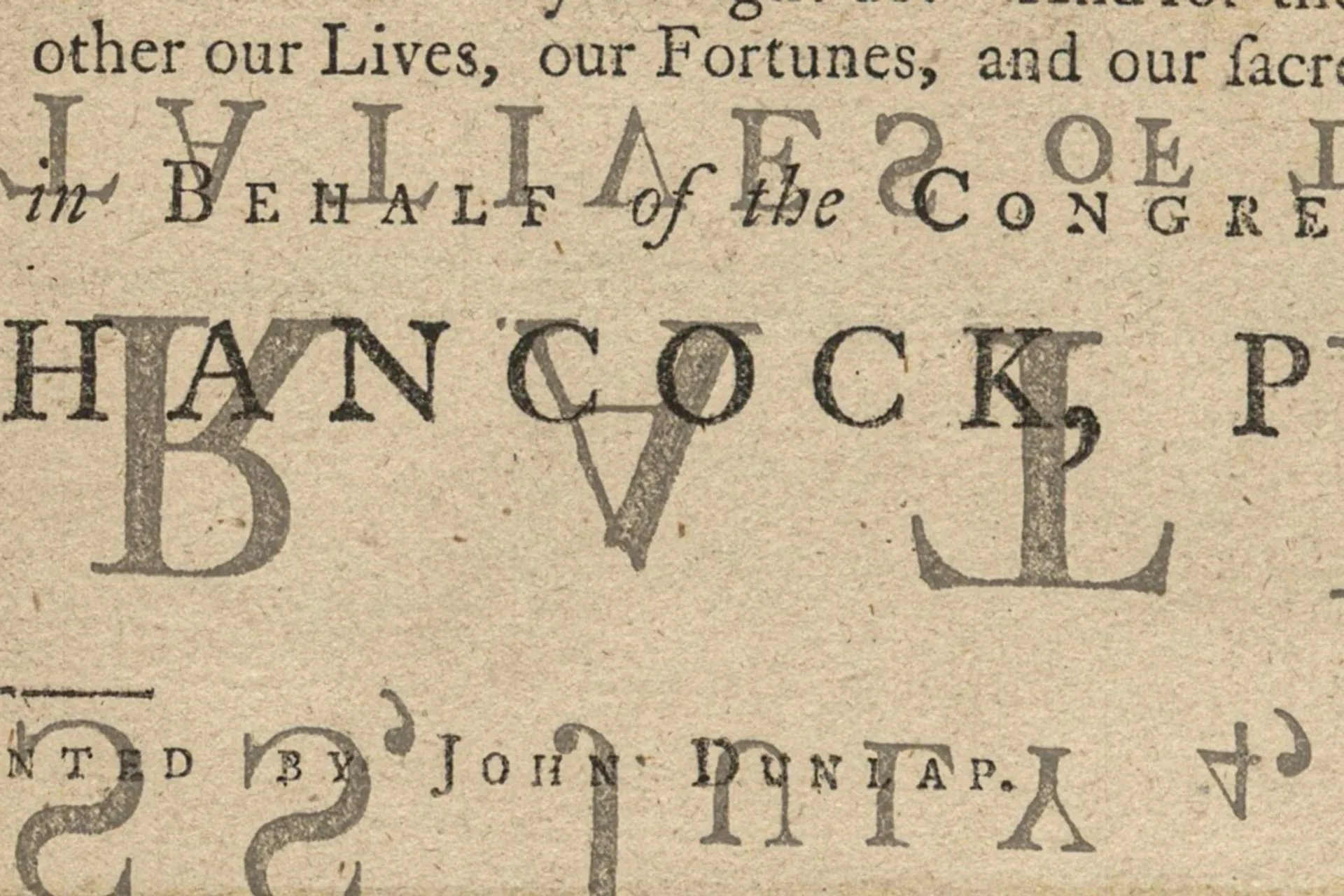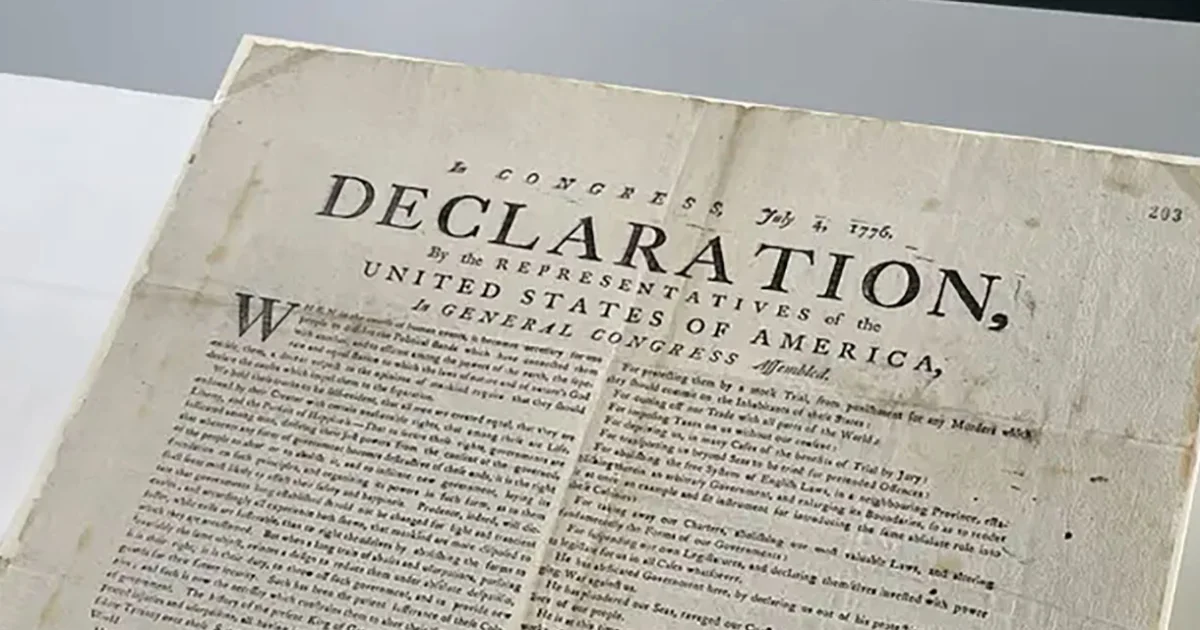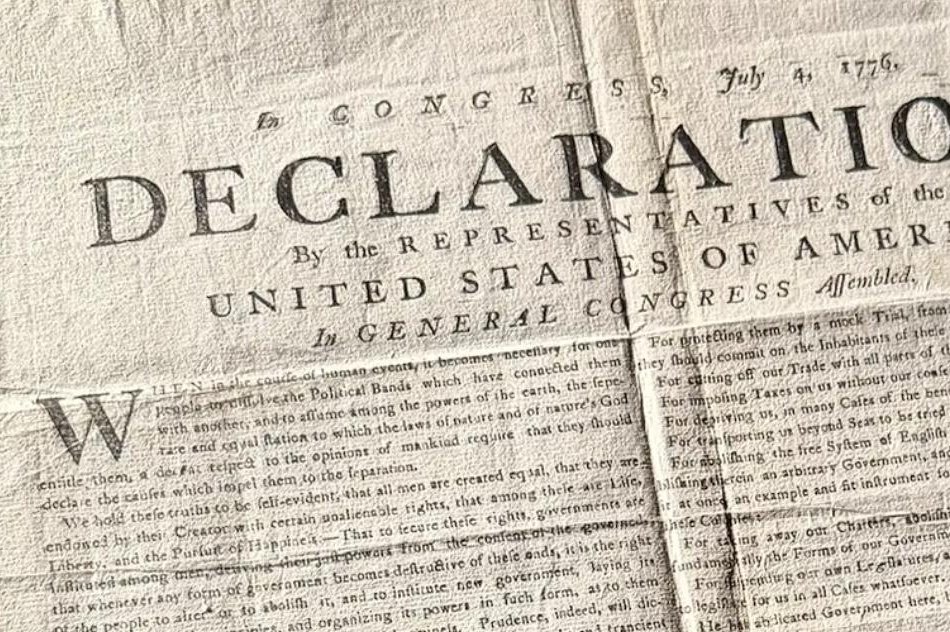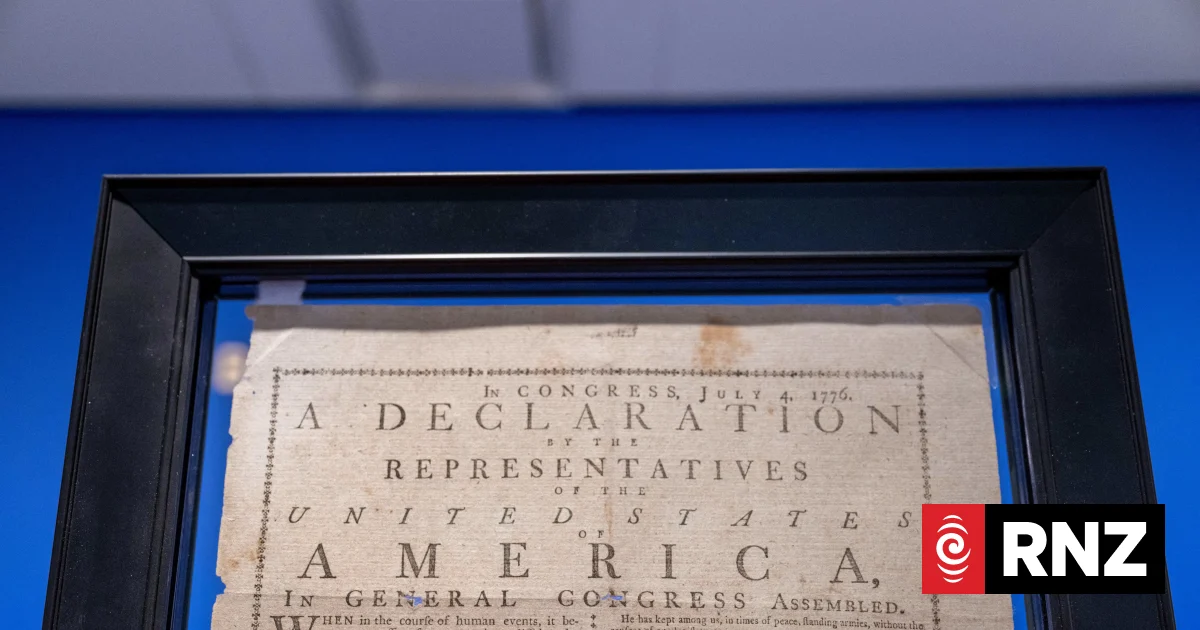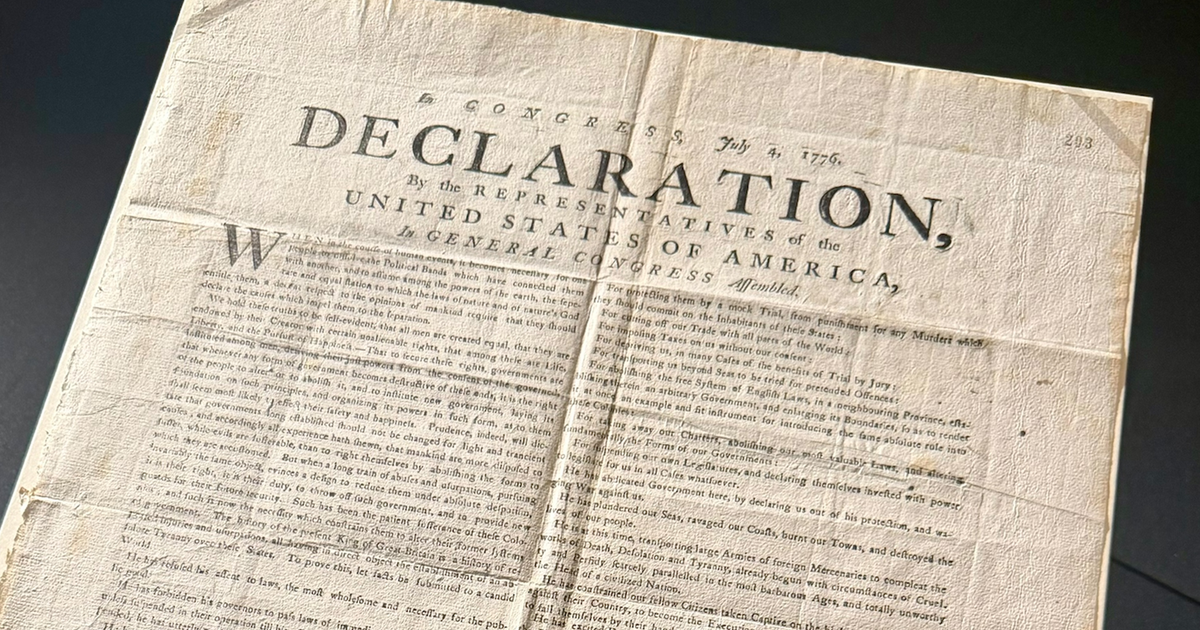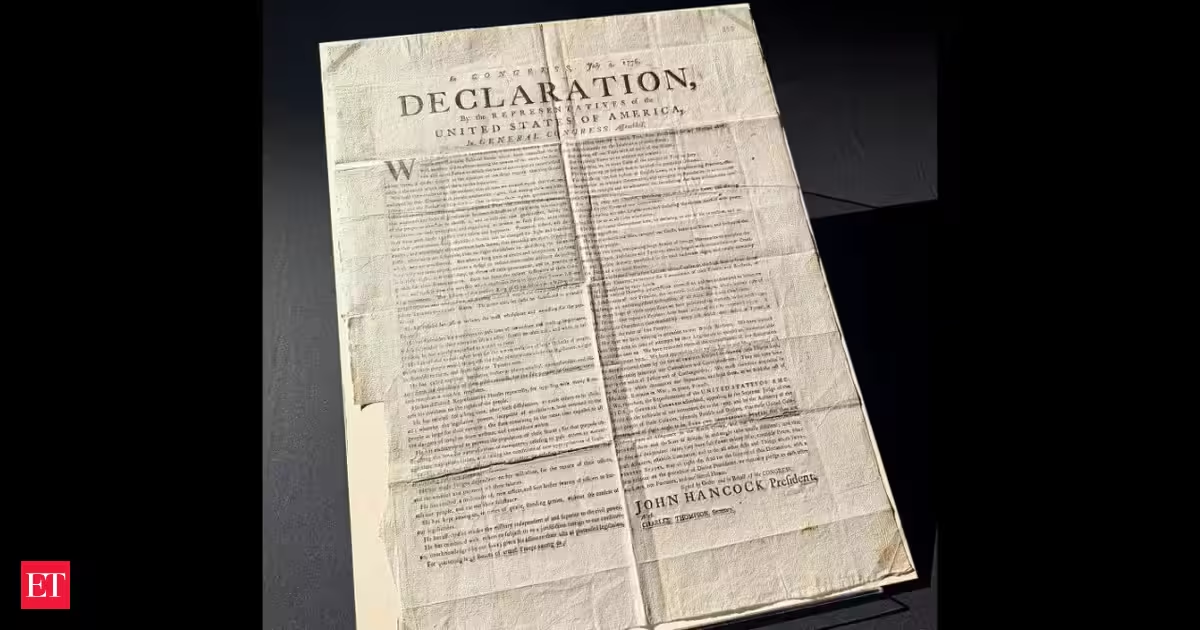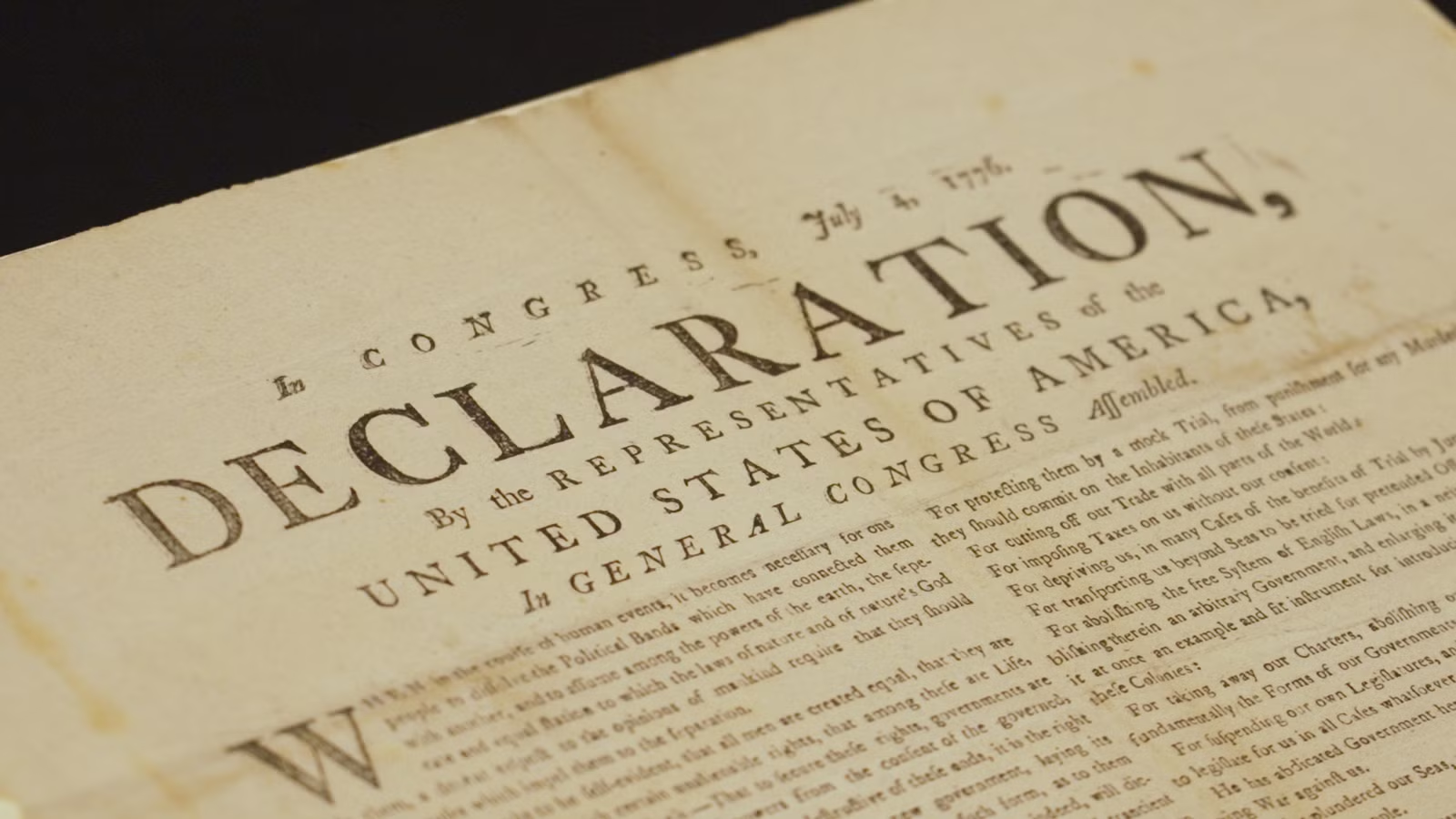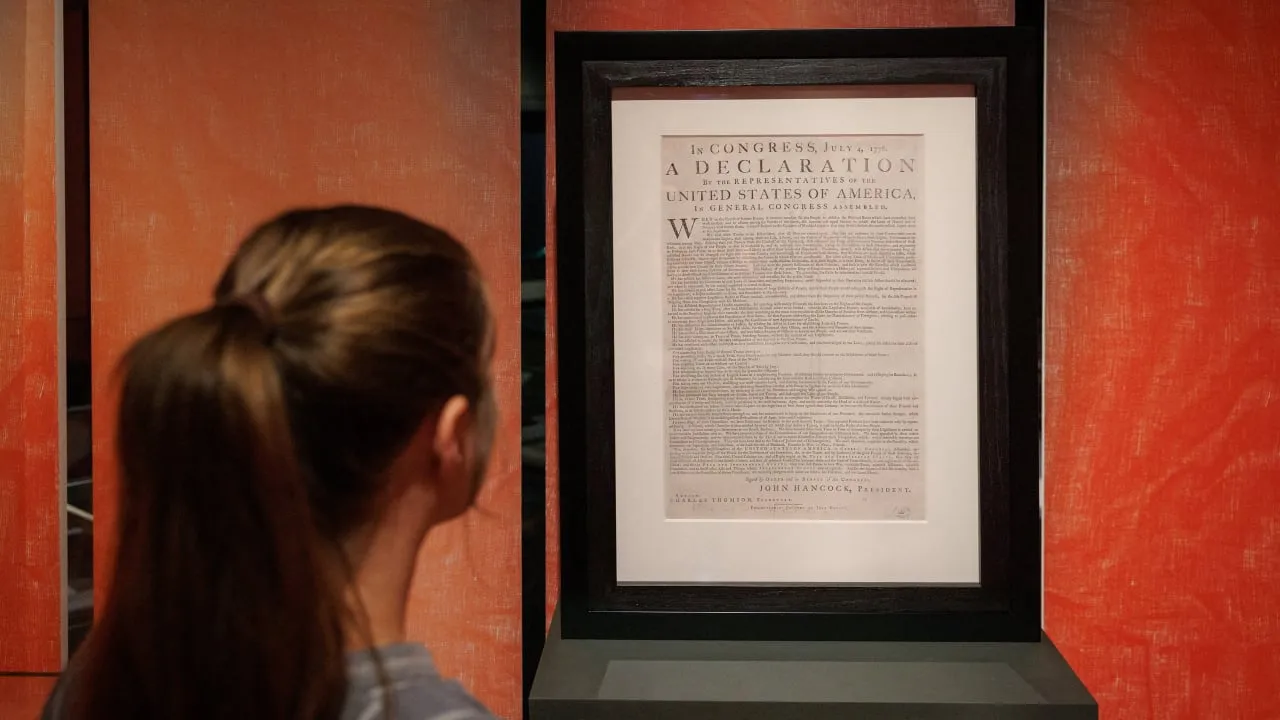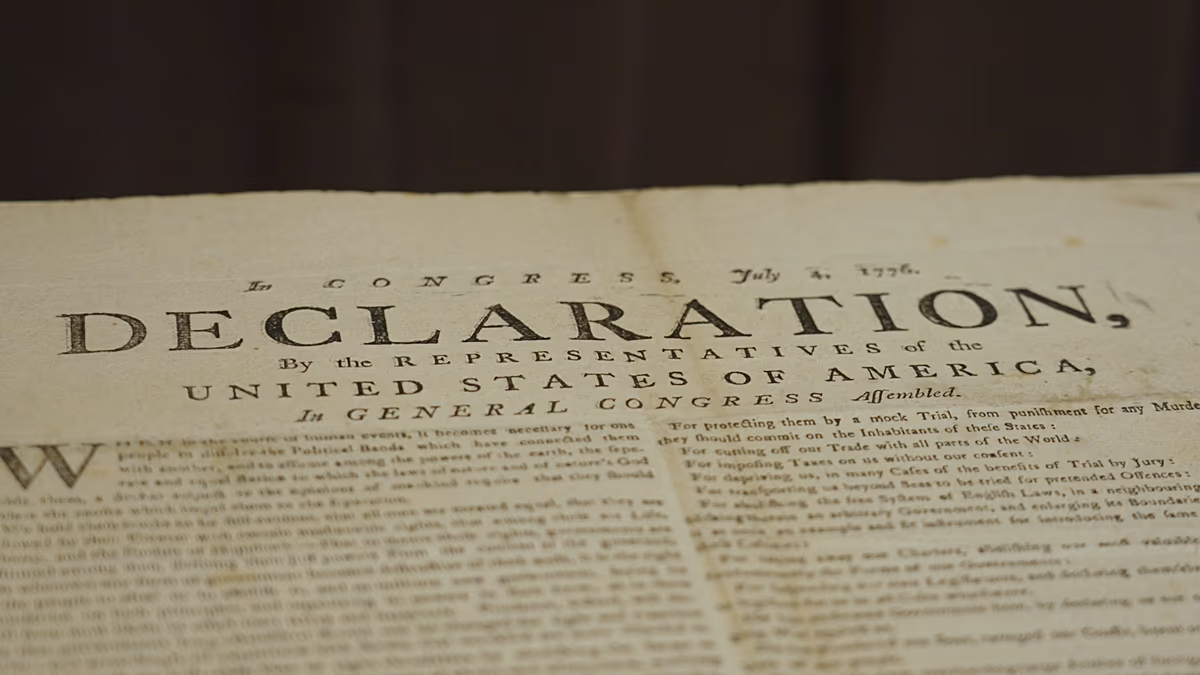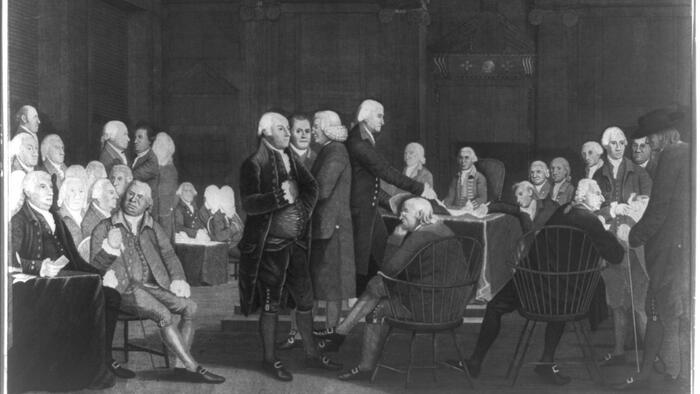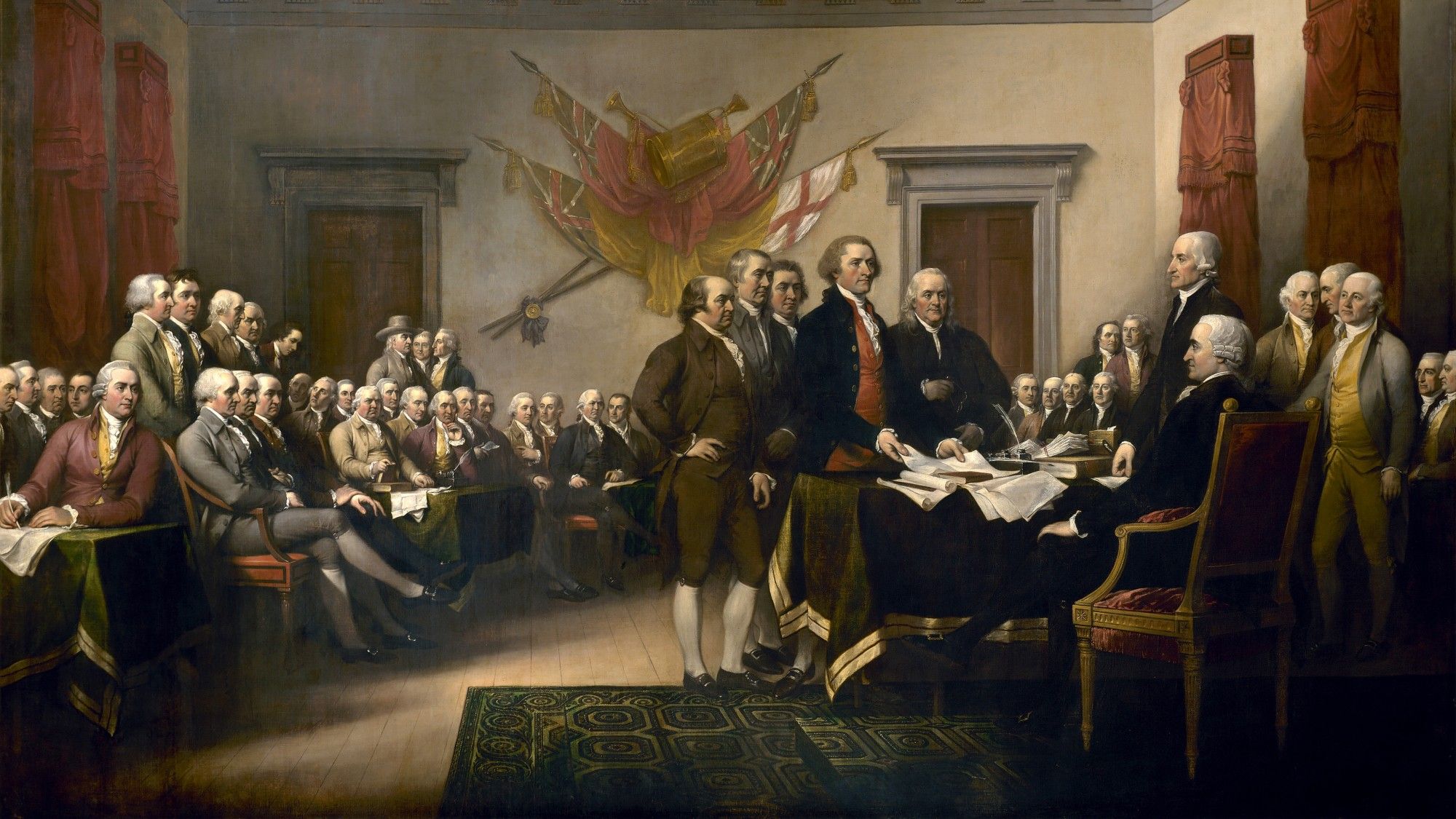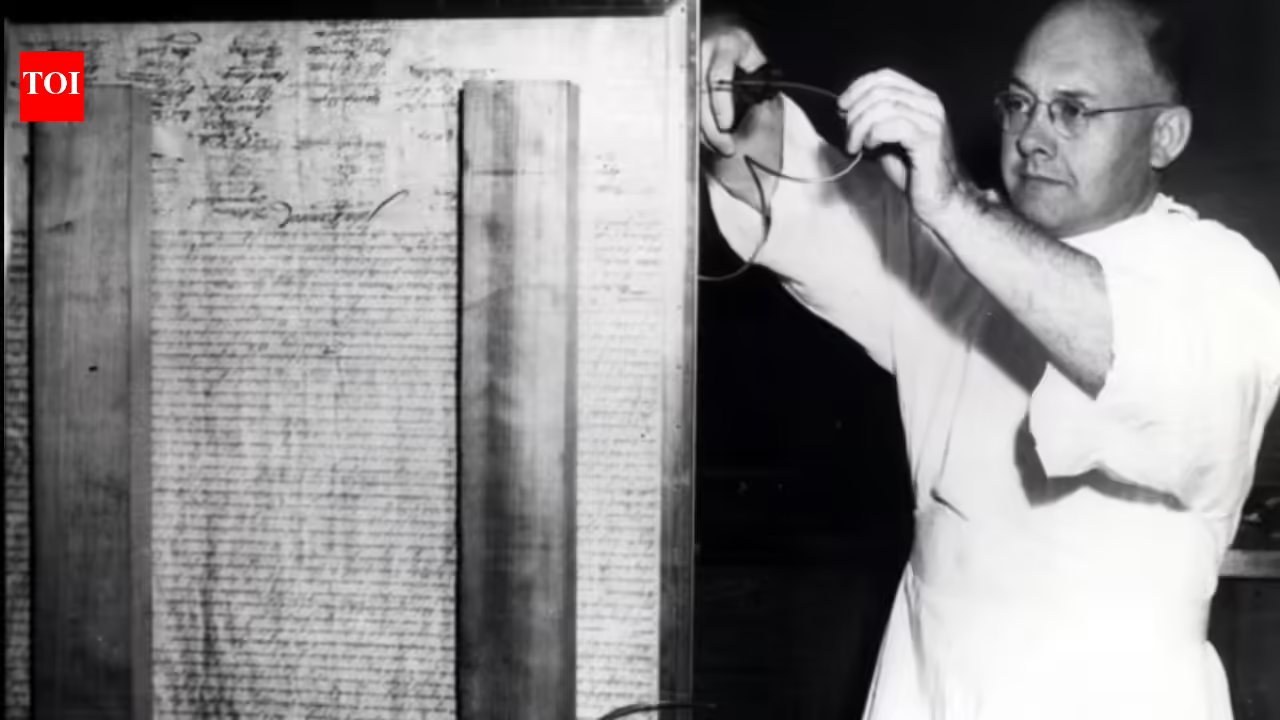
National Bureau of Standards preserving the engrossed copy of the Declaration of Independence in 1951 | Wikimedia CommonsNearly 250 years before the Declaration of Independence became one of the world’s most recognizable political documents, it was simply breaking news. According to the Harvard Gazette, on the night of July 4, 1776, Philadelphia printer John Dunlap worked through the night after receiving an urgent order from the Continental Congress to produce the first printed copies of the Declaration. Historians estimate he printed around 200 broadsides, but only 26 original copies are known to survive today, making them among the rarest and most valuable documents from America’s founding. Harvard University is currently displaying one of those surviving copies as part of its “War of Words” exhibition marking the nation’s 250th anniversary.National Bureau of Standards preserving the engrossed copy of the Declaration of Independence in 1951 | Wikimedia CommonsPrinted to be read, not preservedUnlike the famous handwritten parchment displayed today at the U.S. National Archives, the Dunlap broadside was created for immediate distribution. The single-sheet documents were dispatched to military commanders, state governments, and public officials so the Declaration could be read aloud in town squares, army camps, and meeting halls across the colonies.Because they served as working documents rather than treasured artifacts, most were discarded, damaged, or simply worn out after fulfilling their purpose. Historians say this helps explain why so few originals remain. According to the Library of Congress, Evidence of the rushed overnight printing can still be seen on surviving copies, some of which contain smudged ink, folded pages, and minor typographical inconsistencies caused by the urgency of the job.A revolution powered by the printing pressThe Declaration emerged during an era when printed pamphlets, newspapers, and political essays were transforming public debate in colonial America. Philadelphia had become one of the colonies’ busiest printing centers, thanks in part to pioneers like Benjamin Franklin, while political writings such as Thomas Paine’s Common Sense helped build support for independence long before Congress approved the Declaration.Historians believe the success of the American Revolution depended not only on military victories but also on rapidly spreading ideas. John Dunlap’s overnight print run allowed news of independence to reach communities across the colonies within weeks, turning a congressional decision into a public movement. Public readings of the Declaration soon followed, helping unify the colonies around the cause of independence.John Trumbull's portrait of the Committee of Five presenting their draft of the Declaration to the Second Continental Congress in Philadelphia | Wikimedia CommonsIts influence stretched far beyond 1776Although many of the original broadsides disappeared, the ideas printed on those single sheets have endured for centuries. The Declaration’s opening assertion that “all men are created equal” has been repeatedly invoked by later generations seeking to expand civil rights and democracy.As per the National Archives, the document influenced figures ranging from Abraham Lincoln, who echoed its principles during the Civil War, to Martin Luther King Jr. , who described it as a “promissory note” guaranteeing equality for all Americans. Historians also note that the Declaration’s structure inspired independence movements far beyond the United States, serving as a model for nations seeking freedom from colonial rule. Nearly two and a half centuries after Dunlap’s overnight printing job, the surviving 26 copies stand as rare reminders that one of history’s most influential documents began life not as a museum piece, but as urgent news racing across a young nation.
America’s Declaration of Independence was printed in a single overnight rush in 1776: Only 26 original copies still exist
Nearly 250 years before the Declaration of Independence became one of the world’s most recognizable political documents, it was simply breaking news. According to the Harvard Gazette, on the night of July 4, 1776, Philadelphia printer John Dunlap worked through the night after receiving an urgent order from the Continental Congress to produce the first printed copies of the Declaration.
568 words~3 min read