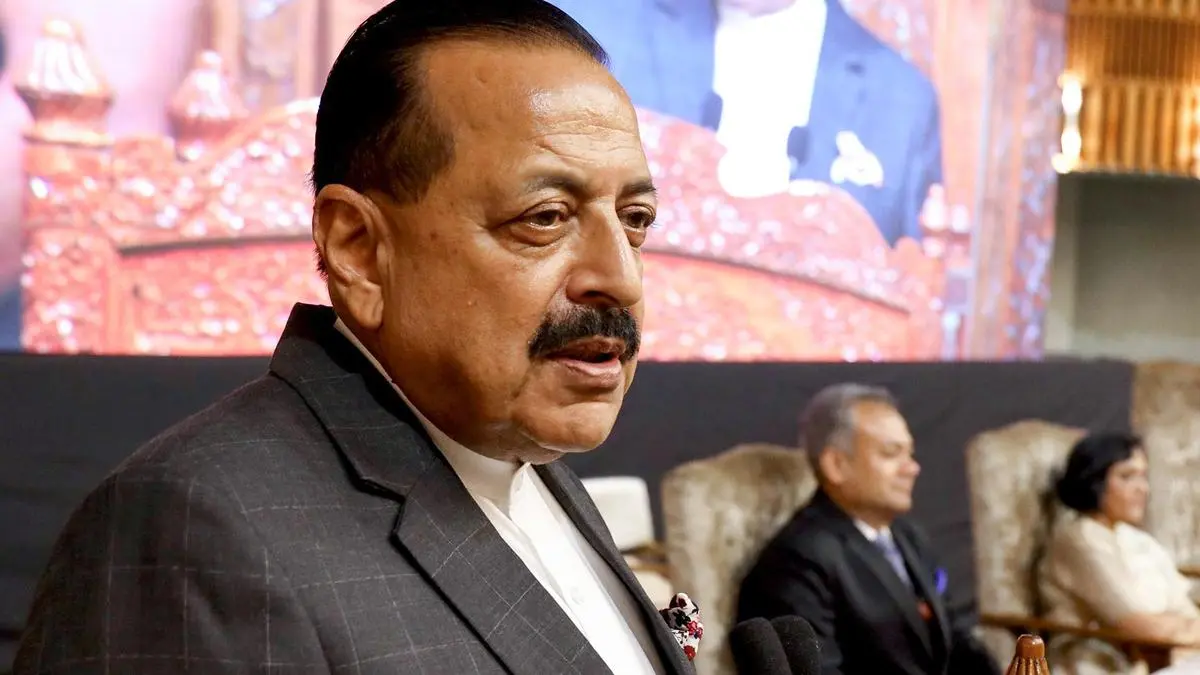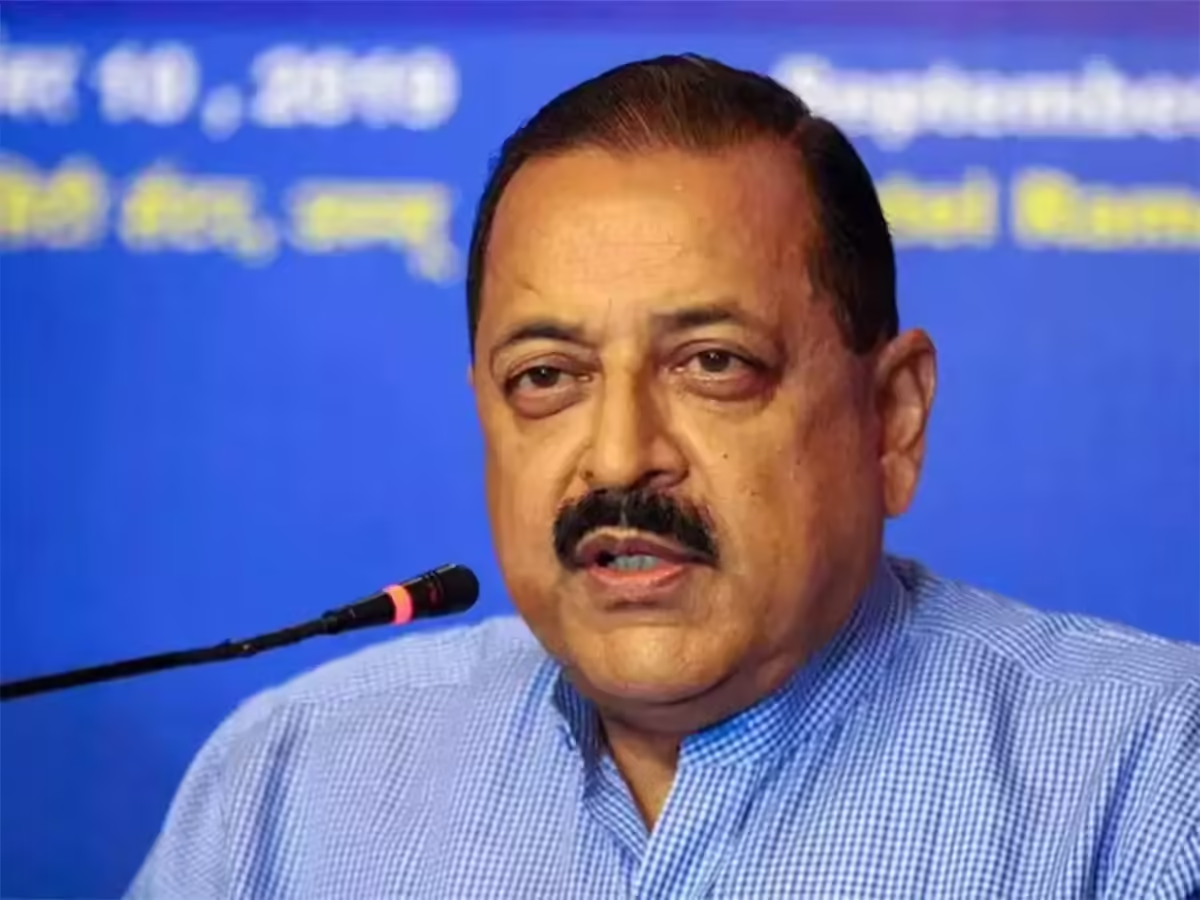
Jaipur, Union minister Jitendra Singh on Thursday said that human-led artificial intelligence would be the defining force behind India's journey towards becoming a developed nation by 2047.The minister of state for science and technology said that technology must strengthen governance without replacing human accountability."The real question is not artificial intelligence alone; the question is how intelligent we are in using artificial intelligence," he said.Addressing the concluding session of the 29th National Conference on e-Governance (NCeG) in Jaipur, Singh said AI is no longer a matter of choice but has become an essential component of governance."The real challenge is not artificial intelligence itself, but whether governments possess the vision and maturity to deploy it responsibly with citizens remaining at the centre of every technological intervention," he said.The two-day conference, organised jointly by the Department of Administrative Reforms and Public Grievances, the Ministry of Electronics and Information Technology and the Rajasthan government, concluded with the adoption of the Jaipur Declaration on e-Governance 2026.The conference was organised around the theme "Viksit Bharat 2047: AI-enabled, Data-driven and Secure Digital Governance".The conference concluded with the adoption of the Jaipur Declaration, which outlines a roadmap for advancing AI-enabled, data-driven, secure and citizen-centric digital governance in line with the vision of Viksit Bharat 2047."India's digital transformation is aimed at empowering public institutions through technology to improve transparency, accountability, efficiency and service delivery rather than replacing human decision-making with machines," he said.He said that governance of the future must combine speed and analytical capabilities of artificial intelligence with human judgement, constitutional values and democratic accountability.He said that technology should amplify human capability, strengthen institutional credibility and improve citizens' experience while remaining firmly anchored in ethics, transparency and public trust.The minister said the conference demonstrated that India's digital governance journey had moved beyond simple digitisation of services and entered a phase driven by AI, data-based decision making, digital public infrastructure and secure digital ecosystems.Referring to the vision of "Maximum Governance, Minimum Government", Singh said technological interventions introduced during the last decade had sought to make governance simpler, more transparent and more accountable.During the event, Singh presented the National e-Governance Awards 2026 to 17 initiatives from central ministries, state governments, district administrations, gram panchayats and academic and research institutions.The awards included 10 gold awards, six silver awards and one jury award across seven categories.The minister also praised Rajasthan's progress in digital governance, particularly the 'Rajkaj' integrated administrative platform, saying it had improved efficiency, transparency and accountability through paperless and technology-enabled administration.
AI to be defining force for 'Viksit Bharat@2047': Jitendra Singh - The Economic Times
Union Minister Jitendra Singh proclaimed that India is set to achieve developed nation status by 2047, thanks to human-led AI advancements. He stressed that technology should enhance, rather than replace, governance and accountability. The recent National Conference on e-Governance culminated in the Jaipur Declaration, outlining a future focused on AI-driven governance that prioritises citizens. The event also celebrated 17 standout digital governance projects with awards.
411 words~2 min read