"People always have this emotional relationship with stocks, and once they have been bitten by something, it takes a while to get back into it."Investing Is as Much About Emotion as NumbersVeteran investor François Rochon's observation captures one of the most enduring truths of investing: market decisions are often driven as much by emotion as by numbers. While investors strive to be rational, experiences of sharp losses can leave a lasting psychological impact, making it difficult to return to the market even when opportunities improve.The Lasting Impact of Market LossesHistory has repeatedly shown that bear markets and major corrections test investor confidence. Those who suffer significant losses frequently become reluctant to invest again, preferring the perceived safety of cash or fixed-income assets. This hesitation can persist long after market fundamentals have recovered.Understanding Loss AversionBehavioral finance describes this tendency as loss aversion: the idea that the pain of losing money is often felt more intensely than the satisfaction of equivalent gains. As a result, investors who have experienced market setbacks may remain on the sidelines, potentially missing the early stages of a recovery when some of the strongest returns are often generated.The Importance of Emotional DisciplineRochon's quote also highlights why successful long-term investing requires emotional discipline. Rather than reacting to short-term volatility, seasoned investors focus on business fundamentals, earnings growth and long-term wealth creation. They recognize that market downturns are an inevitable part of the investment cycle, not a reason to abandon investing altogether.The Takeaway for InvestorsFor retail investors, the lesson is to build a well-diversified portfolio, maintain a long-term perspective and avoid making investment decisions based solely on fear or recent market experiences. While caution after losses is natural, allowing emotions to dictate investment choices can prove more costly than the downturn itself.In the end, markets recover confidence gradually, much like investors do. Patience, discipline and a focus on long-term goals remain the most effective tools for navigating the emotional highs and lows of equity investing.
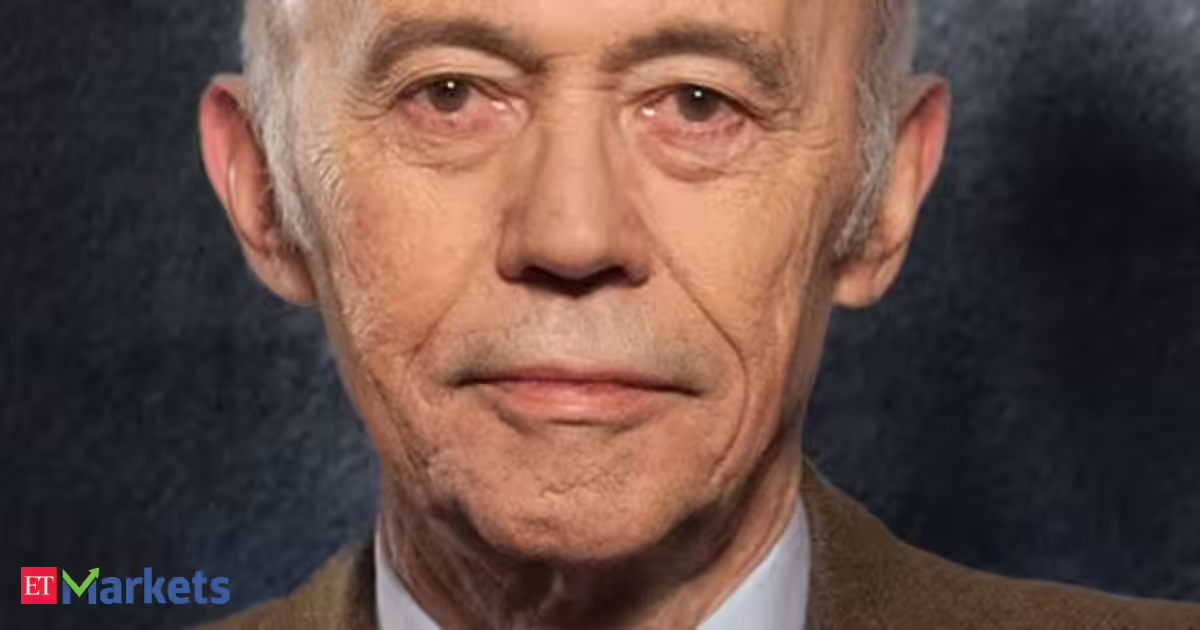
Quote of the day by Francois Rochon: "People always have this emotional relationship with stocks, and once they have been bitten by something, it takes a while to get back into it"
Market losses deeply affect investors, making them hesitant to reinvest even when opportunities arise. This emotional response, known as loss aversion, can lead to missed gains during recoveries. Francois Rochon emphasizes emotional discipline, urging investors to focus on long-term fundamentals rather than short-term volatility. Building a diversified portfolio and maintaining a patient, long-term outlook are crucial for navigating market fluctuations and achieving wealth creation.
326 words~1 min read