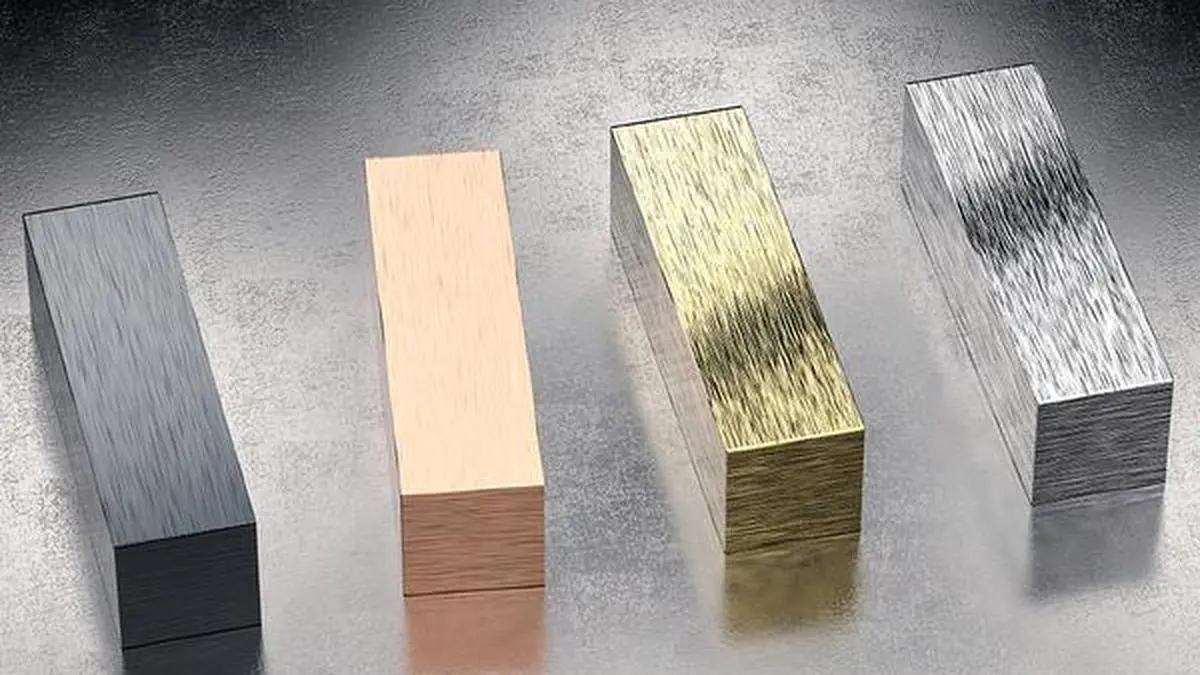
3d rendering metal blocks in multicolored and pattern
| Photo Credit:
PhonlamaiPhoto
Aluminium and copper prices have dropped by 17.5 per cent and 6 per cent, respectively, in the past month, but their downsides are limited from a fundamental perspective, analysts say.“... the loss of Middle Eastern (West Asian) supply had tightened an already constrained (aluminium) market, and we expect a supply deficit to persist in 2026, limiting, in turn, the downside for prices, at least from a fundamentals perspective,” said research agency BMI, a unit of Fitch Solutions.“We believe downside risks for aluminium prices remain limited. The market continues to face a supply deficit of 1.8 million tonnes (mt), while inventories continue to signal tight physical market conditions,” said Ewa Manthey, Commodities Strategist at ING Think, the economic and financial analysis wing of Dutch multinational financial services firm ING. “After a comprehensive assessment of the macro and industrial game, it is expected that the aluminium price may rise after fluctuating in the second half of the year, with limited downside,” said Chinese Commodities data firm Sunsirs, quoting an analyst.Up 3% YTDOn the London Metal Exchange, aluminium is currently quoted at around $3,100 a tonne. Prices are up 3 per cent year-to-date.Sunsirs said that looking at the copper price trend for the second half of the year, with the basic support of tightening supply and stable demand, the copper price is expected to continue to rise. “However, uncertainties in the macro and policy aspects will affect the pace of price movement,” it said. ING Think’s Manthey sees copper easing in the third and fourth quarters modestly, as the initial US tariff stockpiling impulse fades and macro headwinds persist. Though she said a US announcement on tariffs would be a near-term upside risk to ING Think’s forecast, Washington did not come out with any tariffs on June 30 as expected.BMI said even if US President Donald Trump imposes tariffs again on the red metal, sentiment-driven short-term downward pressures would likely ensue. “However, the outcome does not materially alter our outlook, leaving copper’s longer-term supportive fundamentals intact, all else being equal,” it said.Copper gains 7.5% YTDCopper is currently quoted at $13,300 a tonne. Prices are up 7.5 per cent year-to-date. The research agency said the ceasefire agreement between the US and Iran is set to ease the acute supply-side pressure that had weighed most heavily on aluminium supply amid disruptions to Gulf smelting capacity. The US-Iran conflict is estimated to remove 2.3 million tonnes from the market, equivalent to 3.2 per cent of global output. “That said, the lost capacity is unlikely to return quickly,” it said.Manthey expects the global aluminium market to remain in a 1.8 million tonnes deficit this year. Supply disruptions linked to the conflict have already removed an estimated 3 million tonnes of production from the market.“While the geopolitical backdrop has improved, the supply losses underpinning this outlook remain in place,” she said. May reboundSunsirs said the aluminium price in the next three months may show a rebound after pressure, with limited downside. “After a comprehensive assessment of the macro and industrial game, it is expected that the aluminium price may rise after fluctuating in the second half of the year, with limited downside,” it said. Sunsirs said a rapid reduction in Chinese stocks demonstrates that copper demand has strong resilience, and price adjustments often trigger collective restocking behaviour from the downstream. The ING commodities strategist said a 15 per cent phased US tariff on copper from January 1, 2027, would likely increase the COMEX premium over the LME. Both benchmarks, however, would move higher. Suppportive impact“The overall impact would be supportive for copper prices globally, although the larger move would likely occur in COMEX,” said Manthey.BMI said that though the Comex-LME copper spread is “re-widening”, it is nowhere near the $2,937/tonne record at the end of July 2026. This suggests the market sentiment is tilting towards a delay in immediate implementation. Manthey said if the US brings forward its proposed tariffs to 30 per cent in 2028 or confirms them as a near-term policy objective, the premium could expand further.Published on July 2, 2026