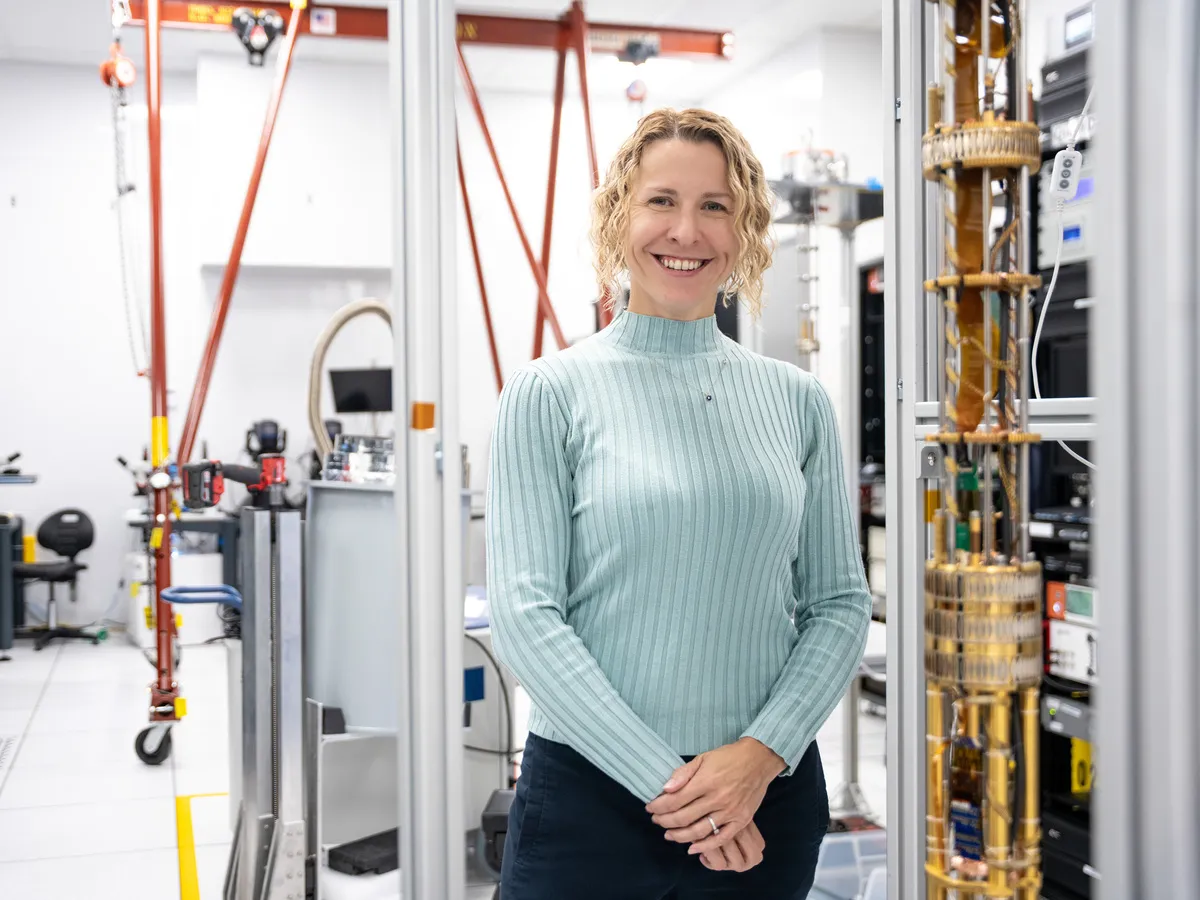
Skip to Content News Archives Economy Energy Oil & Gas Renewables Electric Vehicles Mining Commodities Agriculture Real Estate Mortgages Mortgage Rates Finance Banking Insurance Fintech Cryptocurrency Work Wealth Smart Money Wealth Management Investor Personal Finance Family Finance Retirement Taxes High Net Worth FP Comment Executive Women Puzzmo Newsletters Financial Times Business Essentials More Innovation Information Technology FP500 Podcasts Small Business Lives Told Tails Told Shopping Financial Post Store Obituaries Place a Notice Advertising Advertising With Us Advertising Solutions Postmedia Ad Manager Sponsorship Requests Classifieds Place a Classifieds ad Working Profile Settings My Subscriptions Saved Articles My Offers Newsletters Customer Service FAQ News Economy Energy Mining Real Estate Finance Work Wealth Investor FP Comment Executive Women Puzzmo Newsletters Financial Times Business Essentials HomeInnovationHere's what Rick Mercer doesn't know about how Canada stacks up in quantum computingCanadian tech companies are racing to build a scalable and useful quantum computer within the next decadeLast updated 22 minutes ago You can save this article by registering for free here. Or sign-in if you have an account.The federal government has invested more than $1.6 billion since 2012 in Canadian quantum computer development, including a $334.3-million spending commitment in the most recent budget. Photo by Michelle Berg/PostmediaCanada has long been a hotbed for quantum computing, but even Canadian comedian Rick Mercer doesn’t know what it is despite promoting the country’s prowess in it.Subscribe now to read the latest news in your city and across Canada.Exclusive articles from Barbara Shecter, Joe O'Connor, Gabriel Friedman, and others.Daily content from Financial Times, the world's leading global business publication.Unlimited online access to read articles from Financial Post, National Post and 15 news sites across Canada with one account.National Post ePaper, an electronic replica of the print edition to view on any device, share and comment on.Daily puzzles, including the New York Times Crossword.Subscribe now to read the latest news in your city and across Canada.Exclusive articles from Barbara Shecter, Joe O'Connor, Gabriel Friedman and others.Daily content from Financial Times, the world's leading global business publication.Unlimited online access to read articles from Financial Post, National Post and 15 news sites across Canada with one account.National Post ePaper, an electronic replica of the print edition to view on any device, share and comment on.Daily puzzles, including the New York Times Crossword.Create an account or sign in to continue with your reading experience.Access articles from across Canada with one account.Share your thoughts and join the conversation in the comments.Enjoy additional articles per month.Get email updates from your favourite authors.Create an account or sign in to continue with your reading experience.Access articles from across Canada with one accountShare your thoughts and join the conversation in the commentsEnjoy additional articles per monthGet email updates from your favourite authorsSign In or Create an Accountor“I have no idea what a quantum is, but I know we’re crushing it,” he said in a Business Development Bank of Canada television ad.But Mercer — and others — may know soon. The markets dubbed 2025 the year of quantum following a string of breakthroughs that turned even Nvidia Corp. chief executive Jensen Huang into a quantum bull and ignited a wave of investor interest and public listings, including one by Toronto-based Xanadu Quantum Technologies Inc.Companies are racing to find a way to build a scalable and useful quantum computer within the next decade, something industry proponents say will unlock new applications in everything from drug discovery to financial modelling.Get the latest headlines, breaking news and columns.By signing up you consent to receive the above newsletter from Postmedia Network Inc.A welcome email is on its way. If you don't see it, please check your junk folder.The next issue of Top Stories will soon be in your inbox.We encountered an issue signing you up. Please try againCanadian public and private investors have poured more than $2 billion into the field since 2002 and the Mark Carney government earmarked more than $334 million in the last budget. That may sound like a lot, but here’s how Canada’s quantum investments and players stack up against others.Canada has eight companies focused on quantum computing and technologies that received venture capital funding at the end of 2025, compared to 46 in the United States, 29 in China and nine in the United Kingdom, according to researcher PitchBook.Xanadu is the only publicly traded Canadian pure-play quantum computing company, but Montreal-based Quantum eMotion Corp. and Vancouver’s BTQ Technologies Corp., which are focused on quantum security and post-quantum technologies, have also made their public debut.“This is show time,” said Michele Mosca, a professor and co-founder of the Institute for Quantum Computing (IQC) at the University of Waterloo in Ontario and chief executive and cofounder of evolutionQ Inc., a quantum-safe cybersecurity firm.“Quantum companies now need to move faster, demonstrate technological progress, win customers and attract talent. Most will need additional capital one way or another.”Canada has been the launchpad for industry pioneers such as D-Wave Quantum Inc., which was founded in Vancouver in 1999 by University of British Columbiaprofessors and UBC-affiliated scientists, but moved its headquarters to the United States in 2023.Other companies have remained in Canada and are holding their own. For example, the U.S. Defense Advanced Research Projects Agency (DARPA) has selected three Canadian startups — Toronto-based Quantum Technologies Inc., Vancouver’s Photonic Inc. and Sherbrooke, Que.-based Nord Quantique Inc. — to participate in its Quantum Benchmarking Initiative (QBI) that validates viable approaches to building a large-scale, useful-for-industry quantum computer by 2033.Ottawa launched its Canadian Quantum Champions Program last December to help homegrown companies develop and commercialize their technologies and to keep them headquartered in the country. The program will award up to $92 million to the same three Canadian startups selected by DARPA in addition to Montreal-based Anyon Systems Inc.The first National Quantum Strategy, released in 2023, outlined the federal government’s goals to “make Canada a world leader” in developing, advancing and using quantum computing and technologies.But Ottawa and the tech community began investing in quantum before that. Total public and private investments in Canadian quantum since 2002 exceed $2 billion, according to Innovation, Science and Economic Development (ISED) Canada.The federal government has invested more than $1.6 billion since 2012 in quantum, including a $334.3-million spending commitment in the budget.Provincial governments have also made “significant investments in centres of quantum leadership,” ISED said.For example, Ontario in 2024 invested nearly $15 million in the Quantum Valley Ideas Lab, a Waterloo, Ont.-based research hub that helps companies advance and adopt quantum technologies. It is also in discussions to provide funding to help Xanadu build a quantum data centre in Toronto.Tech pioneers have chipped in, too, including BlackBerry Ltd. founders Mike Lazaridis and Doug Fregin, who set up a $100-million venture capital fund in 2013 to commercialize quantum computing.Venture capital investment in Canadian quantum technology companies totalled $625 million from 2020 to 2026, according to PitchBook.The U.S. and China outpace other countries in funding quantum. Private venture capital investment in U.S. quantum companies totalled about US$5.8 billion from 2020 to 2026, according to PitchBook. On the public side, the U.S. government had funnelled more than US$4 billion to the sector as of 2024, according to estimates in a McKinsey & Co. report that year.The Donald Trump administration in May announced it would provide US$2 billion to nine quantum companies — including US$100 million to D-Wave — in exchange for equity stakes in the businesses.China, meanwhile, has poured at least US$15 billion into the sector as of 2023, according to McKinsey. It set up a US$10-billion national quantum lab in 2017.European Union countries and the European Commission have provided US$13 billion in public funding for quantum since 2020 and are seeking more private investment for the bloc’s startups. Germany has invested at least US$5 billion, while France has invested more than US$2.2 billion as of 2023, according to McKinsey.Japan and Britain have channelled additional public funds into quantum, with the former investing US$7.4 billion and the latter investing US$4.4 billion since 2023.Lisa Lambert, outgoing chief executive of industry group Quantum Industry Canada, said Ottawa’s $82-billion defence push could be a major boon for quantum-focused small and mid-sized businesses.“A lot of these technologies are defence first,” she said. “There’s a really great opportunity to be leveraging our own domestic innovation and pulling these technologies through.”The quantum sector is on track to contribute $180 billion to Canada’s gross domestic product and generate more than 194,000 jobs by 2045, according to a 2026 ISED report.Ottawa in recent months has inked a flurry of technology agreements with non-U.S.-allied countries to deepen cooperation on critical technologies from artificial intelligence to quantum, such as the Canada-Germany Digital Alliance signed last December. Earlier this year, Ottawa and Berlin jointly launched a call for quantum R&D proposals that linked the two countries’ businesses.But Mosca said Canada’s international agreements must be structured around concrete and shared projects, customer access and commercialization pathways that strengthen Canadian companies; otherwise “they risk becoming diplomatic or political theatre.”The biggest issue, she said, is not the total dollar value flowing to the sector, but whether the money is funding the right things quickly enough and in the right way.“Companies need procurement, customers, export support,” she said. “They need more pathways to market, not just more announcements.” Join the Conversation This website uses cookies to personalize your content (including ads), and allows us to analyze our traffic. Read more about cookies here. By continuing to use our site, you agree to our Terms of Use and Privacy Policy.
Here's what Rick Mercer doesn't know about how Canada stacks up in quantum computing
Canadian tech companies are racing to find a way to build a scalable and useful quantum computer within the next decade. Find out more here
1,570 words~7 min read