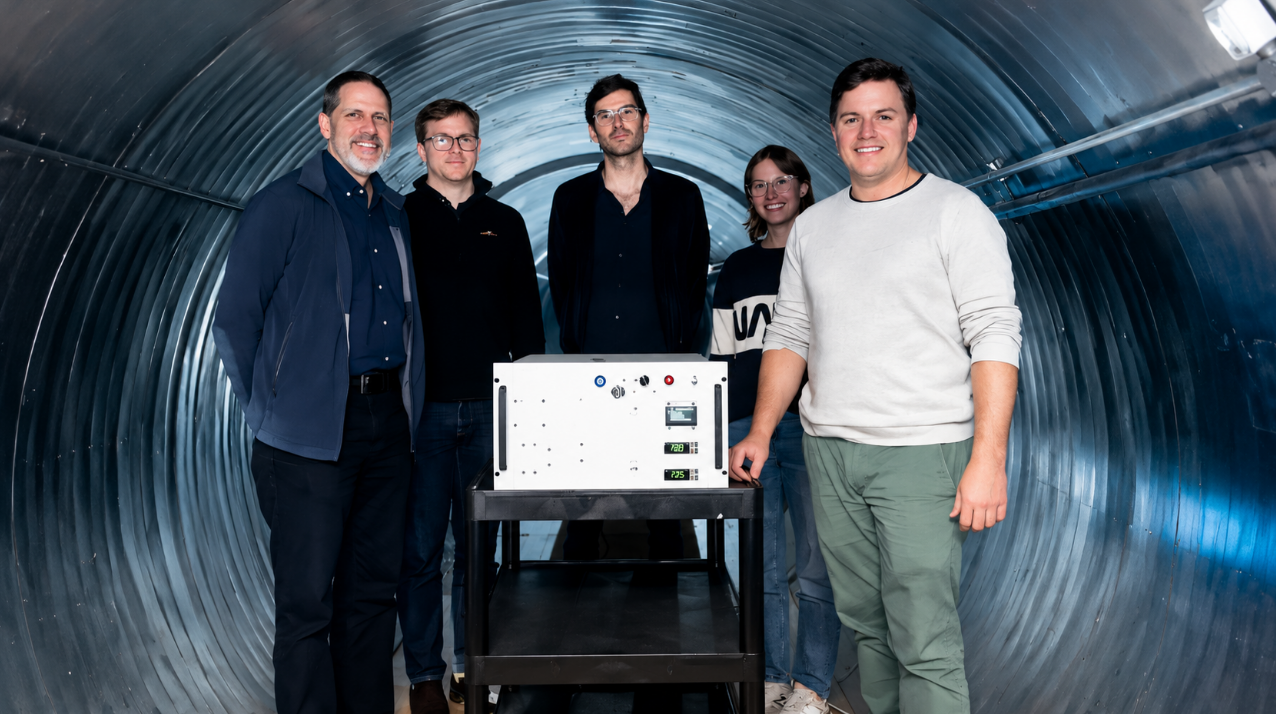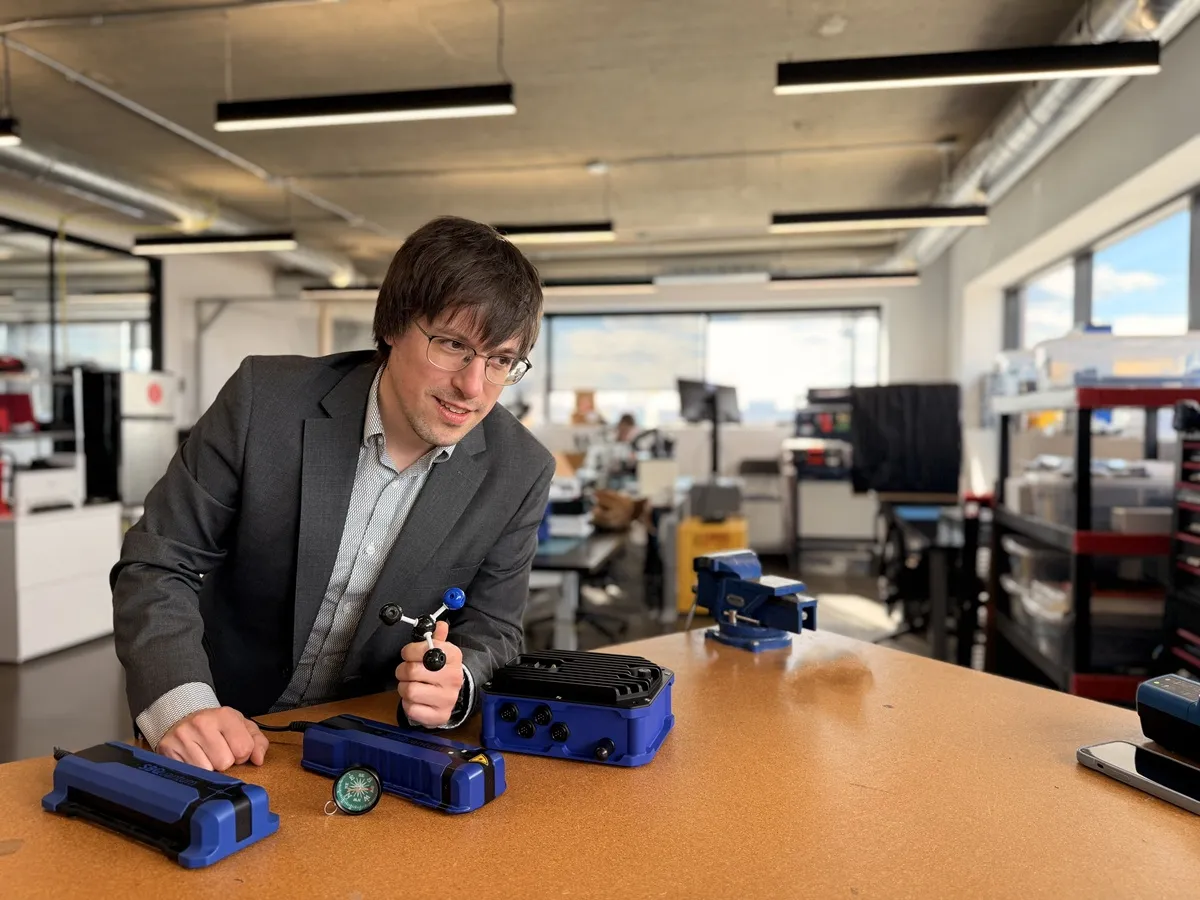
Skip to Content News Archives Economy Energy Oil & Gas Renewables Electric Vehicles Mining Commodities Agriculture Real Estate Mortgages Mortgage Rates Finance Banking Insurance Fintech Cryptocurrency Work Wealth Smart Money Wealth Management Investor Personal Finance Family Finance Retirement Taxes High Net Worth FP Comment Executive Women Puzzmo Newsletters Financial Times Business Essentials More Innovation Information Technology FP500 Podcasts Small Business Lives Told Tails Told Shopping Financial Post Store Obituaries Place a Notice Advertising Advertising With Us Advertising Solutions Postmedia Ad Manager Sponsorship Requests Classifieds Place a Classifieds ad Working Profile Settings My Subscriptions Saved Articles My Offers Newsletters Customer Service FAQ News Economy Energy Mining Real Estate Finance Work Wealth Investor FP Comment Executive Women Puzzmo Newsletters Financial Times Business Essentials HomeInnovationCanadian quantum sensor startup aims to help defence forces navigate where GPS can’t go'Canada needs sovereign, GPS-independent navigation capability for Arctic and GPS-denied operations' You can save this article by registering for free here. Or sign-in if you have an account.David Roy-Guay, SBQuantum co-founder and chief technology officer, with the company's quantum sensors. Photo by Handout/SBQuantumA Sherbrooke, Que.-based quantum sensor startup that aims to “reveal the invisible” and provide an alternative to GPS announced it has been awarded two contracts worth about $3 million from Canada’s Department of National Defence (DND) to test its technology for defence applications.Subscribe now to read the latest news in your city and across Canada.Exclusive articles from Barbara Shecter, Joe O'Connor, Gabriel Friedman, and others.Daily content from Financial Times, the world's leading global business publication.Unlimited online access to read articles from Financial Post, National Post and 15 news sites across Canada with one account.National Post ePaper, an electronic replica of the print edition to view on any device, share and comment on.Daily puzzles, including the New York Times Crossword.Subscribe now to read the latest news in your city and across Canada.Exclusive articles from Barbara Shecter, Joe O'Connor, Gabriel Friedman and others.Daily content from Financial Times, the world's leading global business publication.Unlimited online access to read articles from Financial Post, National Post and 15 news sites across Canada with one account.National Post ePaper, an electronic replica of the print edition to view on any device, share and comment on.Daily puzzles, including the New York Times Crossword.Create an account or sign in to continue with your reading experience.Access articles from across Canada with one account.Share your thoughts and join the conversation in the comments.Enjoy additional articles per month.Get email updates from your favourite authors.Create an account or sign in to continue with your reading experience.Access articles from across Canada with one accountShare your thoughts and join the conversation in the commentsEnjoy additional articles per monthGet email updates from your favourite authorsSign In or Create an AccountorSBQuantum is developing technology to aid navigation and, through fluctuations in magnetic fields, detect objects in rough or remote areas, conflict zones and covert operations. The company’s website says it seeks to “reveal the invisible,” spotting landmasses, mineral deposits and objects, such as submarines, that are hidden, above the ground, underground or beneath the water.The company’s quantum magnetometer is a small sensor that mounts on platforms such as drones, vehicles, aircraft or autonomous underwater vehicles. By picking up fluctuations in the Earth’s magnetic field, it detects the size, orientation, material and distance of objects from the sensor, the company said. The system reads and remembers terrain and allows users to map their location.Get the latest headlines, breaking news and columns.By signing up you consent to receive the above newsletter from Postmedia Network Inc.A welcome email is on its way. If you don't see it, please check your junk folder.The next issue of Top Stories will soon be in your inbox.We encountered an issue signing you up. Please try again“GPS signals are unreliable above 70°N. They are also vulnerable to jamming and spoofing, and dependent on foreign-controlled infrastructure. Canada requires a navigation alternative to GPS that is resilient, sovereign, and operable in demanding environments,” said chief executive Eric Giroux in an email. “Canada needs sovereign, GPS-independent navigation capability for Arctic and GPS-denied operations.”The sensors use engineered diamonds hit by lasers to excite their electrons so their quantum state can be measured as they interact with magnetic fields, according to the company.Unlike standard GPS technology, these sensors cannot get jammed or interrupted. Using the Earth’s magnetic field also means that it’s not possible to track where the sensors’ transmissions emanate from.This technology also does not rely on GPS infrastructure or ground stations. Meaning it will work anywhere in the world regardless of latitude, temperature or network availability.“Magnetic navigation has the potential to provide a new generation of reliable and accurate navigation and positioning systems for aircraft, autonomous platforms and even ships at sea. They offer a unique set of advantages over alternative approaches to navigation. We believe this is why DND has decided to work with us,” said David Roy-Guay, SBQuantum co-founder and chief technology officer.In the wake of the federal government’s defence industrial strategy that aims to prioritize domestic companies for military spending, SBQuantum’s latest DND contracts will see its technology deployed for applications including magnetic navigation, detection of metallic objects and covert operations. The strategy lists quantum sensors as one of its key sovereign capability priorities.One contract, worth $1.05 million, was awarded through DND’s Innovation for Defence Excellence and Security (IDEaS) program. The funding is intended to test SBQuantum’s portable sensor systems in the field.The other contract, worth $1.95 million, was awarded through Innovation, Science and Economic Development Canada’s Innovative Solutions Canada (ISC) program to use the company’s sensors mounted on drones to detect surface landmarks and hidden metallic objects in remote Canadian terrain difficult for ground forces to access, according to the company.Founded in 2017, the Université de Sherbrooke’s Institut Quantique spinout has about 25 employees.The company said it has already received contracts worth millions of dollars from customers including DND, National Research Council, the Canadian Space Agency, European Space Agency and others. Its quantum magnetometer was launched into orbit in March by the U.S. National Geospatial Intelligence Agency to help map the Earth’s shifting magnetic field from space.SBQuantum also received funding by the governments of Canada and the United Kingdom for its Quantum Accelerated Mining Exploration project in 2024. The funding was valued at over $15 million to develop sensor systems for mining to detect mineral deposits, such as cobalt, copper, lithium, nickel, platinum and rare earths, through their specific magnetic signatures, according to the company. SBQuantum’s sensor system can be deployed on drones over mining claims.The company closed a US$4 million round of seed funding led by Canadian and foreign venture capital in April. Join the Conversation This website uses cookies to personalize your content (including ads), and allows us to analyze our traffic. Read more about cookies here. By continuing to use our site, you agree to our Terms of Use and Privacy Policy.
Canadian quantum sensor startup aims to help defence forces navigate where GPS can’t go
Sherbrooke, Que.-based quantum sensor startup SBQuantum lands $3 million in defence contracts to 'reveal the invisible.' Find out more here
1,137 words~5 min read