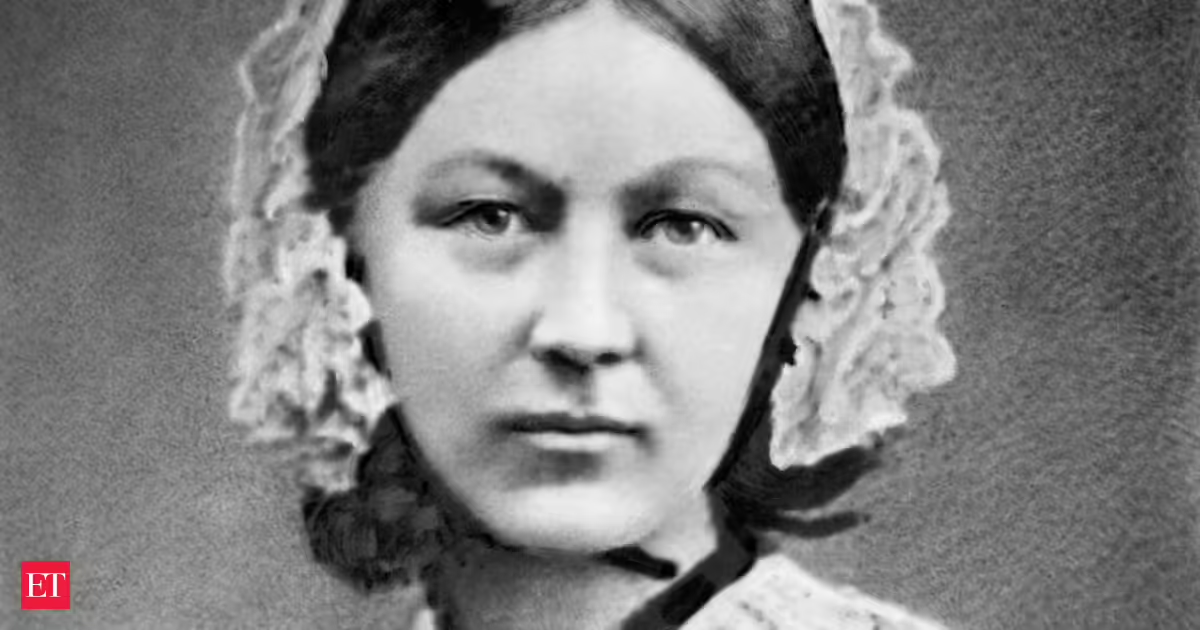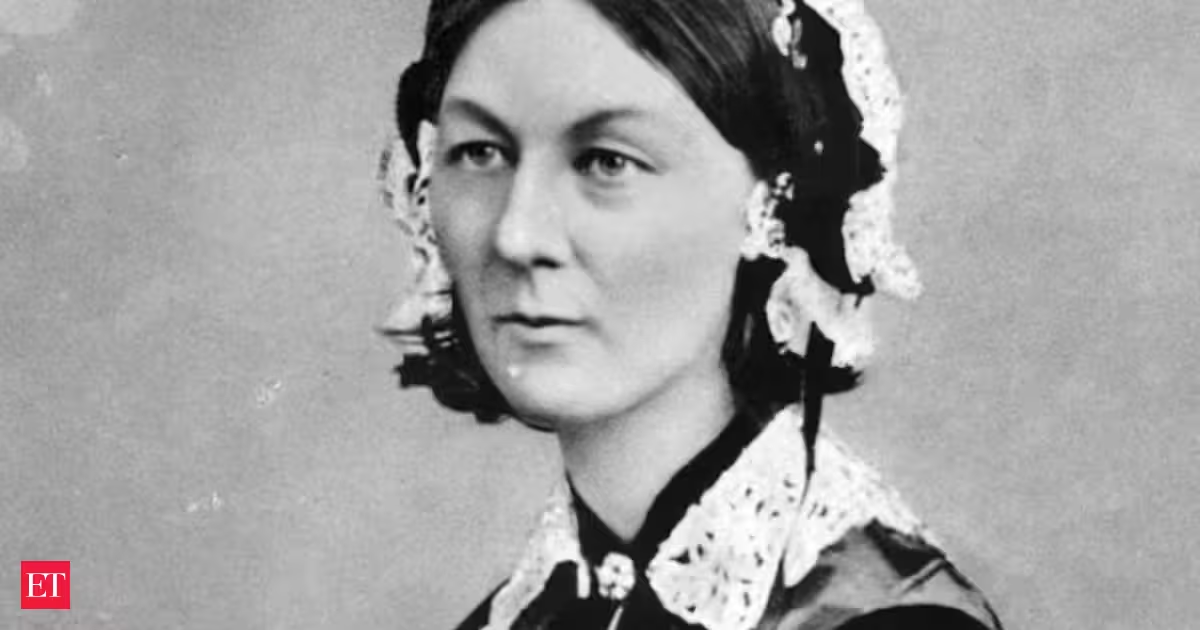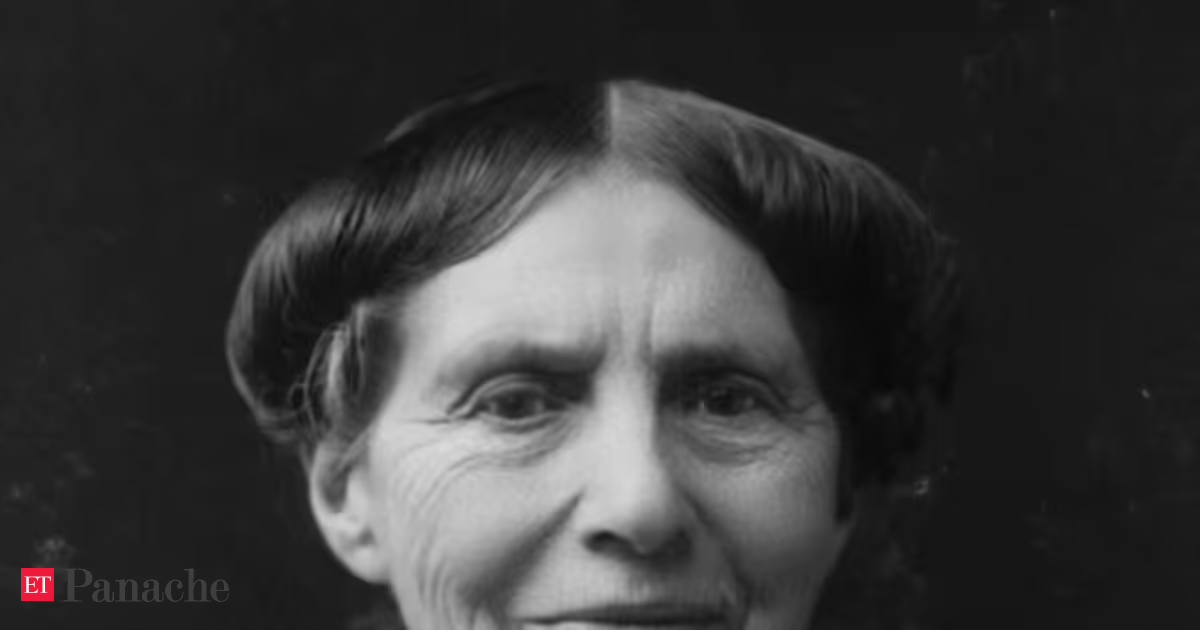
Quote of the day by founder of American Red Cross Clara Barton: 'I have no right to easy comfortable days when our poor men are suffering and dying thirsting' ; life lessons on caring for humanity from Florence Nightingale of AmericaSynopsisEmpathy fuels societal trust and well-being, a principle embodied by nurse Clara Barton. Her powerful words, "have no right to easy comfortable days when our poor men are suffering and dying thirsting," underscore a profound call to action. Barton, a self-taught nurse and founder of the American Red Cross, dedicated her life to alleviating suffering, proving that privilege demands service.ET OnlineEmpathy is the foundation of our society. It is the touchstone of how a society functions and grows. It creates mutual trust between people and helps establishment of a high-trust society where we can expect most if not all people to care for one another’s well-being. Iconic nurse Clara Barton once reflected on the necessity of empathy and how essential it is for humanity as a whole. Quote Of The Day By Clara BartonThe American Red Cross founder once stated: “have no right to easy comfortable days when our poor men are suffering and dying thirsting.”Deeper Meaning Of The QuoteBarton’s words reflects a profound sense of compassion, empathy and responsibility. Like the ultimate caregiver she is, Clara refuses to rest easy and focus on her self, when there are countless people suffering. . Rather than enjoying a life of luxury while ignoring widespread suffering, the quote calls for sharing the burdens of society and working toward the welfare of others. It emphasizes that privilege should never lead to indifference, but instead inspire service and sacrifice. The statement also highlights the moral duty to recognize the pain of vulnerable people and to use one's position, resources, or influence to ease their struggles.Relevance Of The QuoteBarton’s words still hold meaning in this day and age, as there are innumerable people struggling from hunger, lack of basic necessities. It reminds us that people who have privilege have the responsibility to protect and provide for the have-nots. In an era marked by widening economic inequality, humanitarian crises, and climate-related disasters, the quote encourages empathy, social justice, and collective action. It challenges individuals, leaders, and governments to prioritize the welfare of vulnerable communities over personal comfort and luxury.Who Was Clara Barton?Barton is an icon in the nursing profession in US. She was a hospital nurse in the American Civil War, was a patent clerk and a teacher. She did not attend nursing school and was self-taught. Barton was born in the rural town of Oxford, Massachusetts, where farming was the primary way of life for most residents. Her parents chose to name her Clarissa Harlow Barton in honor of her paternal aunt, whose name she carried throughout her life. Although she later became widely known as Clara Barton, her full birth name reflected a cherished family connection and the influence of her father's side of the family.Barton was a teacher initially and served 11 years as an educator in various schools. During the Civil War, she became a nurse. Driven by a deep desire to support her nation during a time of crisis, Clara Barton rushed to the railroad station as injured soldiers began arriving. She immediately devoted herself to caring for around 40 wounded men, offering comfort and medical attention. Many of the soldiers were exhausted, injured, starving, and had little more than the belongings they had carried with them. Recognizing their desperate condition, Barton gathered and delivered essential supplies to the site herself, ensuring they received food, clothing, and other necessities. Her hands-on efforts and unwavering compassion provided critical relief to the suffering troops, demonstrating her extraordinary commitment to serving those who had sacrificed for their country. She was hailed as the "Florence Nightingale of America". She was also nicknamed as the "Angel of the Battlefield.”During a visit to Geneva, Switzerland, in 1869, Clara Barton became acquainted with the humanitarian work of the Red Cross through her meeting with Dr. Louis Appia, one of its leading figures. Impressed by her dedication, Dr. Appia encouraged Barton to establish an American branch of the organization and assisted her in identifying potential financial supporters to help launch the initiative.After returning to the United States, Barton devoted herself to persuading the federal government to officially recognize the International Committee of the Red Cross (ICRC). She formally began this campaign in 1873. Five years later, she presented her case to President Rutherford B. Hayes, who reflected the widespread belief that, with the Civil War over, the nation was unlikely to require such an organization again.Barton remained determined despite the resistance. During the presidency of Chester A. Arthur, she successfully argued that a national Red Cross would be invaluable not only in times of war but also during devastating natural disasters such as earthquakes, hurricanes, and widespread forest fires. Her persistence ultimately led to the establishment and recognition of the American Red Cross. Clara Barton continued to inspire generations through her humanitarian work until her death in 1912, when she passed away at the age of 90.Read More News on...morelessRead More News on...moreless
Quote of the day by founder of American Red Cross Clara Barton: 'I have no right to easy comfortable days when our poor men are suffering and dying thirsting' ; life lessons on caring for humanity from Florence Nightingale of America
Empathy fuels societal trust and well-being, a principle embodied by nurse Clara Barton. Her powerful words, "have no right to easy comfortable days when our poor men are suffering and dying thirsting," underscore a profound call to action. Barton, a self-taught nurse and founder of the American Red Cross, dedicated her life to alleviating suffering, proving that privilege demands service.
854 words~4 min read