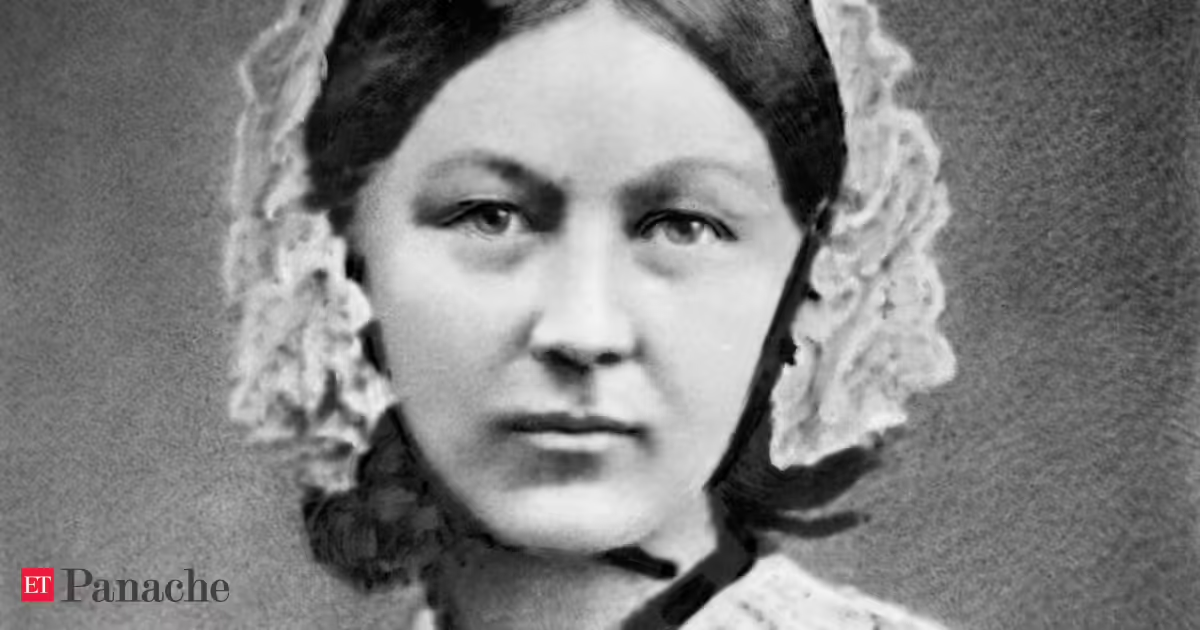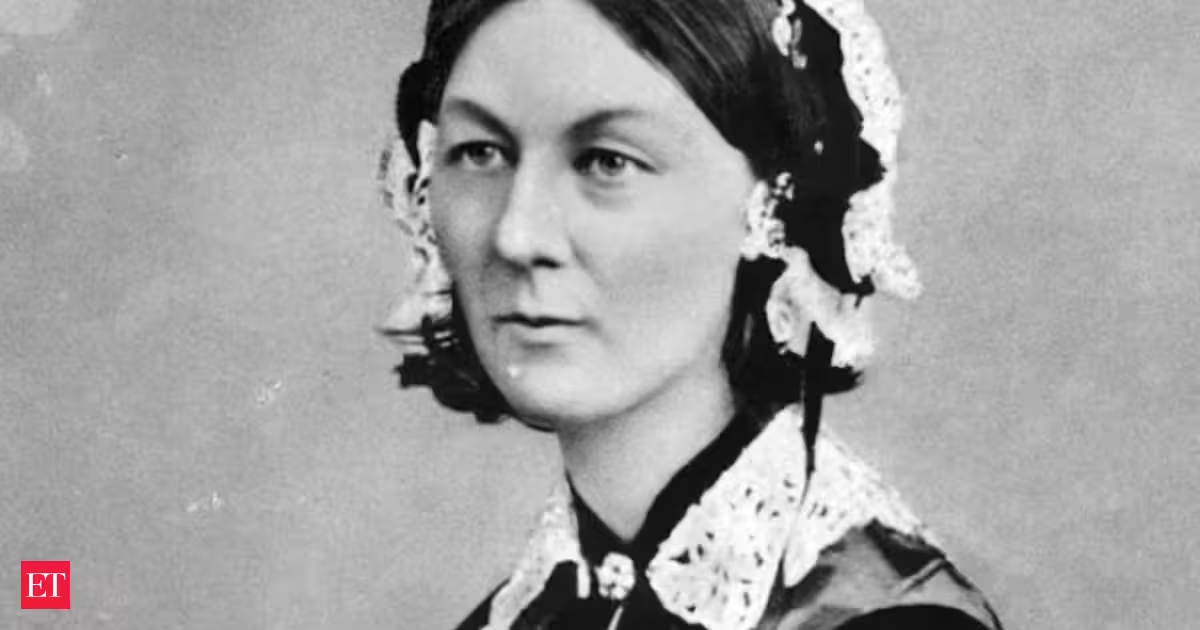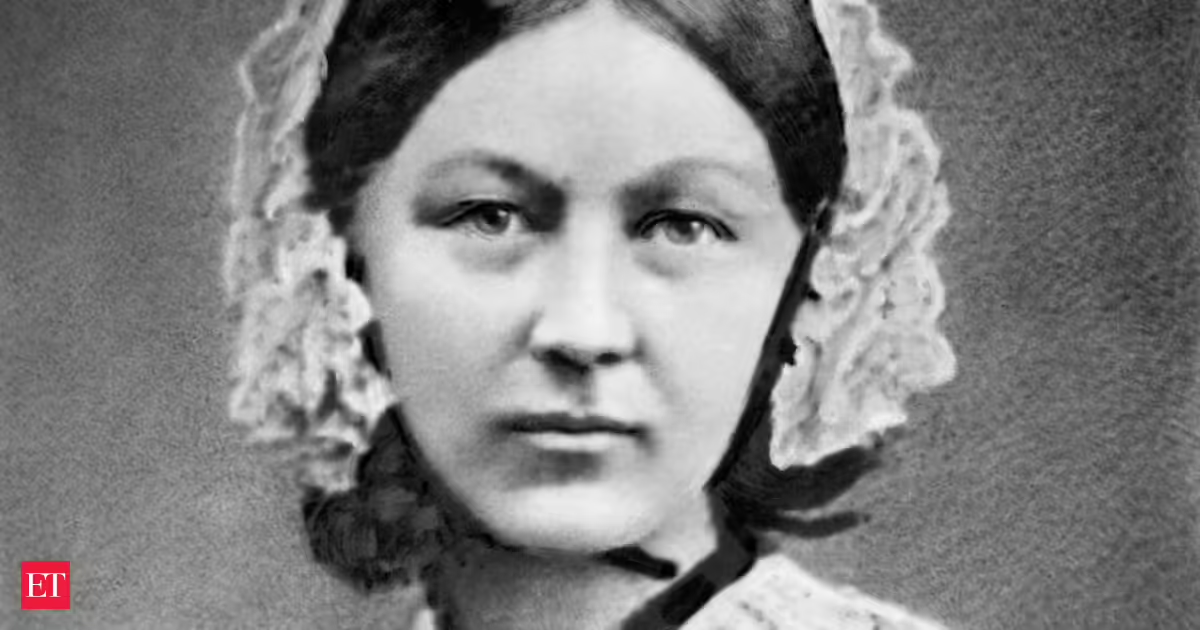
Quote of the Day: Life often presents us with reasons to delay, complain, or shift responsibility elsewhere. Yet history's greatest changemakers have rarely built their legacies on perfect circumstances. Instead, they acted despite obstacles. Florence Nightingale's powerful words, “I attribute my success to this: I never gave or took any excuse,” remain one of the clearest reminders that accountability is the foundation of meaningful achievement.The quote reflects a mindset that values action over explanation and responsibility over blame. It teaches that success begins the moment we stop waiting for ideal conditions and start owning our choices.Quote of the Day by Florence Nightingale: The deeper meaning behind her wordsAt its heart, Florence Nightingale's statement is not about perfection. It is about ownership. To never give an excuse means refusing to let circumstances dictate one's standards. To never take an excuse means holding oneself and others accountable for meaningful action. It reflects a belief that progress requires courage, discipline, and honesty.Excuses often provide temporary comfort, but they rarely create lasting change. They allow people to remain where they are instead of moving toward where they wish to be. Nightingale understood that genuine achievement demands responsibility, even when conditions are difficult.You Might Also Like:Her words challenge modern tendencies to externalize every setback. They remind us that while we cannot control every obstacle, we retain control over our response.Why Florence Nightingale's message remains relevant todayThe contemporary world offers countless distractions and justifications for postponing action. People frequently blame lack of time, imperfect opportunities, workplace limitations, social circumstances, or fear of failure. Nightingale's philosophy offers a different approach.You Might Also Like:She demonstrated that meaningful contributions are possible even amid chaos, suffering, and institutional resistance. During the Crimean War, she encountered overcrowded hospitals, inadequate supplies, unsanitary conditions, and bureaucratic obstacles. Yet she chose action over complaint.Her example teaches that leadership begins with asking, "What can I do right now with what I have?"Whether in education, business, healthcare, family life, or personal growth, accountability remains one of the most valuable traits a person can cultivate.You Might Also Like:How Florence Nightingale lived the principles she preachedThe remarkable power of this quote lies in the fact that Nightingale embodied it throughout her entire life. Born into privilege, she could easily have embraced the expectations placed upon upper-class Victorian women. Instead, she pursued what she believed was her calling despite intense opposition from her family and society, as per Britannica.At sixteen, she experienced what she described as a divine calling to alleviate human suffering. Rather than accepting conventional limitations, she sought formal nursing education in Germany, learning practical caregiving skills and modern hospital organization.When reports emerged about catastrophic conditions facing British soldiers during the Crimean War, Nightingale did not remain an observer. She led a team of nurses into conditions many described as unbearable, establishing standards of cleanliness, nutrition, patient care, and hospital management that transformed modern medicine.Her refusal to accept excuses extended beyond wartime service. After returning to England, she used data, statistical analysis, and meticulous record-keeping to advocate for healthcare reforms. She challenged institutions with evidence rather than rhetoric and built systems that outlived her.Florence Nightingale's philosophy of responsibility and serviceNightingale believed that service required discipline. For her, compassion was not simply an emotion. It was organized action directed toward improving human lives. She understood that good intentions alone could not transform society. Real change demanded responsibility, preparation, and perseverance.This philosophy made her the foundational thinker behind modern nursing. The nursing school she established at St. Thomas' Hospital in London in 1860 introduced scientific principles, professional standards, and formal education into a field previously lacking institutional structure. Her groundbreaking work in statistics, including the famous Coxcomb charts, demonstrated how data could drive public health reform. She showed that responsibility involves both caring deeply and acting effectively.More about Florence NightingaleFlorence Nightingale was born on May 12, 1820, in Florence, Italy, during her parents' extended European travels. Raised in England, she received an exceptional education, studying mathematics, languages, philosophy, literature, and political thought.Long before nursing was considered a respectable profession for women of her social standing, Nightingale felt called to devote her life to reducing human suffering. She trained in Germany before becoming superintendent of a London institution caring for sick gentlewomen.Her historic work during the Crimean War earned her the title "The Lady with the Lamp," reflecting the nightly rounds she made to comfort wounded soldiers. Beyond her wartime service, however, her lasting legacy rests in her revolutionary reforms to nursing education, hospital administration, sanitation, and public health.Nightingale was also a brilliant statistician whose evidence-based approach transformed healthcare systems across Britain and beyond. In 1907, she became the first woman to receive the Order of Merit.Today, International Nurses Day is celebrated annually on May 12, honoring her birth and recognizing the indispensable contributions of nurses worldwide. Her enduring message remains remarkably simple yet profoundly challenging: success belongs not to those who find perfect conditions, but to those who refuse to let excuses stand between themselves and meaningful action.You Might Also Like:
Quote of the Day by the founder of modern nursing, Florence Nightingale: 'I attribute my success to this: I never gave...'- Life lessons on accountability, perseverance, and the courage to act without excuses by 'The Lady with the Lamp'
Florence Nightingale's powerful mantra, 'I never gave or took any excuse,' underscores accountability as the bedrock of achievement. Her life exemplifies this principle, demonstrating that meaningful impact stems from disciplined action, not perfect circumstances. Facing immense challenges during the Crimean War and advocating for healthcare reforms, Nightingale's unwavering commitment to service and evidence-based change continues to inspire, urging us to own our choices and act decisively.
832 words~4 min read