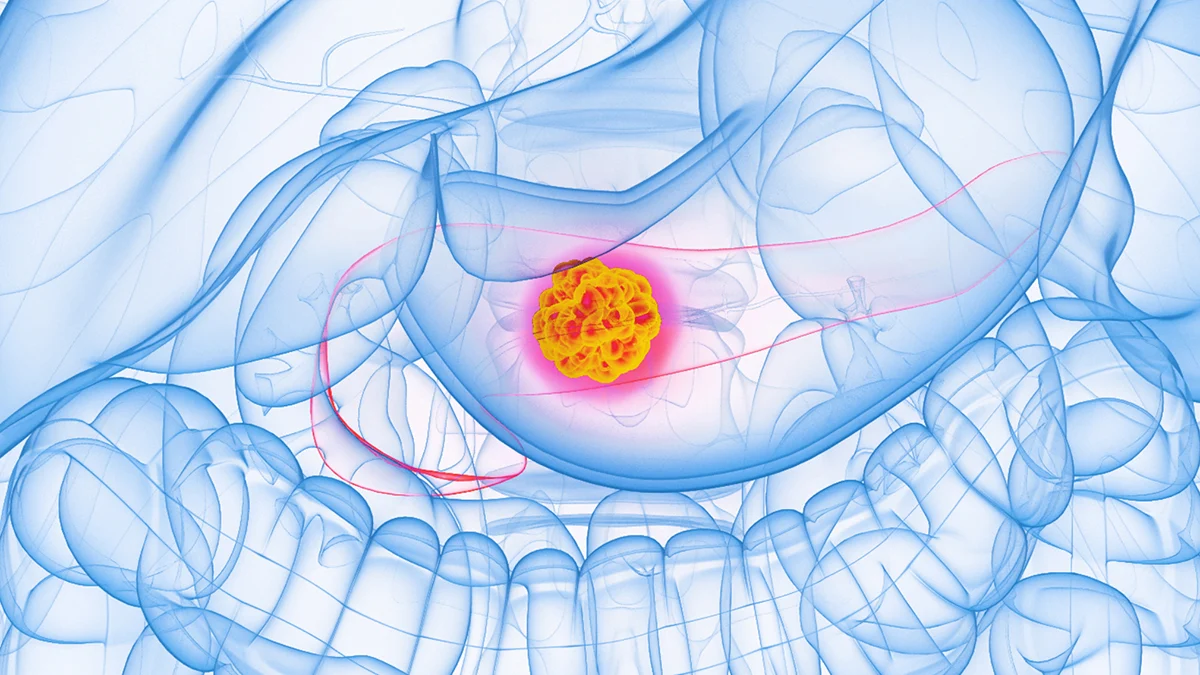
The pancreas is in the upper part of the abdomen. (Sebastian Kaulitzki/Science Photo Library/Getty Images)
Pancreatic ductal adenocarcinoma, the most common form of pancreatic cancer, is particularly deadly and hard to treat. Most tumors of this type are driven by one or more mutations in the KRAS gene, pushing rapid cell division that's difficult to stop.They've long been considered so challenging to treat that KRAS has been labeled "undruggable" across decades of prior research.Now, a new lab study points to a possible way around that problem.A team from Florida A&M University College of Pharmacy and Pharmaceutical Sciences has been testing compounds called polyisoprenylated cysteinyl amide inhibitors (PCAIs) to try to outsmart KRAS malfunctions.These PCAIs have been engineered to disrupt abnormal protein interactions associated with mutant KRAS signaling, rather than targeting a single KRAS mutation."The limited number of drugs to treat KRAS-driven cancers remains a significant healthcare problem, with the current drugs becoming ineffective due to intrinsic resistance," write the researchers in their new paper, published in the journal Oncotarget."In view of this, novel therapies are needed to combat the KRAS conundrum."