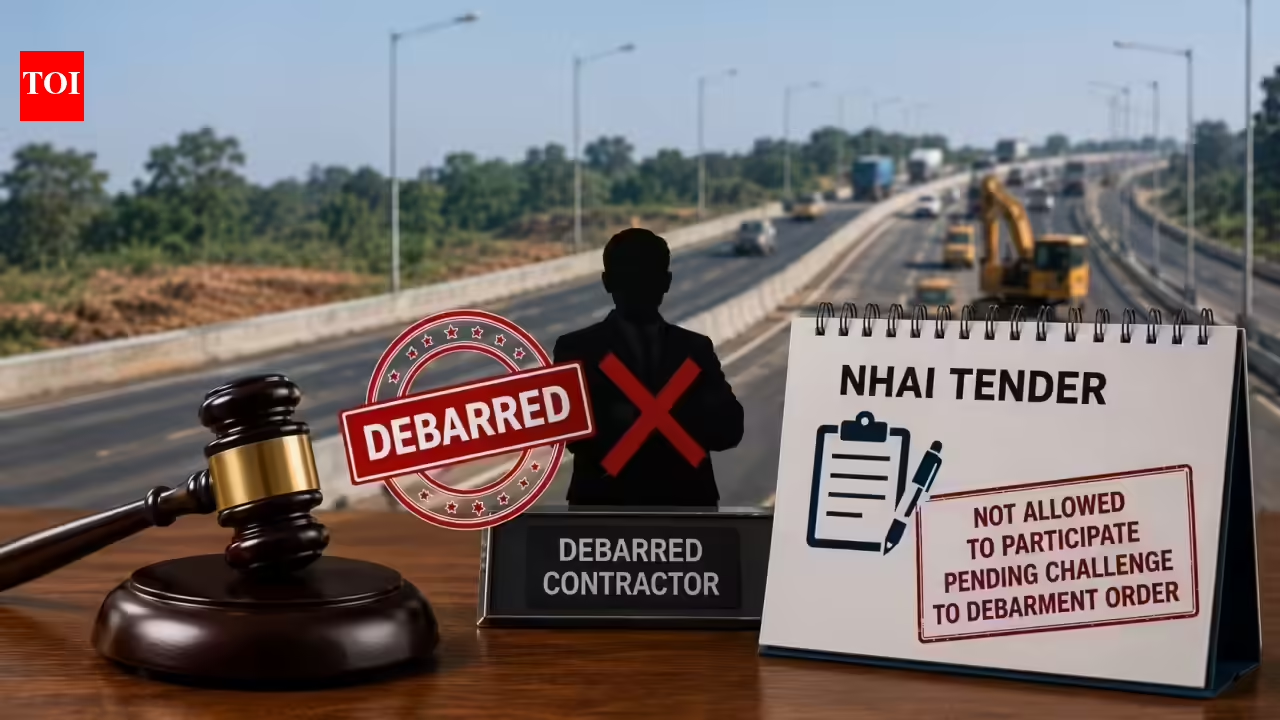
NHAI opposed the petition, that the debarment order expressly prohibited the petitioner from participating in any tender for one year. (AI image)The Delhi High Court has refused to permit a contractor debarred by the National Highways Authority of India (NHAI) from participating in a fresh toll collection tender, holding that the debarment order continues to operate until it is stayed or set aside. The Court observed that a bidder cannot circumvent the effect of an operative debarment order by arguing that the contractual period under the fresh tender would commence only after the debarment expires.BackgroundThe Delhi High Court has dismissed a writ petition filed by R.K. Jain Infra Projects Private Limited seeking permission to participate in a Notice Inviting Tender (NIT) issued by the National Highways Authority of India (NHAI) for engagement of a user fee collection agency at the Ghamroj Fee Plaza in Haryana.A Division Bench of Justice Tejas Karia and Justice Madhu Jain held that since the petitioner’s debarment order remained in force on the last date prescribed for submission of bids, it was not entitled to participate in the tender process merely because the contractual period under the NIT would commence after expiry of the debarment.The petitioner is engaged in the business of collection and management of toll/user fees at national highway projects. On 06.08.2025, NHAI debarred the company from participating in tenders for a period of one year.The petitioner challenged the debarment before the Delhi High Court in W.P.(C) 12044/2025, questioning its legality, proportionality and validity. Arguments in that petition were concluded on 20.04.2026 and judgment has been reserved. However, no interim order staying the operation of the debarment has been passed.Meanwhile, on 02.06.2026, NHAI issued a fresh tender for appointment of a user fee collection agency for the Ghamroj Fee Plaza on the Gurgaon-Sohna National Highway. While bids were to be submitted by 16.06.2026, the petitioner’s existing agreement for operation of the same toll plaza was valid until 12.08.2026. The petitioner therefore approached the High Court seeking permission to participate in the fresh tender.Petitioner Sought Limited Protection Pending Decision On Debarment ChallengeThe petitioner argued that although the bid submission process fell within the debarment period, the contractual period under the fresh tender would begin only after 12.08.2026, by which time the one-year debarment would already have expired.It was submitted that excluding the petitioner from the bidding process would effectively extend the consequences of a time-bound debarment beyond its stipulated duration, even though the actual contractual obligations under the proposed agreement would arise after the debarment came to an end.The petitioner also argued that denial of participation would cause irreversible commercial prejudice.According to the petitioner, once the bidding process concluded, it would permanently lose the opportunity to compete for the contract, a loss that could not subsequently be remedied even if it ultimately succeeded in the pending challenge to the debarment order.On this basis, the petitioner requested the Court to grant limited interim protection by permitting it to submit its bid, subject to the final outcome of the earlier writ petition challenging the debarment.NHAI opposed the petition, that the debarment order expressly prohibited the petitioner from participating in any tender for one year. It argued that the relevant consideration was not the commencement of the contractual period but the date on which bids were required to be submitted.The authority further pointed out that the petitioner had already sought interim suspension of the debarment order in the pending writ petition challenging its validity. Since no interim stay had been granted by the Single Judge, the petitioner could not indirectly secure the same relief by filing a fresh writ petition before another Bench.Debarment Continues To Operate Until Stayed Or Set AsideThe High Court was not persuaded by the petitioner’s submission that it should be permitted to participate in the tender merely because the contractual period under the NIT would commence after expiry of the debarment period.The Bench observed that the debarment order expressly prohibited the petitioner from participating in any tender for one year, from 06.08.2025 to 06.08.2026. Since the last date for submission of bids under the impugned NIT was 16.06.2026, the petitioner admittedly continued to remain a debarred entity on the relevant date.Rejecting the petitioner’s contention, the Court observed that the commencement of the contract was of no consequence while deciding eligibility to participate in the bidding process.“The date of commencement of the contractual period under the NIT is not material so long as the Debarment Order continues to operate against the Petitioner at the time when bid under NIT is required to be submitted.”The Bench further noted that the debarment order is already under challenge before a Single Judge of the High Court in an earlier writ petition, where the petitioner has also sought interim protection against its operation. However, since no interim stay had been granted and judgment in that petition was still awaited, the debarment continued to remain fully operative.According to the Court, the petitioner could not seek indirectly what had not been granted in the pending proceedings.“The learned Single Judge has not granted any interim injunction staying operation of the Debarment Order, and the judgment… is yet to be pronounced.”The Bench observed that permitting the petitioner to participate in the fresh tender despite the subsisting debarment would effectively amount to bypassing the pending challenge to the debarment order itself.The Court held that such a course could not be adopted merely because the petitioner apprehended commercial prejudice if it was excluded from the bidding process.Finding no merit in the writ petition, the Delhi High Court concluded that the petitioner could not be permitted to “circumvent the pending challenge” to the debarment order by instituting a separate writ petition seeking permission to participate in the tender.The writ petition, along with the pending applications, was accordingly dismissed. The Court declined to permit the petitioner to participate in the Notice Inviting Tender dated 2 June 2026 and made no or/der as to costs.(The author of this article, Vatsal Chandra is a Delhi-based Advocate practicing before the courts of Delhi NCR. )
Delhi High Court refuses to allow debarred contractor to participate in NHAI tender pending challenge to debarment order
The Delhi High Court has refused to permit a contractor debarred by the National Highways Authority of India (NHAI) from participating in a fresh toll collection tender, holding that the debarment order continues to operate until it is stayed or set aside. The Court observed that a bidder cannot circumvent the effect of an operative debarment order by arguing that the contractual period under the fresh tender would commence only after the debarment expires.Background
1,005 words~5 min read