“If you find yourself hanging on every word of a whispered story, chances are the reader will too.”
This first appeared in Lit Hub’s Craft of Writing newsletter—sign up here.
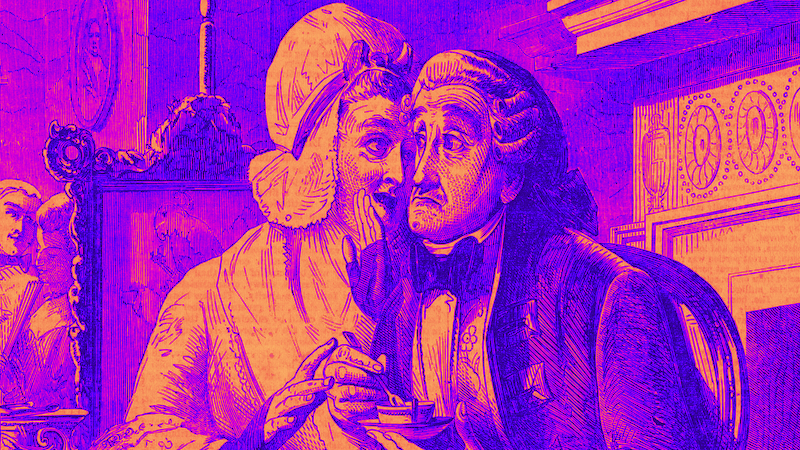
I am an unapologetic collector of gossip. Bring me your tales of accidental reply-all, familial faux-pas, sartorial misadventure. I can certainly keep a secret, I never talk about my friends, but to me, there is no greater conversational gambit than “I just heard the wildest thing…”. The celebrated author John Updike once called literary criticism “gossip of a higher sort,” and—perhaps as a justification of my habits I’d like to lump fiction under that umbrella too, as a kind of artful gossip, rumor spun into gold.
The Shampoo Effect, my new book, was inspired by two different gossipy scandals. The first is highbrow enough: I grew up in Ipswich, Massachusetts. John Updike was the pride of the town, but he also created a major controversy in 1968 when he published his bestselling novel Couples, a tale of sex and adultery among his social set. Even though he changed the names of the real people he was writing about, his stories of afternoon trysts and partner-swapping were perhaps a little too close to home, and the novel blew up his entire circle of friends and cast a spotlight on all of their marriages. Out of the ten real life couples in his group, only two marriages survived the scrutiny. I grew up hearing this story, and then, as an adult, I took a job as an editor at Knopf, Updike’s publisher. I became intrigued by the idea of him, a writer in a small town, mining his social set for material, and the way making art might lead to betrayal.