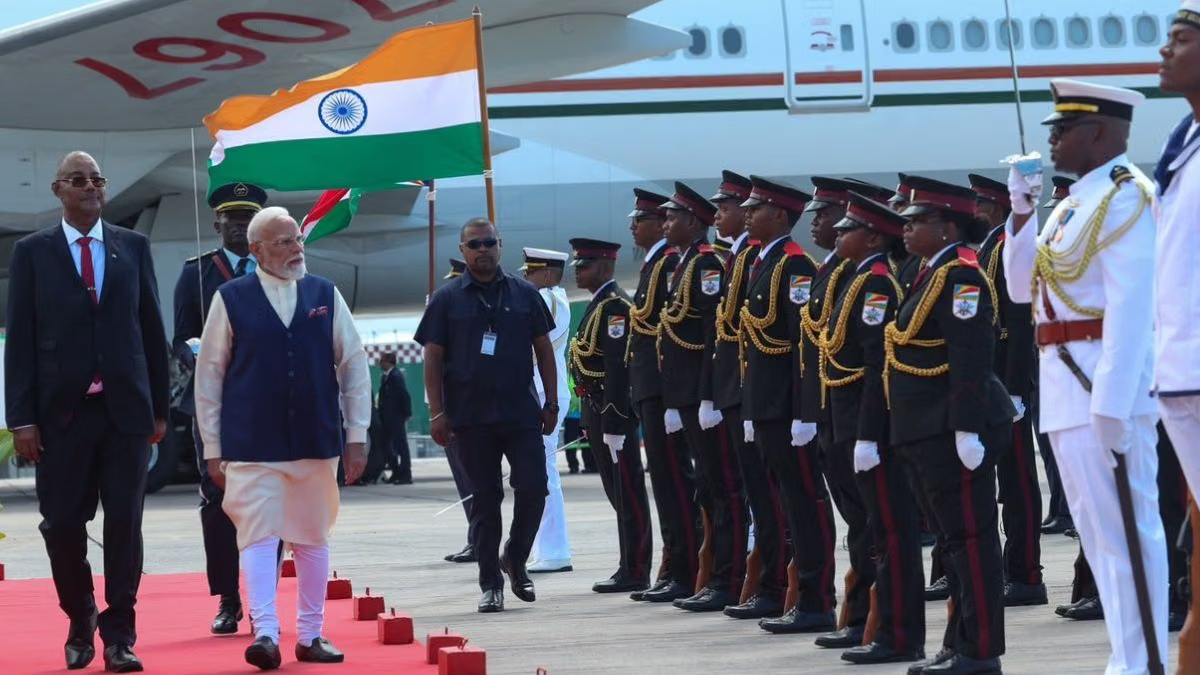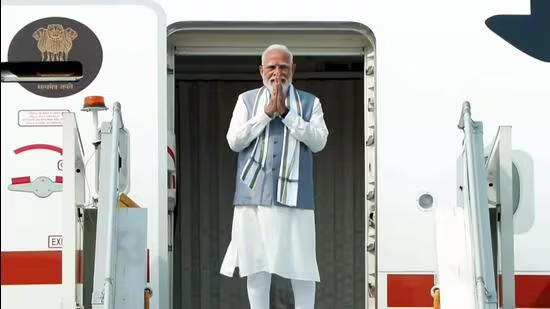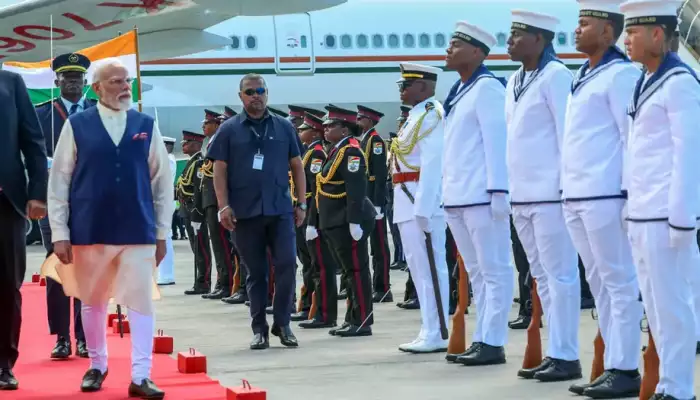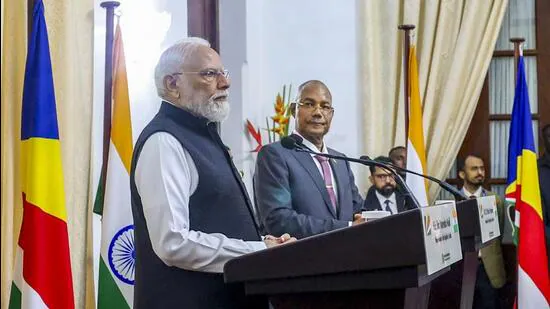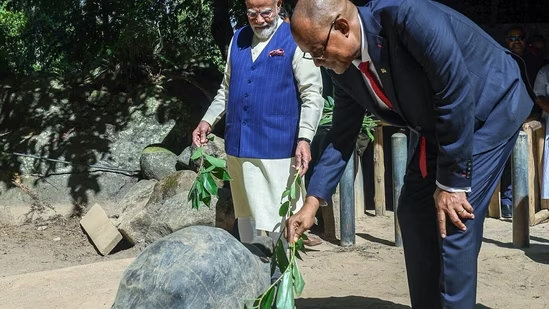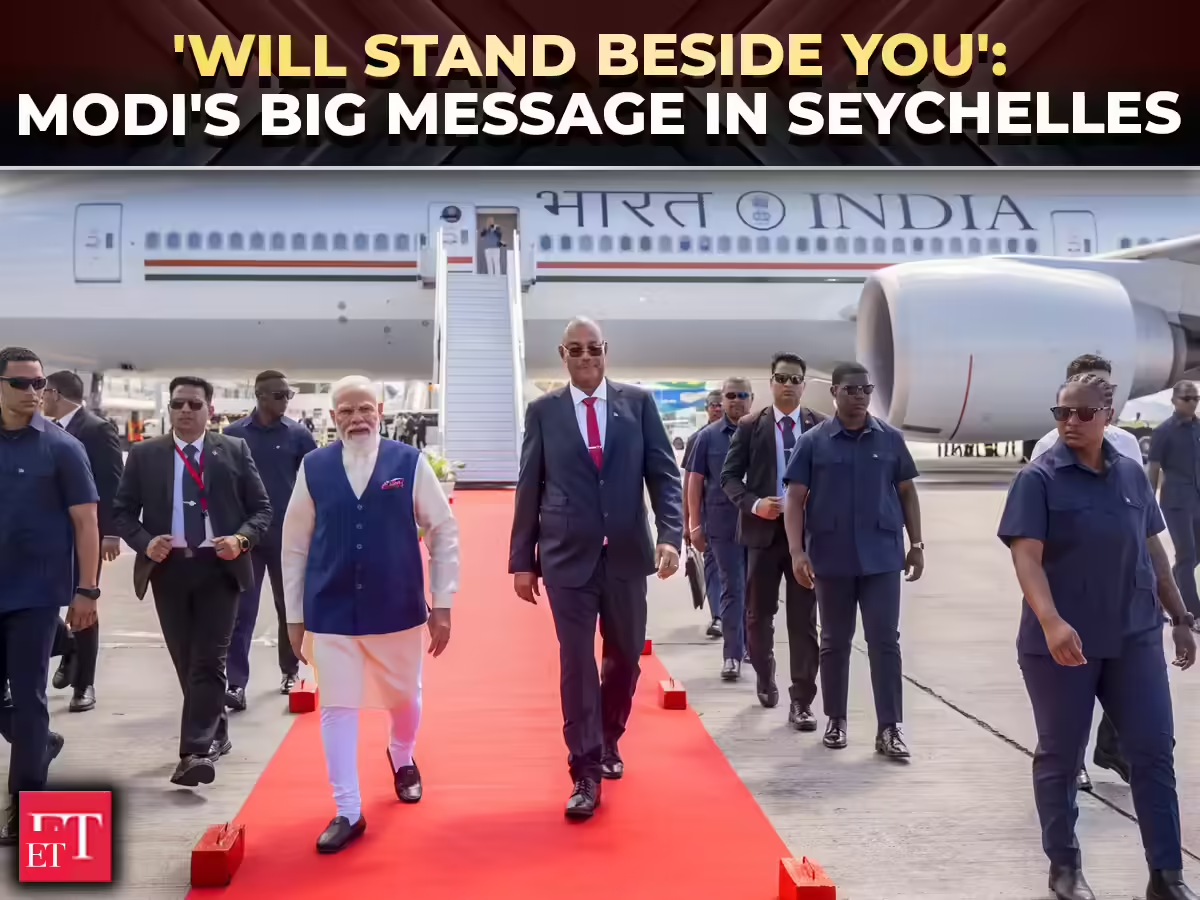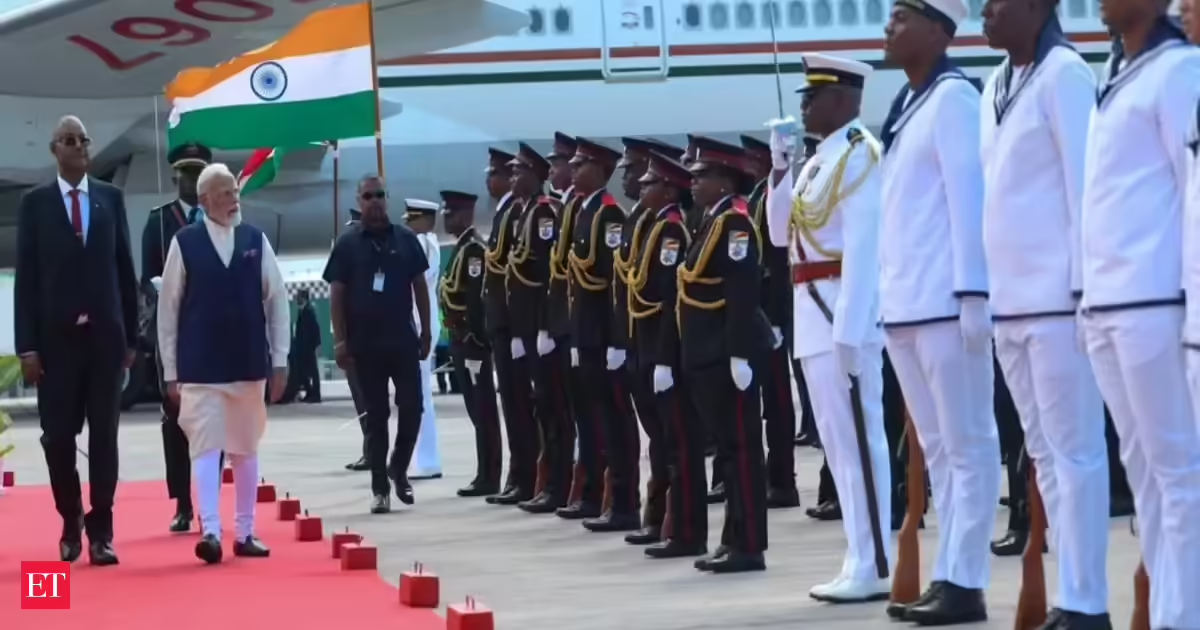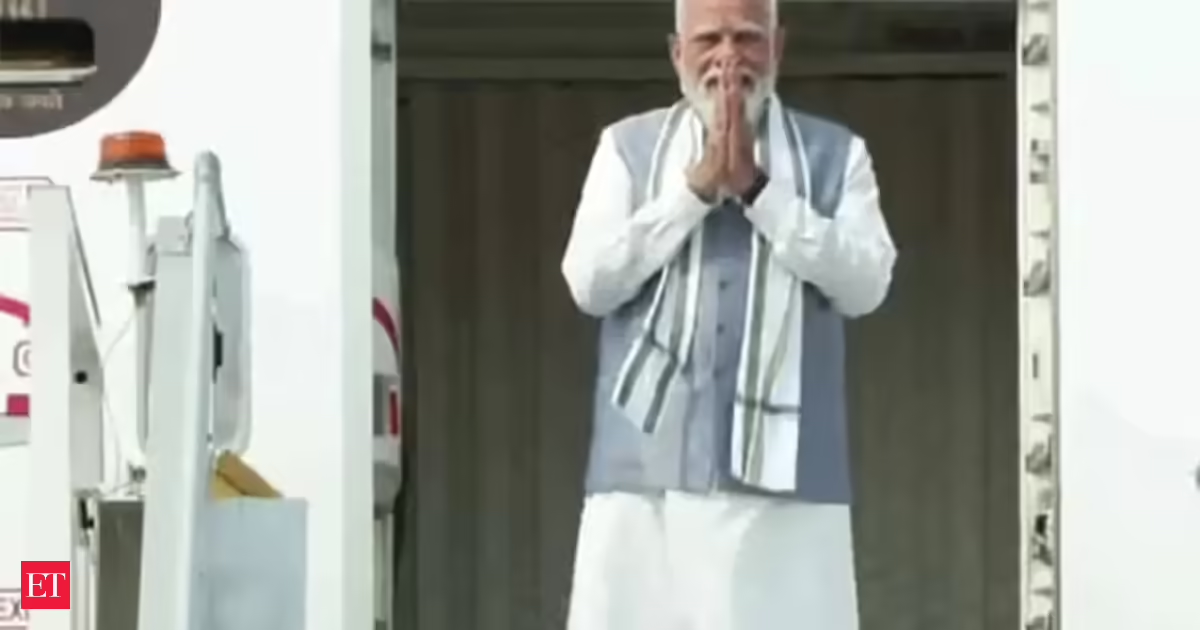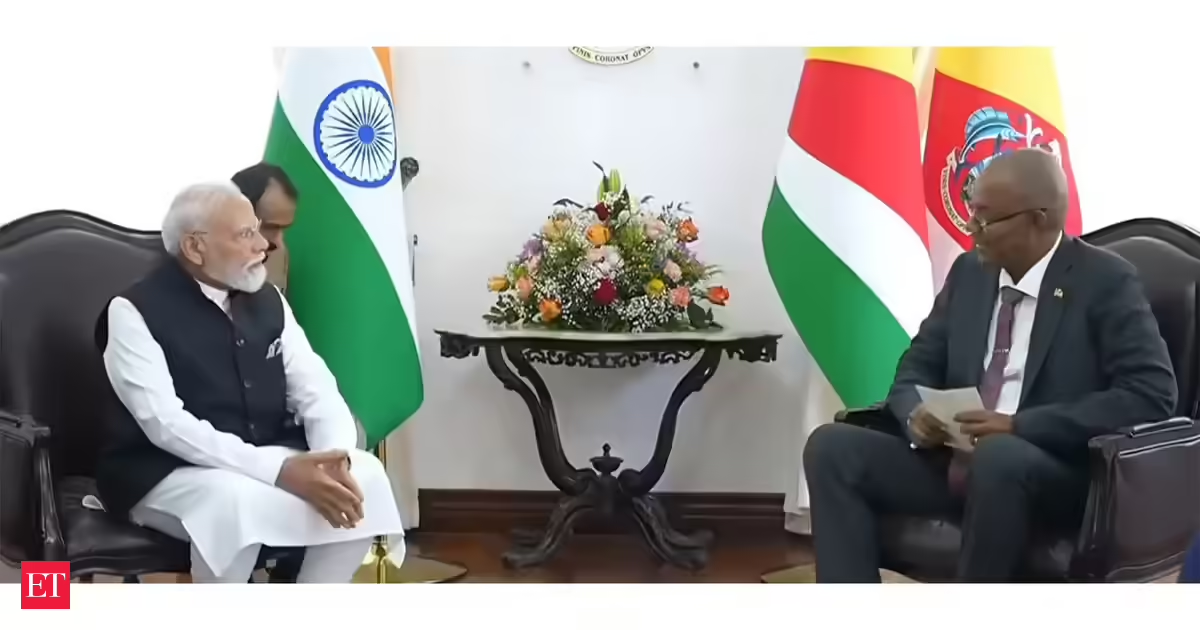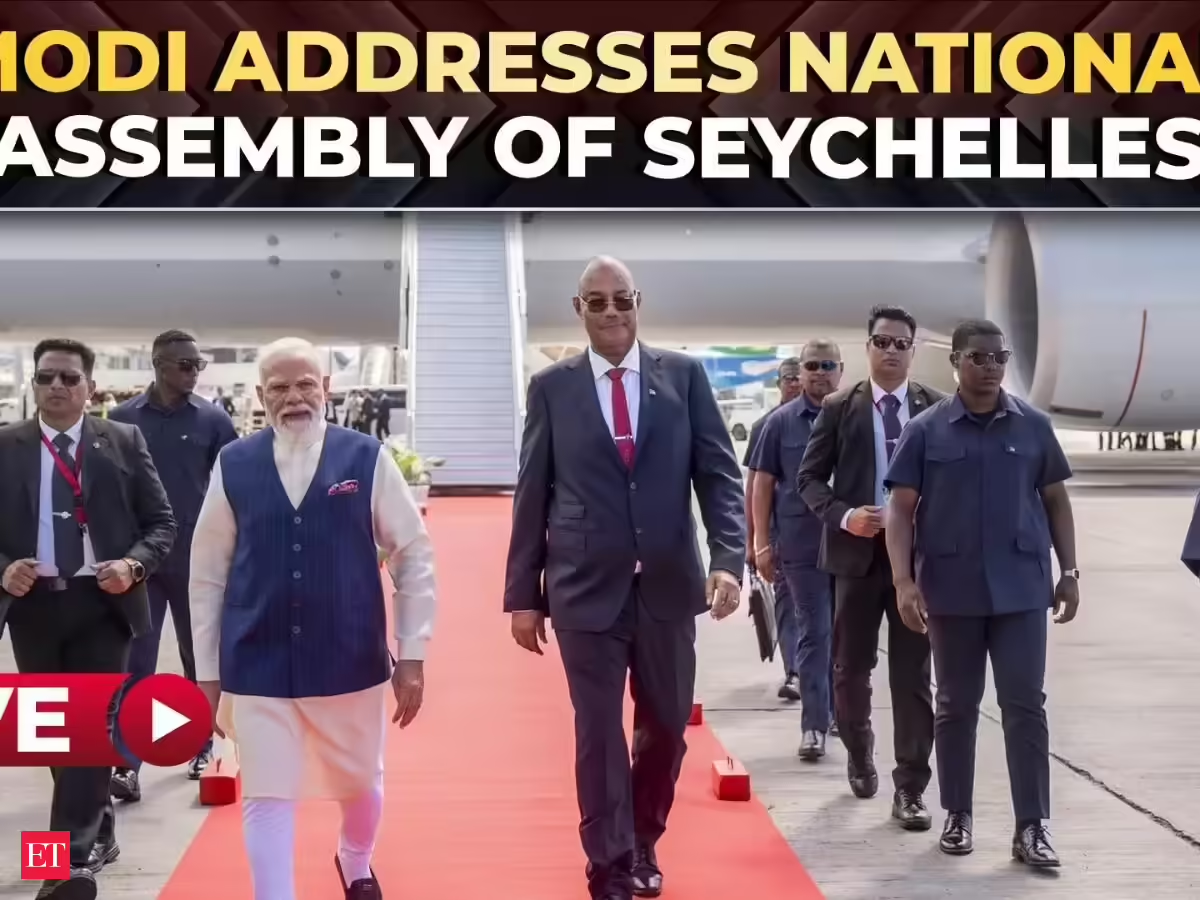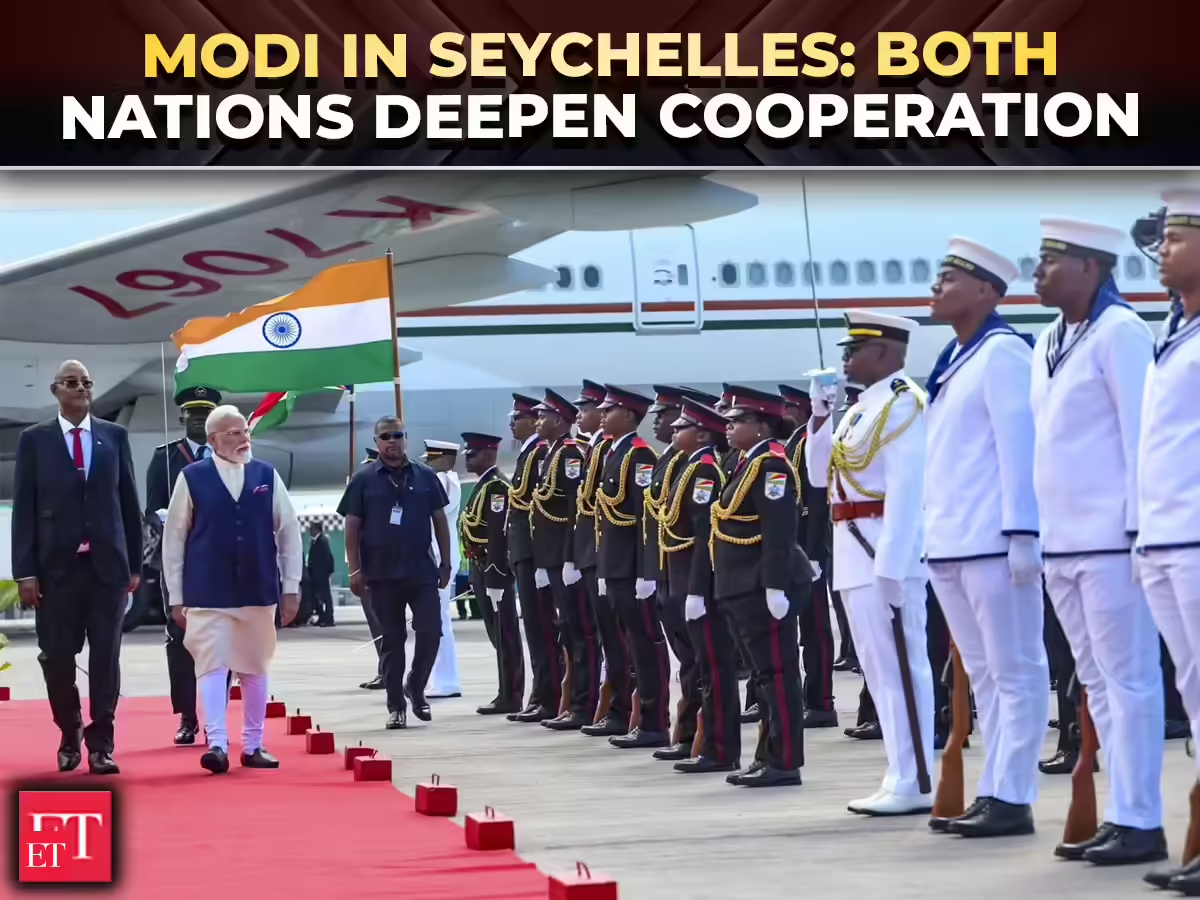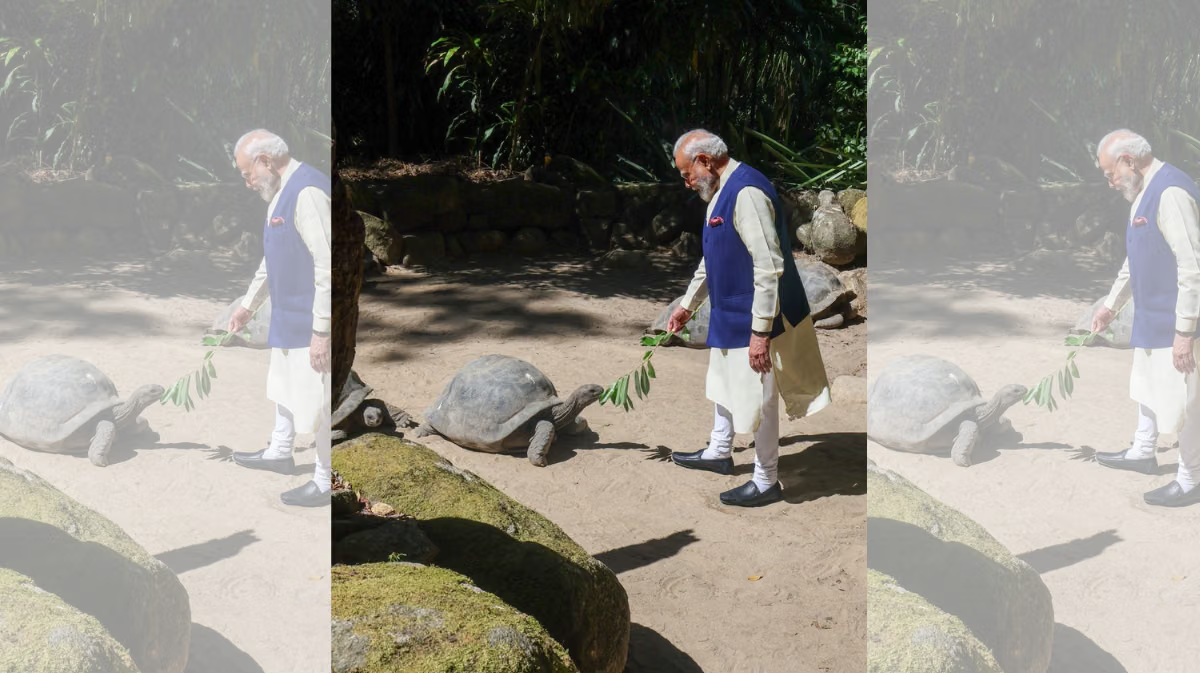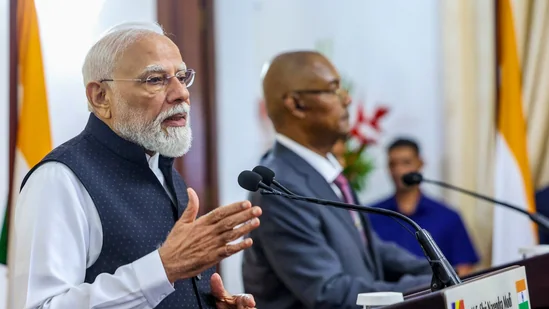
Prime Minister (PM) Narendra Modi’s visit to Seychelles (June 27–29) reflects a new trend, as noticed earlier in the case of France. The interval between two visits of a head of State or government is decreasing. Gone are the days when years separated such visits. Modi’s visit took place within four months of the visit that Patrick Herminie, President of Seychelles, paid to India in February 2026.In this image received on June 28, 2026, Prime Minister Narendra Modi and Seychelles President Patrick Herminie during a joint press statement, in Seychelles. (PMO)This could be due to intensifying competition among India, China, and a few Western nations, such as the US, UK, and France, to gain substantial influence in the Indian Ocean region. It may reflect the desire of the leaders of India and Seychelles to expedite the implementation of agreements signed earlier and those signed now. It may also have been driven by the Seychelles side's motivation to draw international attention to the nation's Golden Jubilee celebrations of independence through the presence of a globally visible leader. It was also a fitting occasion to celebrate the 50 years of the establishment of diplomatic relations between the two countries.As if anticipating criticism from uninformed quarters questioning why the PM was visiting a tiny country with a population of 121,000, the Indian side aptly stressed Seychelles' strategic importance. It is a nation of 115 islands astride vital sea lines of communication near the Mozambique Channel. Located in the Western Indian Ocean, it has a maritime territory spanning over 1.4 million square km. Hence, New Delhi rightly views it “as not a small island State but a large ocean country” that offers an “ocean of opportunity.” Seychelles stands committed to ensuring that the Indian Ocean remains “a beacon of peace and shared prosperity.”Official discussions during the visit reinforced a commonality of perspectives on a host of issues. The challenges faced by island States in the context of the climate crisis and the potential development of the Blue Economy received considerable attention. While speaking at the National Assembly, the Indian PM emphasised the Global South's view that nations that have contributed the least to the climate crisis should not bear the greatest burden of its consequences. In short, climate action must be guided by fairness, responsibility, and equity. “This is the essence of climate justice,” said Modi. Admittedly, it is a powerful argument, but the question is whether powerful nations in the West are listening at all.There were significant indications given by Seychelles that India’s ability to extend development cooperation, maritime security and its deep interest in fostering the Blue Economy linkages would drive this relationship, The citation of a newly-minted national honour or award conferred on Modi specifically refers to his “long-standing commitment towards advancing the interests of developing countries, and his long-standing commitment towards promoting the Blue Economy, climate action, sustainable management of ocean resources, and the development aspirations of small island developing States.”The gift package sent by India to friendly Seychelles on this occasion included security-related items, such as two patrol boats, a fast patrol vessel, and two Dornier maritime surveillance aircraft. It also included development-related offerings such as six ambulances, ten utility vehicles, food and construction items. The total value of the package is $175, including concessional financial assistance of $125 million. These funds will be utilized for projects in priority areas such as social housing, green mobility, maritime security, education, health care, digital public infrastructure, and people-to-people exchanges.During the visit, the Seychelles president put forward a new request for the provision of an advanced light helicopter and assistance in setting up centers dedicated to cybersecurity and Artificial Intelligence. The Indian side signaled a positive reaction.In a welcome trend that identifies specific outcomes of Indian VVIPs’ visit abroad, the ministry of external affairs (MEA) listed out, in respect of this visit, five items of development assistance extended, five new announcements, including on Seychelles joining the Coalition for Disaster Resistant Infrastructure (CDRI), and the signing or renewal of 9 MOUs. Inter alia, it covers agricultural cooperation, an umbrella line of credit from the Exim Bank, and the decision to set up a new national hospital. Taken together, the package of assistance shows both continuity and diversification and is undoubtedly shaped by the needs and priorities of the government of Seychelles.Two other aspects need to be examined here.One, with Seychelles recently joining the Colombo Security Conclave (CSC) as a full member, a new bond has been forged. When the seventh meeting of the national security advisers of CSC took place in New Delhi in November 2025, Seychelles participated as an Observer. This elevation indicates the strengthening of this important forum, which is responsible for maritime safety and security, combating terrorism and trafficking, and managing humanitarian assistance and disaster relief. Seychelles’ increased role in CSC may have been touched upon during discussions held in the national capital, Victoria.Two, media reports indicating that India has been engaged in setting up a military base or a Coast Guard station on Assumption Island in Seychelles reappeared. Foreign secretary Vikram Misri disclosed that this issue was not discussed during the PM’s visit, while hinting that discussion at other levels may have taken place. On such matters, India is guided by “the priorities and interests” of the host government. He added meaningfully that India would be “open to hearing about such ideas” as the Seychelles authorities may have on this important subject. We may hear more about this issue in the future.It is worth noting that the China-Seychelles partnership continues to prosper. The relationship was elevated to a Strategic Partnership in September 2024. The Chinese vice president visited Victoria in March 2026 to celebrate the 50th anniversary of the establishment of diplomatic relations between China and Seychelles.The fact of India-China competition for influence and friends in the Indian Ocean is well known. Experts maintain that the two nations have sought to bridle or hide their cooperation, with China displaying noticeable caution. In this context, Jean-Pierre Cabestan, emeritus professor at Hong Kong Baptist University, has argued that this cautious behaviour has directly helped Seychelles maintain a privileged security relationship with India while also pursuing a balanced foreign policy between Delhi and Beijing. In short, this approach has helped the island State enjoy and exercise “some agency” amid the burgeoning competition in the Indian Ocean.(The views expressed are personal)This article is authored by Rajiv Bhatia, Distinguished Fellow, Gateway House and a former ambassador with experience in several African countries.
Modi’s Seychelles visit strengthens ties across ‘ocean of opportunity’
This article is authored by Rajiv Bhatia, Distinguished Fellow, Gateway House and a former ambassador with experience in several African countries.
1,078 words~5 min read