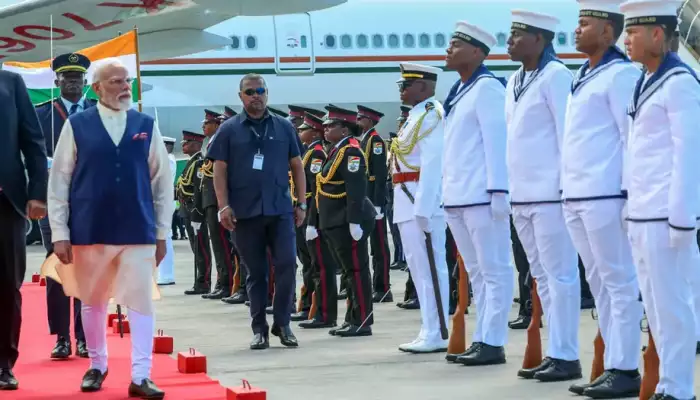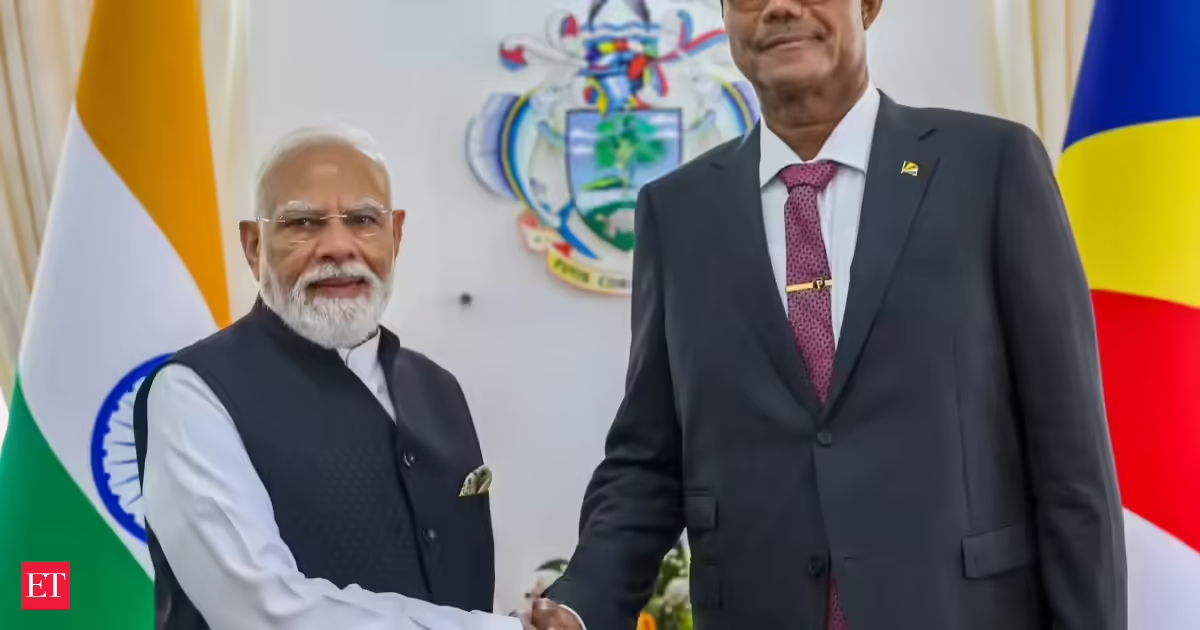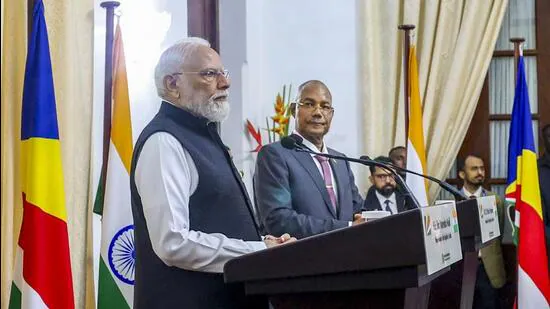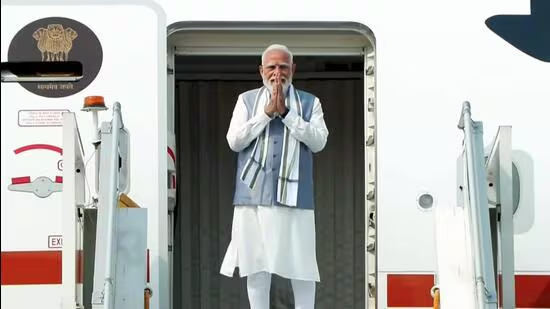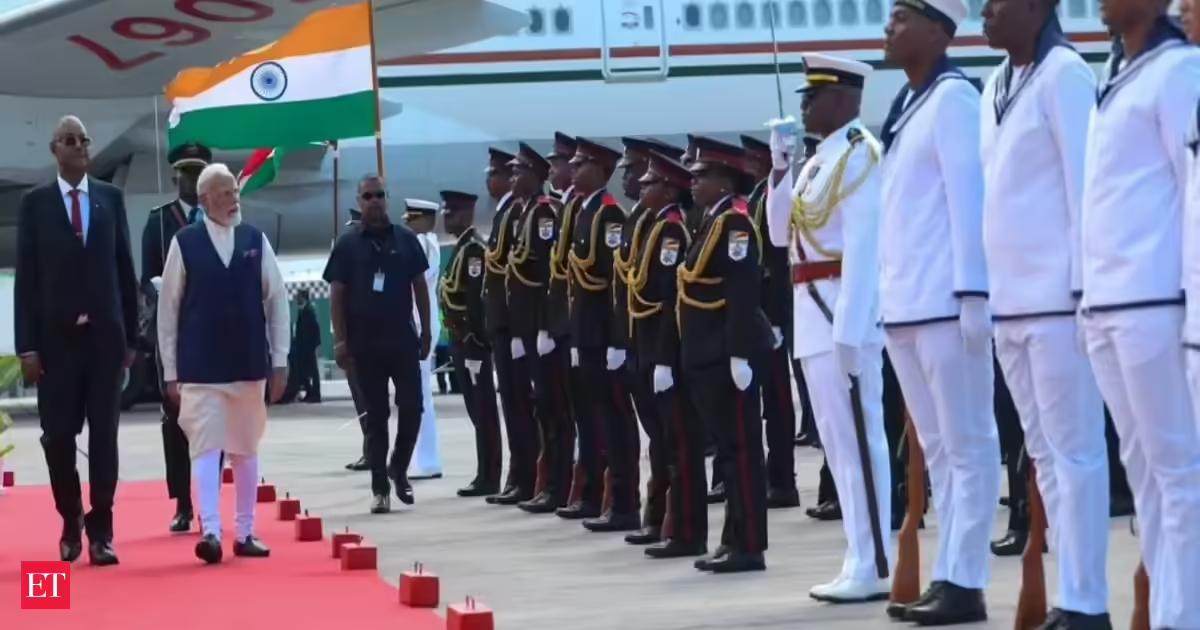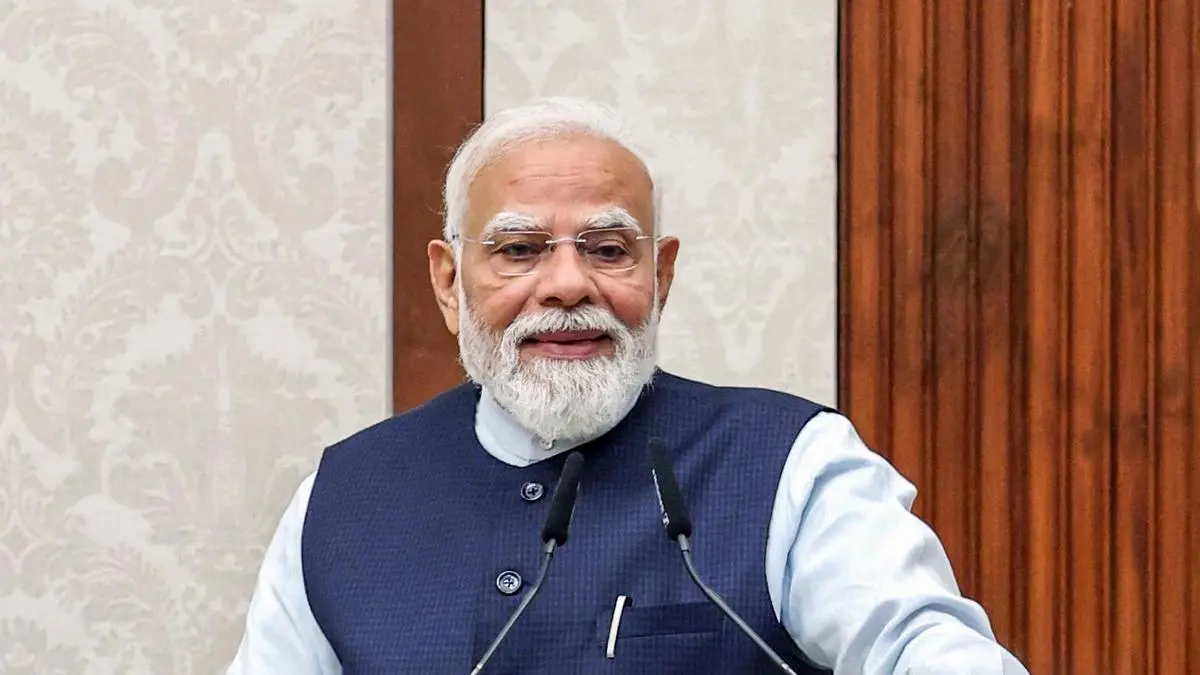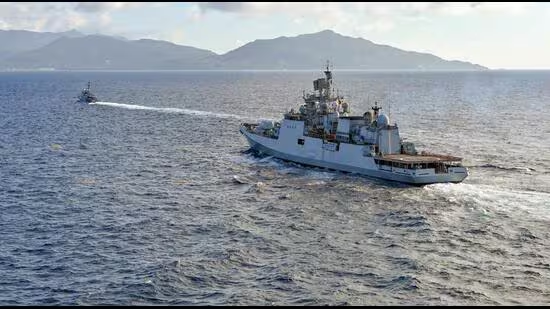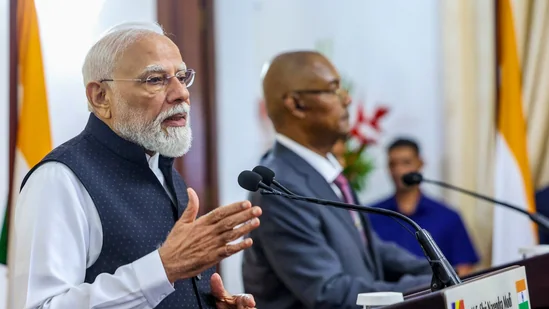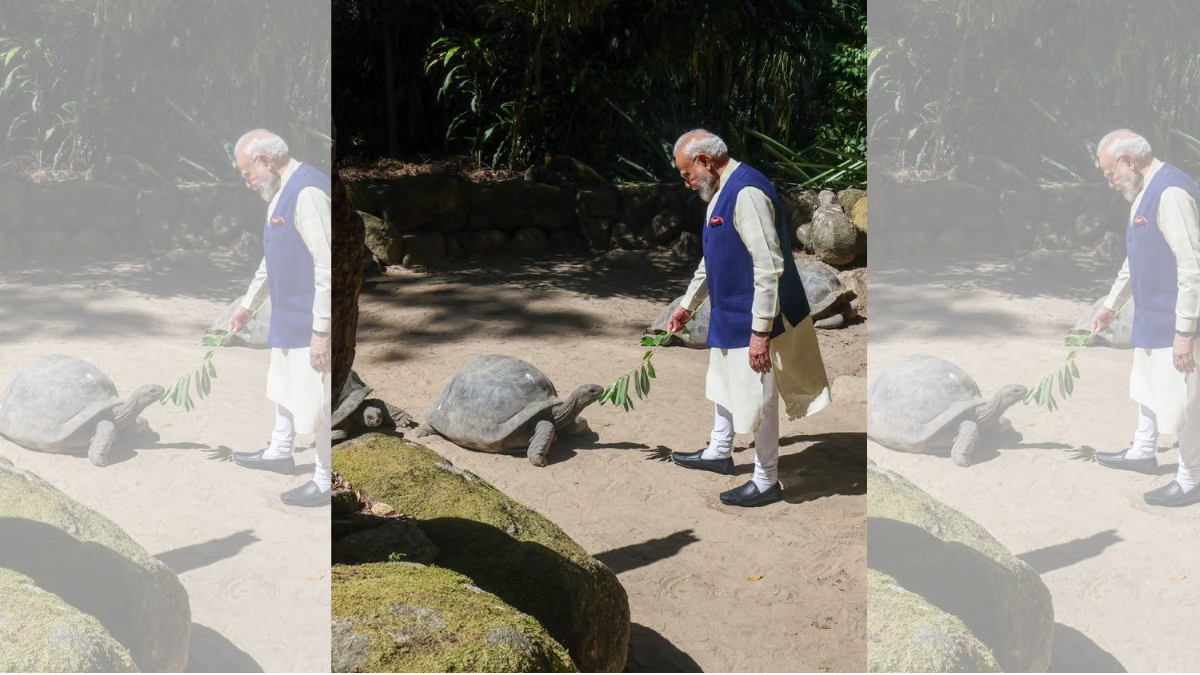
The friendship between India and the Seychelles received a boost this week as Prime Minister Narendra Modi concluded a three-day state visit. In a warm gesture symbolising the two countries’ long friendship, the PM fed Jonathan, the iconic 196-year-old Aldabra giant tortoise, believed to be the world’s oldest living land animal. He also addressed an extraordinary sitting of the National Assembly of Seychelles, becoming the first Indian prime minister to do so. The key outcomes of Modi’s state visit were a $175-million development package, the signing of nine wide-ranging agreements, and a significant boost to maritime security cooperation.Why Seychelles matters
The Seychelles is an archipelagic nation of 116 islands situated off the east coast of Africa in the Indian Ocean. It is the smallest country in East Africa, with a population of approximately 100,000+ as of 2022. It remained largely uninhabited until the 18th century, when it was claimed by the French, who brought in African, Arab and Indian labour to work the plantations. When the British took control in the early 19th century, indentured labour was brought in from India. The Seychelles became independent from the British in 1976, and has since moved from a largely agrarian economy to a market and service-based economy which is quite heavily dependent on tourism. From 1976 to 2015, the GDP grew by almost 700 per cent.The Seychelles is separated from Mumbai by about 3,800 km, and a non-stop Indigo flight operates from Mumbai to Mahé, the largest and most populous island in the archipelago.Maritime expert Abhijit Singh said that the East African country is strategically located on the major Sea Lines of Communication (SLOCs).“During times of peace, the sea lines of communication (SLOC) serve as commercial trading routes, but they are also seen as strategic highways that give countries access to resources in faraway places. This is especially relevant to oil and gas shipments, a vast majority of which are transported via the sea. Consequently, SLOC protection has become a crucial condition for the sustenance and growth of regional economies,” Singh said.The Seychelles serve as a gateway between East Africa, the Gulf and the Indian sub-continent. In times of war, it is a strategic geopolitical location for the transportation of oil that is shipped to India to meet our energy consumption.Seychelles is also relevant for its “Blue Economy”—a framework launched in 2018 to promote sustainable marine development, and to align economic growth with environmental stewardship and social development. Large water bodies have the potential to sequester and isolate carbon dioxide and convert it into oxygen at rates four times that of trees and forests. Preserving marine resources in alignment with the United Nations Sustainable Development Goals, specifically SDG 14 and promoting good ocean governance is a goal of the island nations.The Seychelles is also strategically located and in a position to counter open sea piracy and to ensure the safety and security of the Indian Ocean.The country also monitors illegal fishing, maritime terrorism and drug trafficking, along with disaster response for rising sea levels caused by global warming. It is geographically well placed to counter these scourges of the sea.