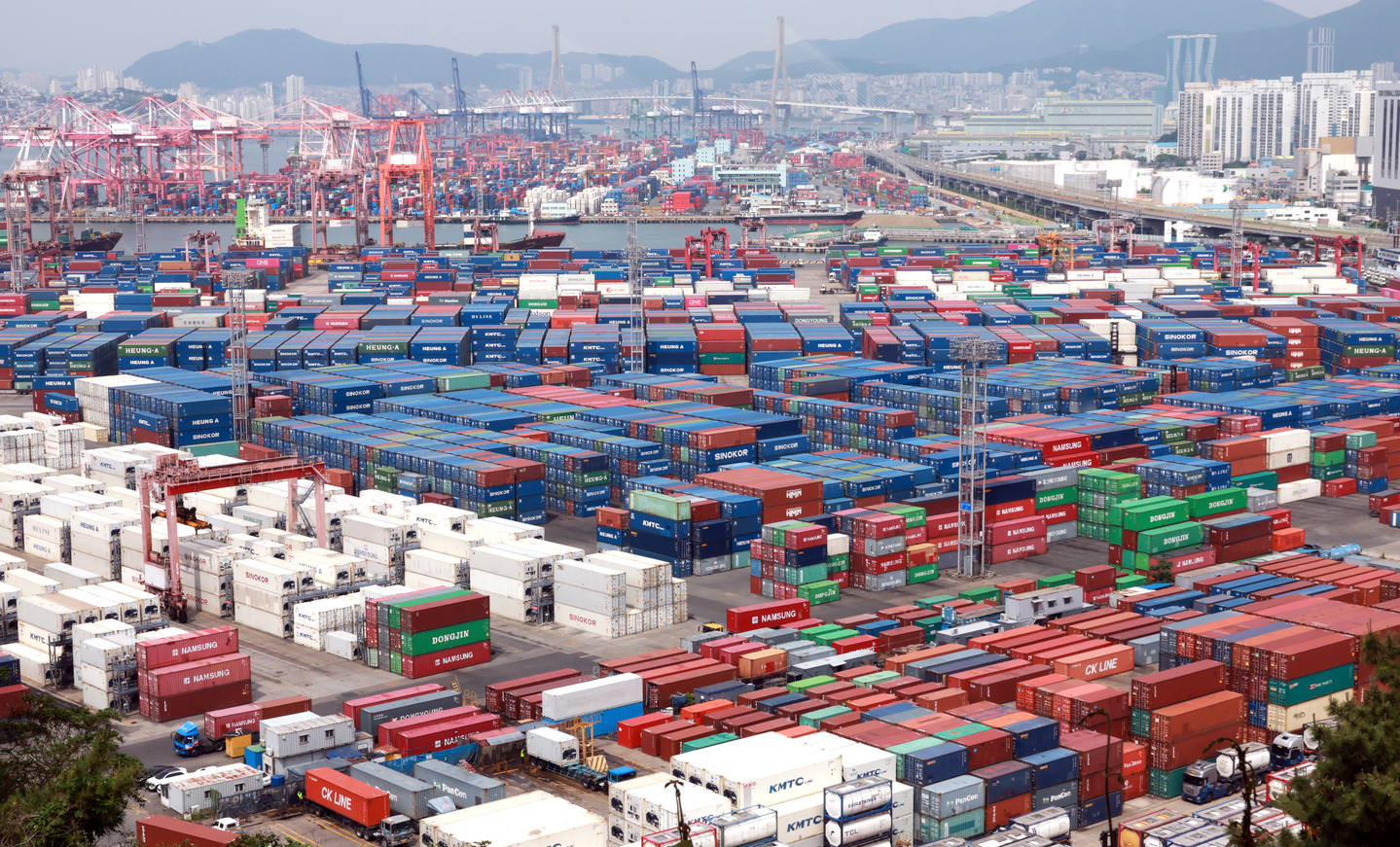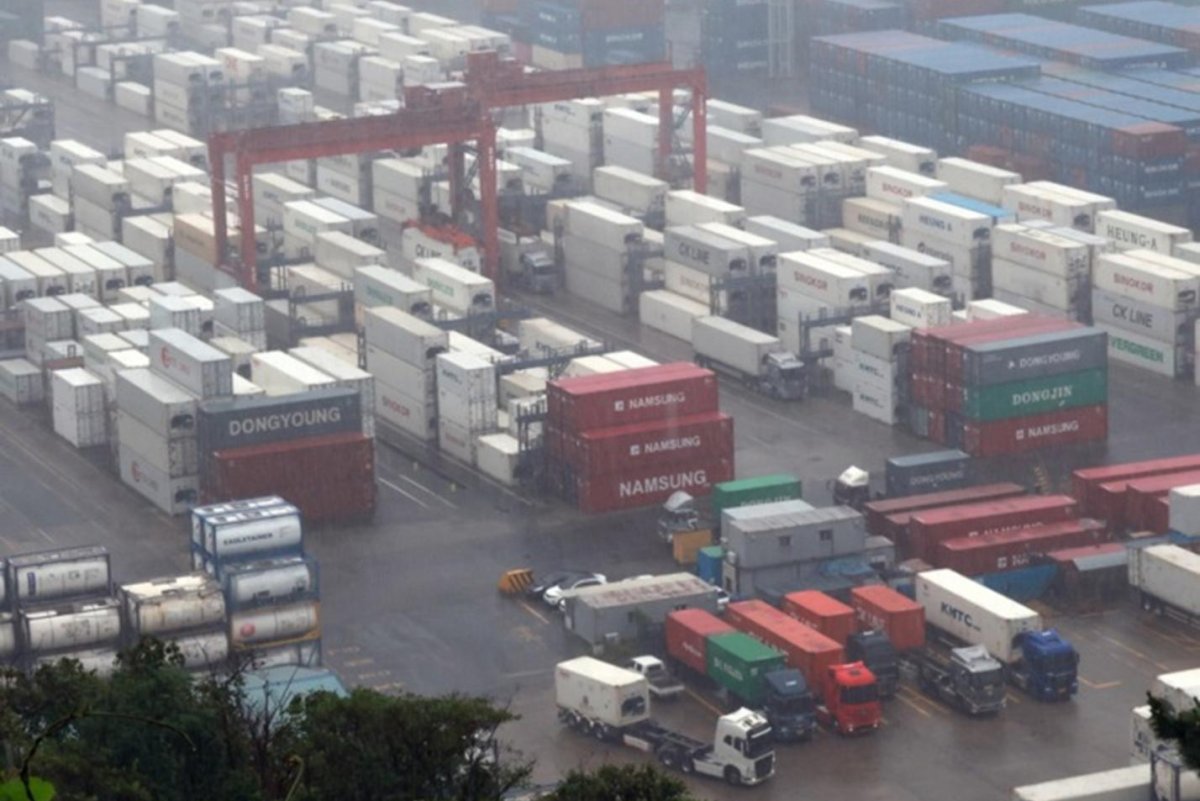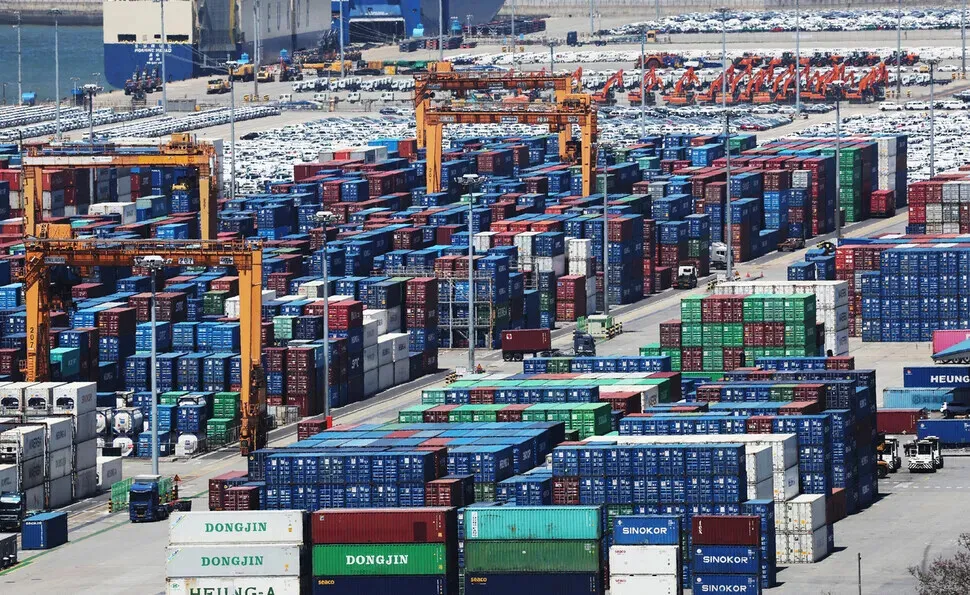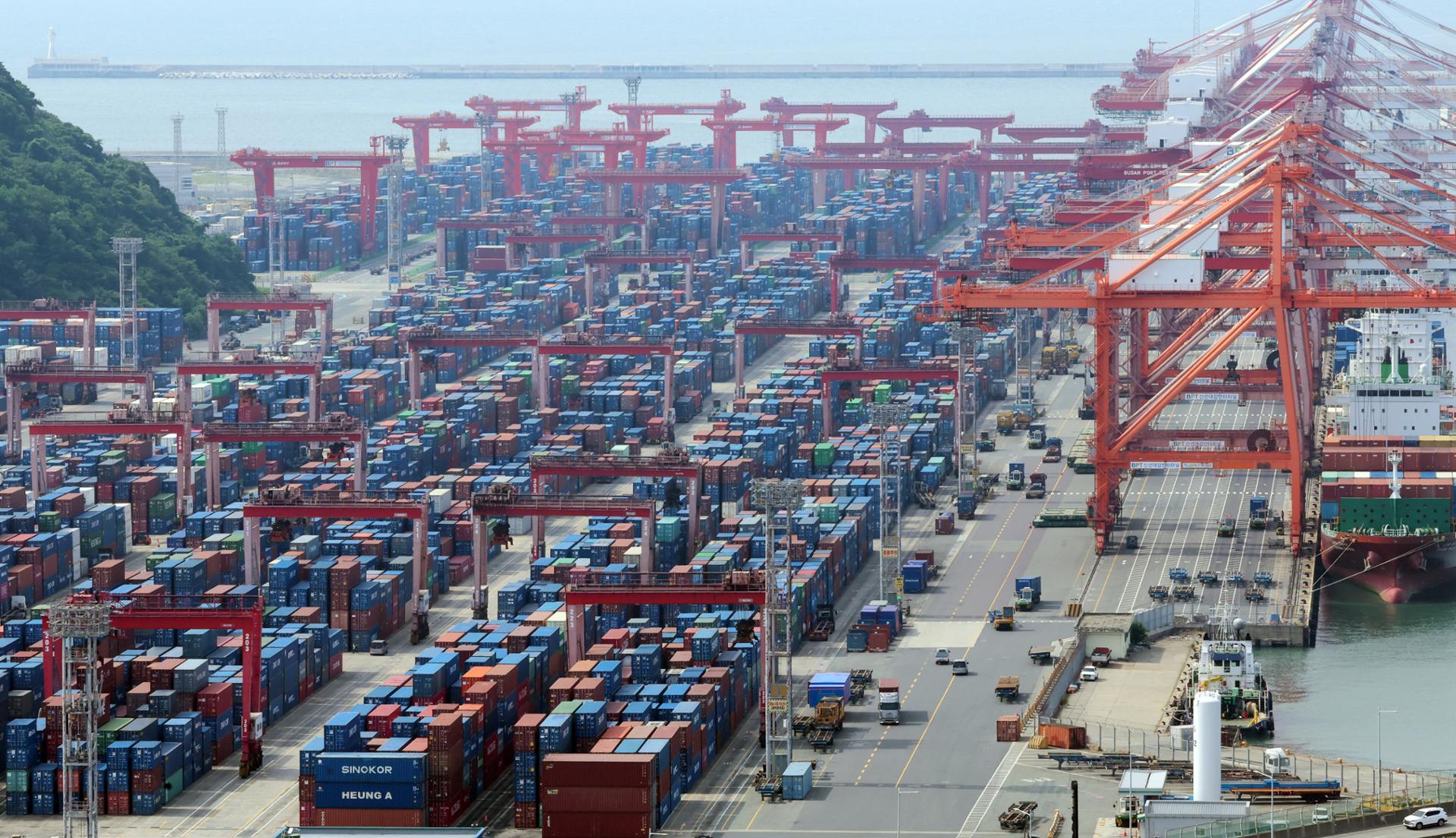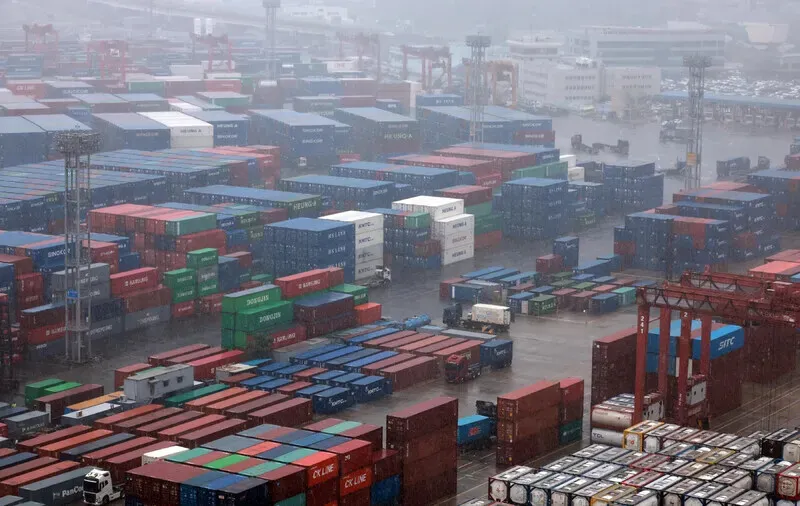
Rain drizzles on the Port of Busan in South Korea on July 1, 2026. (Yonhap)
Korean exports topped US$100 billion for the first time in June largely because of the historic bull market in memory chips made by Korean semiconductor firms Samsung Electronics and SK Hynix.With semiconductors in the lead and shipbuilding and smartphones providing momentum, some expect that Korea’s exports for the year will reach US$1 trillion, which would make Korea the world’s fourth biggest exporter after China, the US and Germany.According to figures released Wednesday by Korea’s Ministry of Trade, Industry and Resources, semiconductor exports rose 199.5% year-over-year to US$44.82 billion, accounting for 43.8% of Korea’s total export value in June (US$102.25 billion). That was the first time monthly chip exports have hit US$40 billion.Exports gained value as the corporate fixed price of DRAM (16GB DDR5) rose from US$31 in March to US$40 in June, driven by a global surge of investment in AI.Last month, semiconductors were one of 18 of Korea’s 20 leading export categories that grew in value last month. So while the growth in chip exports was particularly dramatic, Korean exports posted steady growth across the board.As major tech firms invested more in AI infrastructure, exports of computers shot up by 308.8% alongside higher exports of smartphones and other wireless communications devices (51.9%), automobiles (5.8%), petroleum products (49.8%), petrochemicals (18.8%), ships (12.9%) and steel (9.6%).By region, Korea reported a major increase in exports to both China and the US, with that growth largely attributable to semiconductors. Exports to China rose 92.1% to US$20.03 billion, while exports to the US were up 78.6%, reaching US$20.02 billion.Korea’s imports in June (US$66.1 billion) rose 30.1% because of higher oil prices, but that was far outstripped by exports. As a result, Korea posted a trade surplus of US$36.15 billion last month, the first time that metric has exceeded US$30 billion.Korea’s cumulative exports and imports for the first half of 2026 were worth US$496.7 billion and US$358.4 billion, respectively. That makes a trade surplus of US$138.3 billion, or US$110.9 billion higher than last year.“Exports for the second half of the year may not hit targets if the export price of petroleum products and petrochemicals falls along with oil prices. There’s also uncertainty about tougher tariffs from the US and the EU slashing its tariff-free quota for steel imports,” noted Chang Sang-sik, the director general of the Institute for International Trade at the Korea International Trade Association.But Chang added that “since exports typically increase a little in the second half of the year, we might hit US$1 trillion in exports this year.”By Park Jong-o, staff reporterPlease direct questions or comments to [english@hani.co.kr]