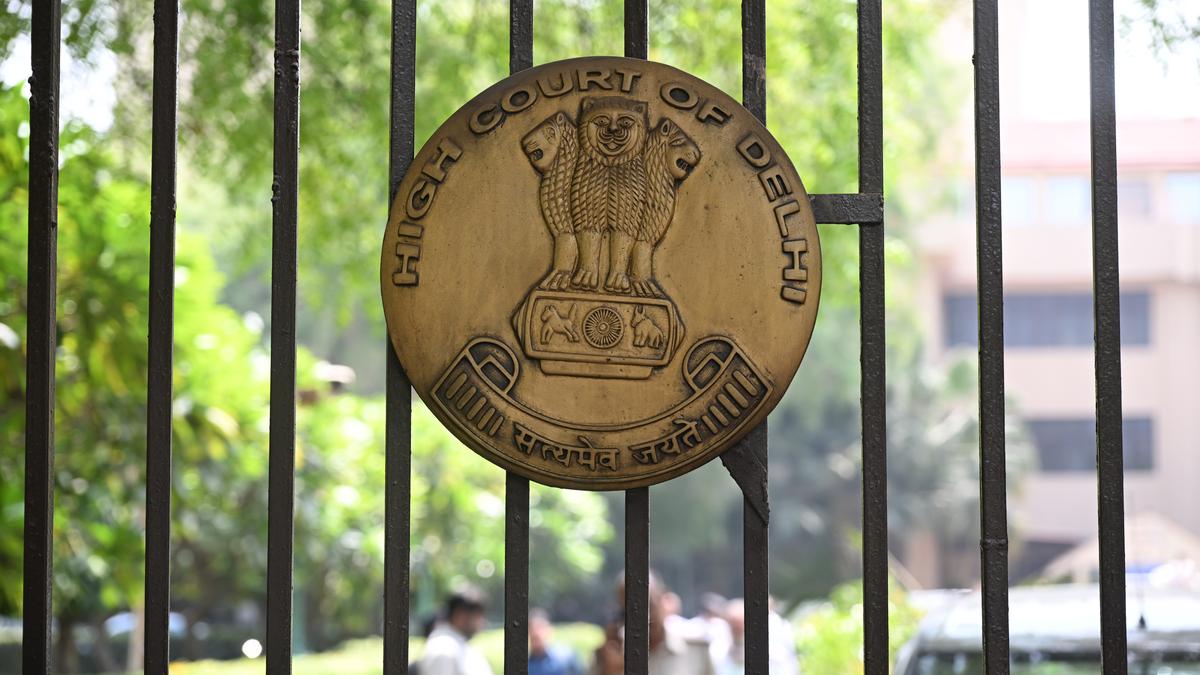
The Delhi High Court has set aside the conviction of former Major General Anand Kumar Kapur in a disproportionate assets case, holding that the trial court adopted an unduly technical and hasty approach by prematurely closing the defence evidence without affording him a reasonable opportunity to examine his remaining witnesses.The former Major General was booked by the CBI in 2007 for amassing assets disproportionate to his known sources of income. (iStock | Representative)A bench of Justice Jasmeet Singh in his 117-page verdict delivered on Wednesday, also found serious infirmities in how the Central Bureau of Investigation (CBI) obtained sanction for prosecution. The court observed that the sanctioning authority had not been provided with the complete investigative record and had instead considered only such material as the investigating officer had chosen to place before it.“However, the Trial Court proceeded with undue haste to close the Appellant’s evidence without granting any further opportunity, thereby causing serious prejudice to the defence. Unfortunately, the impugned order reflects that the Trial Court proceeded solely with the objective of adhering to the timeline fixed for the conclusion of the case, without examining whether denial of further opportunity would cause prejudice to the defence. I am therefore of the opinion that the Trial Court adopted an unduly technical and hurried approach in closing the defence evidence without granting a reasonable opportunity to the Appellant to conclude the examination of his remaining witnesses,” the court held.It added, “While the Court was justified in discouraging unnecessary adjournments, the facts of the present case warranted a more calibrated approach so that the mandate of speedy trial could coexist with the equally important requirement of a fair trial. Sanctioning authority was not furnished with the complete investigative record. The authority was shown only such material as the IO subjectively chose to forward. Accordingly, I am constrained to hold that the prosecution has failed to establish that the entire relevant material collected during the investigation was placed before the sanctioning authority prior to grant of the sanction dated 29.09.2009. The sanction, therefore, suffers from non-application of mind and stands vitiated in law.”Also Read: Centre begins fresh eviction process against Delhi Gymkhana ClubKapur, who joined the Indian Army in 1971, was booked by the CBI in 2007 for amassing assets disproportionate to his known sources of income during his service in the Indian Army from 1971 to 2006.In September 2016, a trial court convicted him under the Prevention of Corruption Act and sentenced him to one year of rigorous imprisonment, a fine of ₹50,000 and also ordered confiscation of assets worth ₹2.22 crore.Kapur challenged the conviction before the High Court, arguing through his counsel, Vivek Kohli, that the investigation was flawed and the prosecution sanction was invalid, having been granted within just 20 days despite the investigation spanning more than two years and involving voluminous records. He further contended that he was denied a fair trial after the trial court closed his defence evidence during a lawyers’ strike, even though only four of his nine proposed defence witnesses had been examined.The CBI’s special public prosecutor Rajesh Kumar defended the conviction, maintaining that sufficient opportunity was provided to Kapur and that the trial court was acting in compliance with the Supreme Court’s direction to conclude the proceedings by September 2016. It was also argued that the sanction was awarded only after due application of mind.
Delhi HC sets aside conviction of former major general in asset case
The court observed that the sanctioning authority had not been provided with complete investigative record and had instead considered only such material as the IO had chosen to place before it | India News
561 words~3 min read