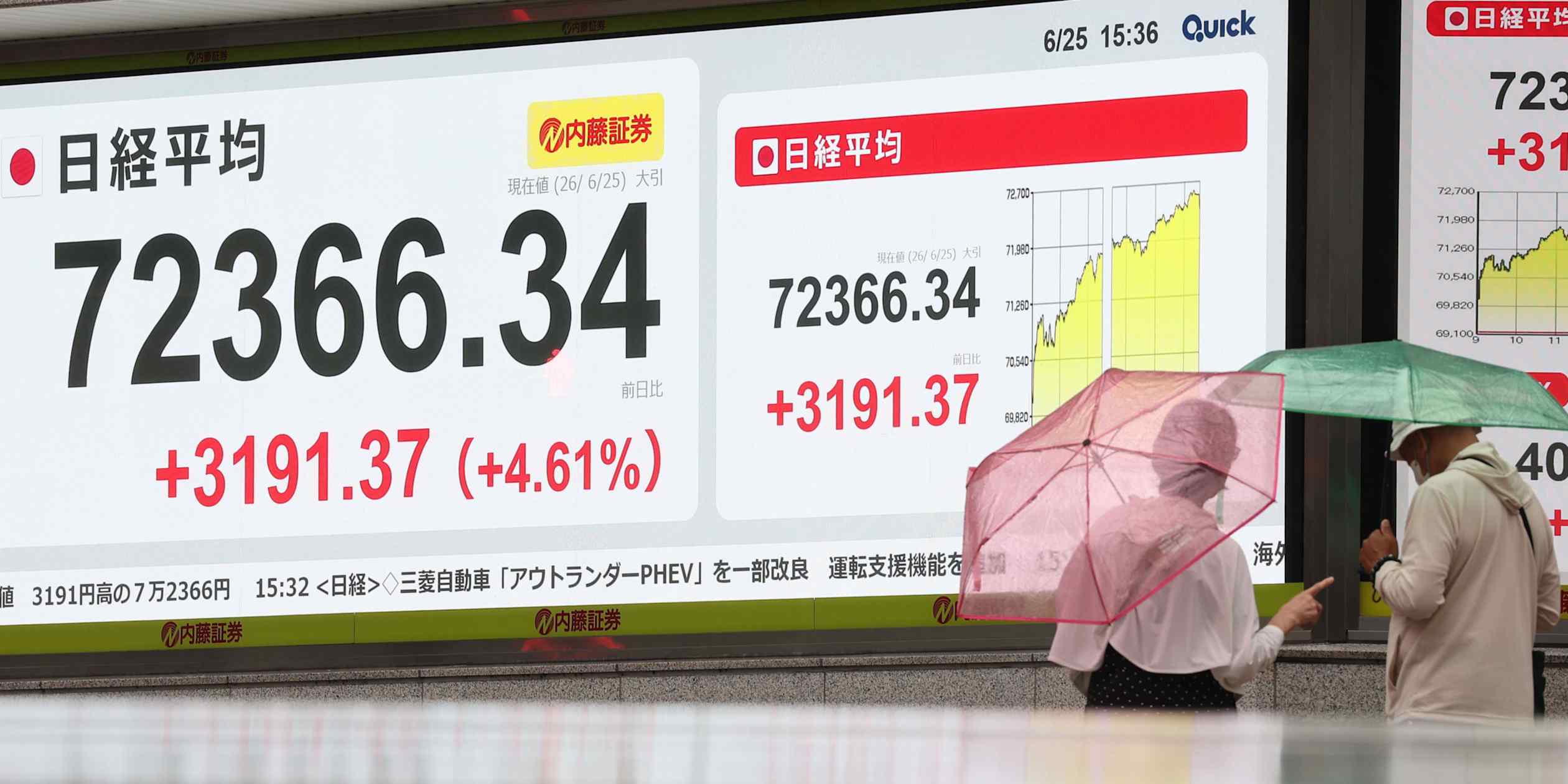
While global markets were busy panicking over a tech selloff, Japan’s retail investors did what they do best: bought the dip. And they did it in record size.
Individual investors in Japan purchased a record amount of domestic shares last week as the Nikkei 225 dropped 2.47% to 68,732, dragged lower by chip-related stocks caught in a broader technology rout. The buying spree is all the more striking because these same investors have been aggressively dumping foreign holdings, recording net sales of 2.72 trillion yen ($16.98 billion) in overseas stocks in May alone, the largest monthly outflow in roughly five years.
The $99 billion war chest
As of late June, Japanese retail investors held over 16 trillion yen, approximately $99 billion, in readily deployable cash within their brokerage accounts. That’s not money locked in long-term deposits or pension funds. It’s capital sitting in accounts specifically designed for stock trading, waiting to be put to work.
What makes this rotation particularly notable is its directionality. Japanese households aren’t just buying stocks generically. They’re actively pulling money out of foreign markets and redirecting it home. The $16.98 billion exit from overseas equities in May suggests a deliberate repatriation of capital, not just opportunistic bargain hunting.