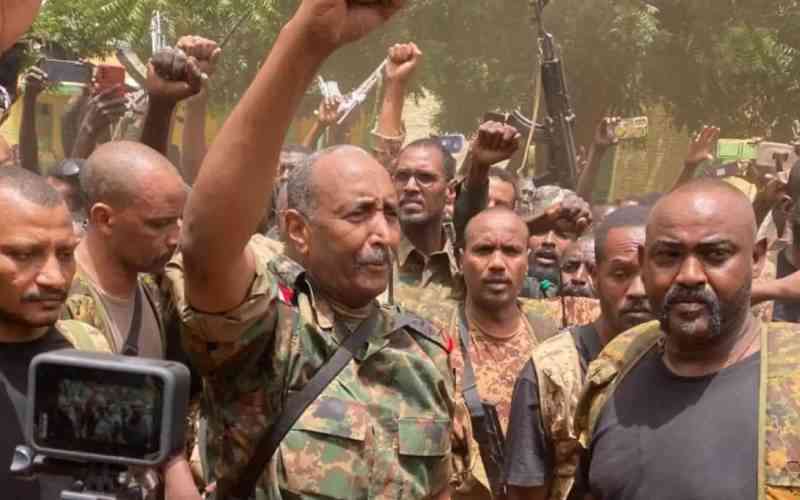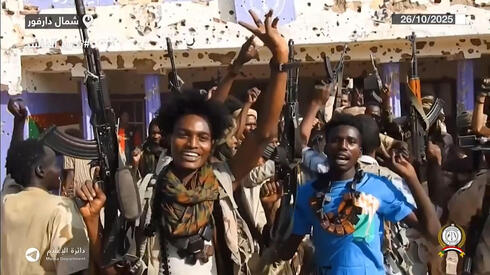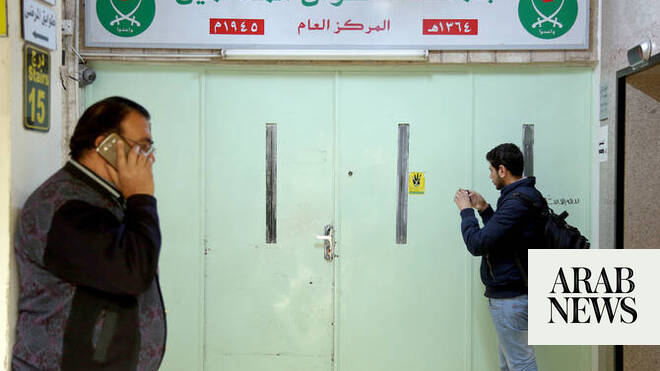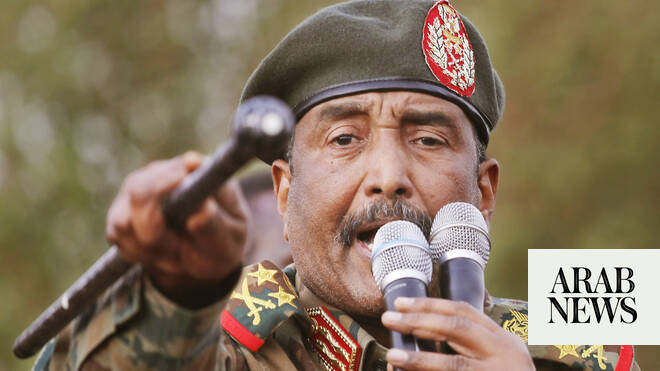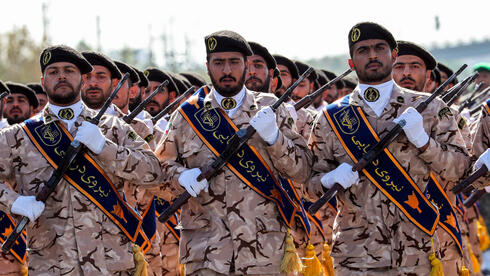
Analysis: An Islamist militia trained by Iran's Revolutionary Guard is sitting inside Sudan's army command and mass executing civilians. Washington just named it. Israel called this years agoThe Trump administration has just drawn a hard line under Sudan's Muslim Brotherhood, warning openly that fighters loyal to the movement are receiving training and support from Iran's Revolutionary Guard Corps and threatening a fresh wave of sanctions against anyone who keeps that pipeline open.Washington's message on Sudan is blunt and leaves no room for ambiguity. Sudan's Islamic Movement is using excessive violence against civilians to sabotage conflict resolution and spread its extremist ideology, and many of its fighters, trained and armed with Iranian help, have carried out mass executions of civilians. This is one of the clearest and most direct statements yet from Washington tying a Muslim Brotherhood affiliate to Iran's terror machine, and it comes with an explicit threat that more punishment is coming.GalleryA view of damaged tanks in front of the Central Bank of Sudan building, after the Sudanese army deepened its control over Khartoum from the Rapid Support Forces (RSF), in Khartoum, Sudan (Photo: Reuters)This is not a new suspicion dressed up in diplomatic language. Washington designated Sudan's Muslim Brotherhood a global terrorist organization and a transnational criminal organization back in March, and last September it blacklisted the group's Al Bara ibn Malik Brigade specifically over its brutal role in Sudan's civil war and its ties to Tehran. Iran is branded once again as the world's leading state sponsor of terrorism, its Revolutionary Guard accused of funding and directing malign activity across the globe, and Sudan's Islamists are now formally listed as one of its beneficiaries.For Israel, the significance is not subtle. Every time a Muslim Brotherhood offshoot anywhere in the region gets folded into Iran's orbit, it confirms what Jerusalem has argued for years in closed briefings and open testimony alike: political Islam and the Iranian axis are not rivals competing for the same turf, they are increasingly partners sharing weapons, training camps and a common enemy. Sudan now joins that grim ledger, and the fighters carrying it out are executing unarmed people in the name of an ideology that has already proven it exports violence far beyond its borders. This is not an isolated case study. It is the same pattern that has played out from Gaza to Lebanon to Yemen, an Islamist movement wrapping itself in religious language while functioning as a forward operating arm of the Iranian regime.Washington sees no military solution to Sudan's war and is pushing for a negotiated humanitarian truce, an end to foreign military backing for the warring factions, unimpeded aid access and a path toward civilian rule. But the warning aimed at the Brotherhood's fighters is not framed as one factor among many. It stands apart, paired with a threat of further terrorist designations against Brotherhood branches elsewhere, following the precedent already set in Egypt, Jordan and Lebanon, a signal that Sudan is being treated as part of a wider, coordinated crackdown rather than a standalone case.Washington is conducting a continuous review of these groups to classify them for what they truly are, whether sponsors of terrorists or terrorists themselves, a standard that now hangs directly over Sudan's Islamist fighters and their patrons in Tehran. That framing matters because it leaves open the door to further, harsher designations against the movement's leadership, financiers and any government structure that continues to shelter it. Iran's Revolutionary Guard (Photo: AFP)That review matters because Sudan's Islamic Movement is not some fringe faction, easily dismissed as a footnote to a distant civil conflict. It sits inside the command structure of the Sudanese Armed Forces, giving an organization Washington now calls a terrorist group direct influence over a state military still fighting for control of the country. An Iranian funded, Brotherhood led network embedded inside a national army is precisely the scenario that keeps counterterrorism planners awake at night, because it blurs the line between insurgency and government, and because it hands Tehran a foothold on the Red Sea corridor that Israel watches closer than almost anywhere else on the continent.That embedded position inside the army command is what separates Sudan's Muslim Brotherhood from a typical designated terror group operating on the fringes. It is not hiding in the shadows or fighting from mountain hideouts. It has spent years working its way into the machinery of the state itself, using the chaos of Sudan's civil war to entrench its fighters, its financiers and its ideology inside institutions that are supposed to answer to a government rather than to a movement with loyalties in Tehran.The movement's roots inside Sudan run deep, dating back decades to when Islamist officers and ideologues first began cultivating influence within the military and security services long before the current civil war ever began. What Washington is now describing is not the sudden emergence of an outside threat but the culmination of a long, patient project of infiltration, one that used the collapse of state authority during the war as cover to accelerate its grip on the army's command structure and its access to Iranian support.The mass executions carried out by these fighters are not incidental battlefield violence. They are described as a deliberate feature of the group's strategy, a calculated tool used against civilians specifically to derail any diplomatic path out of the war and to keep the country locked in a conflict the movement believes it can exploit for its own long term gain. Every ceasefire effort, every humanitarian corridor, every attempt to steer Sudan back toward civilian rule runs into the same obstacle, an armed Islamist faction with outside backing that has no interest in seeing the war end on anyone's terms but its own.Washington's language leaves little ambiguity about where responsibility lies. The Brotherhood is not framed as one armed faction among several competing for power in a chaotic civil war. It is singled out by name, tied explicitly to Iran's Revolutionary Guard, and placed on notice that further sanctions and terrorist designations are actively being prepared. For a country already devastated by war, the presence of an Iranian backed Islamist militia inside the national army is now, for the first time, being described in Washington in exactly those blunt and unflinching terms, without hedging and without any of the usual diplomatic softening reserved for delicate wartime alliances.For Israel, watching Iran's Revolutionary Guard named as the hidden hand behind a Muslim Brotherhood militia’s mass execution is confirmation of a pattern it has warned about for years, that the Brotherhood's global network and Tehran's regional ambitions are converging rather than competing. Sudan is simply the latest and bloodiest confirmed proof of exactly that convergence. The only question that matters now is whether the sanctions threatened against Sudan's Islamist fighters will actually land in real practice, or whether, like so many warnings issued from Washington before, they will simply join the long list of tough lines drawn and quietly blurred on the ground while the killing continues.Amine Ayoub, a fellow at the Middle East Forum, is a policy analyst and writer based in Morocco. Follow him on X: @amineayoubx
Sudan's Muslim Brotherhood is executing civilians on Iran's orders
Analysis: An Islamist militia trained by Iran's Revolutionary Guard is sitting inside Sudan's army command and mass executing civilians. Washington just named it. Israel called this years ago
1,188 words~5 min read