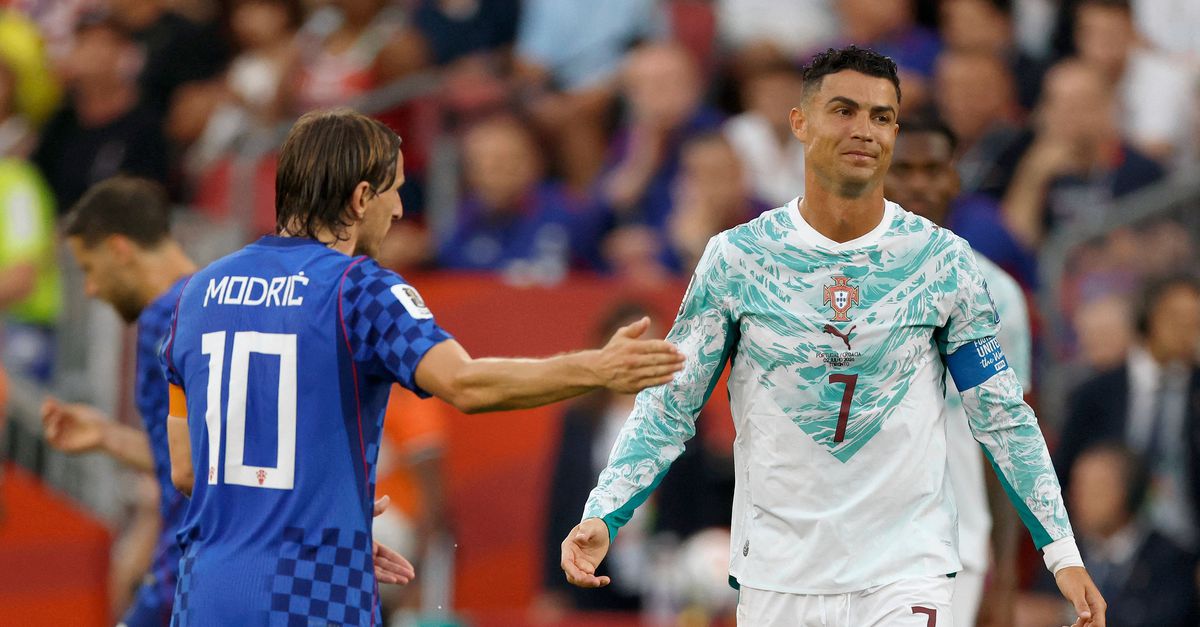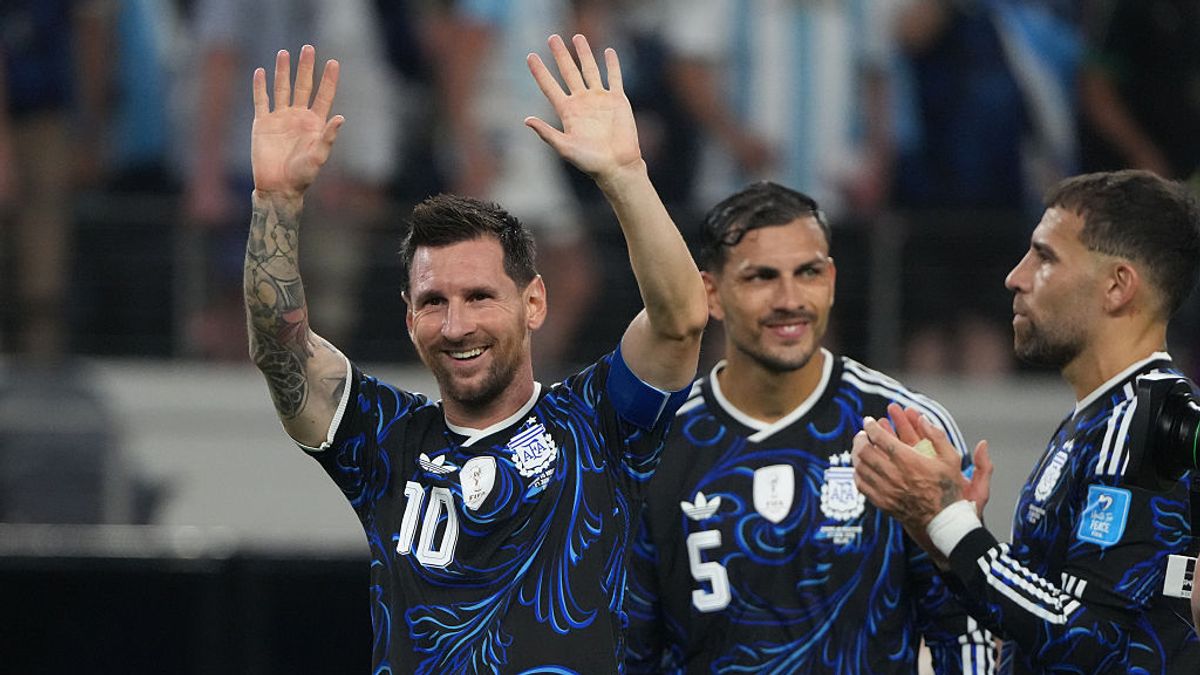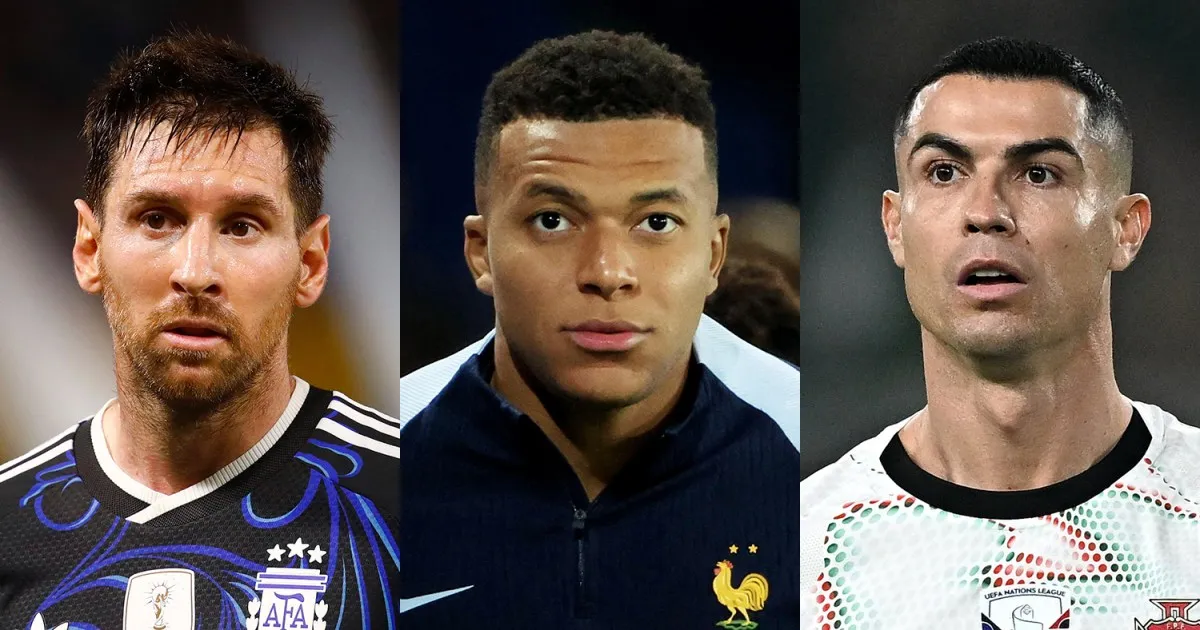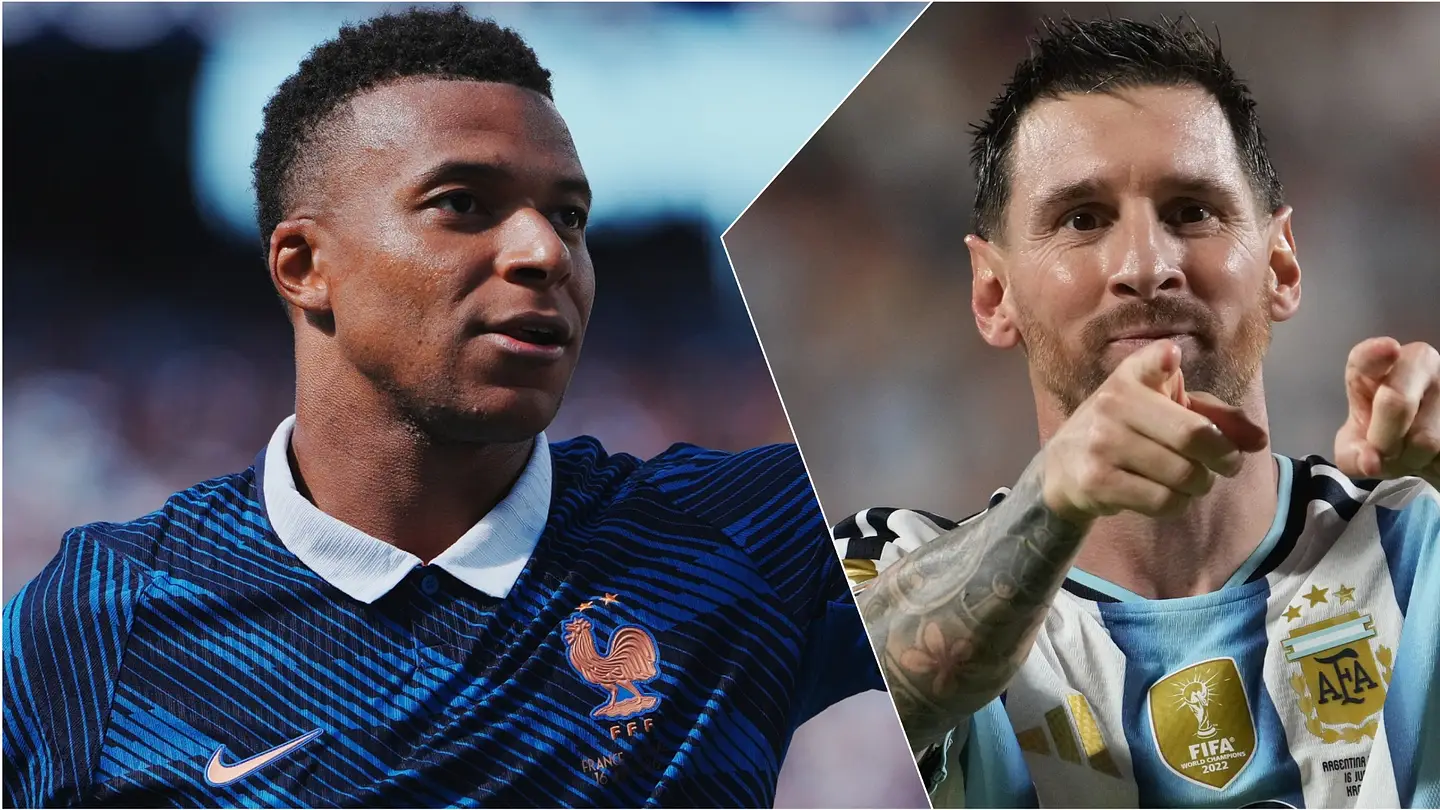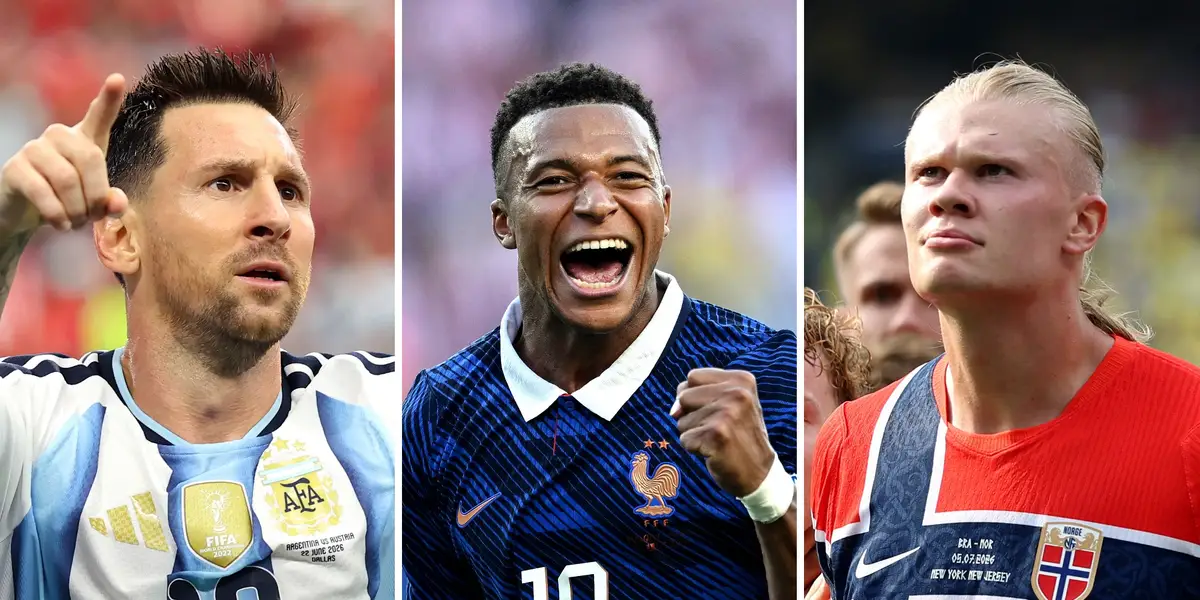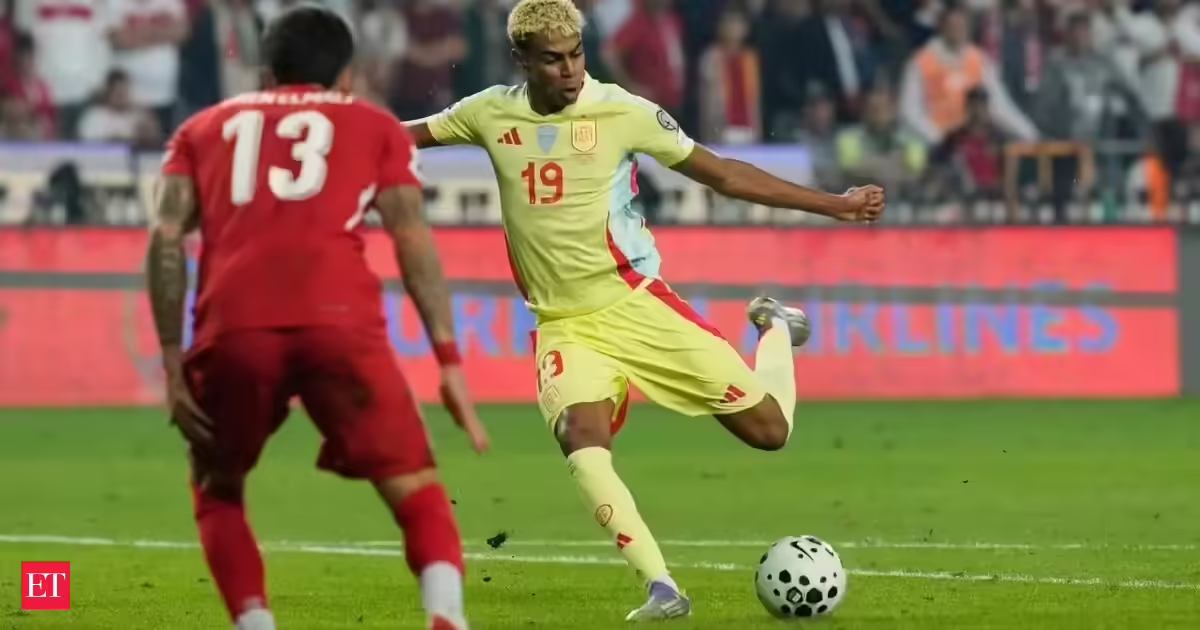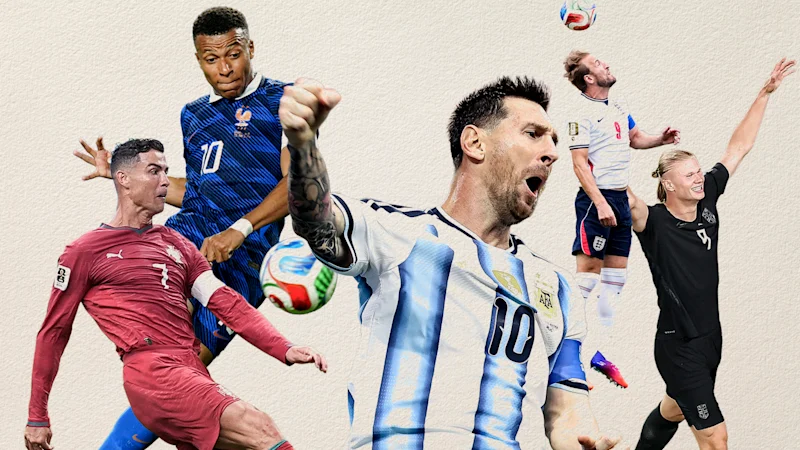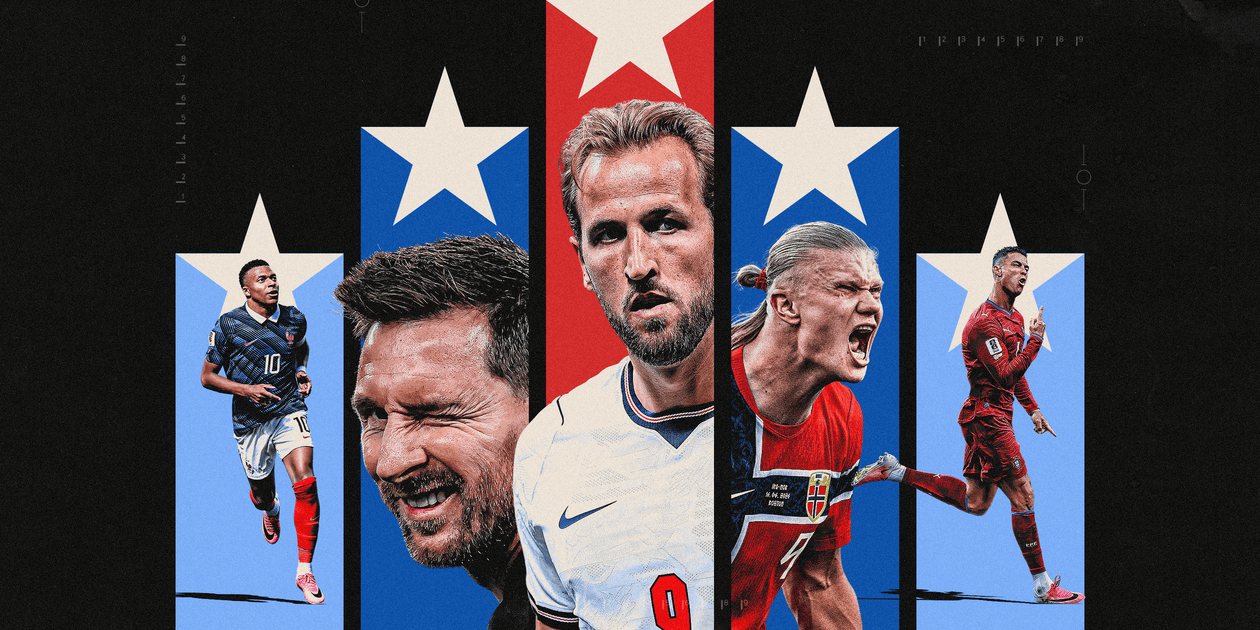
The World Cup, historically, is brutal and unforgiving. It doesn’t respect reputations. Legends have been written on football’s biggest stage, but far more often, the pressure has proved intolerable.Diego Maradona played at four World Cup tournaments. Everyone remembers the second one in 1986, when he scaled such extraordinary heights to lead Argentina to glory, but the first ended in bitter frustration (a red card for kicking out at an opponent), the third in tears (unable to reach those same heights en route to a semi-final defeat by Italy) and the fourth in disgrace (testing positive for a banned substance).Zinedine Zidane played in three for France. His first, in 1998, was an enormous triumph, culminating with his two goals in the final against Brazil, but it also included a red card and a two-game ban for stamping on an opponent. The second was a write-off as he struggled to overcome injury and the third, his swansong in 2006, ended in a red card for head-butting Marco Materazzi in the final.Cristiano Ronaldo, the record goalscorer in the Champions League and in international football, is playing in his sixth World Cup at the age of 41 and still looks encumbered with the frustrations of the previous five. Lionel Messi’s World Cup story was tinged with melancholy and frustration until he made it fifth time lucky in 2022. At his four previous tournaments he seemed stifled at times by the pressure of carrying Argentinian hopes on his shoulders.It goes on and on. The great Marco van Basten, Luis Figo and Zlatan Ibrahimovic never scored at a World Cup. Wayne Rooney’s World Cup history is best remembered for a red card rather than the one goal he scored across three tournaments for England. Ronaldinho lit up the 2002 tournament as an emerging star. As the sport’s biggest star four years later, with two Ballon d’Or crowns to his name, he struggled.Frank Lampard scored more than 300 goals from midfield for club and country, but never in any of his three World Cup tournaments for England. There is more than an element of hard luck about that — he cannot forget the officials’ failure to see that a shot against Germany had crossed the line in 2010 — but he has also spoken about the difficulty of playing at a World Cup: not necessarily the standard of the competition, but the pressure you face while playing, at such high stakes, in a team that is usually less cohesive than a leading club side. Olympic athletes spend four years working towards reaching a peak of performance. For footballers in Europe, the World Cup is bolted onto the end of a club campaign when, mentally as well as physically, fatigue has taken hold.That is what makes this summer’s World Cup so unusual. The game’s biggest stars have not just come to the party; they have dominated it.Messi and Kylian Mbappe have appeared intent on making it a two-way fight for both the Golden Boot award, with six goals apiece already, and the Golden Ball award for the tournament’s outstanding player. But they face competition; Harry Kane and Erling Haaland have scored five goals apiece; France forward Ousmane Dembele, the holder of the Ballon d’Or, and Brazil’s Vinicius Junior have scored four times; even Ronaldo, in what has been a difficult tournament to date, has scored twice. Others, such as Spain’s Lamine Yamal, England’s Jude Bellingham, Egypt’s Mohamed Salah and Colombia’s Luis Diaz, are also off the mark. Michael Olise is yet to score, but he has five assists and his performances for France have been outstanding.Time and again, when the pressure has been on, the biggest names have produced. Messi and Mbappe are enjoying every second of it, playing with such freedom, and Kane, Haaland and Vinicius have delivered when their teams have needed it. At 1-0 down to DR Congo in Atlanta yesterday, England needed someone — anyone — to step up. To nobody’s surprise, Kane was the one to do so, first with a well placed header from Anthony Gordon’s hanging cross and then with a thunderous shot into the roof of the net in the 86th minute, just as extra time was looming.In a post-match interview, Kane told the BBC he and his team-mates had spoken beforehand “about people having hero moments”. “It can be anyone in the team — whether it’s me, a save from (goalkeeper Jordan) Pickford, a block from the defenders, whoever it is, we have hero moments. And for me it was today.”Delivering in high-pressure moments at big tournaments is nothing new for Kane. What is unusual is for so many of the game’s biggest stars to be delivering at the same time.At the 2010 World Cup, players of the quality of Messi, Ronaldo, Fernando Torres, Didier Drogba, Kaka, Wayne Rooney and Ibrahimovic — that’s seven of the top 10 in the previous Ballon d’Or vote — scored a combined total of two goals. That was a freakishly bad tournament when it came to the performances of the biggest stars, but in 2006 the only player to score more than three goals was Germany’s Miroslav Klose, who, outside of the World Cup, was a very good centre-forward rather than a truly great one. Messi and Mbappe battled for the Golden Boot and the Golden Ball in 2022, ending up with seven and eight goals respectively, but other big names, not least Ronaldo, were well off the pace.The obvious caveat is that this is a higher-scoring tournament in general — 2.94 goals per game at the time of writing, as opposed to 2.69 per game in 2022 and a miserable 2.27 back in 2010 — and that goalscoring has been facilitated at an expanded 48-team tournament, where, inevitably, the quality of the opposition is diluted.But while Messi scored once against Jordan (73rd in the FIFA rankings), he also scored three times against Algeria (ranked 29th in the world) and twice against Austria (23rd). Mbappe scored twice against Iraq (63rd) but also twice against Senegal (18th) and Sweden (37th). Kane scored once against Panama (44th) and twice against DR Congo (41st) but also twice against Croatia (13th). The expansion is clearly a factor, but some of the less fancied teams have produced remarkable defensive displays (Cape Verde against Spain, DR Congo against Portugal, Curacao and Ecuador). Goals have been up across the board, rather than just against the perceived minnows.Messi celebrates another World Cup goal (Photo: Charlotte Wilson/Getty Images)Indeed, it has been a tournament with a pleasing share of underdog stories as well. Messi and Mbappe might have dominated the headlines, but they have also shared the limelight at times with, for example, Vozinha and Eloy Room, the little-known goalkeepers of Cape Verde and Curacao respectively. Away from the heavyweights, all three host nations — the U.S., Canada and Mexico — have surged into the last 16 with displays of collective spirit and defiance. Whatever the ingredients required to make it a truly compelling World Cup, most of them appear to be present as we head into the fourth week.But the most significant difference with previous tournaments is that so many of the star players are in such impressive condition, both mentally and physically. Rather than turn up at the World Cup exhausted, as has been the case in the past, they have looked primed and ready to hit the ground running from game one.Advances in sports science, nutrition and conditioning help in that regard. The Athletic detailed the lengths that both Messi and Kane have taken to try to ensure they arrived at the World Cup in peak condition. Mbappe, who looked jaded at the European Championship finals in 2024, seems to be in the form of his life.They will be tested more severely as the tournament progresses; Kane has the heat and altitude of Mexico City to contend with on Sunday, while either Haaland or Vinicius is certain to head home after Norway take on Brazil. But so many of the best talents are, for once, all thriving on the World Cup stage. An exception might be Spain’s teenage winger Yamal, who is still playing his way back towards full fitness and form following a hamstring injury, but he too has shown flashes of his outstanding quality.Football has been heading towards a crossroads in recent years. The cult of the individual has become so powerful in terms of off-pitch profile and yet, conversely, so much less important from a coaching perspective. At times even the biggest stars — well, maybe not Ronaldo and Messi at 41 and 39 respectively — are expected to sacrifice their own game and their output for the greater good.And here we are at a World Cup in which so many of the biggest players are excelling, dominating the scoring charts, the player-of-the-match ballots and the general narrative of the tournament to such a degree. So many of the great players of the past had only one great World Cup — and in some cases, not even that — but this summer so many of them appear ready to shine and illuminate the tournament. It doesn’t happen very often, but sometimes the stars just align.
Stars like Kane, Messi and Mbappe are dominating this World Cup. That is not normal
What makes this summer’s World Cup so unusual is the game’s biggest stars have not just come to the party; they have dominated it
1,528 words~7 min read