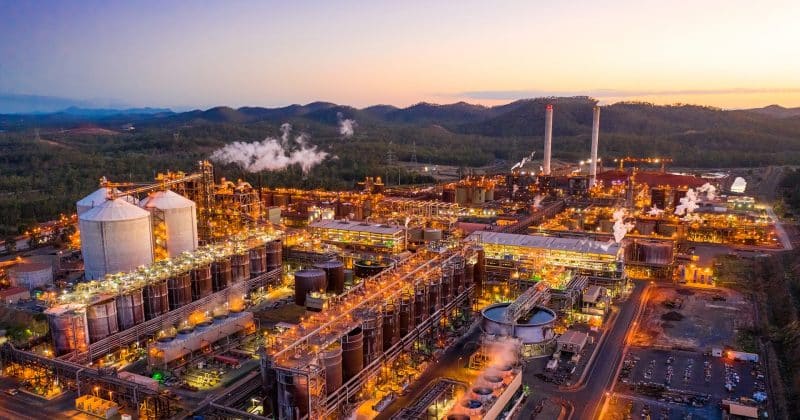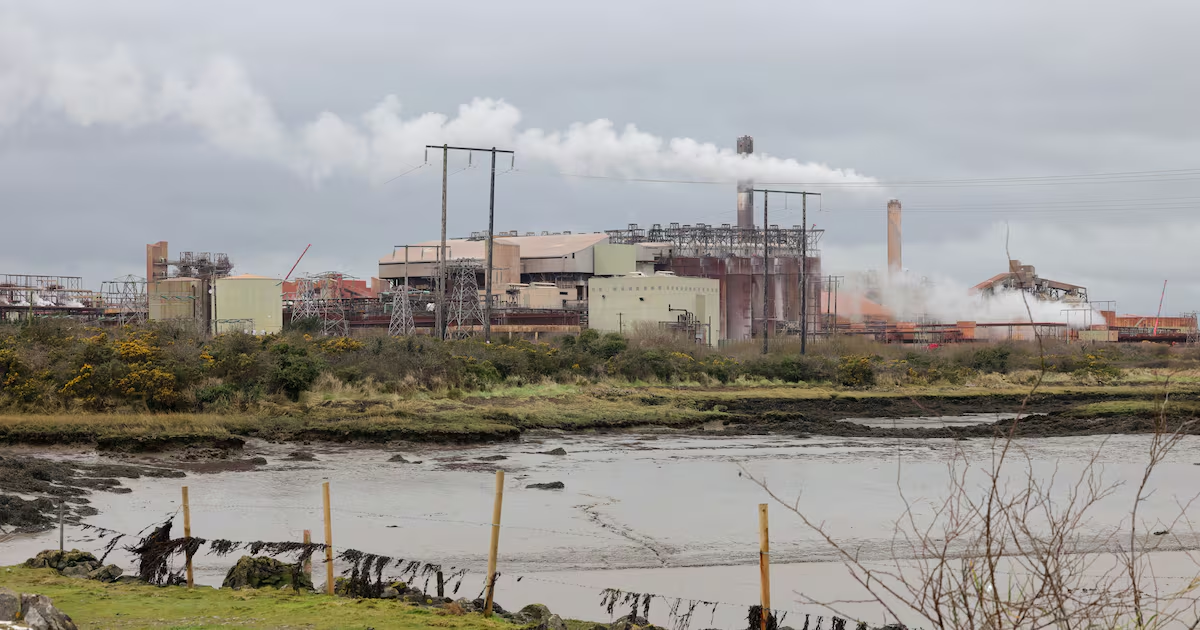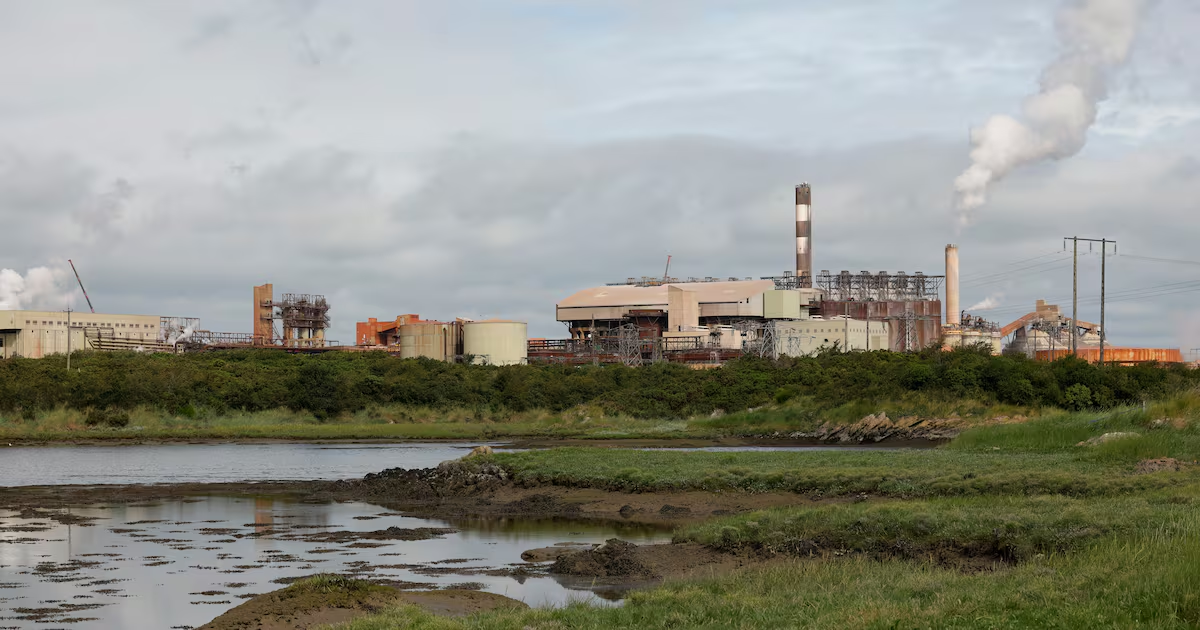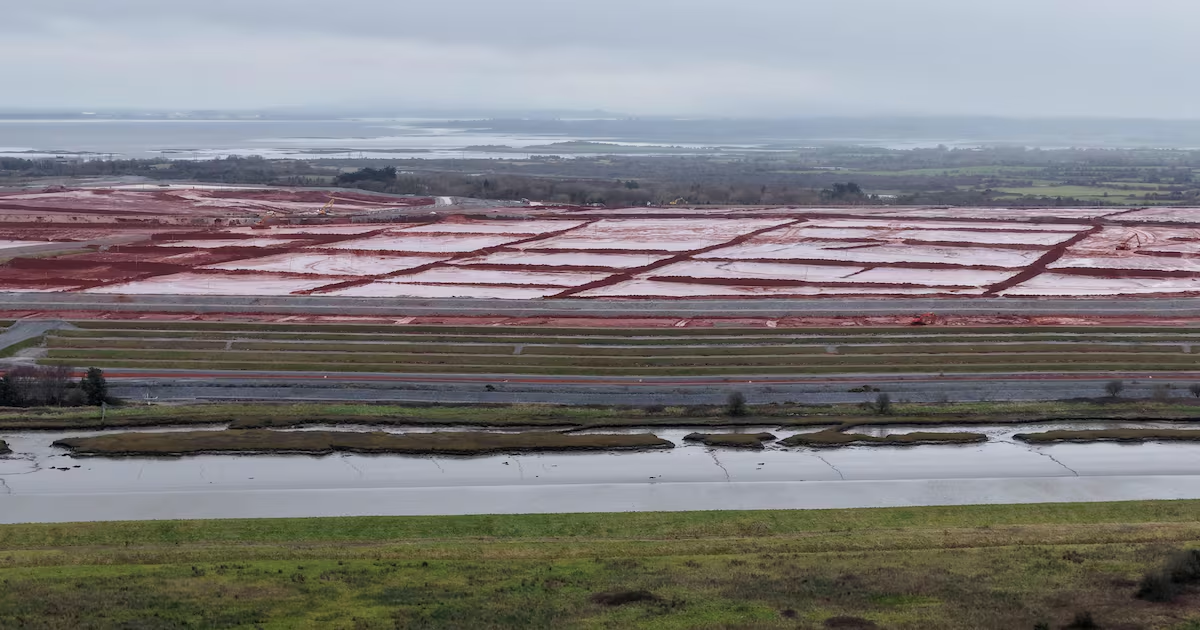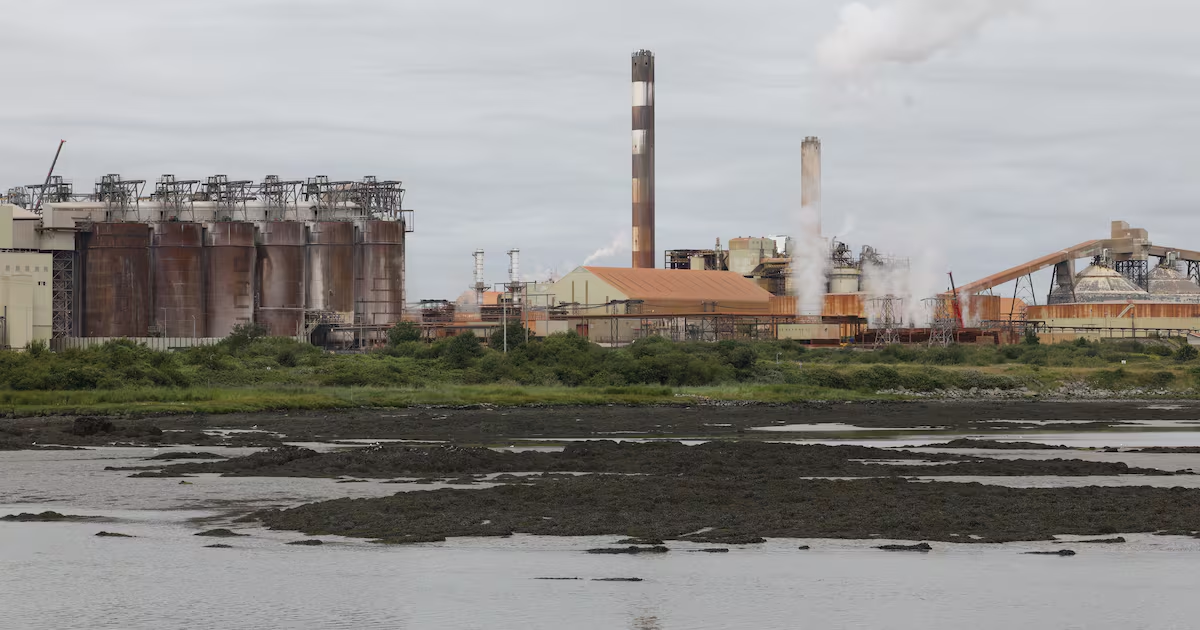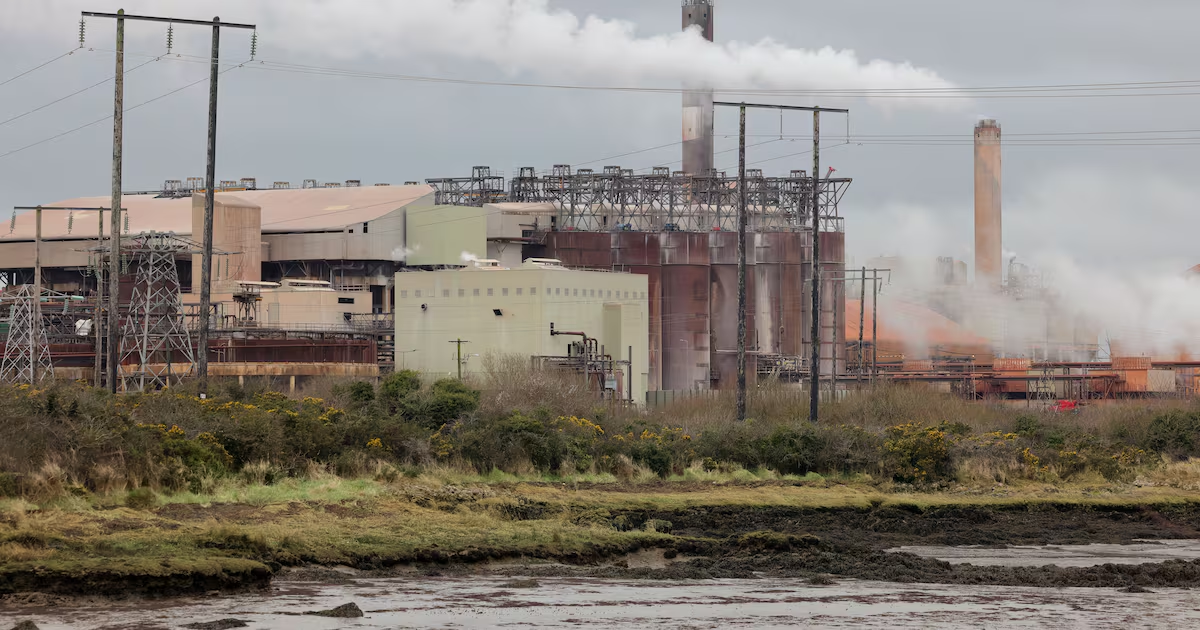
Swedish tax rulings do not generally have much impact on matters of geopolitics.But the latest judgment of Skatteverket, Sweden’s equivalent of Revenue, regarding the Kubal Aluminium plant on the country’s east coast, is likely to be different.The figures involved are relatively small, just over €5.1 million, held in Kubal’s tax account and now frozen by authorities. But the findings of the agency could affect hundreds of jobs in Ireland and trigger a severe shortage of aluminium for European industry.It also leaves Ireland increasingly isolated in failing to take action against Rusal, the Russian parent company of both Kubal and Aughinish Alumina in Co Limerick.The focus of the judgment is Oleg Deripaska, a billionaire oligarch with close ties to the Kremlin and a key player in the Russian arms industry.[ Sanctioned Russian billionaire retains control of Aughinish parent company, Sweden findsOpens in new window ]In 2002, Deripaska founded EN+, a large energy conglomerate which took over the metals manufacturer Rusal. Rusal later purchased both Kubal and Aughinish Alumina.In 2018, the US treasury moved to sanction Deripaska and all of his assets, including Aughinish and Kubal, over allegations of interference in the US presidential election.This could have been devastating for the Co Limerick region. Aughinish employs about 470 people directly and another 500 on contract. The Irish Government engaged in an intensive lobbying campaign in Washington to remove the sanctions. Eventually, a deal was worked out in January 2019 where EN+ and Rusal would avoid sanctions if Deripaska agreed to reduce his stake in the parent company.His shareholding would be reduced to 44.95 per cent while his voting rights would reduce to 35 per cent, meaning he no longer controlled decision-making at EN+.As part of the deal, the board would be reconstituted to include eight members (of 12) which did not have any links to Deripaska.The new board members included Christopher Burnham, a former undersecretary general of the United Nations; Thurgood Marshall jnr, an American lawyer and son of the first black US Supreme Court judge; and James Schwab, a former senior official in the US department of state.The Irish Government rejoiced at the deal. “I want to congratulate the management down at Aughinish, everybody associated with this result which comes as a great relief for communities across Co Limerick,” said Peter Burke, then a junior minister and in finance and now the Minister for Enterprise.Further sanctions followed in 2022, this time from the EU targeting Deripaska for his role in supplying the Russian military following its full-scale invasion of Ukraine.But the 2019 deal shielded Rusal and Aughinish from any impacts. Then came the Swedish taxman.The Skatteverket ruling runs to 73 pages and details the structure and history of Rusal’s ownership, including a bewildering series of complex share trades. But its findings can be summed up in one sentence: the 2019 deal is a sham.It determined Deripaska continues to control EN+ and by extension Rusal. This is chiefly down to a decree from Russian president Vladimir Putin which invalidates the voting rights of company shareholders from “unfriendly nations”.In the case of EN+, when those voting rights are excluded, Deripaska’s share of voting rights increases to more than 70 per cent, “sufficient for both simple and qualified majority” votes.If he controls EN+, he also controls Rusal and all of its assets, it stated. This group includes Kubal and Aughinish.Sweden is not the first to arrive at this conclusion. In 2023, the Italian government froze the assets of Eurallumina, a Rusal-owned smelter in Sardinia, on the basis that Deripaska was still the majority owner.This leaves Ireland as one of only two EU countries to have failed to take action against Rusal assets in their countries (Rusal also owns a small aluminium plant in Germany).As Ireland takes up the EU council presidency and the Government finalises a report on the links between Aughinish and the Russian arms industry, the pressure on Dublin to be seen to be taking some sort of action may become unbearable.
Ireland increasingly isolated in failing to act against Aughinish Alumina parent company
As Ireland takes up EU presidency, it is one of only two EU countries that failed to take action against Rusal assets
660 words~3 min read