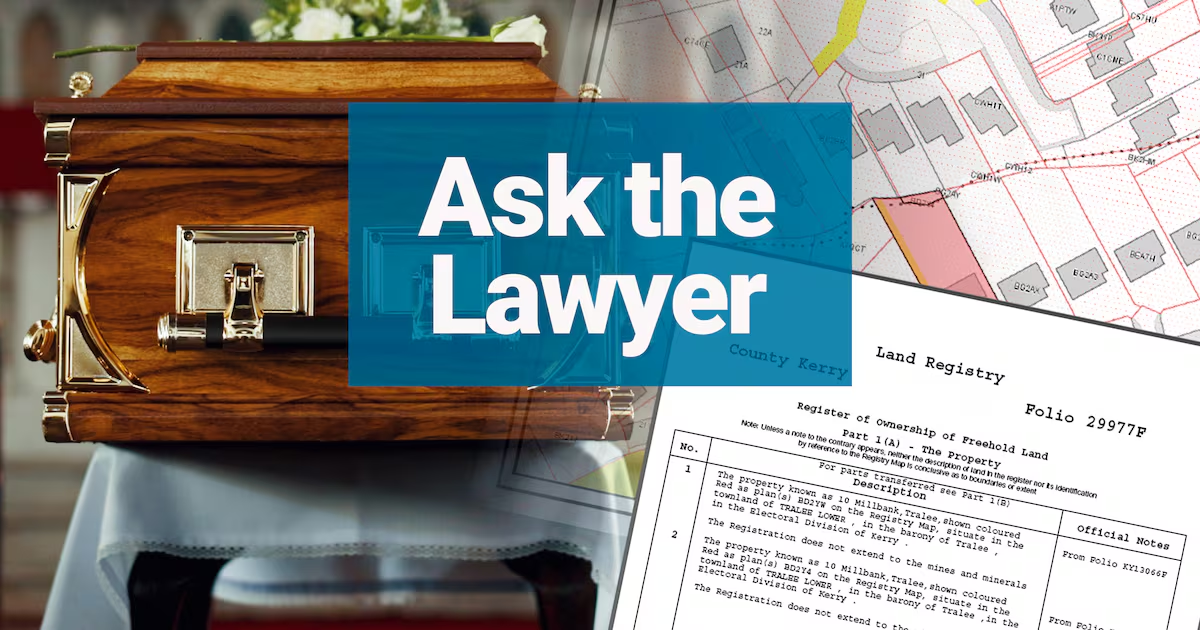
Q: My mother died last year and we have just completed probate. We did it ourselves as my mother’s will was very straightforward. However, I have a query about making an application to transfer the ownership of the house. Although I have siblings, I inherited my family home. There is no dispute about ownership. I have always lived in the house with my mother and father, who predeceased my mother. Can I transfer ownership of the house into my name without the assistance of a solicitor? Or would it be foolish to attempt this? A: Registering your ownership of a property after you inherit it is the right thing to do, says solicitor Matthew Johnston, of Nooney & Dowdall Solicitors in Mullingar.“Her mother was the owner of the property and she left a valid will leaving it to her daughter, so she has good title to it,” says Johnston.“But if she doesn’t do anything to register herself as owner now, her next in line [when she dies] will have to do it. This can be harder to do at a later remove. It’s much easier to do it now,” he says. There is no legal requirement to use a solicitor to register her ownership. She can do it herself, following this Tailte Éireann checklist – but there are some good reasons to use a solicitor, says Johnston.There are two systems for recording property transactions in Ireland, both controlled by Tailte Éireann, which translates as “Irish Lands”. It is the independent government agency which, since March 2023, has been responsible for managing the Land Registry and the Registry of Deeds. The Land Registry system is where ownership is registered, and property deeds are filed. Before that system there was the Registry of Deeds. “Not all titles have taken the leap from the Registry of Deeds to the Land Registry, and my concern would be if the property isn’t Land Registry-titled,” says Johnston.About 90 per cent of the legal titles in Ireland are registered in the Land Registry but older houses may not be – and registering your ownership of this type of property can be more complicated. Use a good solicitor. They will do a review of the title deeds of the property at the same time, says Johnston.“It’s like an NCT for your title deeds. It will look at whether there are any discrepancies you should attend to, or whether there are any documents that are no longer relevant and can be removed,” he says. “Often there are old versions of the same folio that can be disposed of.“It’s important to see what’s there and what isn’t there, like compliance documents, and current local property tax registration,” he says. If the reader wanted to remortgage the property or sell it in future, ironing things out now will avoid complications. Once she is registered as the new owner with the Land Registry, she will receive a notice of completion from them. She should request an up-to-date version of the folio too, showing her as the owner, says Johnston.If he was dealing with this for a client, Johnston said he’d look at any inheritance tax implications too.“If it’s a Dublin property, its value could be over the €400,000 child inheritance tax threshold, in which case she should be filing a return for Dwelling House Relief,” says Johnston. This allows a beneficiary to receive a home as an inheritance, tax-free, if they have lived in it as their main residence for the three years immediately before the date of the inheritance.The other thing to square off is that the will actually reflects what the siblings have agreed.If the house was left to the reader and her sister, for example, but her sister has decided she doesn’t want it and her sibling should get it, then formally disclaiming the benefit is wise to avoid any issues down the line. Relative to the value of the property, and to the cost of dealing with any potentially bigger problems later, getting legal advice can pay off. “Paying legal fees to do the work now, in my opinion, will be money well spent,” says Johnston. “The work will be straightforward for an expert; the cost should not be prohibitive.”The name of the reader who submitted the question is not being published to protect the identities of those involved.Please send your legal queries to Joanne Hunt, Ask the Lawyer, The Irish Times, 24-28 Tara Street, Dublin 2, or by email to joanne.hunt@irishtimes.com with a contact phone number. This column is a reader service and is not intended to replace professional advice
I inherited my mother’s house. Do I need a solicitor to transfer ownership?
There are two systems for recording property transactions in Ireland, which can lead to complications
763 words~3 min read