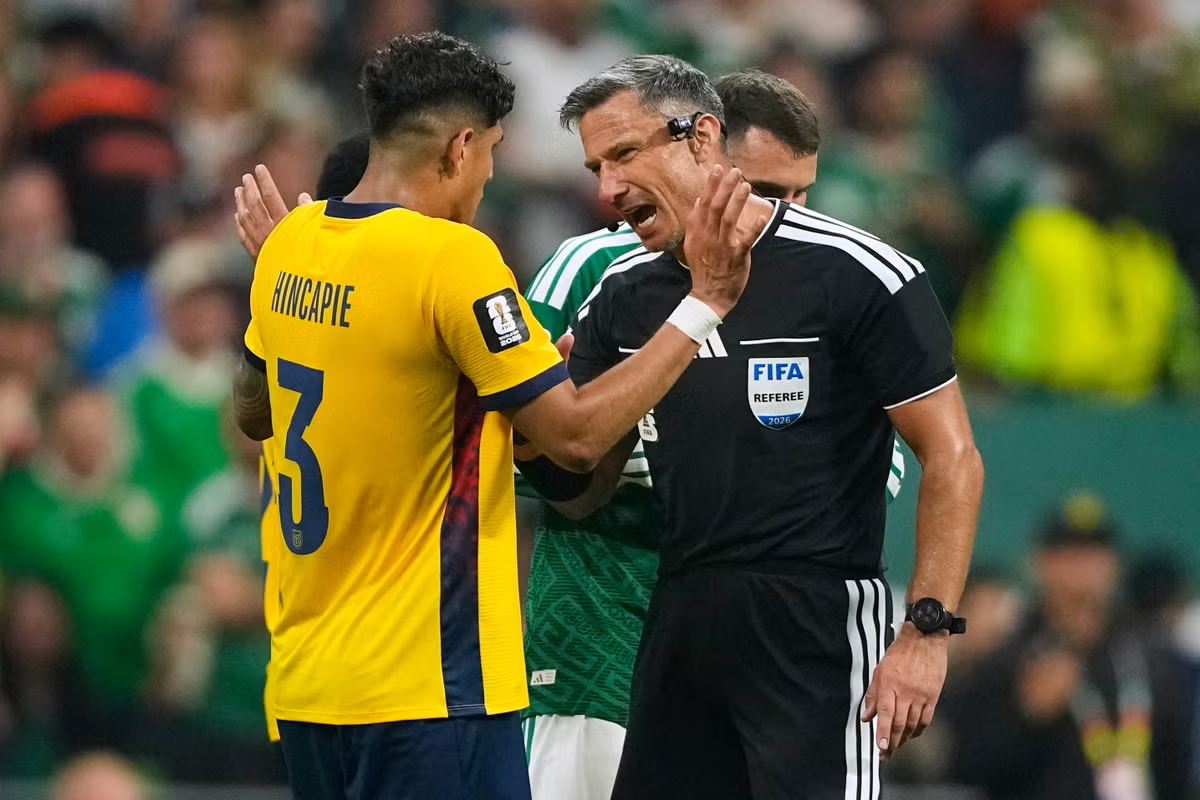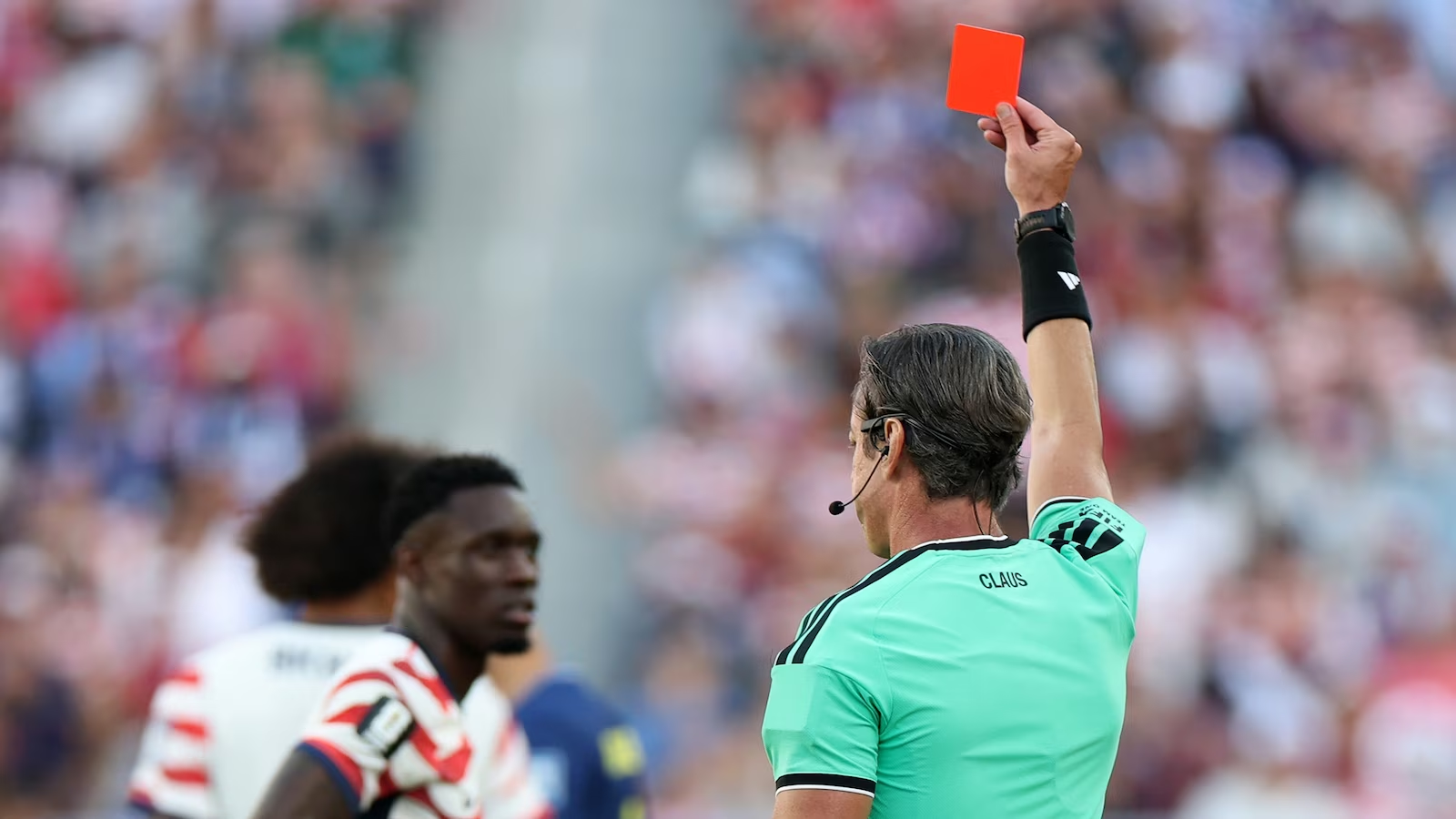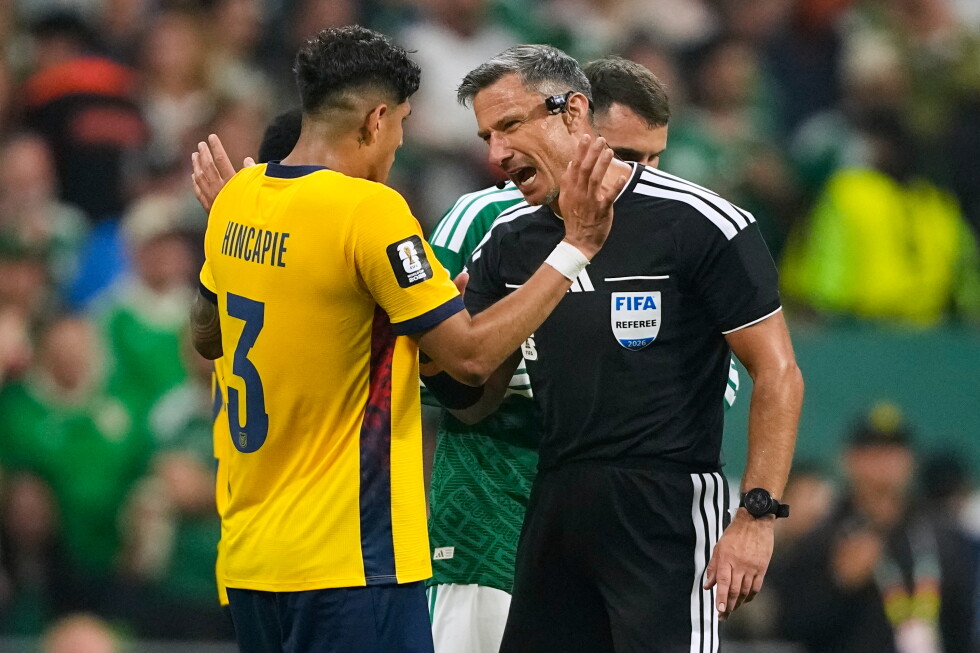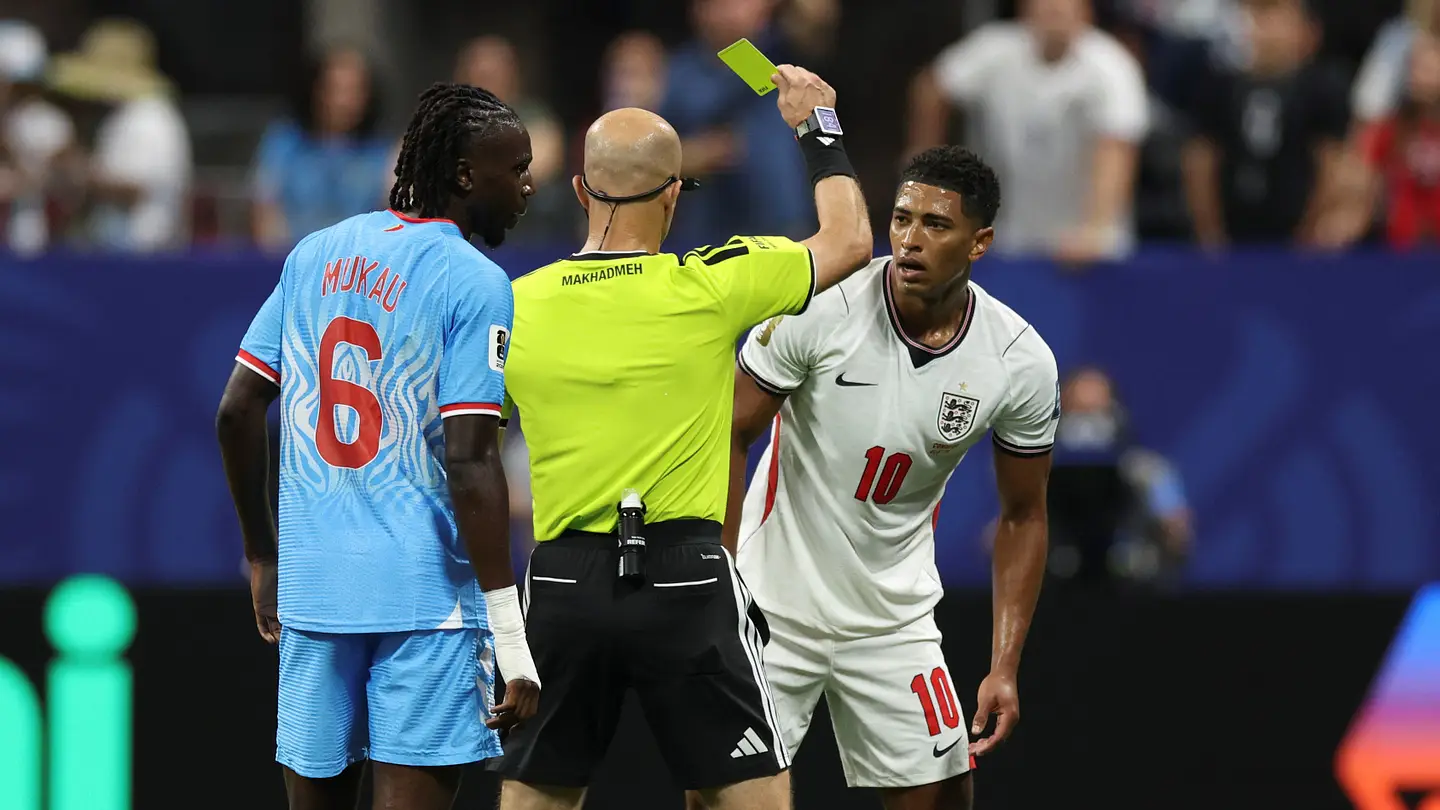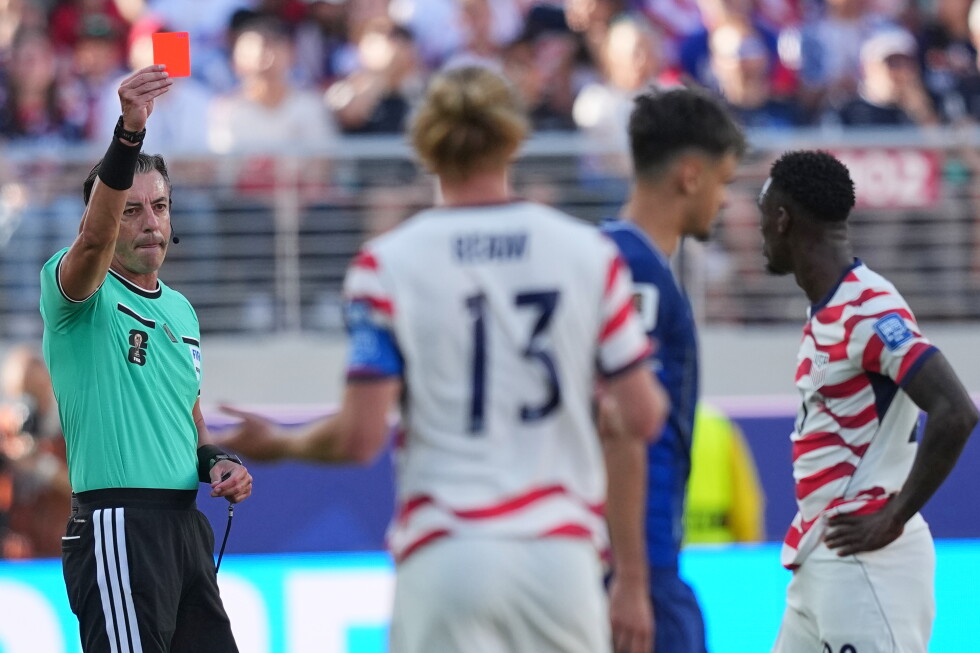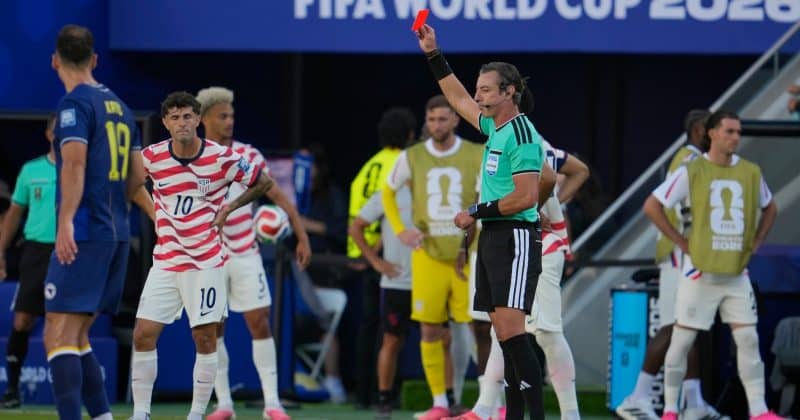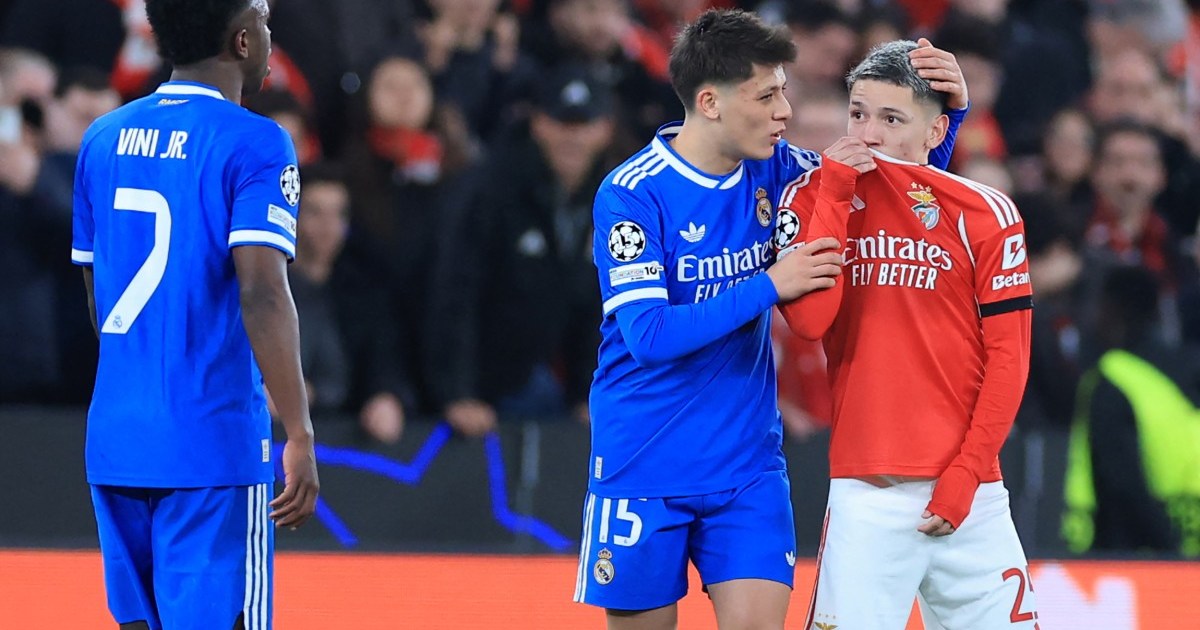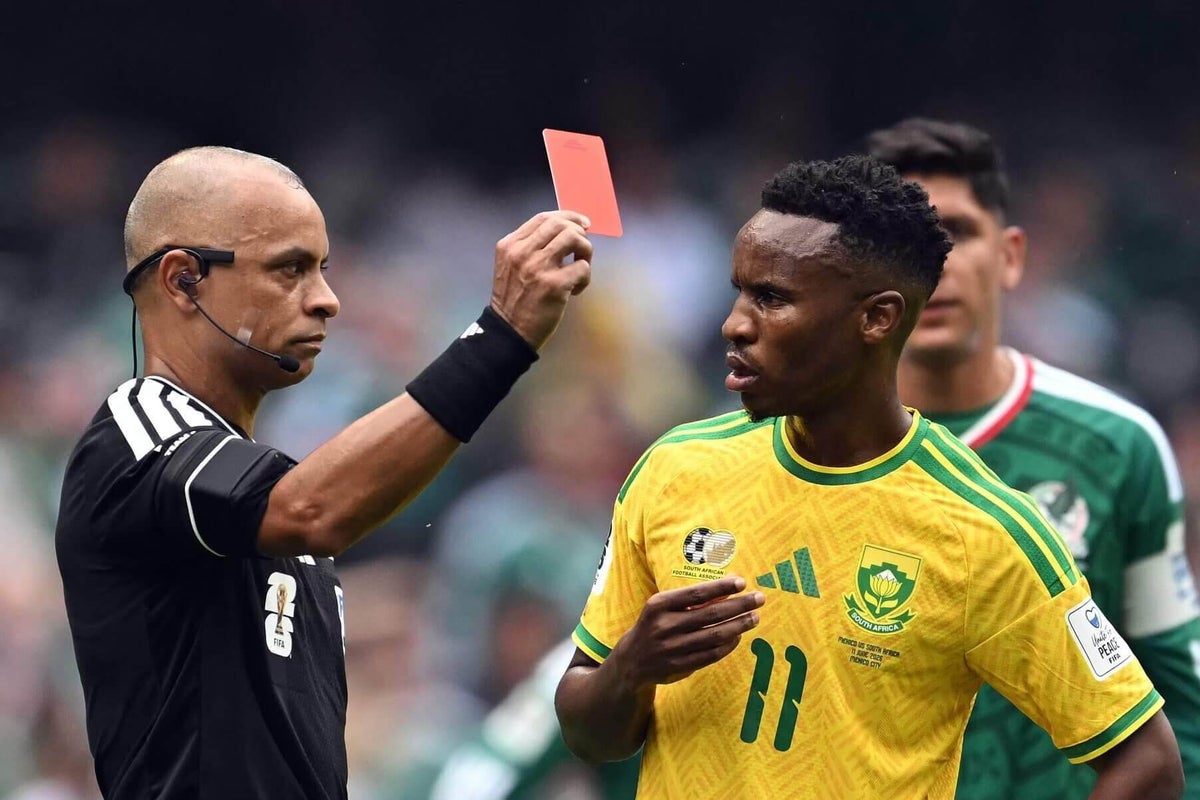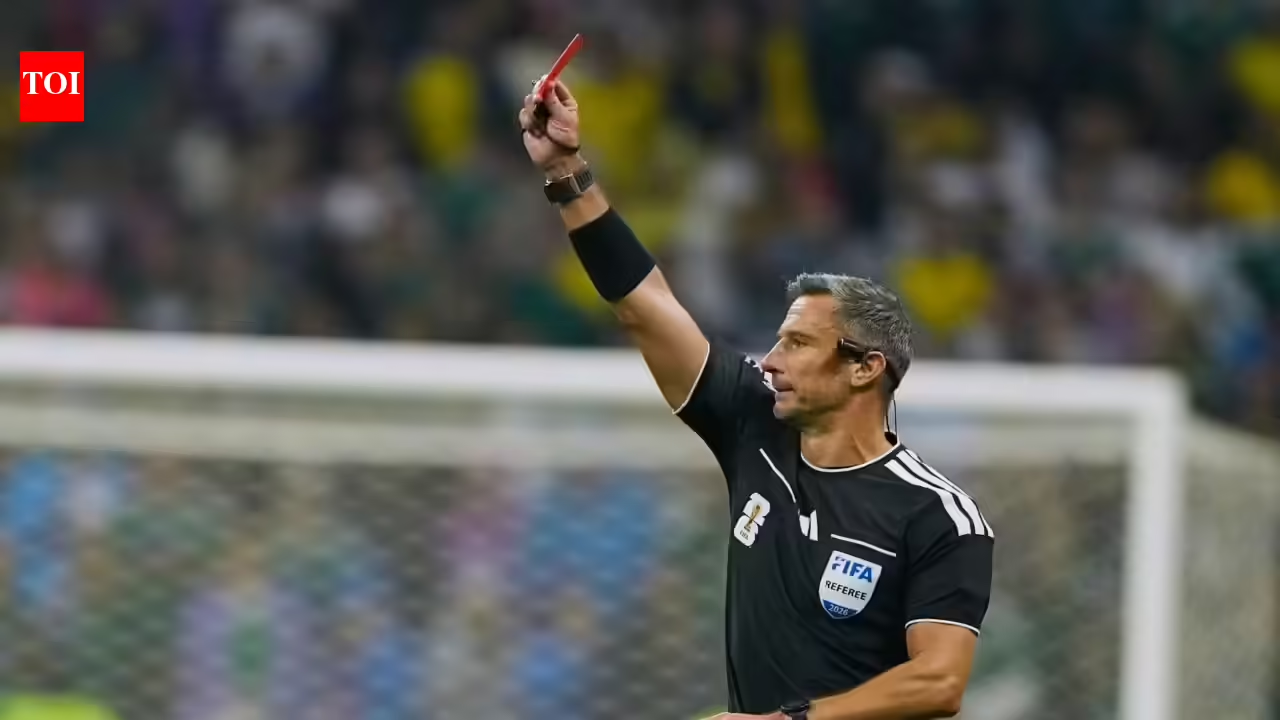
Referee Slavko Vincic of Slovenia shows a red card. Image via: Natacha Pisarenko/ APA red card in soccer means instant ejection from the match, and at the 2026 World Cup it has already reshaped several results. Referees pull out the red for serious offenses like violent conduct, denying a clear scoring chance or, under a brand-new rule this year, covering the mouth during a heated exchange with an opponent. The suspended player cannot be replaced, forcing the team to finish the match a man down, and misses the following game automatically.The system dates back to the 1970 World Cup, introduced after English referee Rudolf Kreitlein struggled to communicate with players during a contentious 1966 quarterfinal between England and Argentina. Here's a full breakdown of how red and yellow cards work, and what has changed for this summer's expanded tournament.What is a Red card in soccer?Referee Daniel Quintero is showing a red card. Image via: Azael Rodriguez/ Getty ImagesA red card is shown for the most serious offenses on the field, including dangerous tackles, violent conduct, spitting, and denying an obvious goal-scoring opportunity by fouling an opponent or handling the ball. Once shown, the offending player must leave the pitch immediately, and the team cannot bring on a substitute to replace them, leaving the side to play out the remainder of the match with 10 men or fewer.A team can theoretically have up to four players sent off in a single game, reducing them to as few as seven. Video Assistant Referee review can also step in to award a red card the referee missed in real time, and for the first time this tournament, VAR can overturn a mistaken second-yellow dismissal as well.What is a Yellow card in soccer?Danny Makkelie. Image via: Dean Mouhtaropoulos/ Getty ImagesA yellow card is a caution, shown for less severe offenses during a stoppage in play. Reckless but not dangerous tackles, time-wasting, diving, excessive celebration, persistent fouling and arguing with officials can all draw a yellow. The player stays on the field and keeps playing, but the card goes on the record, and getting "booked" a second time in the same match results in an automatic red.FIFA's Disciplinary Committee reviews every incident at the World Cup and can extend a suspension if an offense is judged especially serious even when only a yellow was shown in the moment. Accumulating yellow cards across separate matches can also trigger a ban.Red vs Yellow card: Major distinctionsThe core difference comes down to severity and consequence. A yellow card is a warning that allows a player to continue, while a red card removes them from the match entirely and costs their team a player for the rest of the game.Red card offensesYellow card offensesSerious foul playReckless challengesViolent conductTime wastingDenial of an obvious goalscoring opportunity (DOGSO) outside the penalty area, or inside if there was no attempt to play the ballExcessive celebrationSpitting or bitingHalting a promising attackAbusive or insulting behaviorPersistent foulingCovering the mouth during confrontationsDenial of an obvious goalscoring opportunity (DOGSO) in the penalty area, with an attempt to play the ballLeaving the pitch in protest of a referee’s decisionArguing with a match officialReceiving two yellow cards in the same matchSimulation ("diving") to win a foul or get an opponent cautionedWhat happens when you get a Red card?Referee Slavko Vincic talks to Ecuador's Piero Hincapie. Image via: Fernando Llano/ APThe moment a red card is shown, the player is done for the match. Their team cannot substitute for them, so the side plays the rest of the game with one fewer man. The suspension carries automatically into the team's next match, regardless of the round, and FIFA's Disciplinary Committee can add further games or fines depending on how serious the offense was.Two brand-new rules have driven red card totals up sharply at this year's tournament. The first punishes players who cover their mouths during a confrontation. Paraguay's Miguel Almiron became the first player sent off under the new rule during the group stage, and Ecuador's Piero Hincapie followed in the round of 32.The second new rule targets walkoffs. Any player, coach or official who encourages a walkoff in protest can now draw a red card as well.What happens when you get a Yellow card?A yellow card does not remove a player from the match, but it starts building a disciplinary record that can catch up with them. Receiving two yellow cards in separate matches results in an automatic one-match ban for the next game, no matter the round.FIFA has adjusted how that record resets for the expanded 48-team format this year. Previously, a single yellow card could follow a player all the way to the quarterfinals. Now, any player carrying a single yellow card after the group stage has that card wiped before the round of 32, and the slate resets again heading into the semifinals. A player who picks up two yellow cards before either cutoff still serves the standard one-game suspension, regardless of the reset. Yellow cards from World Cup qualifying do not carry into the tournament, though red card suspensions for serious offenses committed during qualifying can.
What happens when you get a red card in soccer? World Cup punishment explained
A red card in soccer means instant ejection from the match, and at the 2026 World Cup it has already reshaped several results. Referees pull out the red for serious offenses like violent conduct, denying a clear scoring chance or, under a brand-new rule this year, covering the mouth during a heated exchange with an opponent.
850 words~4 min read