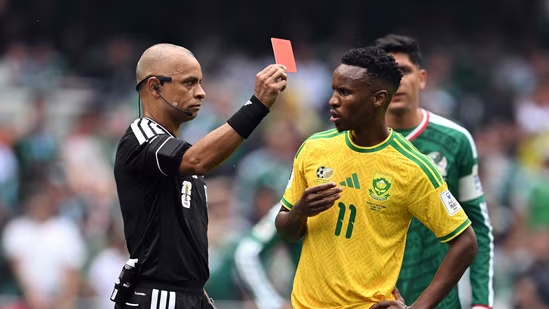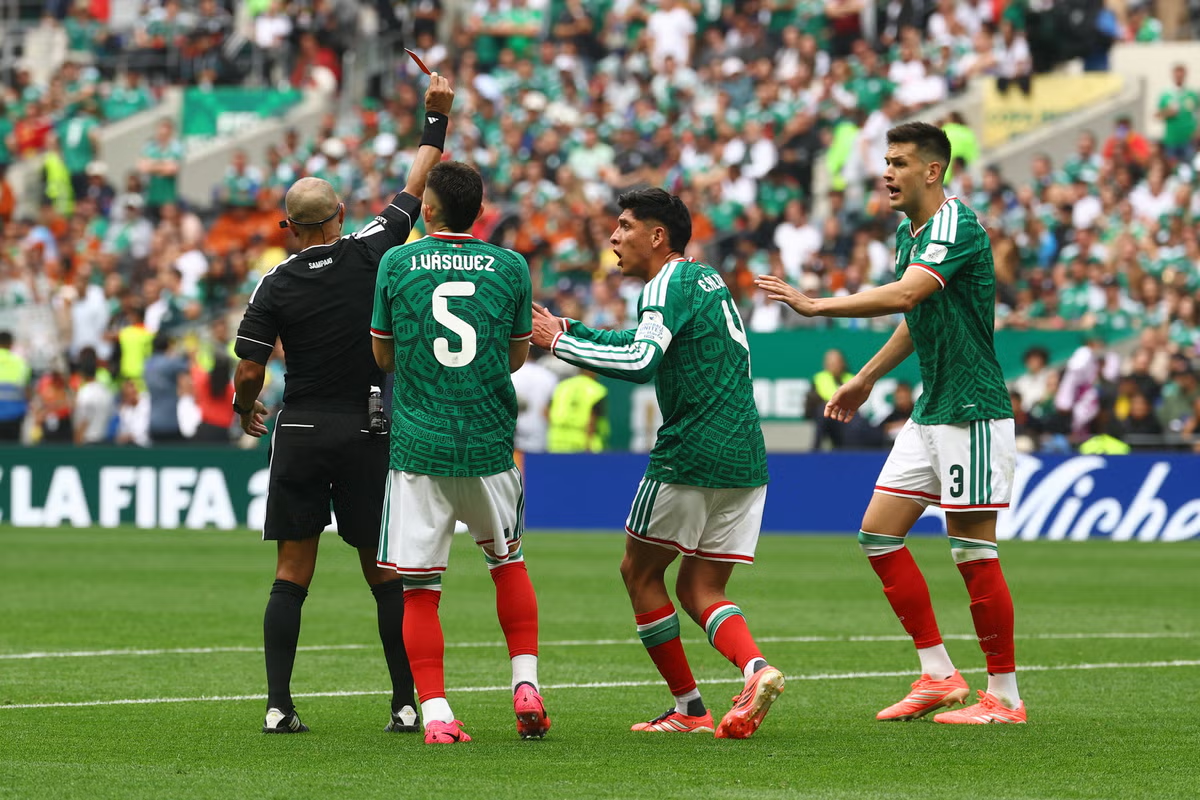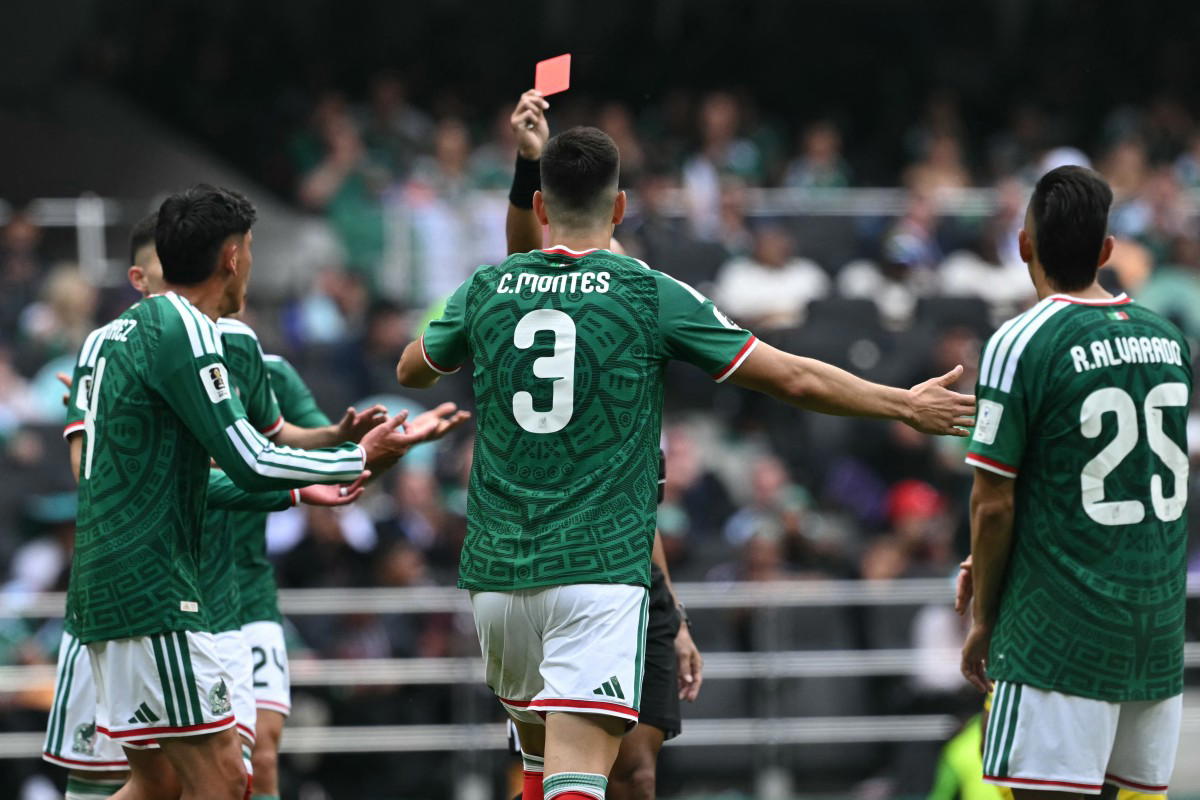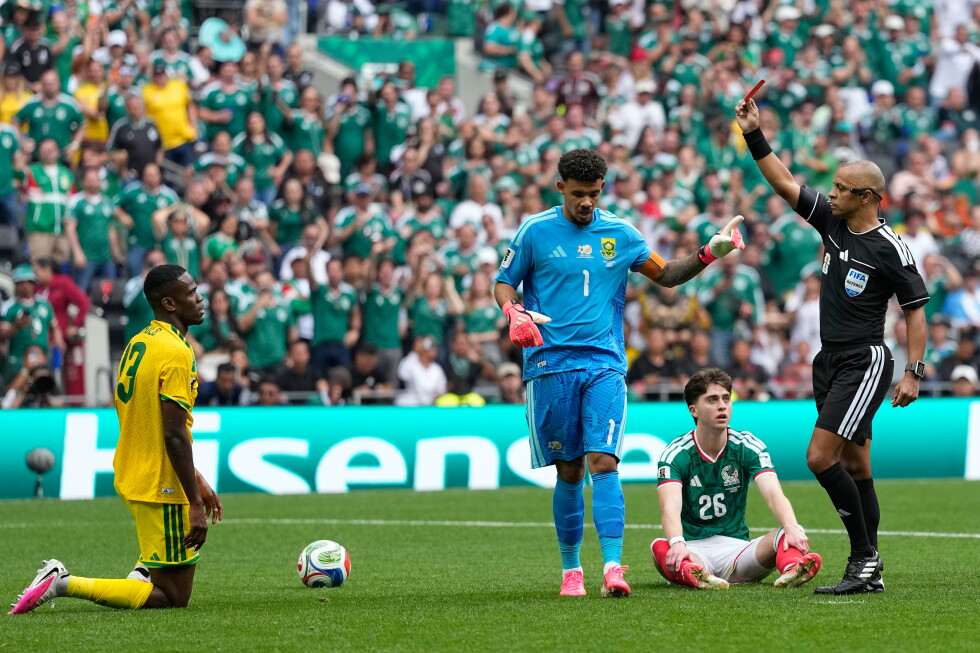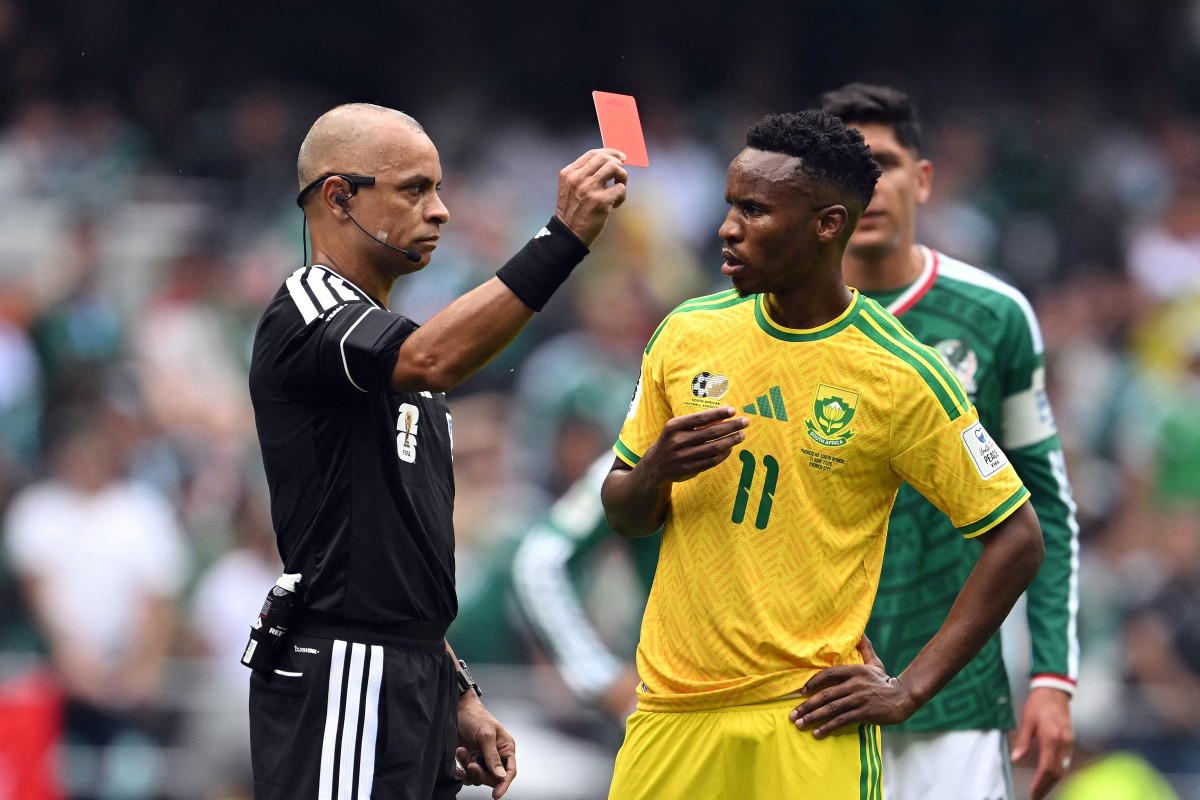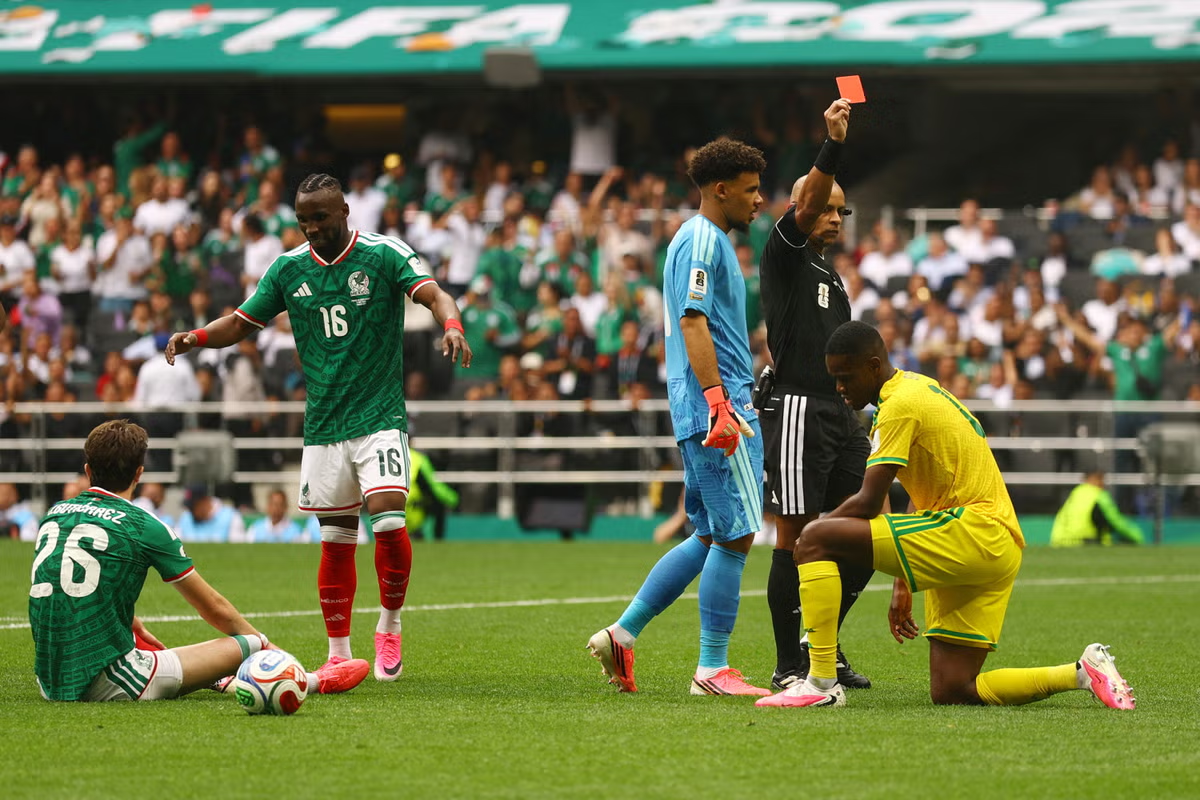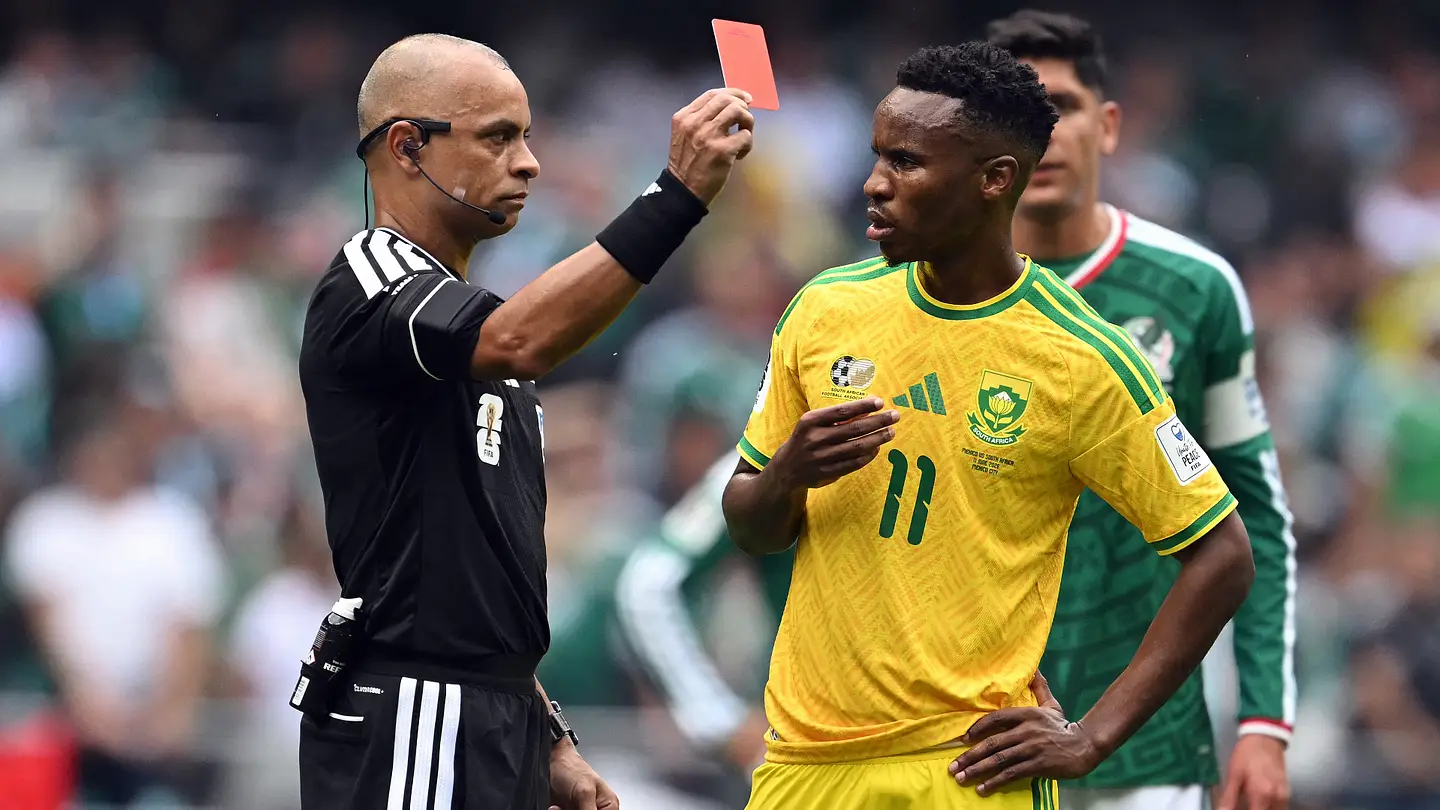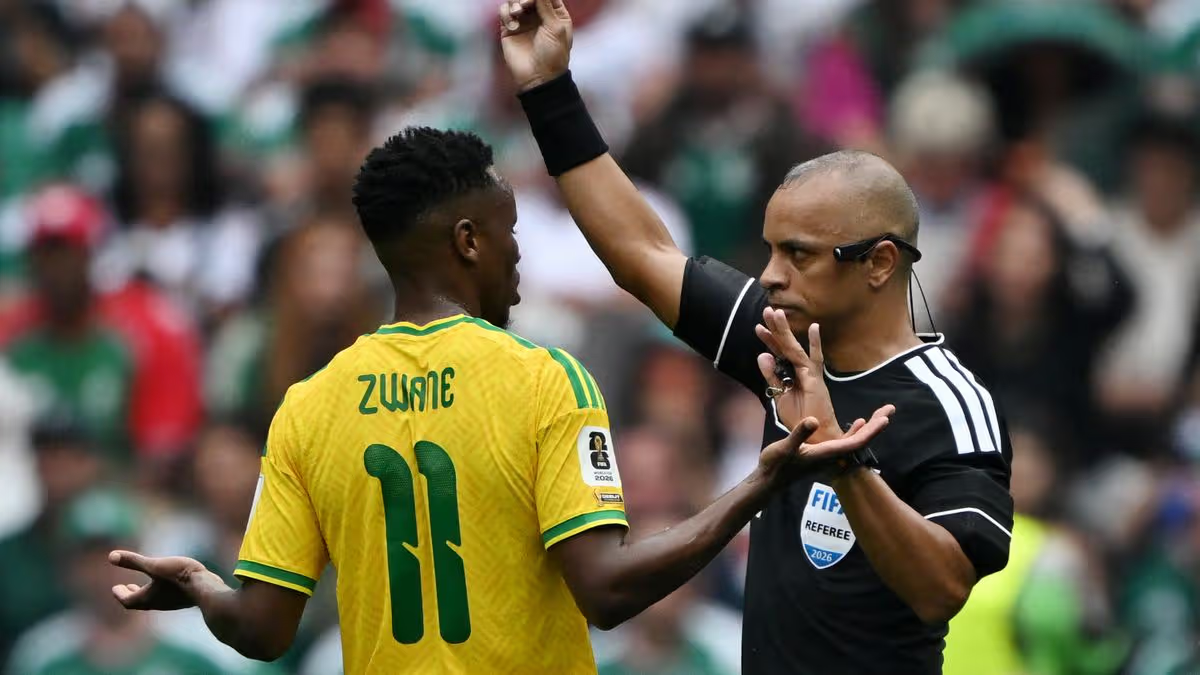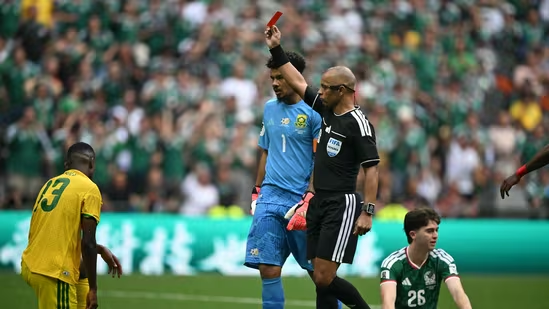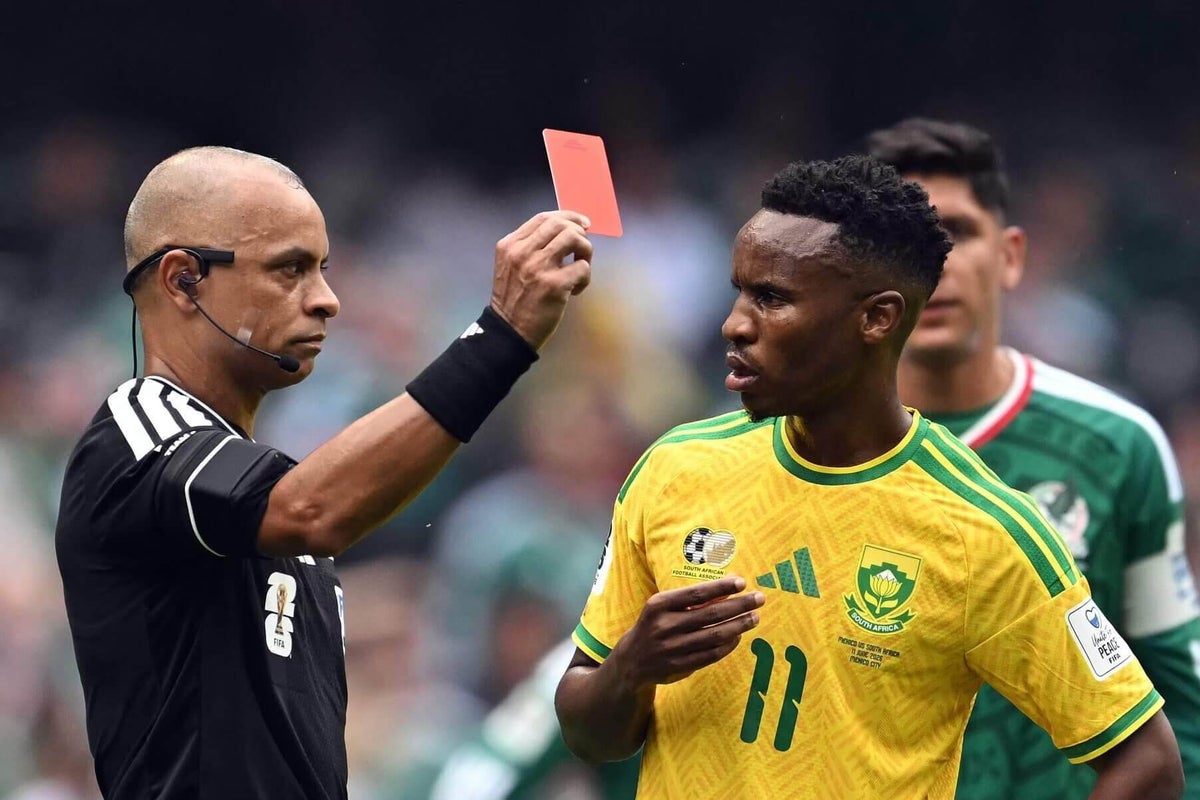
Three red cards, three yellows, 10 men against nine. If Brazilian referee Wilton Sampaio had hoped his performance in the opening match of World Cup 2026 would go unnoticed, he was sadly mistaken.Anyone new to football might be wondering whether this will be the norm over the coming weeks, with officials taking a hardline approach to foul play and players being dismissed as a matter of routine. After all, World Cup 2026 is already just one red card shy of the four red cards produced in the whole of the 2018 and 2022 tournaments — and there are still 102 games to go.It is far too early to tell, but it’s worth noting that the second match of the tournament between the Czech Republic and South Korea produced a solitary yellow card, and that came in the sixth minute of stoppage time at the end of the match.At the Azteca Stadium, Sampaio would have been in no doubt that Sphephelo Sithole had to be sent off for denial of an obvious goalscoring opportunity (DOGSO) just after half-time when he inadvertently brought down Brian Gutierrez.There was no intent, but there doesn’t have to be. Sithole got too close to his opponent, became entangled with him and brought him down. The consequence was that Mexico were denied an obvious chance to score, so it’s an open-and-shut case.Sphephelo Sithole tangles with Brian Gutierrez (Carl Recine/Getty Images)Sampaio’s second DOGSO red card in the dying stages was less straightforward. The foul by Cesar Montes on Khuliso Mudau was cynical, which makes no difference in the laws of the game, but does tend to tip referees towards the higher sanction if the decision is in the balance.I used to tell players who committed such deliberate fouls that they clearly thought the player was about to score, or they would have let him run past. If the attacker did not pose a real threat to their goal, they would not have chopped him off at the knees.The decision for Sampaio here was about the players’ positions, their direction of travel and whether Mudau’s next action would have been an unchallenged shot with only the goalkeeper to beat.The South African was a little wide of the goal, and not moving directly towards the target, but these are mitigating factors, not deal-breakers. Ultimately, the officials must decide whether the impact of the foul was to prevent an obvious – not possible – goalscoring opportunity.Sampaio took his time, consulted his assistant, and reached for the red card. The outcome is not definitively correct, and either colour card would likely have been backed by the VAR, but dismissing Montes was the best decision in the circumstances.In between came a red card that was more contentious and would almost certainly not have led to the same sanction in the Premier League.Themba Zwane passed the ball and tried to make an attacking run into the penalty area but was blocked off by the presence of Roberto Alvarado. Zwane brushed his opponent aside but in so doing caught him on the side of the face with an open hand.Some will view this as an understandable action, that the contact was relatively minor, and that there was negligible force. Alvarado stayed down a while, perhaps to encourage a VAR review, but recovered soon enough.Others will watch slow-motion replays and see something more sinister: one player striking another with an unnecessary slap to the face, which in football’s laws can be interpreted as violent conduct.In the Premier League, it’s possibly a free kick possibly, potentially a yellow card. In most other jurisdictions, including here at the World Cup, the VAR is highly likely to step in, with a red card becoming inevitable.There are 182 players from the Premier League selected to play in Mexico, Canada and the U.S., and all will have become accustomed to that league’s fiercely competitive nature, with referees actively encouraged to permit a more physical approach.Officials allow more robust tackles and upper-body contact than anywhere else in the world, which is a large part of the league’s success and its enormous global following.Those players are going to have to adjust, quickly, to the way matches will be refereed over the next month. Robust tackles will more often lead to free kicks even when the ball is won and the threshold for yellow cards will be lower.As we witnessed in Mexico City, players engaging in aggressive encounters with opponents better keep their hands to themselves, while anyone entering a tackle at full pelt will be taking a huge risk if they make significant contact with anything other than the ball.Communication needs to be more conciseReferees will be hoping that they can keep their cards in their pockets, not least because any dismissal following a VAR review means they are obliged to address the crowd and a global TV audience by explaining their final decision.Poor Sampaio — for whom English is obviously not his first language — mumbled and stumbled as he tried to find the words to describe the pictures he had just seen, which was excruciating to watch and caused more confusion than clarity.When these announcements were first mooted, I lobbied for referees to follow the model we see in the NFL, where the announcement is concise and to the point. In this case it would have been something like this: “South Africa No 11, violent conduct, red card, free kick to Mexico”. It may lack nuance, but everyone would grasp the basics and we could get on with the game.But for now, refs must explain themselves in more detail, which would have been difficult enough for Sampaio in Portuguese, and proved almost impossible in English.Should we change the laws on DOGSO?Finally, back to the law on DOGSO, and a question. Why do we send players off for this offence at all? I’d rather see the referee award a penalty, regardless of where the offence occurred, as that would re-institute the opportunity that had been denied.Maybe then, players like Montes might not bother committing such heinous foul tackles in the first place and put greater faith in their goalkeeper, who is more likely to prevail in a one-v-one than from a spot kick.Much like almost every other type of red card, the threshold for dismissing a player is higher in the Premier League than anywhere else on the planet. The advice at one stage was that VARs should only intervene if the offence was obvious from the moon, until someone pointed out that there were no cameras on the Earth’s natural satellite for us to check.In the Premier League last season, there were two DOGSO incidents in a similar area of the field as occurred in Mexico City.The first came at Selhurst Park, where Marcos Senesi of Bournemouth brought down Ismaila Sarr. Referee Jarred Gillett awarded a free kick and yellow card, the VAR Alex Chilowicz recommended a red, but Gillett decided to reject the advice and stuck with his original decision.The key match incident (KMI) panel that sits in judgement on the officials voted 3-2 that the referee was wrong not to send off Senesi, and by the same margin that the VAR was right to recommend a red card.The other incident involved a clash between Argentina and Brazil on New Year’s Day, when Tottenham Hotspur defender Cristian Romero sent Igor Thiago tumbling at Brentford.The officials wrongly thought it was a fair tackle and played on. The VAR – once again Chilowicz – decided to keep out.The KMI panel met again, voted 3-2 that the on-field call was wrong and that Romero should have walked, and told Chilowicz that he should have intervened ‘on the basis that it was a clear and obvious error’.The tightness of the votes demonstrates that decisions are often neither right nor wrong but sit in an uncomfortable grey area that officials have to navigate.
Three red cards in one World Cup game: Is this the start of a chaotic trend?
There were compelling reasons for the dismissals in Mexico vs South Africa, says The Athletic's refereeing expert Graham Scott
1,308 words~6 min read