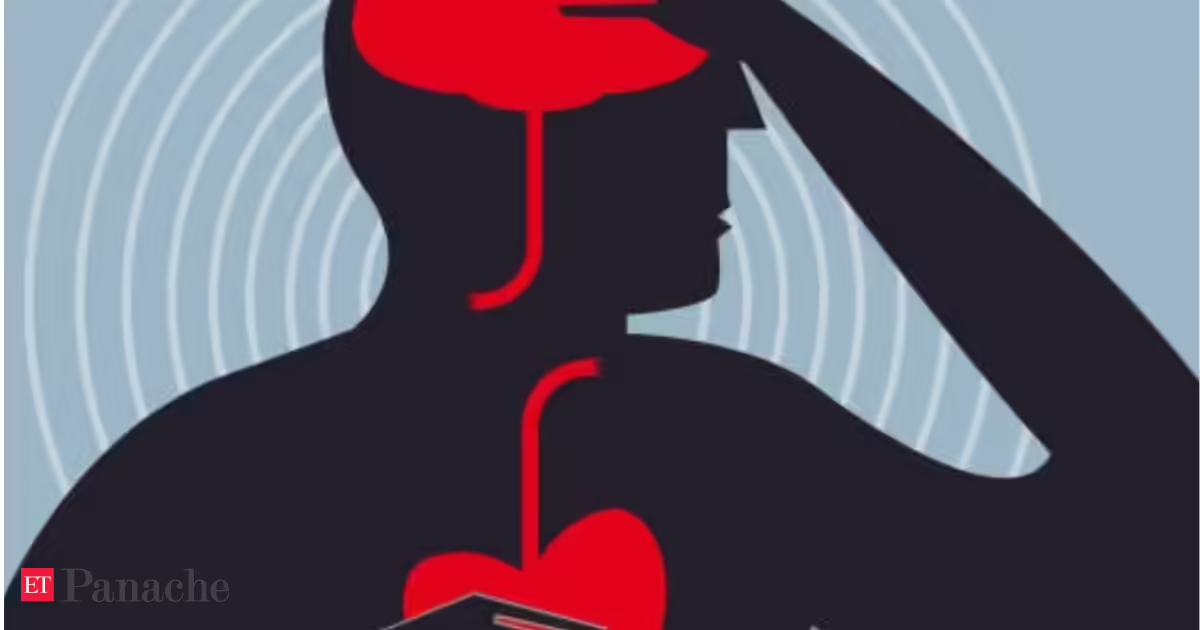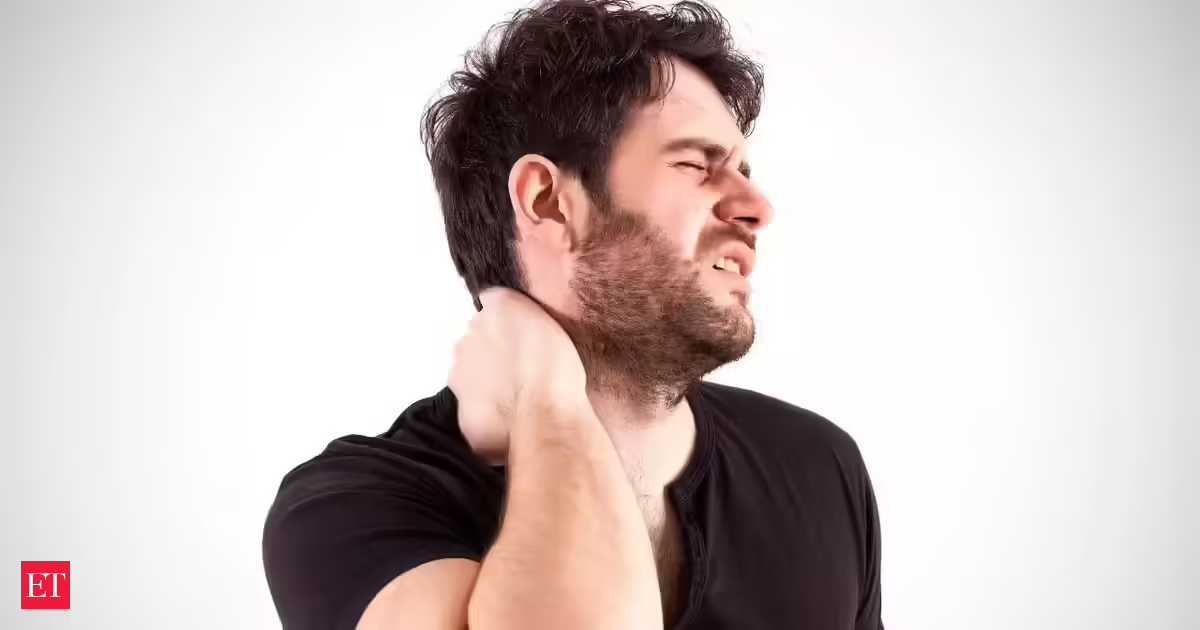
A seemingly harmless habit of forcefully cracking the neck to relieve stiffness may, in rare cases, trigger a life-threatening stroke, according to physician Dr. Priyam Bordoloi, who recently shared the case of a 34-year-old man.The doctor said the patient was otherwise healthy. He had normal blood pressure, did not have diabetes, did not smoke, and regularly ran 5 km on weekends. However, he suddenly developed stroke symptoms while working at his computer.Sudden stroke despite being healthyAccording to Dr. Bordoloi, the man experienced sudden dizziness, drooping of the right side of his face, weakness in his right arm, and slurred speech. Recognising the warning signs, his wife rushed him to a hospital without delay.Doctors stress that the first 4.5 hours after an ischemic stroke are considered the "golden window," when timely treatment can significantly improve outcomes.What caused the stroke?Medical imaging ruled out common causes such as high cholesterol and uncontrolled hypertension.When doctors asked whether he had suffered any recent injury, the patient said he had not. However, he admitted to frequently forcefully twisting and "cracking" his neck several times a day to ease stiffness from long hours at his desk.According to Dr. Bordoloi, the repeated neck manipulation caused a cervical artery dissection—a tear in one of the arteries supplying blood to the brain.How neck cracking can trigger a strokeDr. Bordoloi explained that the neck contains the carotid and vertebral arteries, which carry blood to the brain. A sudden, forceful twist can sometimes tear the inner lining of these arteries.The injury may lead to:A tear in the artery wallBlood collecting within the vessel wallFormation of a blood clotThe clot travelling to the brainBlockage of blood flow, resulting in an ischemic strokeThe doctor noted that cervical artery dissection is one of the leading causes of stroke among otherwise healthy people under the age of 45.Stroke risk factors in young adultsDr. Bordoloi listed several factors that can increase stroke risk in younger people, including:Cervical artery dissection caused by severe neck manipulation, trauma or heavy strainingPatent Foramen Ovale (PFO), a small opening in the heart present from birthGenetic clotting disorders that increase the risk of blood clotsUse of illicit drugsKnow the F.A.S.T. warning signsThe doctor urged people to remember the F.A.S.T. acronym for identifying a stroke:Face: One side of the face droops or the smile appears uneven.Arm: Sudden weakness or numbness in one arm.Speech: Slurred speech or difficulty speaking.Time: Seek emergency medical care immediately. Do not wait for symptoms to improve."Every minute kills millions of brain cells," Dr. Bordoloi said, urging people to reach a stroke-ready hospital as quickly as possible.The patient survived because he received treatment within the critical time window. He is currently undergoing rehabilitation to regain motor function.Dr. Bordoloi cautioned against forcefully cracking the neck as a routine stress-relief habit, saying the spine and the blood vessels in the neck should be treated with care.
Healthy at 34, but a simple neck-cracking habit led to a stroke: Doctor explains hidden risk
A seemingly harmless habit of forcefully cracking one's neck has been linked to a rare but life-threatening stroke in a healthy 34-year-old man. Dr. Priyam Bordoloi highlighted how repeated neck manipulation can cause cervical artery dissection, leading to blood clots and stroke. Recognizing F.A.S.T. warning signs and seeking immediate medical attention within the 'golden window' is crucial for survival and recovery.
473 words~2 min read