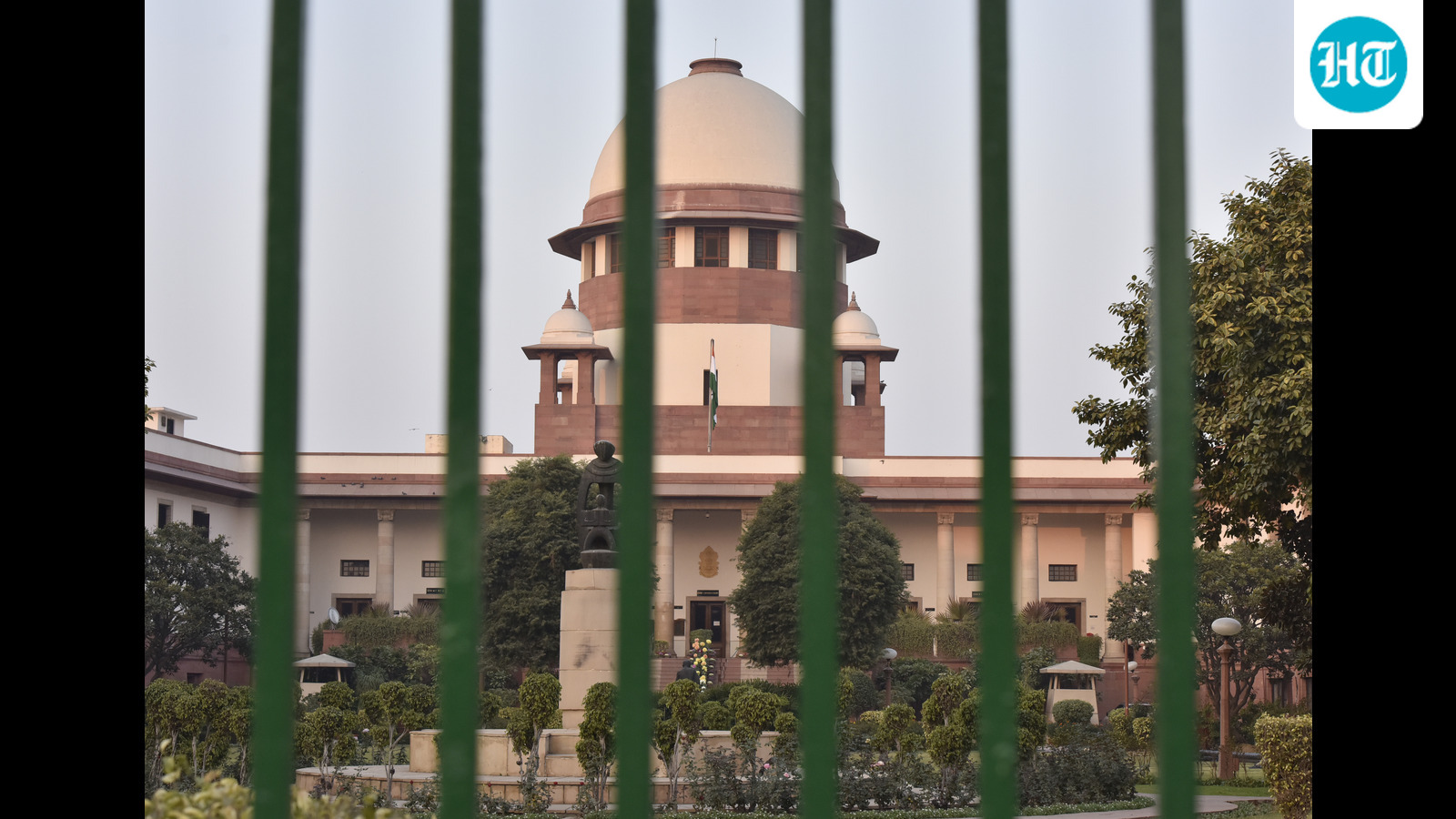
Recently, the Supreme Court collegium recommended multiple elevations to the Court, taking it closer to its now sanctioned strength of 38. At the same time, the Court also stated in different contexts that no one has a legal right to be appointed as judge to a constitutional court and that the process of judicial selection is not subject to judicial review.The Supreme Court collegium recommended multiple elevations to the Court, taking it closer to its now sanctioned strength of 38. (HT_PRINT)This position exposes a paradox. The Supreme Court fiercely guards judicial review as a check on executive excess. Yet, when it comes to appointing its own judges, it has insulated itself from the same scrutiny. The reasoning is that suitability cannot be reviewed; it is a collective assessment of merit and integrity that is a matter for the collegium alone.Historically, the collegium system itself is a judicial creation rather than a constitutional mandate. It emerged out of institutional anxiety over executive interference in judicial appointments in the years after the Emergency.Also Read | Delhi HC collegium removes judge pick after proposal sent to Supreme CourtIn Supreme Court Advocates-on-Record Association v. Union of India (1993) or the Second Judges Case, a nine-judge bench forever transformed the appointments process by creating the collegium — a body comprising the Chief Justice of India (CJI) and the two senior-most judges of the Supreme Court.This verdict was fiercely contested on the bench. Justices AM Ahmadi and MM Punchhi (both future CJIs) dissented, cautioning that the Court should not read into the Constitution what it did not contain. Further, if such a seismic shift was necessary, it should come through constitutional amendment, not judicial interpretation. Constitutional scholar HM Seervai was more scathing, describing the judgement as “a low point of judicial competence”. Still, the system survived. In 1998, the Third Judges Case expanded the collegium to five judges, firmly entrenching judicial primacy over appointments.For more than three decades, the collegium has survived because it has been regarded as the least imperfect mechanism for safeguarding judicial independence.Nonetheless, many have repeatedly pointed to its vulnerabilities, from weak accountability to, at times, questionable appointments and omissions. It operates behind closed doors, with no publicly articulated criteria for selecting one judge over another, rejecting another, and rarely discloses dissenting opinions, fuelling allegations of arbitrariness, favouritism and nepotism, as well as concerns around regional and community representation.Also Read | Collegium recommendation review will open ‘pandora’s box’: SCBut even as critics press for reform, defenders urge caution. Secrecy, they argue, is not a bug, but a feature of the system. Confidentiality protects judges from political pressure, preserves the dignity of those considered but not appointed, and shields the process from lobbying and media noise.Also Read | Collegium recommendation review will open ‘pandora’s box’: SCThe executive, for its part, has never abandoned its ambition to shape the higher judiciary. Its boldest attempt came in 2014 with the National Judicial Appointments Commission (NJAC), a constitutional amendment designed to replace the collegium and introduce greater executive role in appointments. In 2015, the Supreme Court struck it down as a violation of judicial independence. Following public scrutiny, the collegium began publishing its resolutions in 2017 to balance transparency with confidentiality. The experiment was short-lived. By 2019, detailed reasons had given way to bare announcements. Today, they reveal only final names, while dissenting views remain concealed.The collegium system has been criticised for judges appointing judges. But for all its flaws, its strength lies in seeking to protect independent judges that can work without fear of executive pressure. This is why calls to scrap the collegium misunderstand the issue. Any reform must ensure that in trying to let the sunlight in, we do not blow the roof off. For what lies beyond may place the power to appoint judges uncomfortably close to the executive it is meant to check.The question, then, is not whether the collegium should survive, but how it should evolve. Over the years there have been calls for transparency in criteria for selection, disclosure of dissents where appropriate, stronger regional and gender diversity. Some of these bear consideration.One thing, however, is clear: Any reform will have to come from within the judiciary itself. Until then, the collegium will remain a system that is flawed but necessary. Too important to discard, too imperfect to ignore, and ultimately, too consequential to remain as is.Insiyah Vahanvaty is a socio-political commentator and author of ‘The Fearless Judge’. Ashish Bharadwaj is pro vice-chancellor of the upcoming WPU Goa Campus. The views expressed are personal
‘Too important to discard, too imperfect to ignore’: The collegium system is flawed but necessary
The reasoning is that suitability cannot be reviewed; it is a collective assessment of merit and integrity that is a matter for the collegium alone.
754 words~3 min read