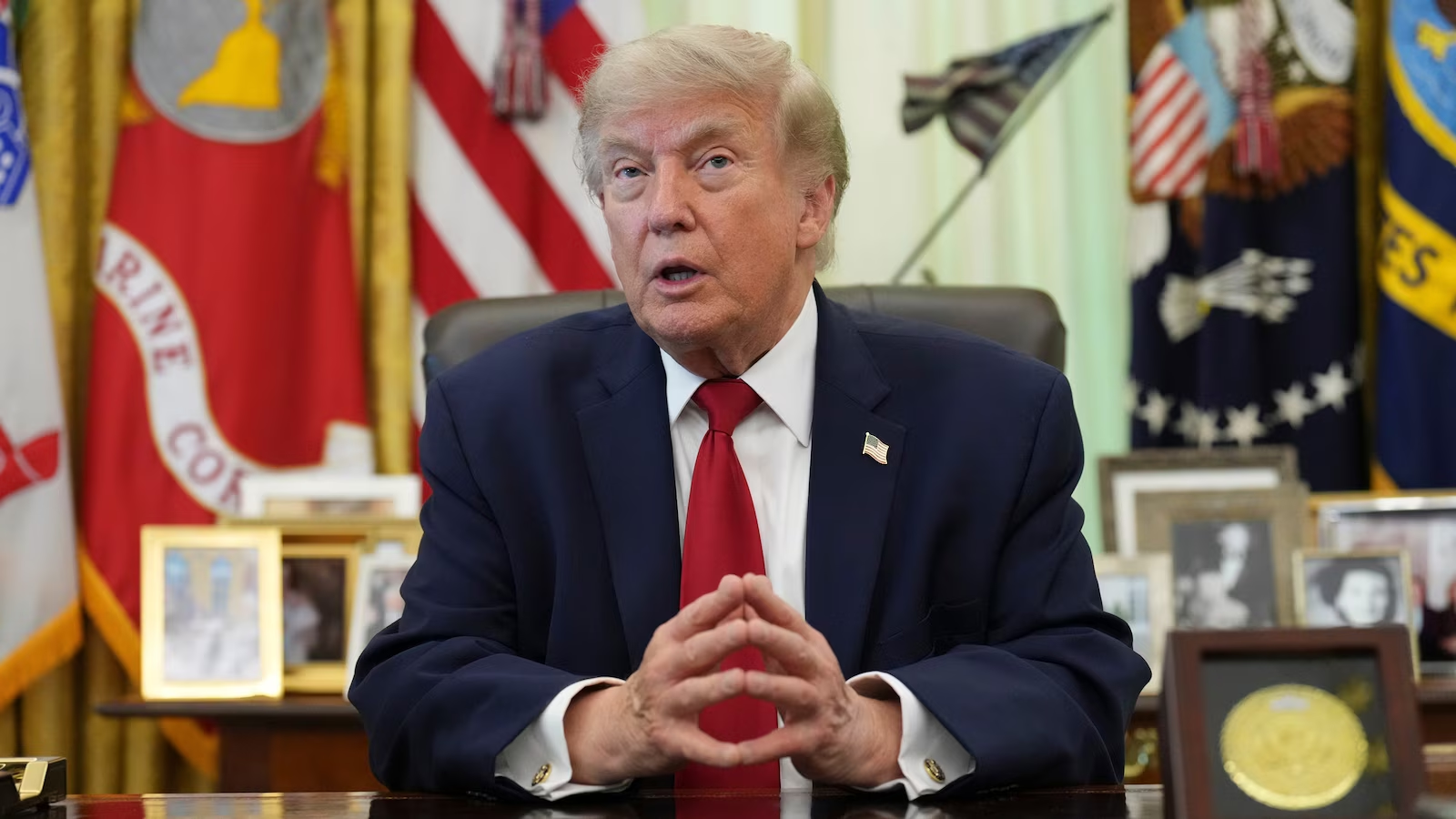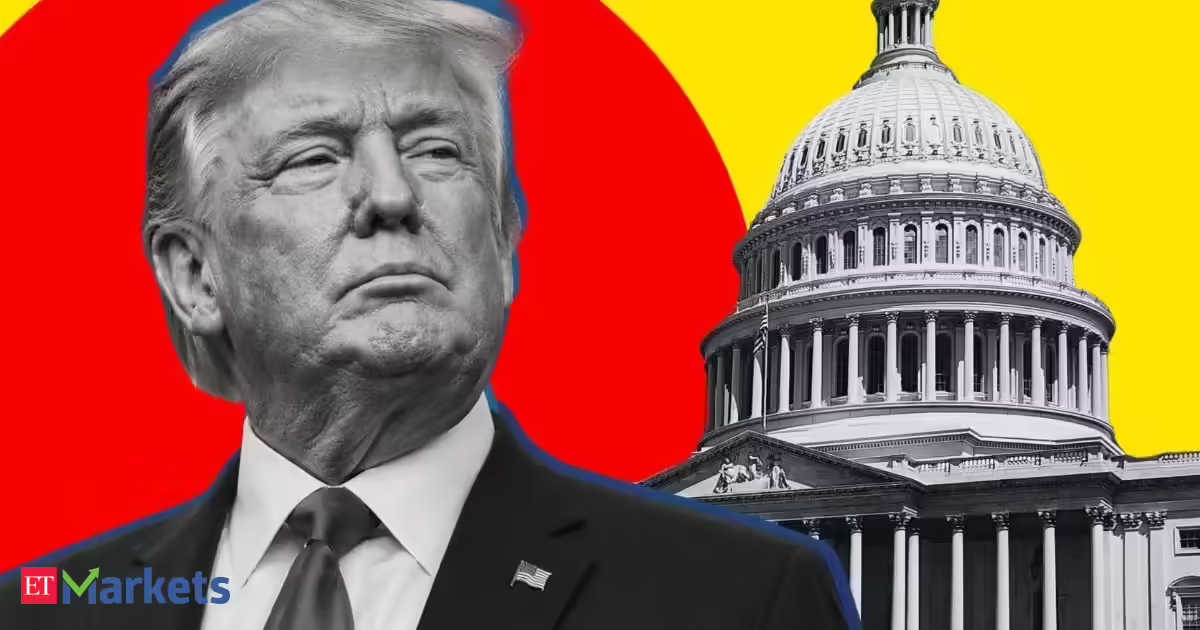
President Donald Trump’s latest financial disclosure has drawn attention for its sheer scale: thousands of stock trades, over $1 billion in crypto income, golf revenue, book royalties, all crammed into a filing that ran to 927 pages this year—compared with eight pages for Barack Obama’s final disclosure and 11 for Joe Biden’s. The optics practically invite suspicion: How does a sitting president buy and sell Nvidia, Apple, and Microsoft on the same day, sometimes dozens of times, without personally calling the shots?
But according to people who actually build the infrastructure behind high-volume, tax-optimized investing, a different picture emerges; those numbers seem pretty normal. What looks from the outside like either chaos or manipulation looks, from the inside, like an account structure that’s become increasingly common and accessible well outside the Oval Office. Trump’s 2025 financial disclosure, much like a review of his previous disclosure in March, is so multifaceted that index-based experts say it has the hallmarks of what it looks like when you have overlapping and automated portfolio-management strategies.
A direct indexing strategy
When Trump released his previous quarterly disclosure in March, many on social media including Sen. Elizabeth Warren alleged that the president and his family were benefiting from Trump holding a seat in the Oval Office. In a post on X at the time, the president’s son Eric said his father’s investments are held in accounts managed by third-party financial institutions with sole authority “over all investment decisions, including asset allocation, trading, rebalancing, and portfolio management. Investments are executed and allocated through automated, model-based portfolios and direct indexing strategies administered entirely by those firms.” The Trump Organization did not yet respond to Fortune’s requests for comment.