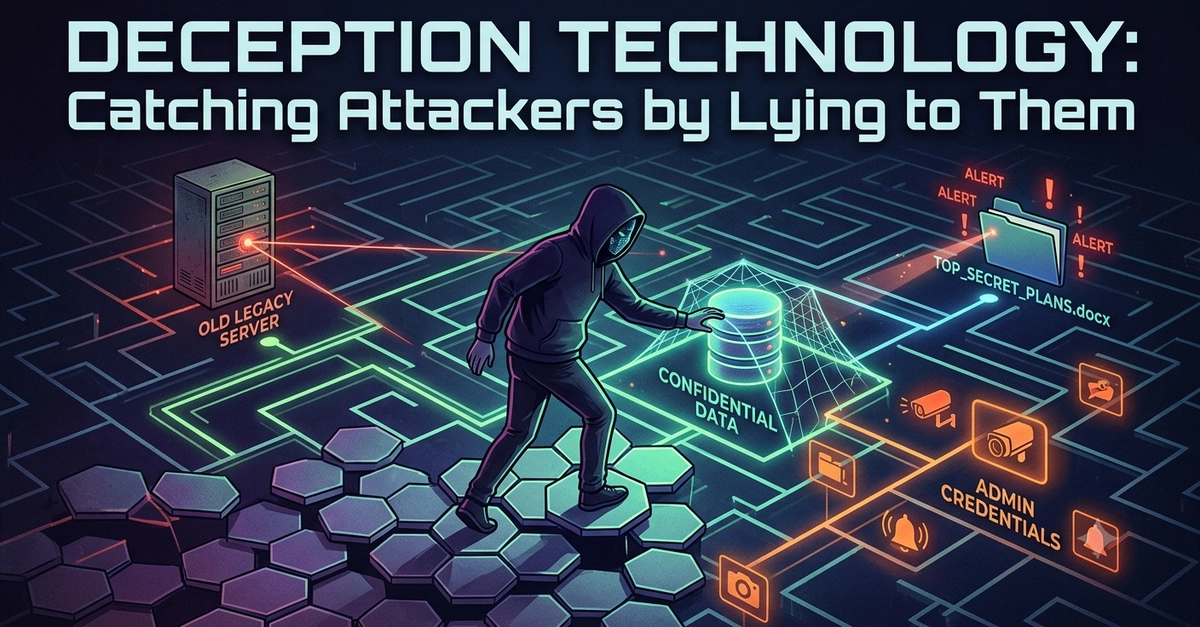
Most security advice focuses on keeping people out — firewalls, passwords, locked doors. But what happens when someone gets in anyway? That's the question deception technology is built to answer.
The idea is simple: instead of only trying to keep attackers out, you also plant fake things inside your system to trick them once they're in. Think of it like leaving a fake wallet on a table with a tracker inside it. If someone who shouldn't be there picks it up, you instantly know.
What It Actually Means
Deception technology means placing things in your system that look real but aren't — and have no real purpose except to catch someone who shouldn't be touching them. A normal user or program never interacts with these fake things, so if something does, you know right away that something is wrong.
A few common types, explained simply: