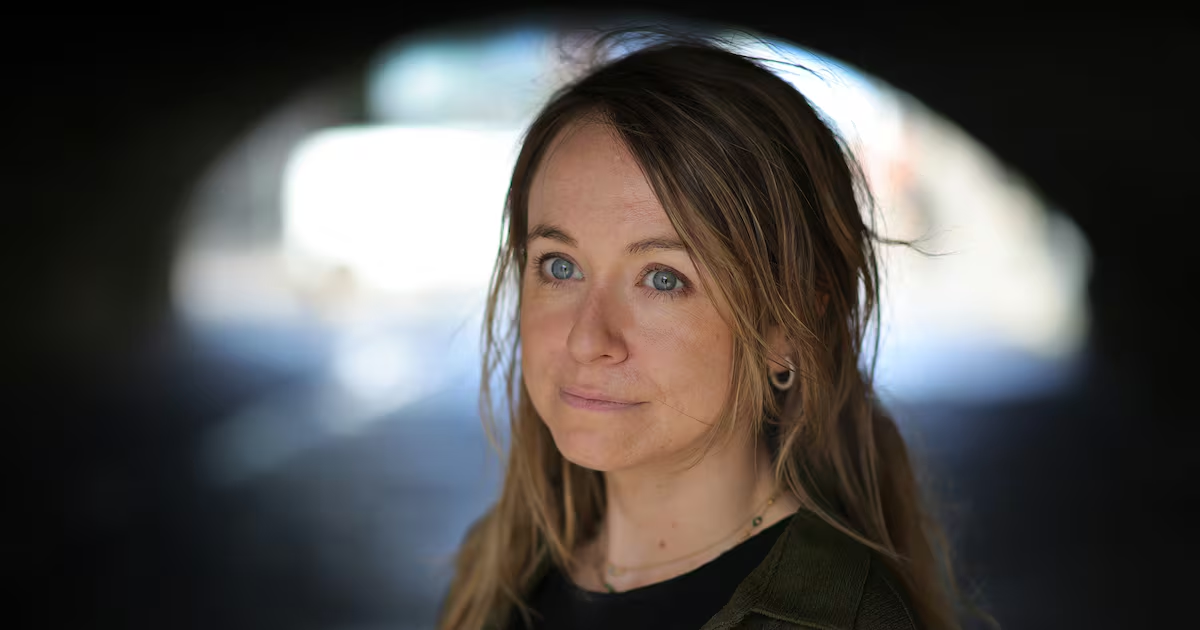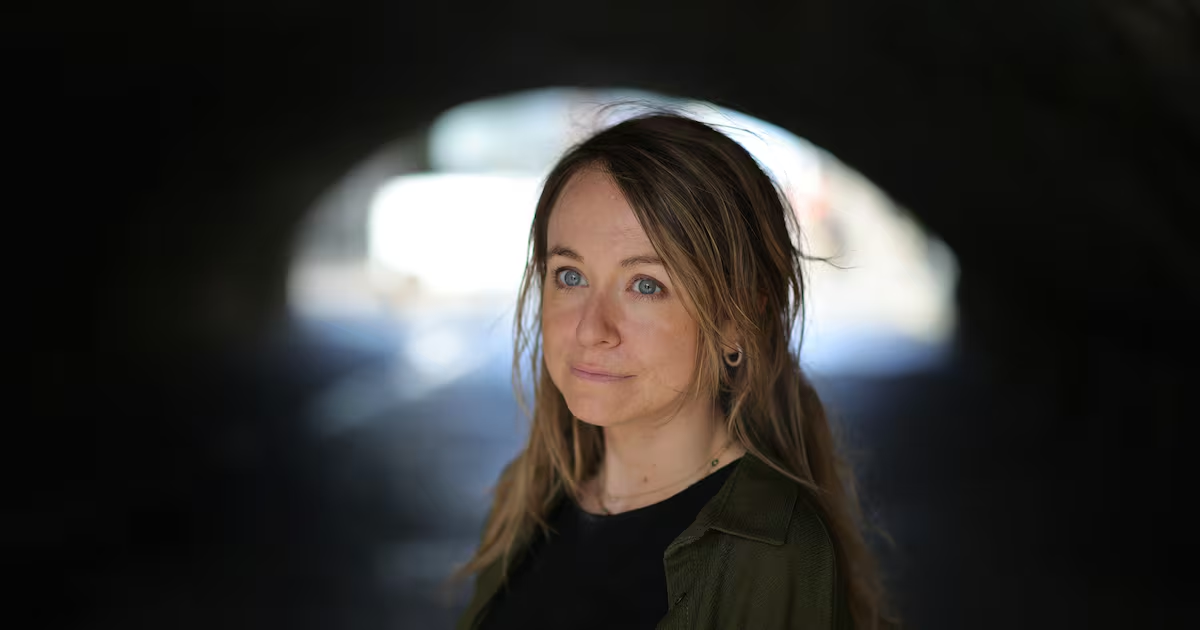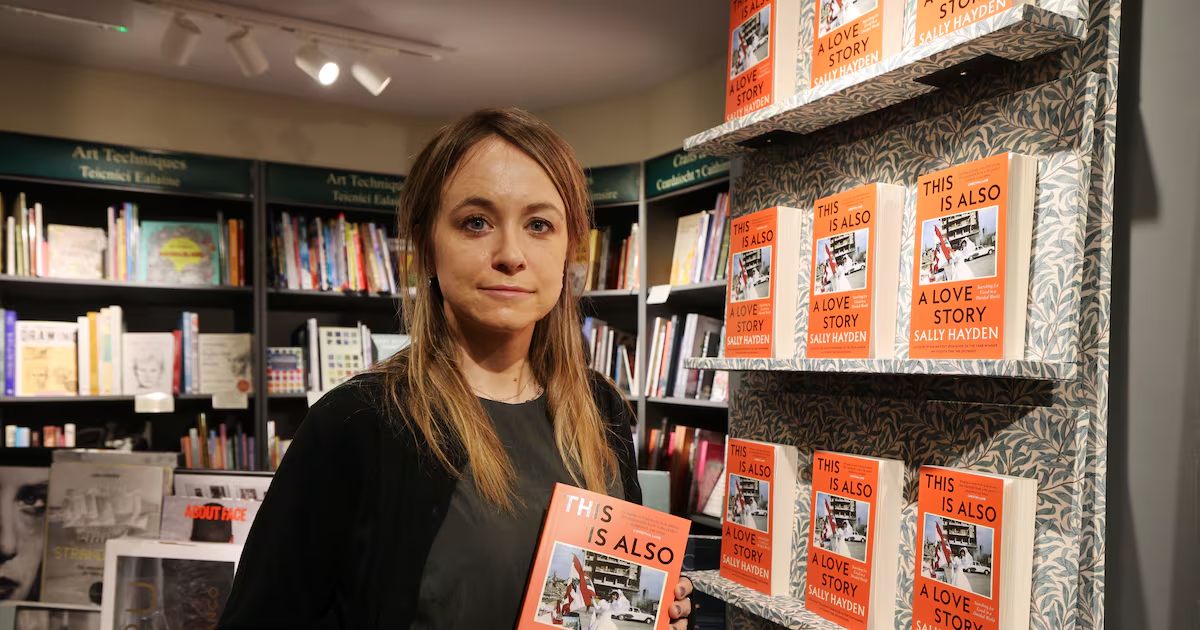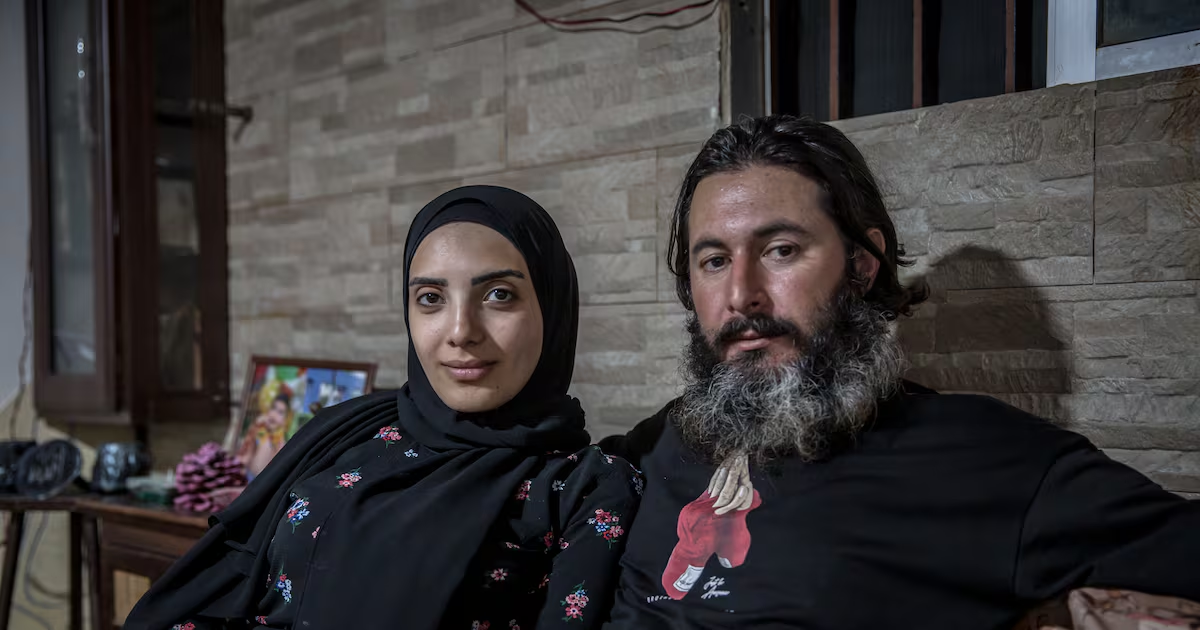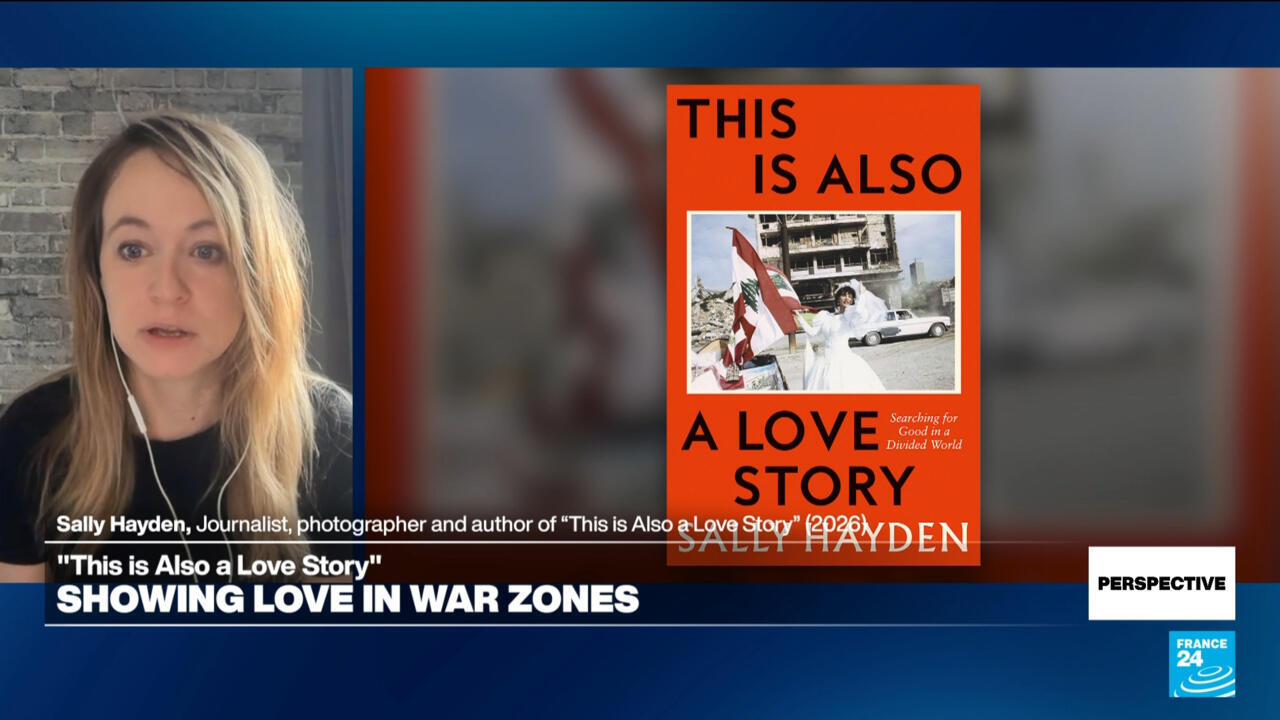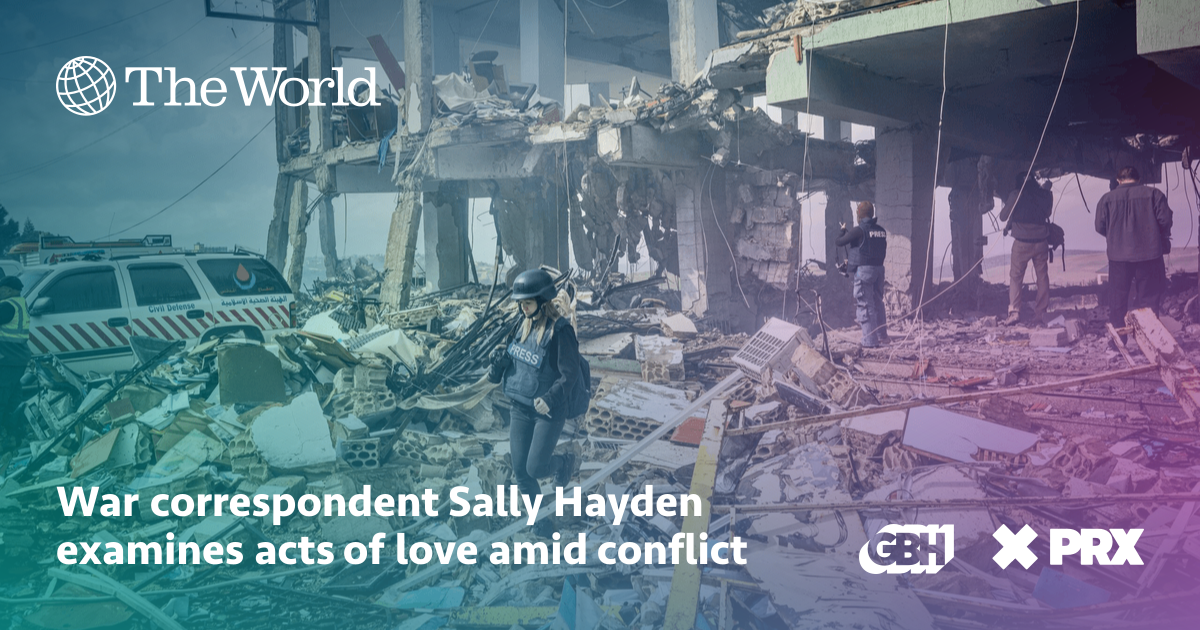
Public radio’s longest-running daily global news program.AboutContactDonateMeet the TeamPrivacyTerms of use©2026 The World from PRXPRX is a 501(c)(3) organization recognized by the IRS: #263347402.War correspondent Sally Hayden examines acts of love amid conflictJournalist Sally Hayden has reported on crises across the globe — harrowing stories of war, displacement and political violence. But in her new book, “This Is Also a Love Story,” Hayden turns her attention to something often overlooked in crisis coverage: the relationships that help people endure. Hayden spoke to Host Marco Werman from Beirut, where she’s covering the current conflict in Lebanon between Israel and Hezbollah. BooksJuly 1, 2026Updated: July 1, 202611:44Journalist Sally Hayden in Lebanon, March 2026.Irish journalist Sally Hayden has covered war and humanitarian crises across the globe, seeing the grimmest of the grim: political violence, uprooted families. But that’s not all she’s seen. “This Is Also a Love Story: A Reporter’s Search for Goodness in a Cruel World” book coverCourtesy of Sally HaydenThe title of her latest book says it best. It’s called “This Is Also a Love Story: A Reporter’s Search for Goodness in a Cruel World.” In Ukraine, Rwanda, Sudan and beyond, Hayden has witnessed how love compels people to persevere under the most horrific circumstances. Hayden recently spoke to The World’s Host Marco Werman from Beirut, where she’s covering yet another war, and shared that she’s been thinking about this book for a long time.“I guess I was struggling just with what I had seen even in my first few years doing this job, just violence and atrocities and cruelness,” she said. “And I wanted to remember that there was goodness in the world and that humans have the capacity for goodness. So, in part, I was just trying to remember that it exists, but also it wasn’t that hard to find stories.”Sally Hayden:Yeah, so, I went to Ukraine in 2023. I was actually there for Christmas. And I had reached out to people whose partners were on the front lines. So, not every chapter is about romantic love, but in Ukraine I specifically wanted to look at romantic love and after the full-scale invasion what that had done to relationships. And so, I wanted to meet the partners of people who were fighting, and Irina was one woman who basically just volunteered to spend hours with me talking about her relationship and about her love for her husband Sergei. He had volunteered very early and had been fighting pretty much ever since. She was first drawn to him because he was so handsome with a mustache like Salvador Dalí. And yeah, they fell in love very deeply and then were kind of torn apart by this full-scale invasion. And she wanted to speak about what that had meant for them, but also issues around, for example, trauma, like him facing trauma when he comes back. It’s difficult to be around crowds. She never knows when he’s going to get leave. Her loneliness, as well. And how she’s coping with that.A couple comforts each other while looking at the fire in a residential building after the attack of Russian drones in Kyiv, Ukraine, Oct. 26, 2024.Alex Babenko/AP/FileYeah, Irina basically talked about how much she had struggled after the full-scale invasion and how difficult that period was for her. She said that she had talked to Sergei and he had said, “Well, if you can’t find some happiness, then what are we fighting for? What’s the point of resisting this?” And he basically said to her, “Put on your red lipstick, go out, dress up, have a good time, send me photos.” And they ended up with this code, “red lipstick,” about finding a way to live amid this and enjoy yourself. And she actually told me she had a photo album of her wearing red lipstick, so if he asked for a photo, she could just send it because she would be feeling sad and depressed, but she just didn’t want to say that.Yeah, so I mean, one of the chapters in the book is about Rwanda, and I went there in 2014 when I was 24. I had just started being a journalist. And I met one person and then one group of people. So, the person was Zura Karuhimbi, who I talk about in the book, who was this extraordinary Rwandan woman who had saved the lives of dozens of people basically by pretending to have magical powers and, as she said, being a witch. And [when we met her], we were kind of just asking her random questions and for advice, and she said that her advice for life is to find someone to love, that the future will always be bright, and that love is the most important thing in the world.And then on that same trip, I met what are called artificial families. So, it was groups of young people who had lost their family members in the genocide. They had a father and a mother appointed and children, but they’re all the same age. It was basically a support network. They’d meet up like once or twice a week, and the father and the mother would be like, “Are you studying? Do you have any problems?” And I was pretty much the same age as them.Ten years later, while working on the book, I tracked some of them down and found out what had happened, which people can read about. But I think that, again, coming across those two stories very early in my career was probably quite influential and something that made me think it’s important to look for these details in terms of goodness and kindness, because a lot of these people are facing choices that many of us could never imagine.An armed man Bassam al-Sheikh Hussein, 42, background, speaks with a security officer after he took hostages inside a bank, in Beirut, Lebanon, Aug. 11, 2022. A hostage standoff in which a gunman demanded a Beirut bank let him withdraw his trapped savings so that he could pay his father’s medical bills ended seven hours later with the man’s surrender.Hussein Malla/AP/FileYeah, I mean, they had a very limited amount they could withdraw, but it was pretty much gone. And his father needed medical care, and he decided that he was going to raid a bank and try to get out his own money. And the unexpected impact of that was that he became a national hero. So people were like, “He’s not the thief, the bankers are the thieves, the politicians are the thieves.” And so, I think that story was quite well known at the time, but there were some factors I started noticing: There were more bank raids after that, and many of the people carrying them out were looking for money to help family members, particularly with medical care.Protesters with frozen bank deposits holds placards outside a court building during a protest calling for the release from detention of Bassam al-Sheikh Hussein, who held hostages in a bank last week, in Beirut, Lebanon, Aug. 16, 2022. Hussein, a food-delivery driver surrendered last Thursday after a seven-hour standoff in return for getting $35,000 of his money and promises that he would only be questioned then set free.Hussein Malla/AP/FileI’ve been living in Beirut since January 2024, and the book opens and closes there. And yeah, the situation generally is devastating. As I’m sure listeners know, more than 1 million displaced, thousands killed. Some areas are totally off limits and being destroyed. That actually includes Bassam’s village that his family comes from and where his father’s grave is. And I mean, I still see love every day. That’s not an exaggeration. I see people helping each other. Not everyone, of course; you have to clarify. But one of the things that I’ve been doing — I’ve been on, I don’t know how many airstrike sites now — collecting basically evidence of civilian lives.In the book, at the end, I reference finding a photograph of a couple at an airstrike site, which had them kind of posing, and underneath were the words, “Love is just a word until someone comes along and gives it a meaning.” Like, already I’ve had some feedback on the book from people in Lebanon, and they’ve said they’re grateful, at least the people who’ve talked to me so far, because they feel like a lot of the time these stories and this human cost, it gets stripped from, again, from the international understanding.Hopefully, it’s not too much about me at all, but it is also a bit of a reckoning, given that I’ve been in the journalism industry for more than a decade, particularly as an international reporter. Yeah, questioning “have I contributed to dehumanization,” and “how does the media quote statistics, for example, or press releases more than human experience and human stories.” I think a lot of that does come down to time, space and capacity. Obviously, journalism has been in crisis for quite a long time, but I do question, in the book, whether the world could be a different place if more stories were told through the prism of love. I do think that’s a conversation I would want to start.Parts of this interview have been lightly edited for length and clarity.
War correspondent Sally Hayden examines acts of love amid conflict - The World from PRX
Journalist Sally Hayden has reported on crises across the globe — harrowing stories of war, displacement and political violence. But in her new book, “This Is Also a Love Story,” Hayden turns her attention to something often overlooked in crisis coverage: the relationships that help people endure. Hayden spoke to Host Marco Werman from Beirut, where she’s covering the current conflict in Lebanon between Israel and Hezbollah.
1,548 words~7 min read