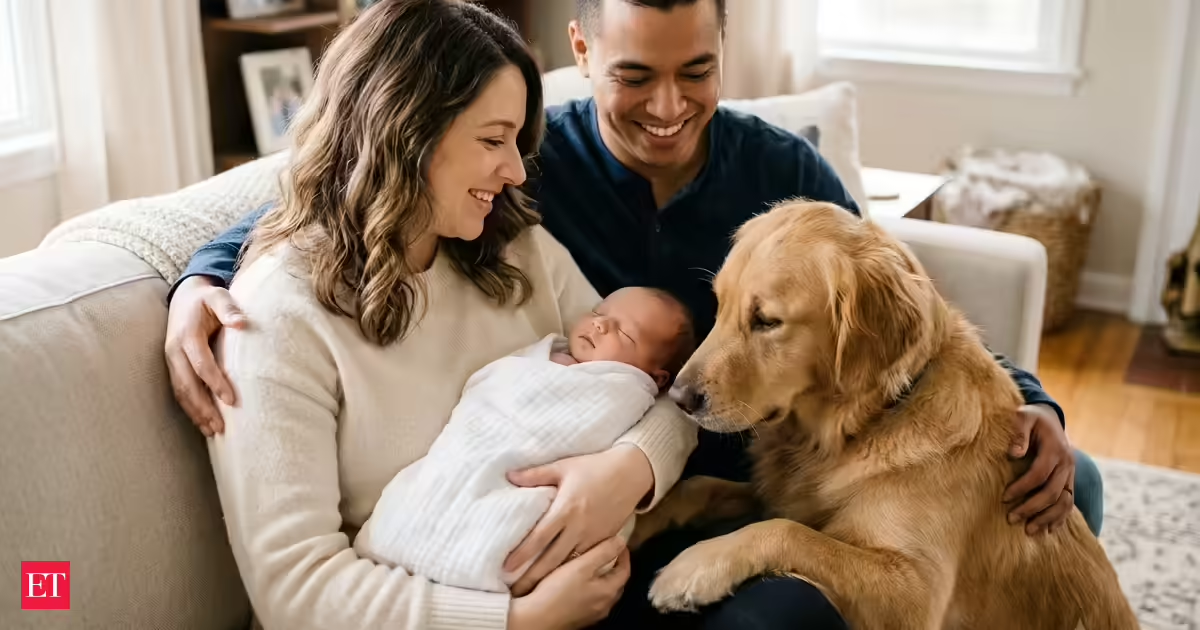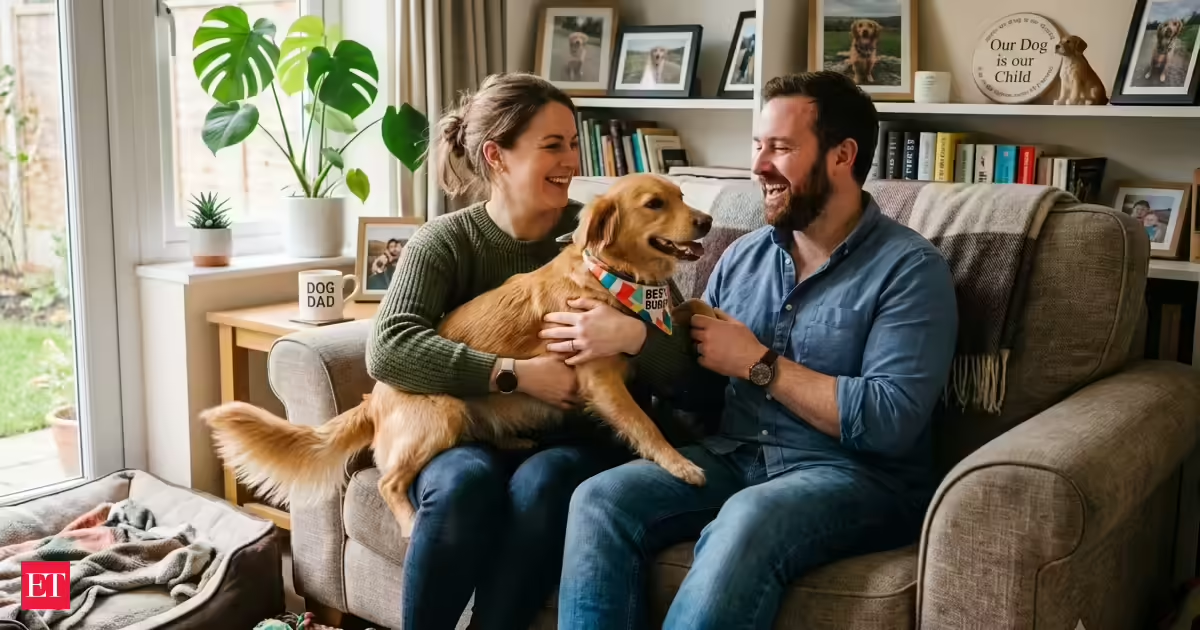
Choosing whether to become a parent is one of the biggest decisions in life. Some people decide to have children. Others adopt. Many decide not to become parents at all. A growing number of people instead choose to become pet parents. Psychology says this decision should not be judged using simple labels. Human behavior is shaped by personal experiences, financial situations, emotional needs, health, relationships, career goals, and values. Studies show that pets often become important members of the family. They provide companionship, emotional support, daily routines, and a sense of responsibility. Psychology explains that different family choices can still lead to meaningful and satisfying lives.One common belief is that people who choose pets instead of children are avoiding responsibility. Psychology does not support this idea. Taking care of a pet requires daily commitment. Owners must provide food, exercise, healthcare, attention, training, and emotional care. Many pets depend entirely on their owners throughout their lives.Researchers say this type of caregiving activates many of the same emotional systems involved in nurturing relationships. While pet ownership and parenting are different experiences, both involve long-term commitment and care. The decision to raise pets instead of children is often based on individual priorities rather than a refusal to accept responsibility.What psychology says?Psychology explains that family choices differ because every person has unique motivations. Some people enjoy spending time with children and become parents. Others feel more comfortable caring for animals. Neither choice automatically reflects a person's ability to love, care, or build relationships.Psychologists also explain that life satisfaction comes from many sources. Family is one source, but friendships, careers, hobbies, volunteering, community work, and pet companionship also contribute to emotional well-being. The important point is that people should make decisions that match their own values and circumstances.You Might Also Like:What does this mean?Choosing a pet over having children does not mean someone dislikes children. Many people simply decide that raising children does not fit their current life plans. Others may face medical conditions, infertility, financial limitations, demanding careers, housing concerns, or personal preferences.Some people also value flexibility in their lifestyle. Pets often require care, but the responsibilities are different from raising children. Psychology says these decisions reflect planning and personal priorities rather than a single personality trait. Why is it done?People choose pet parenting for many reasons.You Might Also Like:Some want companionship without becoming parents.Others enjoy the emotional bond they build with animals.Many people experience comfort by spending time with pets after work or during stressful periods.Financial planning also plays a role. Raising children involves long-term expenses related to education, healthcare, housing, and daily living. Some individuals decide that pet ownership better fits their financial goals.Others simply feel a stronger connection with animals and choose to express their caregiving instincts through pets.Which psychology theory explains this behavior?Several psychological theories help explain this decision.Attachment Theory suggests that humans naturally seek close emotional bonds. Pets can become attachment figures that provide comfort, security, and emotional connection.Self-Determination Theory explains that people seek autonomy, competence, and meaningful relationships. Choosing whether or not to have children is part of exercising personal autonomy.You Might Also Like:Maslow's Hierarchy of Needs also helps explain this behavior. Once basic needs are met, people pursue belonging, purpose, and emotional fulfillment in different ways. For some people, pets become part of meeting these higher emotional needs.These theories do not suggest that pets replace children. Instead, they explain how emotional needs can be fulfilled through different relationships.This psychology study saysMany studies have examined the relationship between humans and companion animals. Research published in journals including Anthrozoös, the Human-Animal Interaction Bulletin, and the Journal of Social Issues has found that pet ownership is associated with companionship, emotional support, daily routines, and improved feelings of social connection for many people.Researchers have also found that interacting with pets may help reduce feelings of loneliness for some individuals and encourage regular physical activity, especially among dog owners. However, psychologists also note that pets do not replace all aspects of parenting or human relationships. Instead, they represent one meaningful form of caregiving and companionship.Study finds non-parents form strong bonds with pets without treating them as child substitutesA study found that people without children often develop stronger emotional bonds with their companion animals than parents. They invest more time, care, and affection in pets, but this does not mean pets replace children. Instead, researchers say pet parenting reflects a different way of expressing nurturing behavior in modern society.The study was conducted by Dr. Shannon M. Volsche of Boise State University and published in the peer-reviewed journal Society & Animals. Researchers surveyed 917 pet owners in the United States through an online Qualtrics questionnaire. Participants completed demographic questions, the Lexington Attachment to Pets Scale (LAPS), and caregiving behavior surveys. The findings showed that people without children reported stronger emotional attachment, greater caregiving, and more investment in their companion animals than parents. However, the study concluded that pets are not substitutes for children. Instead, non-parents direct their nurturing instincts toward companion animals while meeting their species-specific needs, reflecting a different form of caregiving rather than replacing parenthood.The principle behind itThe main psychological principle is that people build caring relationships in different ways. Humans naturally seek connection. Some create families through children. Others through adoption. Some build close relationships with partners, relatives, friends, or pets.Psychology emphasizes that emotional bonds are influenced by individual choices, life experiences, and personal values. Respecting these different paths supports better understanding instead of judgment.What to learn from it?This behavior teaches several important lessons. People should avoid making assumptions about someone based on whether they have children. Different life choices do not automatically reflect someone's character.A caring person can express kindness toward children, family members, friends, older adults, community members, and animals. Psychology encourages understanding instead of comparing personal decisions. Everyone has different goals, and those goals deserve respect when they do not harm others.Life lessons from the behaviorOne important lesson is that there is no single definition of a meaningful life. Some people find purpose in raising children. Others find purpose in caring for animals, supporting family members, building careers, helping communities, or pursuing personal goals.Psychology reminds us that happiness depends on living in a way that matches personal values rather than following social expectations alone. Respecting different family structures creates healthier relationships and reduces unnecessary judgment.You Might Also Like:
Psychology says people who become a pet parent instead of raising their own or adopting a child aren't avoiding responsibility: What this choice may reveal
Psychology says people who become a pet parent instead of raising their own or adopting a child aren't selfish or disconnected from society. Psychology explains that people make family choices for many reasons. Some choose pets because of personal goals, emotional needs, financial planning, health concerns, or lifestyle preferences. Research shows that caring for pets can provide companionship, responsibility, emotional support, and a sense of purpose without replacing every role that parenting offers.
1,050 words~5 min read