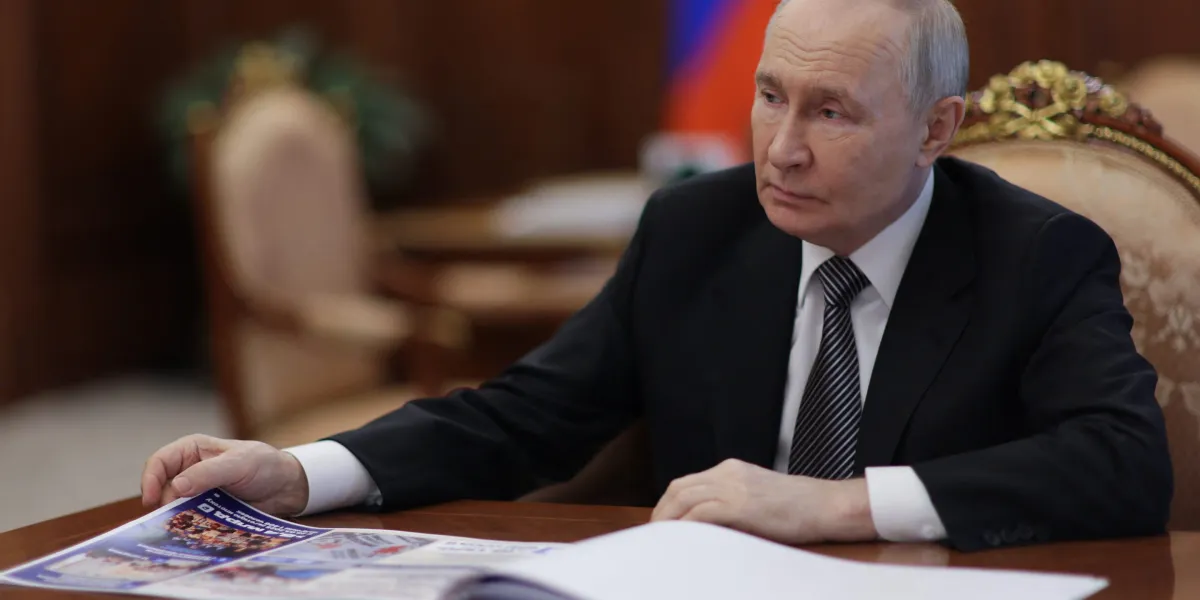
While Putin makes loud claims about the Russian economy performing better than those of Western countries, business statistics tell a very different story. Since the beginning of the year, two-thirds of Russia’s largest corporations have either seen a sharp drop in profits or else posted outright losses. The trend is not limited to the hardest-hit sectors, such as oil and gas or coal. Instead, losses and profit declines are being recorded across all industries except banking. A relatively tight monetary policy has brought inflation down, but stock prices are falling again, and the number of defaults is rising. Companies with heavy debt loads and those oriented toward the domestic market are suffering the most. Two major assets have already been nationalized following actions by the Prosecutor General’s Office.Contents1.Sales are there, but profits aren’t2.Only banks are doing well (at least some of them do)3.Construction: debt, nationalization, and transparency issues4.Food industry’s first losses5.Automotive sector: secrets and losses6.Magnitogorsk in the red, Cherepovets with collapsing profits7.Non-ferrous metals: survival depends on size of debt8.Fertilizers are no longer massively profitableThe financial performance of large businesses in today’s Russia says more about the state of the country’s economy than official macroeconomic statistics — in short, the situation in real life looks even worse than the situation on paper. According to the Russian Ministry of Economic Development, GDP was 0.2% lower in January–March 2026 than in the same period last year, yet 0.2% higher in January–April. However, as Vedomosti recently calculated, 21 out of the country’s 28 largest companies saw their situation worsen over the past year, and small and medium-sized businesses fared no better — an increased tax burden resulted in a 22.2% year-on-year decline in tax revenues from SMEs in the first quarter of 2026, the Ministry of Finance admitted.From Jan. 1 to June 13, the Moscow Exchange index fell by 9%, while the overall decline in the course of 2025 amounted to 4%. The exchange is also recording a sharp spike in bond defaults. While the first half of 2025 saw only 26 defaults involving three issuers, as of mid-June the figure for 2026 had already reached 164 across 16 entities (both figures exclude technical defaults, where companies did ultimately pay their debts after a brief delay).In the first half of 2026, the Moscow Exchange recorded 164 bond defaults across 16 companies
Farewell to windfall: Сompanies in almost all Russian industries are getting poorer
While Putin makes loud claims about the Russian economy performing better than those of Western countries, business statistics tell a very different story.…
3,979 words~18 min read