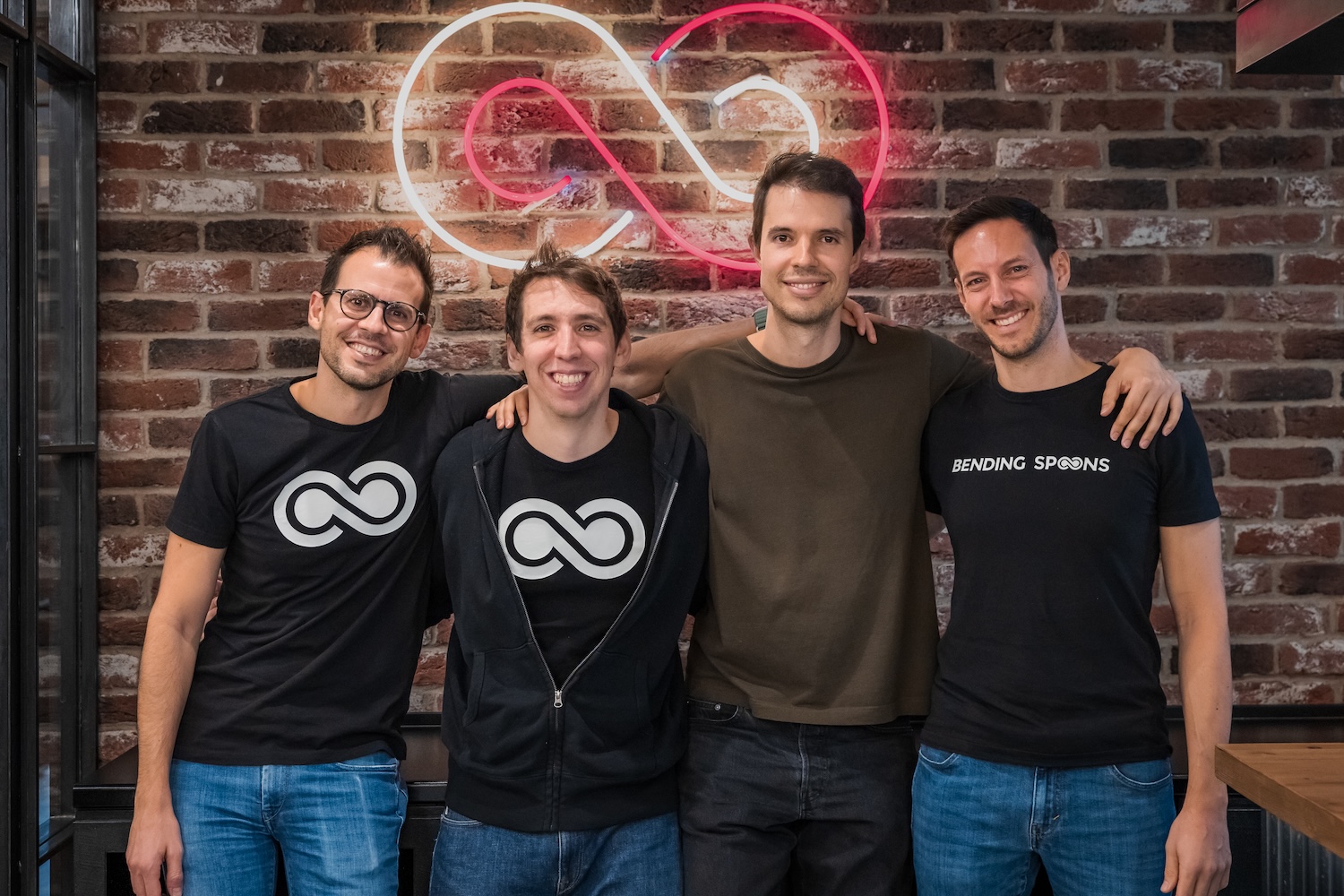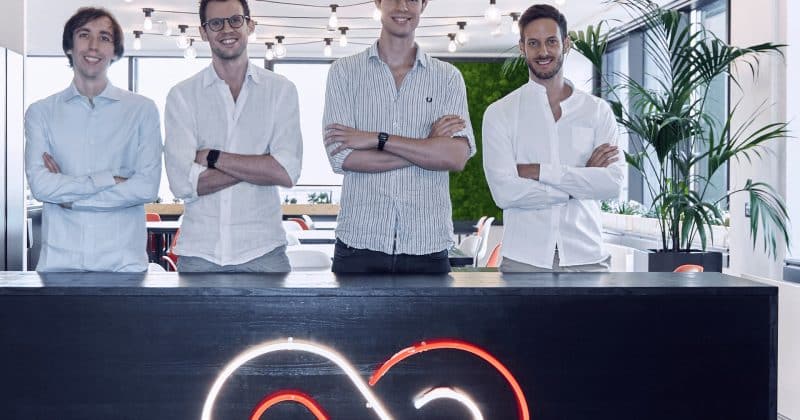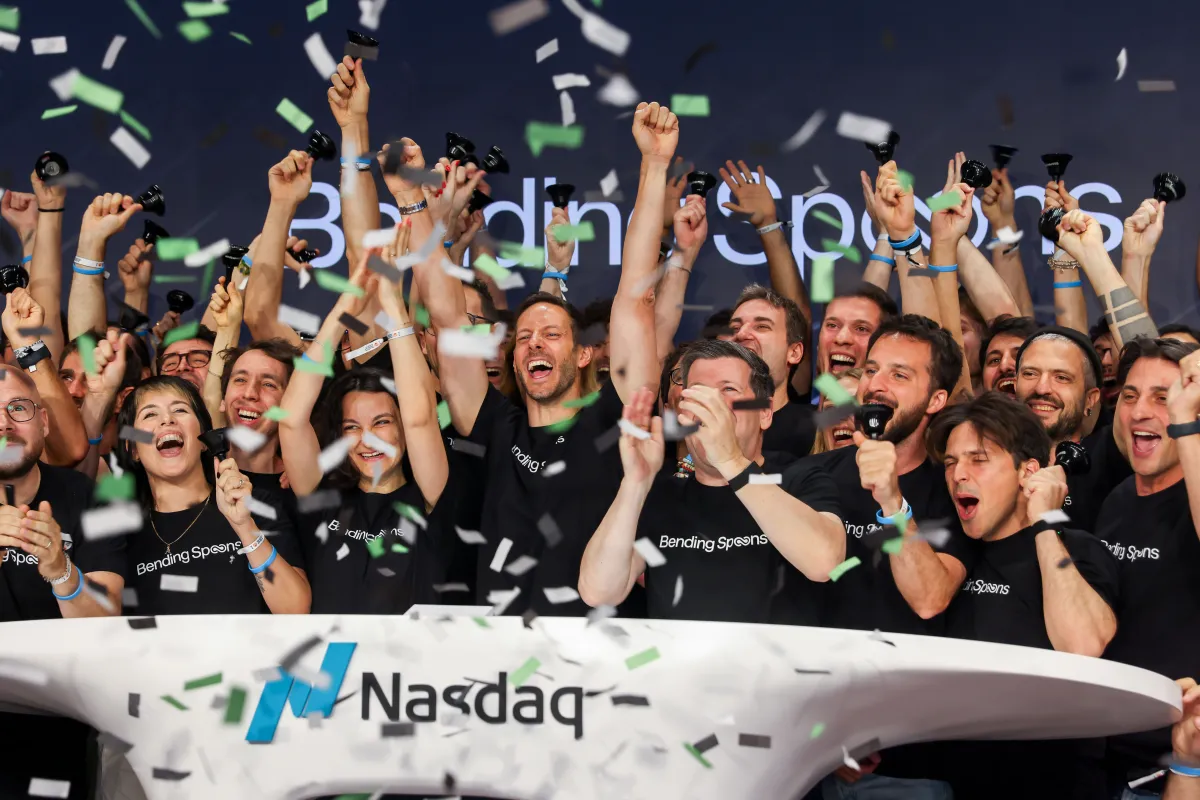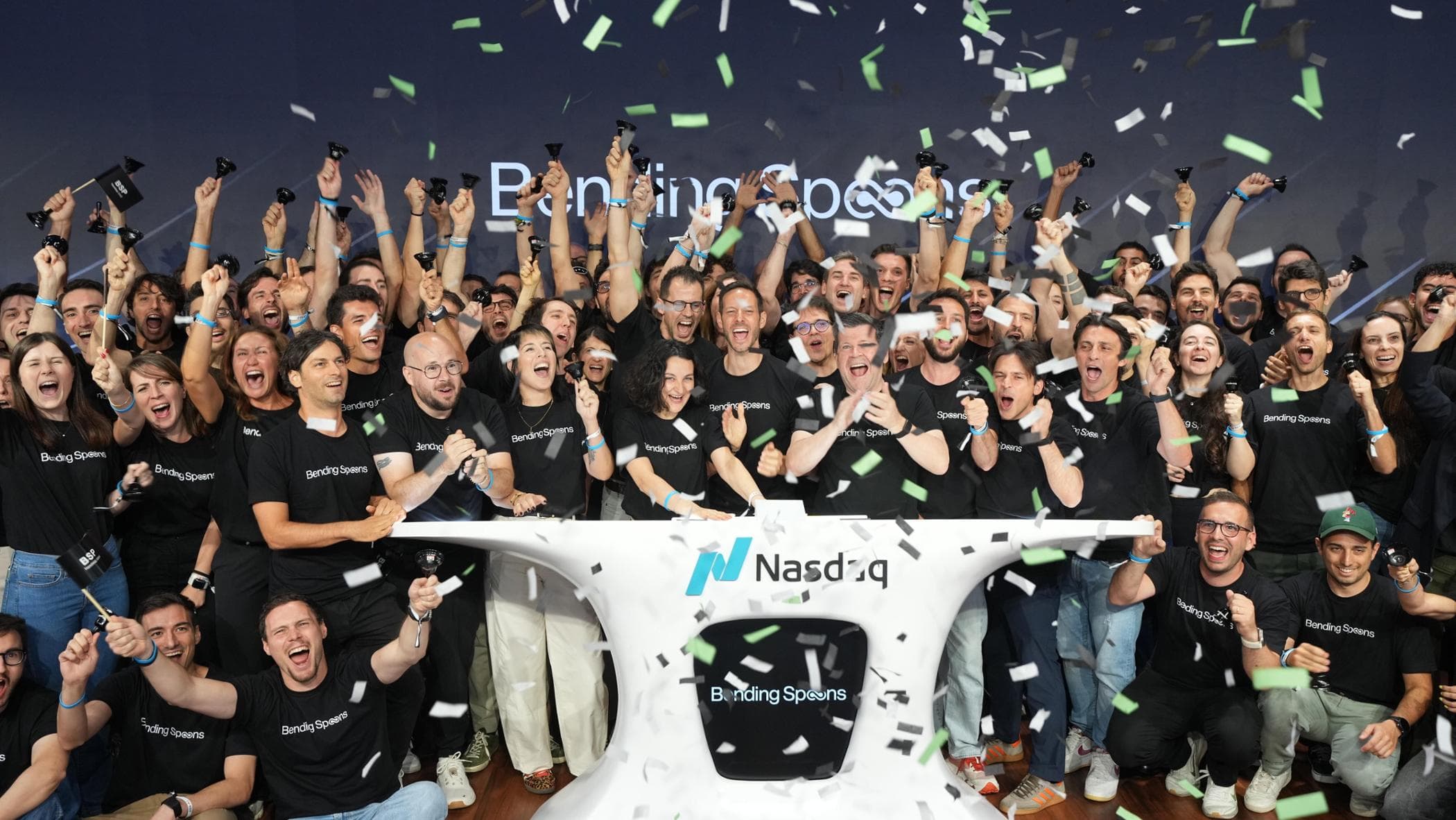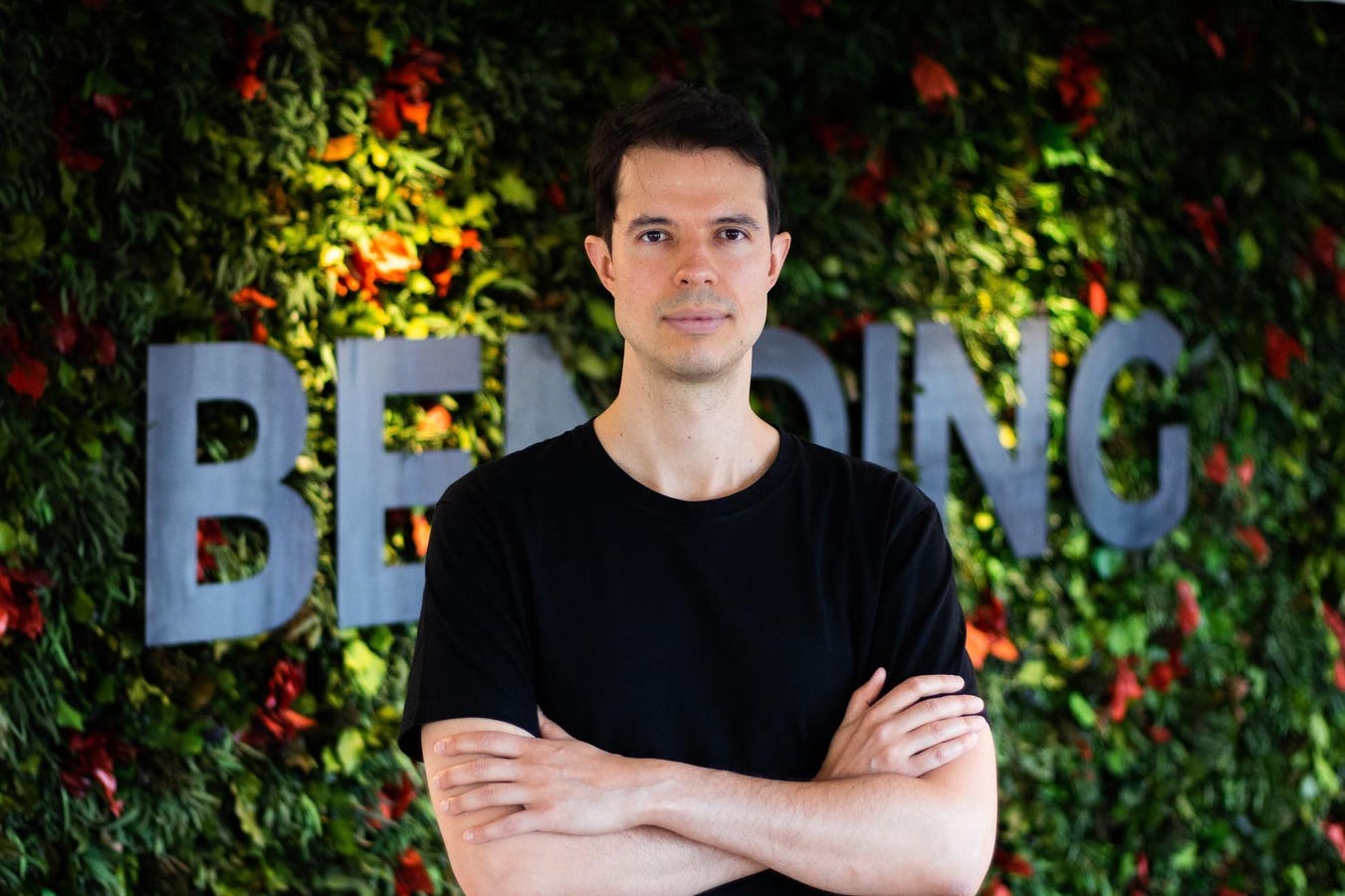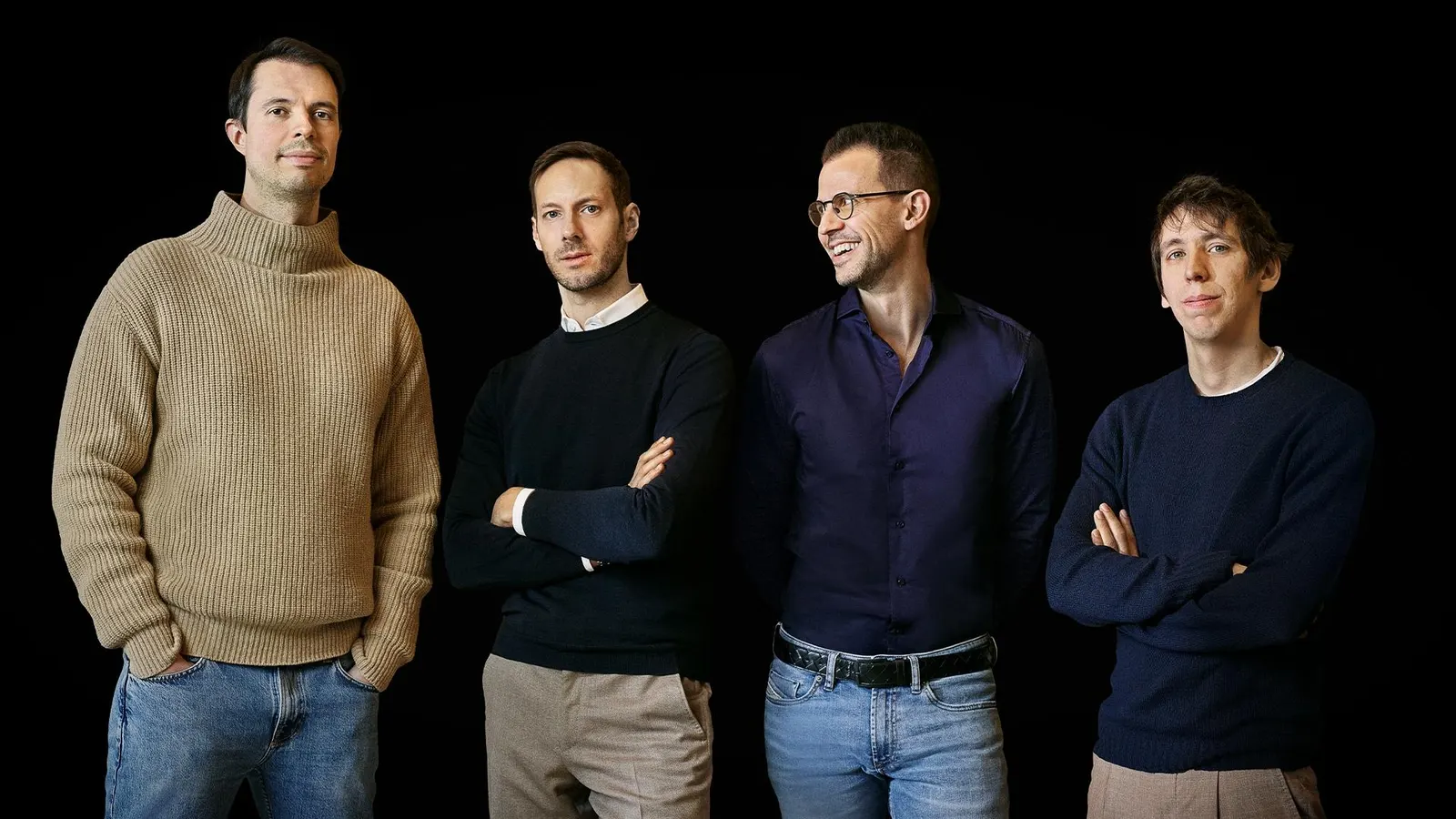
AOL. Evernote. Vimeo. Eventbrite. All darlings of a previous era of technology, and now all owned by the same company: A little-known Italian startup called Bending Spoons. Since its founding in 2013, the company has acquired more than 50 stalled out apps and websites and rolled them up into a single business that raked in $1.3 billion in 2025. It’s “the best of both worlds of Berkshire Hathaway and a technology company,” CEO Luca Ferrari tells Forbes.Today, the Milan-based company went public on the Nasdaq, raising $1.7 billion at a $18.4 billion valuation, in the largest listing for an European startup since 2023. Ferrari and his cofounders were already billionaires after Bending Spoons was valued at $14 billion in an October 2025 fundraise. Now their combined stake of $8.9 billion is worth more than big name Italian corporates like tire maker Pirelli and Banca Generali.The float also means a big potential payday for Bending Spoons’ backers, including British investor Baillie Gifford, whose stake is now worth $1.2 billion; buyout fund Renaissance Partners, which owns a $980 million stake; and American billionaire Jim Cox’s media group, who holds $780 million position. Bending Spoons shares popped 31% from the open to $38 per share. Sebastian Nevols for ForbesThat valuation teeters on Ferrari’s aggressive playbook. Bending Spoons buys apps that bring in solid revenue, but aren’t growing like they used to. Then Ferrari’s team reboots the underlying technology — centralizing server costs, cleaning up sprawling codebases — while slashing costs. That often means layoffs: According to its SEC filings, the firm paid over $78.6 million in “reorganization-related expenses” in 2025 after picking up 1,830 staff from its AOL, Eventbrite and Vimeo deals. It only expects a “few hundred to remain” by the end of 2026.A Bending Spoons takeover also tends to mean stinging price rises for users. Evernote users used to pay $100 per year for the note-taking app; after Bending Spoons bought the company for $200 million in 2023, it jacked up prices to $249, with business users taking an even bigger hit. Vimeo and file transfer platform WeTransfer users also saw prices spike after Ferrari’s takeover. It seems like Ferrari can afford to squeeze these loyal customers. Bending Spoons in its prospectus boasted that 48% of its subscription revenue from across its stable came from customers who had been with the company for at least five years. The filing says Evernote’s revenue was up 34% in 2024 and up an additional 30% last year, but didn’t break out exact numbers. Evernote said it had $100 million in recurring revenue in a blog post at the time the deal was announced in November 2022. “The increase in Evernote revenue was driven by higher subscription revenue resulting from an increase in average revenue per subscriber, partly offset by a decrease in the number of subscribers,” the firm noted in the SEC filing. Ferrari is touchy about being confused with a buyout fund, or being accused of asset striping. He has vowed never to sell an app. With Evernote in particular, he says his team rebuilt the app’s tech stack, bringing software launched in 2008 up to date. The rejigged app now has many of the AI search, note-taking and summarization features that are standard in a new generation of hit AI apps like Granola or Notion.Those tactics and a $5 billion buying spree that started in earnest in 2023 have seen Bending Spoons’s revenue double since 2024. Ferrari’s company was largely self-funded until 2018 but since then has loaded up on debt to finance larger and larger buyouts. It now has $6 billion on its balance sheet and its interest payments grew to $143 million last year — around half of its $278 million in operating income. The company lost $200,000 last year. It’s hard to judge the success of its strategy so far. Bending Spoons struck most of its deals in the last two years, with half its revenue now coming from AOL, which it bought for $1.45 billion in 2025. Much of the company’s new revenue comes from takeovers. Organic growth was just 13% in 2025. But there are hints that Ferrari’s playbook is working. Bending Spoons claims that it doubled its revenue per employee over the last two years to $2.57 million in 2025. That beats estimates for Apple ($2.4 million), Meta and Alphabet.While there’s a big arbitrage between Silicon and Po Valley salaries, Ferrari contends that Bending Spoons is no tech sweatshop (its top engineers make over $250,000). That means he can hire the best engineering talent coming out of Europe’s universities. But new hires shouldn’t be expecting bonuses or share grants. Ferrari scorns such “extrinsic rewards for…short-term actions.” Even before becoming a public company, Ferrari’s cofounders and major investors would vote regularly that he continue on as CEO. Bending Spoons got its start in 2013, after Ferrari and cofounders Francesco Patarnello, Matteo Danieli and Luca Querella, all friends from studying in Italy and Denmark, failed to build a successful journaling app. “We were living and breathing that company but the dream melted away,” said Ferrari in an interview with Forbes in 2025. But the four realized they could just buy a small app and give it new life. Ferrari and his cofounders named the new company after a scene from the Matrix movies. They started with a small keyboard app, bought for just $10,000, and built their portfolio from there.More than a decade later, winning over public markets investors might call for a trick worthy of the spoon bending magician Uri Geller. Bending Spoons is seeking to tap the market at the same time that both legacy software and buyout funds are struggling. The likes of KKR, Blackstone and Apollo have slumped by close to a third since the start of this year, while software stocks like Atlassian, ServiceTitan and AppLovin — dubbed AI victims — are down more than half. “We are thinking 10 or 20 years out we don’t really care too much about what the environment is,” says Ferrari. “If you choose Bending Spoons stock, you do because you like the compounding engine and arguably that works in an environment where most of those targets are cheaper.” That sell off has also hammered a Canadian company Constellation that’s often compared to Bending Spoons. Its billionaire founder Marc Leonard ran a similar playbook of buying hundreds of niche software companies with surprising sticky revenues over two decades. The company peaked at a $78.3 billion valuation on Toronto Stock Exchange last May. It was also swept up in the so-called SaaSpocalypse, with its shares now down over 44% over the last year.Ferrari sees AI not as a threat, but as a boon to his business. He says he’s aiming for three to five targets a year that he can rebuild and tune with AI. “We are a technology company at our core,” he says. “We are now at 90% of our code being developed by AI.”Additional reporting by Alicia Park. More from ForbesForbesBending Spoons Cofounders Become Billionaires After Italian Startup Raises At $11 Billion ValuationBy Iain MartinForbesHow A Young Outsider Turned Failing Vimeo Into A Billion-Dollar CompanyBy Steven BertoniForbesAOL Has A New Italian Owner: Unicorn Startup Bending SpoonsBy Iain MartinForbesSpaceX Investments Now Dominate The 10 Best VC Checks Of All TimeBy Iain Martin
Italian CEO Of Bending Spoons, Owner Of AOL And Evernote, Is Worth $2.4 Billion After IPO
Buying busted apps made Bending Spoons’s four cofounders billionaires. Now their stakes have collectively jumped to $8.9 billion after the Milan-based startup scrap yard listed on Nasdaq at an $18.4 billion valuation.
1,216 words~6 min read