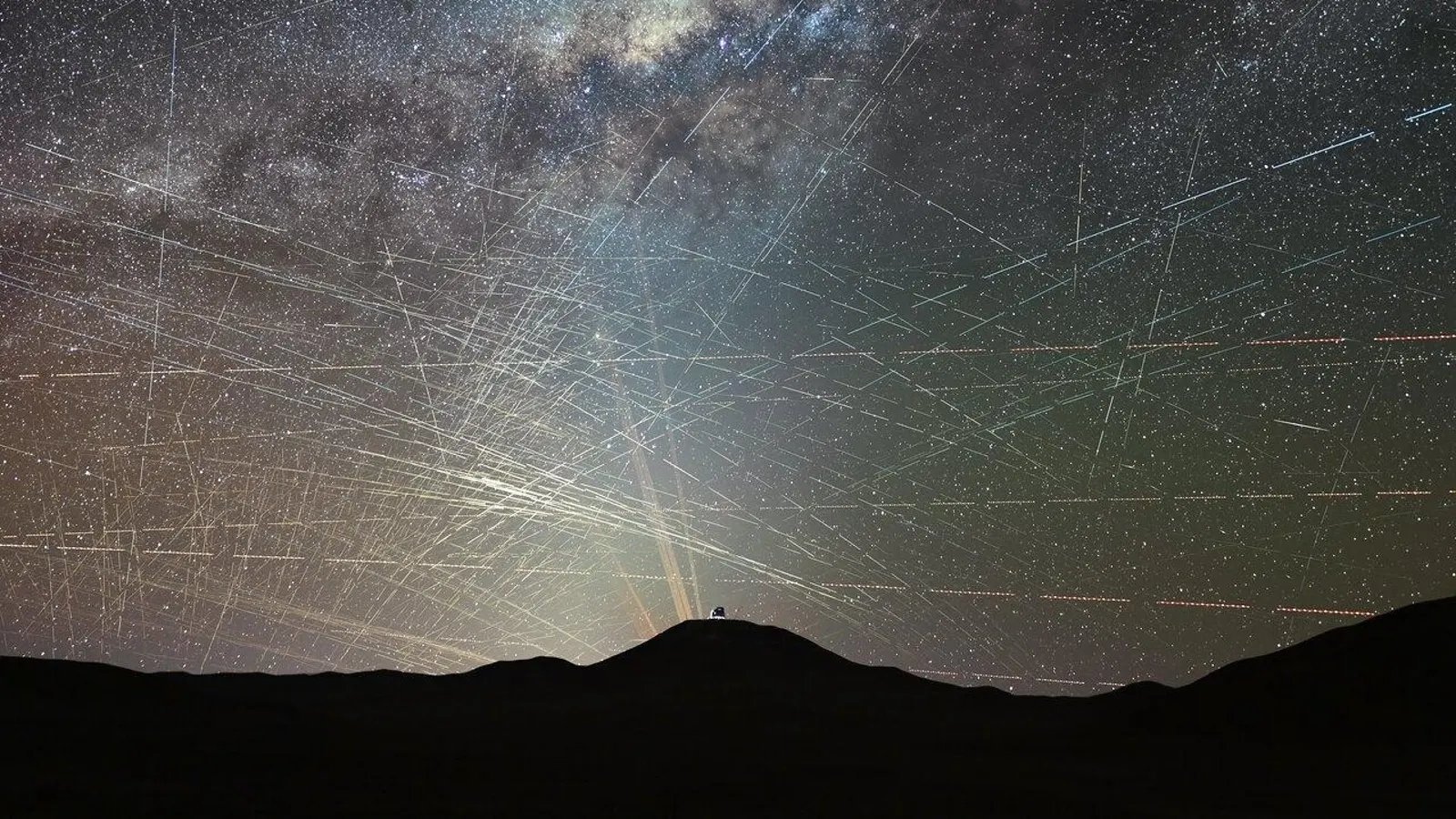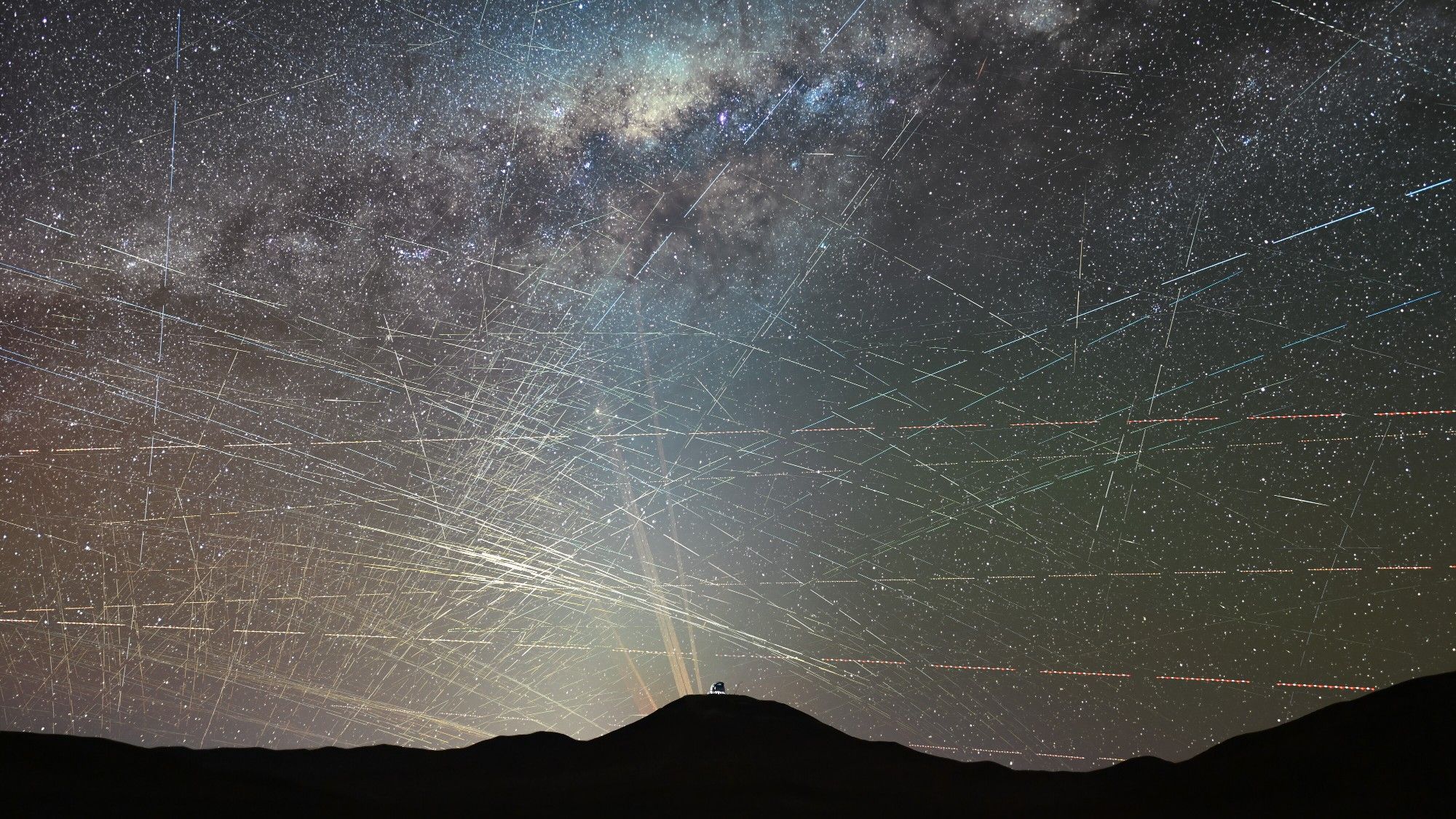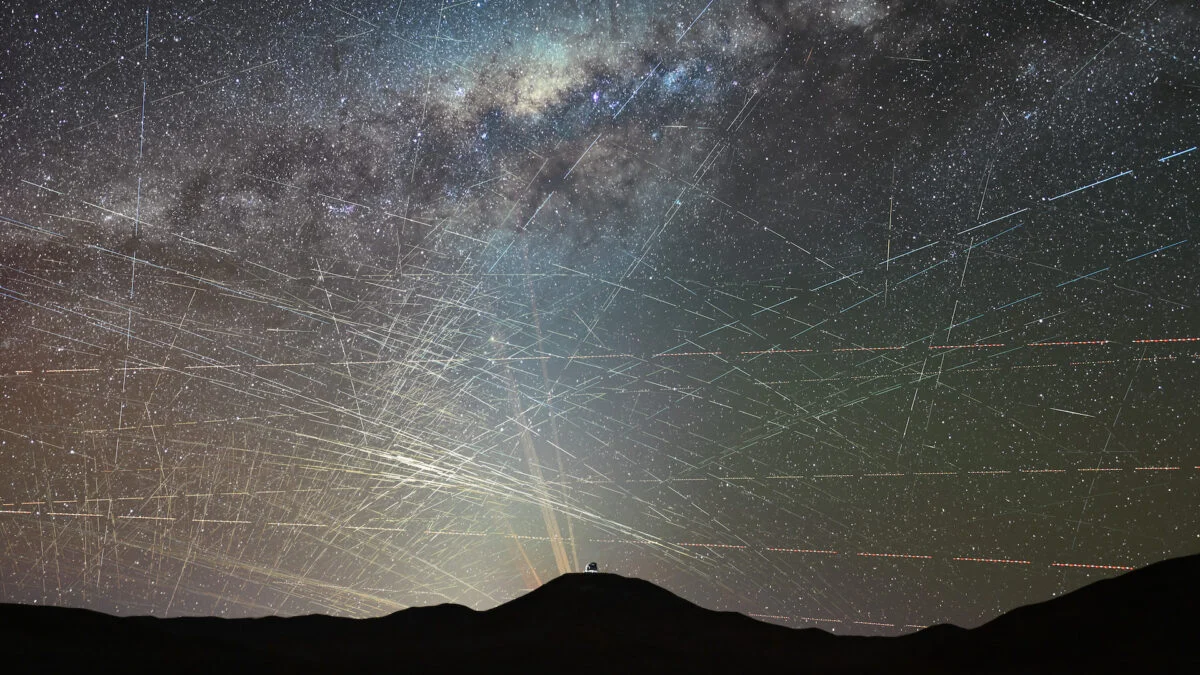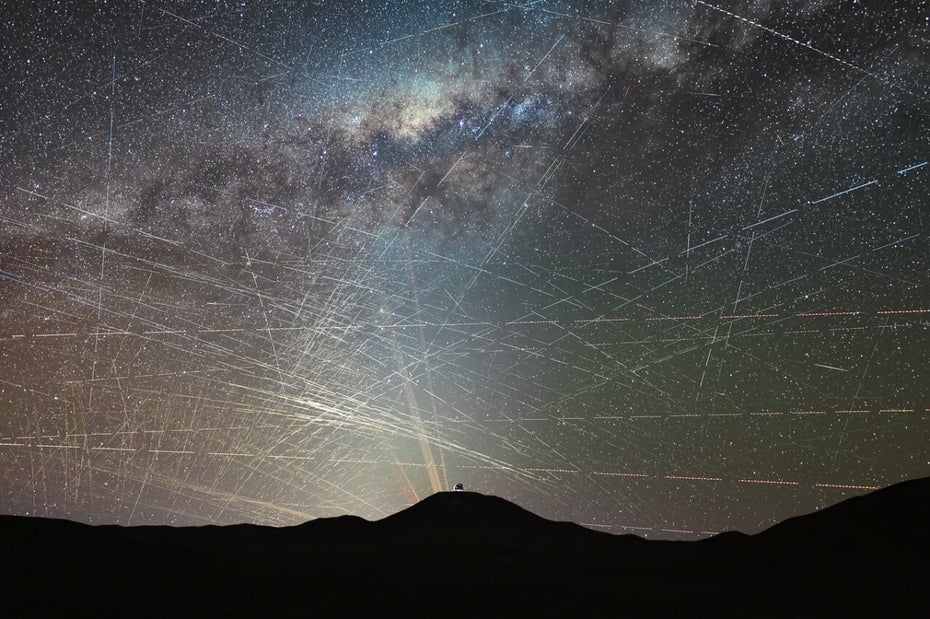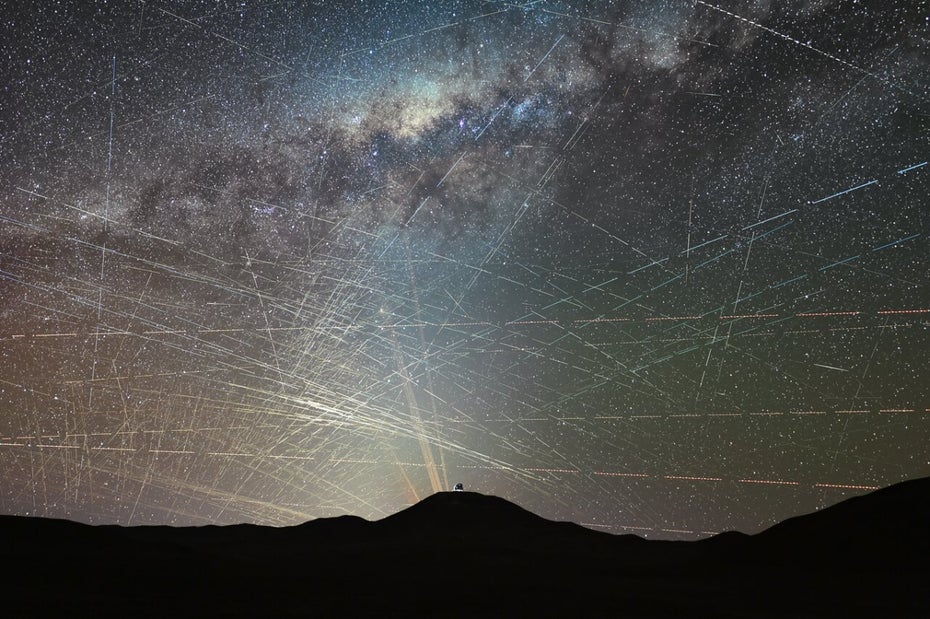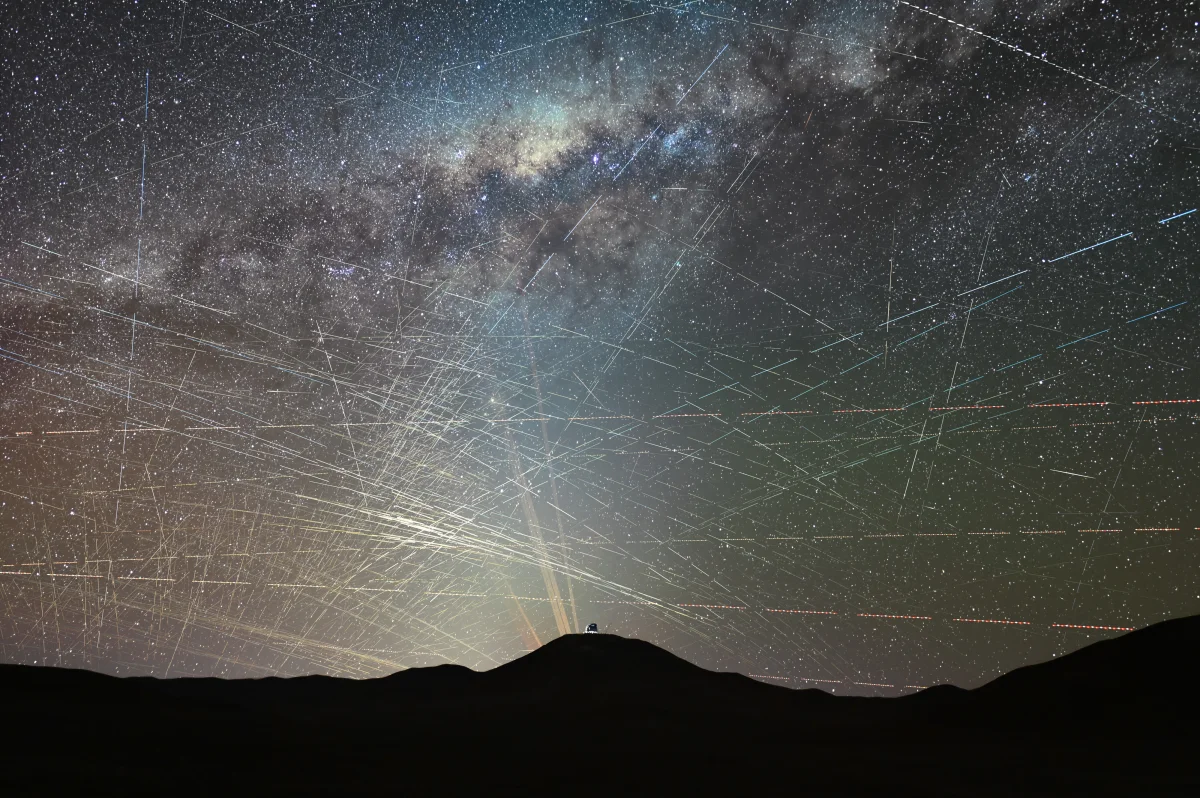
In the foreground we see the dome of ESO’s Extremely Large Telescope (ELT), the world’s largest optical/infrared telescope, currently under construction atop Cerro Armazones. Behind it we see the lasers of ESO’s Very Large Telescope (VLT) at Paranal Observatory, 22 km away from the ELT.
view more
A new European Southern Observatory (ESO) study has found that current proposals to launch over 1.7 million satellites into orbit, including extremely bright ones, would have “devastating consequences for astronomy.” According to the study, no more than 100 000 faint satellites, below naked eye visibility, should orbit Earth, to safeguard our ability to observe the night sky with modern telescopes. The study is the first to compute the extent to which large and bright satellite constellations — which have also raised concerns about their impacts on health and the environment — would affect astronomical observations by making the night sky brighter.
Since 2019, the number of satellites orbiting Earth has increased rapidly, to over 14 000 today [1] — dominated by SpaceX's Starlink telecommunications satellites. Satellite proposals have also escalated, both in number and in potential impact. "Until now we have managed, but it's getting worse," stresses Olivier Hainaut, who has been involved in developing recommendations to mitigate the impact of satellite constellations on astronomy. While companies like SpaceX have taken measures to make their satellites less bright, current satellite proposals are going “beyond the limit” of what astronomy can withstand, he says. Hainaut, an astronomer at ESO for over 30 years, is the author of the peer-reviewed study on the impacts of satellite constellations accepted for publication in Astronomy & Astrophysics.