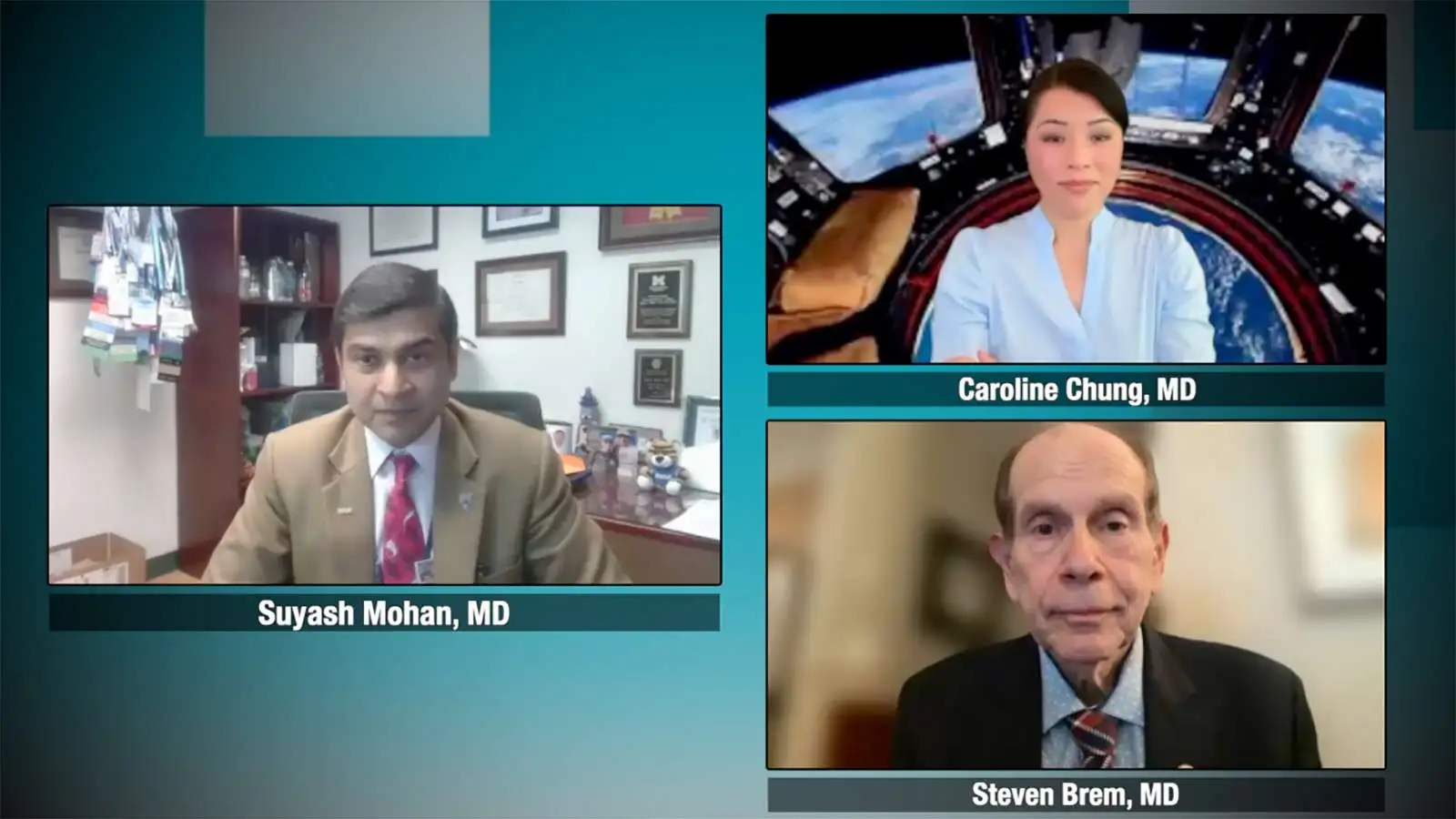
Following the American Society of Neuroradiology meeting, MedPage Today convened three leaders in neuro-oncology and brain tumor imaging for a virtual roundtable discussion on the evolving role of advanced MRI in brain tumor care. Moderator Suyash Mohan, MD, of the University of Pennsylvania in Philadelphia, is joined by Caroline Chung, MD, of the University of Texas MD Anderson Cancer Center in Houston, and Steven Brem, MD, also of the University of Pennsylvania.
In this third of four episodes, the panel discusses why advanced MRI remains unevenly adopted despite its growing clinical promise. From surgeon resistance, to new technology and the lack of standardized imaging protocols, to uncertainty in distinguishing tumor progression from treatment effects, the experts explore what must happen before advanced neuroimaging can become routine in brain tumor care.
You can view the full series here.
Following is a transcript of their remarks:
Mohan: Let's talk about some challenges and barriers and I'll come to you, Dr. Brem, first. Advanced imaging you know is getting more and more popular. It's clearly so promising. Why do you think adoption is still so uneven? Do you think the biggest barrier is, Dr. Chung mentioned, is it post-processing complexity integrating in our daily workflow? Is it reimbursement? Or simply do you think that we don't have enough prospective evidence that these tools are actually improving outcomes? What do you think, Dr. Brem?