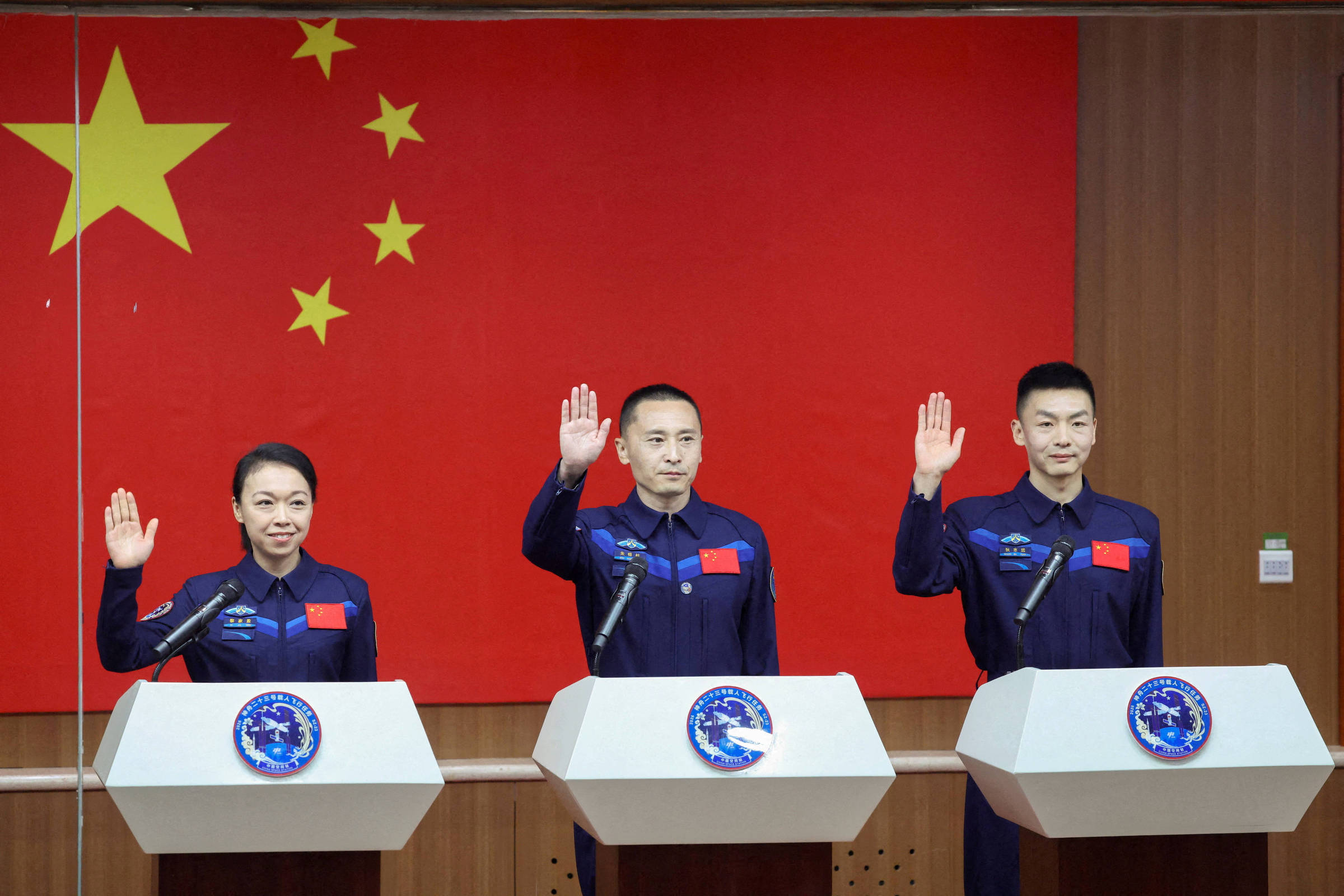
Lai Kai-ying, the first female Chinese civilian to reach outer space, is currently on board China's crewed Tiangong space station, where she orbits the Earth 16 times a day, alongside two other Chinese astronauts.
Tiangong is a unique microgravity laboratory for scientific experiments, designed to provide new insights into humanity's future.
Today, aviation and spaceflight are once again shaped by ideological rivalry, echoing the mid-20th-century space race between the United States and the Soviet Union. In the 21st century, however, Washington's primary competitor is no longer Moscow, but Beijing.
US space agency NASA intends to retire its landmark research outpost, the International Space Station (ISS), by 2032. When that happens, China will be the only country operating a permanently crewed orbital station.
China dominates cutting-edge research